
How I Stopped Panicking About My Unpredictable Freelance Paycheck.
I know that sinking feeling in your stomach when you check your bank balance and it’s lower than your rent. I’ve been there—staring at a screen, waiting for an invoice to clear while my bills piled up. Freelancing shouldn't feel like a gamble, but without a plan, it usually does. I want to show you the exact system I use to stay calm even when clients go silent. Let’s stop the guessing game and get your money sorted.
Imagine waking up on the first day of the month. You open your banking app, expecting to see a steady, automated direct deposit. Instead, you see a static number that has to stretch for an unknown period.
This is the daily reality of many self-employed remote professionals. One month you are celebrating a massive client payout. The next month, a major client pauses their operations, and your inbox goes completely silent.
This constant cycle of feast or famine creates deep, silent anxiety. You want to focus on doing your best work, but the background noise of unpaid bills keeps you awake at night.
Thankfully, you do not have to live in this state of constant financial worry. With a few practical, step-by-step shifts in how you handle your money, you can build a stable financial foundation.
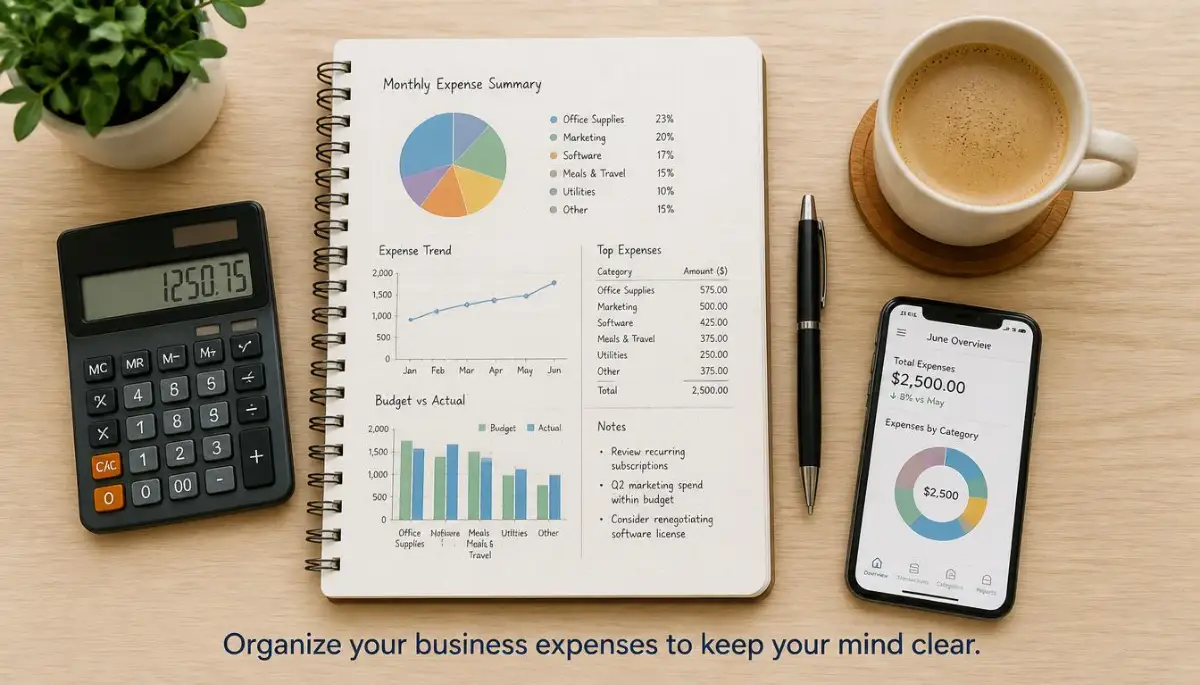
Rethinking the Freelance Income Model
To survive as a remote professional, you must change how you view your money. Traditional budgeting advice is built for people with a steady, fixed paycheck.
When your income changes every single month, those old budgeting rules quickly fall apart. You need a system that adapts to your highs and your lows without breaking.
Quick Wins: How to Fix Your Finances Today
- Know Your Baseline: Find the absolute minimum you need to survive (Your "Survival Number").
- Stop the Mix-up: Never use the same bank account for your grocery shopping and your client payments.
- Pay Yourself First: Transfer a fixed "salary" to yourself every month, even if you earned more.
- The 25% Rule: Save 25% of every invoice for taxes the second you get paid.
Let us look at some common myths that keep self-employed professionals stuck in financial stress.
Myth vs. Reality in Freelance Finance
The Bare-Bones Budget: Finding Your True Survival Number
Your first step to financial peace is knowing your absolute minimum monthly cost of living. We call this your survival number.
This is not the budget that includes dining out, streaming subscriptions, or weekend trips. This is the exact amount of money you need to keep a roof over your head and food on your table.
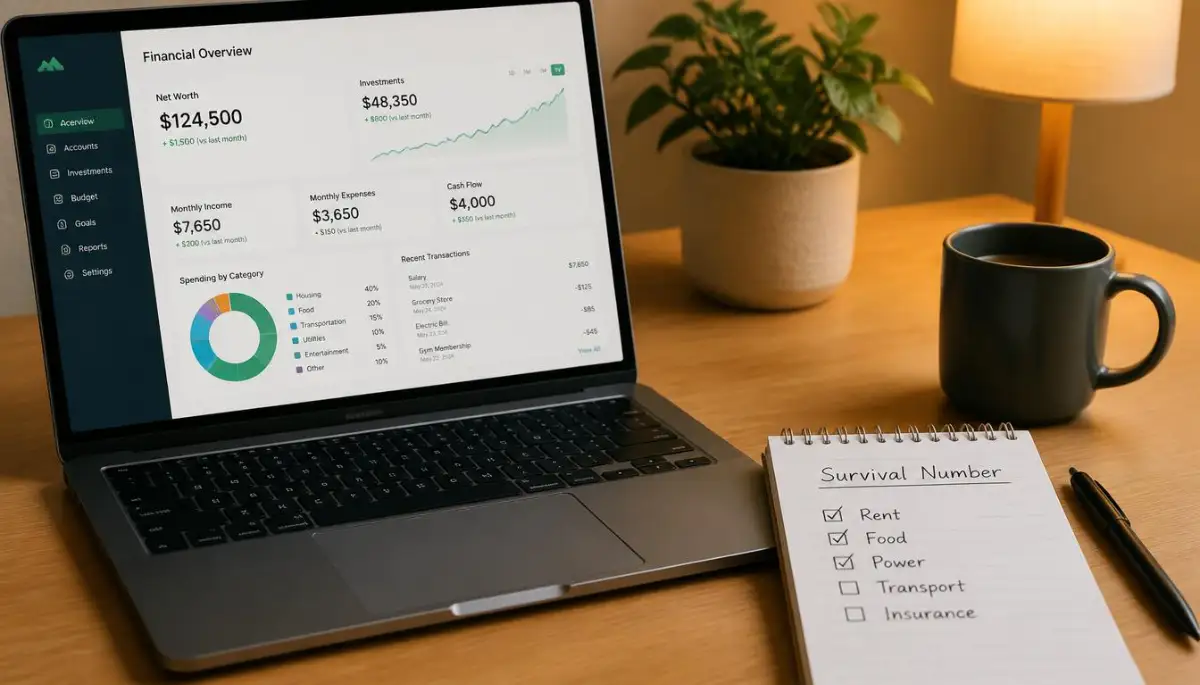
How to Calculate Your Survival Number
- List your absolute essentials: This includes rent or mortgage, basic groceries, utilities, and minimum debt payments.
- Remove all extras: Temporarily cross off gym memberships, premium apps, and luxury shopping.
- Add a small buffer: Give yourself a 5% margin for unexpected essential costs, like a sudden doctor visit.
Knowing this number gives you massive psychological relief. If you know you only need $1,500 a month to survive, a dry spell feels much less terrifying.
You no longer worry about making thousands of dollars every week. You only focus on hitting that clear survival baseline first.
Separating the Church and the State: The Two-Account System
One of the biggest mistakes remote workers make is using one bank account for everything. When your client pays you, that money should not go directly into your personal spending account.
If you mix your funds, you will easily overspend during your peak months. You might look at your bank balance and feel rich, forgetting that taxes and business expenses are still due.

Setting Up Your Business Treasury
To fix this, open at least two separate bank accounts.
If you want to see exactly how to set up this multi-account system step-by-step, take a quick break and watch this simple guide. It will help you visualize the entire money flow before you read the next steps below!
- Account A (The Business Vault): All client payments land here. You do not touch this money for daily personal expenses.
- Account B (The Personal Spending Account): This is where you pay yourself a steady, monthly salary from Account A.
I used to think that keeping my personal and business money in one place was simply easier. But I realized that paying myself a fixed salary—even during my most profitable months—was the exact shift that saved my mental health. Now, I never touch the extra money in my business account, and it serves as my ultimate shield during dry seasons.
By doing this, you create a buffer between your work earnings and your daily life. It helps you treat your freelancing as a real business, which is key for long-term growth.
How to Pay Yourself a Stable Salary
Once you have your two accounts set up, you can start paying yourself like an employee. This is the ultimate secret to surviving the freelance rollercoaster. When a low-income month arrives, you will still have plenty of money sitting in your vault. You can easily transfer your usual monthly salary without stress.
This simple habit eliminates the panic of slow months. Your personal life remains stable, even if your business has a quiet month.
Building a Customized Safety Net for Remote Workers
Most financial planners recommend saving three to six months of living expenses. For a self-employed professional, you should aim for a slightly larger safety net.
Because your income is volatile, having a six-to-nine-month emergency fund is a game-changer. This fund should live in a high-yield savings account where it is safe but easy to access.
Step-by-Step Fund Accumulation
Do not try to build this entire fund in a single month. That expectation only creates more pressure.
Instead, dedicate a fixed percentage of every single payment you receive to this safety net. Even saving 10% of every client invoice will quickly add up over a year.
Managing Your Tax Obligations Without Surprise Panic
There is nothing worse than getting a massive tax bill at the end of the year with zero savings to pay it. This surprise bill can destroy months of financial progress.
When you work for yourself, no one is withholding taxes from your paycheck. You have to do this job yourself.
The Automatic Tax Pot Method
Every time a client pays an invoice, immediately move 20% to 30% of that money into a separate tax savings sub-account.
Do not look at this money. Do not borrow from it. Pretend that this money does not belong to you at all.
My Simple "$1,000 Rule" for Every Payment
Whenever $1,000 hits my business account, I don't see $1,000. I see three different "buckets" that I need to fill immediately:
- The Tax Bucket ($250): This goes straight to my tax savings. I never touch it.
- The Business Bucket ($150): This covers my software (Zoom, Adobe, etc.) and future laptop upgrades.
- The My Life Bucket ($600): This is my actual "paycheck" that I move to my personal account.
- By following this, I never feel broke when it's time to pay the government.
When tax season arrives, you will not have to scramble or borrow money. You will simply open your tax pot and pay your bill with complete peace of mind.
Diversifying Your Client Portfolio to Reduce Risk
Relying on one single client for your entire income is a massive financial risk. If that client changes their budget, your income instantly drops to zero.
As a remote professional, you should try to avoid having any single client represent more than 50% of your total earnings.
Balancing Your Income Streams
- Anchor Clients: These are clients who give you steady, predictable monthly work.
- Ad-Hoc Projects: These are one-off projects that pay well but do not offer long-term stability.
Common Questions I Get About Freelance Money
- Q: Should I use a credit card for my business?
- My Take: Only if you can pay it off every single week. High-interest debt is the fastest way to kill your freelance dream.
- Q: What if I have a $0 month?
- My Take: This is exactly why we build the "Survival Number" first. Your business account should have enough to pay your "salary" even when no new money comes in.
Use the steady income from your anchor clients to cover your survival number. Then, use the extra money from one-off projects to build your savings and pay for lifestyle upgrades. This balance protects you from sudden industry shifts and keeps your cash flow moving smoothly.
Planning for Tools, Software, and Upgrades
As a remote worker, your computer, software, and internet are your livelihood. If your laptop breaks tomorrow, your income stops immediately.
You must plan for these expenses before they happen. Create a small equipment replacement fund in your business account.
Setting Aside Tech Savings
Try to save $50 to $100 every month specifically for technology.
When you need a new laptop or a premium software subscription, you can buy it outright. You will not have to put these expenses on a high-interest credit card.
This proactive planning keeps your business running smoothly without adding to your personal debt.
Tracking Your Financial Health with Weekly Reviews
Many people avoid looking at their bank accounts because they are afraid of what they might see. This avoidance only makes financial anxiety worse.
Set aside 15 minutes every Friday morning for a weekly money date.
During this time, update your spreadsheet, check your pending invoices, and review your spending.
Facing your numbers regularly removes the mystery and fear of money. It gives you the data you need to make smart, confident decisions for your remote business.
Cultivating a Sustainable Financial Mindset
To wrap up this first part, remember that managing your money is not about restriction. It is about creating the freedom to enjoy your remote lifestyle. Uncertainty is a natural part of being self-employed. But with a solid structure, that uncertainty becomes an exciting adventure rather than a source of constant stress.
By applying these basic steps, you protect both your business and your mental well-being. Take it one small step at a time, and watch your financial confidence grow.
Advanced Cash Flow Strategies to Build Long-Term Wealth
Trading your hours directly for dollars is a common starting point. However, this model limits your earning capacity and leaves you vulnerable when you get sick. To build a stable business, you need to transition to value-based pricing. This means charging your clients for the results you deliver rather than the hours you log on a screen.
According to labor trends monitored by the U.S. Bureau of Labor Statistics, self-employed professionals who manage their own benefits have a higher rate of long-term business survival. This survival depends heavily on moving away from unpredictable hourly work.
Transitioning from Hourly Rates to Fixed Retainers
A monthly retainer is an agreement where a client pays you a set fee every single month for a guaranteed amount of work. This model shifts the risk away from your personal wallet and onto a structured agreement.
Your clients receive guaranteed access to your professional skills without having to hire a full-time employee. Meanwhile, you gain a highly predictable baseline of income that helps you plan your personal life.
If you have two or three reliable retainer clients, your basic living expenses are completely covered before the month even begins. This security lets you focus on doing great work rather than searching for new jobs.
Designing an Automated Outflow System
You should not spend your limited energy manually moving money between different bank accounts every week. Instead, set up automatic transfers inside your business banking application.
Every time a client invoice is paid, your bank should automatically distribute those funds into your specific sub-accounts. A set percentage should immediately flow to your tax reserve, your emergency fund, and your personal checking account.
This automation is especially helpful when preparing for quarterly tax deadlines. The Internal Revenue Service (IRS) self-employed tax center states that self-employed workers must pay quarterly estimated taxes to avoid underpayment penalties at the end of the year.
An automated system ensures that you always have the money ready when those federal payment dates arrive. You will never have to scrape together savings at the last minute.
Reinvesting Profits Back into Your Infrastructure
To keep your business competitive, you must treat your home office as a real enterprise. This means dedicating a small portion of your monthly income to business upgrades and educational resources.
Do not spend all your excess business profits on lifestyle upgrades. Instead, create a dedicated development fund to purchase professional assets.
For example, buying a faster computer or subscribing to premium project management software can save you five hours of labor every week. That saved time directly translates into more free time or a higher capacity to take on higher-paying clients.

Hidden Traps That Can Quietly Destroy Your Business
Many skilled remote professionals struggle not because they lack talent, but because they fall into common psychological money traps. When you do not have a human resources department managing your money, a single mistake can quickly spiral out of control.
Understanding these invisible financial dangers is the only way to protect your self-employed business over time.
The Illusion of the Golden Month
When you experience a high-paying month, your brain can easily trick you into thinking that this high income is your new permanent baseline. This overconfidence often leads to immediate lifestyle inflation. You might sign a lease on a more expensive apartment or buy premium gadgets on credit. When the project inevitably ends, you are left with high monthly bills that your basic budget cannot support.
This sudden drop in cash flow can force you to accept low-paying, stressful projects just to survive. To keep your freedom, always treat high-income months as temporary bonuses rather than permanent salary increases.
Ignoring the Slow Leaks in Your Budget
Many remote workers sign up for multiple software tools, cloud storage plans, and professional memberships when business is booming. Over time, these minor monthly charges can silently drain your business accounts.
Just like ignoring subtle health warnings such as spotting the subtle signs of prediabetes, ignoring minor monetary leaks can eventually cause severe damage to your business health. You must audit your credit card statements every single month to remove tools you no longer use.
Keep your business lean so that your basic running costs remain as low as possible. This simple habit keeps your business safe during unexpected industry downturns.
The Cost of Constant Exhaustion
When you face financial stress, your natural reaction might be to work longer hours to make more money. You might start working seven days a week, ignoring your physical and mental health.
However, this habit quickly leads to severe burnout. Overworking leads to extreme fatigue, which requires dedicated steps to recover, much like the strategies used for overcoming college burnout.
When you are constantly exhausted, your work quality drops, your communication slows down, and your clients will eventually look for other professionals. Taking care of your health is actually a necessary business strategy to protect your long-term income.
Failing to Prepare for Large Life Milestones
Many self-employed professionals live entirely in the present moment, forgetting that they might want to buy a home or apply for a loan in the future. Banks and traditional lending institutions are often highly skeptical of self-employed applicants.
If your bank statements show wild, unstructured income dips and rises, getting a mortgage approval becomes incredibly difficult. If you plan to buy a home, you must show steady income, which requires similar care to managing a job change during mortgage applications.
Paying yourself a consistent monthly salary through your business accounts is the best way to prove your financial stability to external lenders.
Your Action Plan for True Financial Peace
Running your own remote business is a highly rewarding path that offers unparalleled freedom. However, that freedom is only sustainable when backed by a strong, structured financial system.
By separating your accounts, calculating your survival number, and automating your tax savings, you can remove the constant anxiety of unstable income. You will no longer worry about where your next client is coming from because your savings buffer will give you time to breathe.
Do not let the fear of money hold you back from doing the work you love. Take control of your financial destiny today, and build a remote career that supports your life, your health, and your long-term dreams.
Your Steps for Tomorrow Morning
- 1: Open your bank app and look closely at your personal spending over the past three months.
- 2: Write down your absolute minimum survival number on a piece of paper.
- 3: Open a separate savings account and name it your "Tax Reserve Account."
- 4: Set up an automatic transfer of 25% from every incoming payment to go straight into that new tax account.
With these simple habits, you will slowly transition from a stressed freelancer into a confident, organized business owner. The stability you build today will protect your creative freedom for years to come.
Taking charge of my finances did not just save my bank account; it actually gave me my creative freedom back. When you stop worrying about daily survival, you finally start producing your best work. I encourage you to take that first step tomorrow morning because you deserve to work with true peace of mind.
Disclaimer: The information provided in this article is for educational and informational purposes only. It does not constitute professional financial, legal, or tax advice. Please consult with a certified financial planner, accountant, or tax professional before making major financial decisions regarding your business or personal estate.