
The Silent Stress of Solopreneur Tax Season
I spent my first year as a freelancer terrified of April. My 'filing system' was just a messy pile of receipts in a kitchen drawer and a lot of hoping for the best. If you're working from home and worrying about a surprise tax bill, you aren't alone. It’s not just about the money; it’s the fear of getting an audit notice because you didn't know the rules. I've learned how to turn that stress into a simple system, and I want to show you exactly how to protect your hard-earned cash.
Now, tax season is finally here, and you realize you owe thousands of dollars more than you planned for. The fear of doing something wrong makes your stomach drop as you look at the tax forms.
You ask yourself if you should write off your home internet bill, or if doing so will cause a scary government audit. It feels like you are being punished simply for trying to work for yourself.
This tax anxiety is a silent struggle that keeps many home-based business owners awake at night. You want to save money, but the tax rules feel like they are written in a foreign language.
How to Claim Your Workspace Without Fearing an Audit
To save money on your taxes, you must first understand how to claim your workspace. The government allows you to write off a portion of your home expenses, but you have to follow specific rules.
💡 Your "Tax-Saving" Cheat Sheet:
- The Golden Rule: Your home office must be used only for work. No kids' homework, no gaming.
- Pick Your Path: Use the $5-per-sq-ft method for speed, or the Actual Expense method if your rent is high.
- The 30% Habit: Move 30% of every paycheck into a separate savings account immediately so you aren't scrambling in April.
- Log Your Miles: Even a trip to the post office counts. Use an app to track your drives so you don't forget the math later.
The most important rule is that your home office must be used regularly and exclusively for your business. This means you cannot claim a deduction for your kitchen table if your family also eats dinner there.
The Rule of Exclusive Use
To qualify for this deduction, your workspace must be a clearly defined area where you only do business. It does not have to be an entire room with a closed door.
For example, if you set up a desk in the corner of your living room, that specific area can count. You just need to measure the square footage of that corner and use it only for your daily work.
If you use that same desk to play video games or let your kids do homework there, it no longer qualifies as exclusive. Keeping this boundary clear is the easiest way to keep your taxes simple and stress-free.
Quick Reality Check: Home Office Truths
Choosing the Right Calculation Method
When it comes to calculating your home office deduction, you have two different paths to choose from. Both paths are completely legal, but one might save you more money than the other.
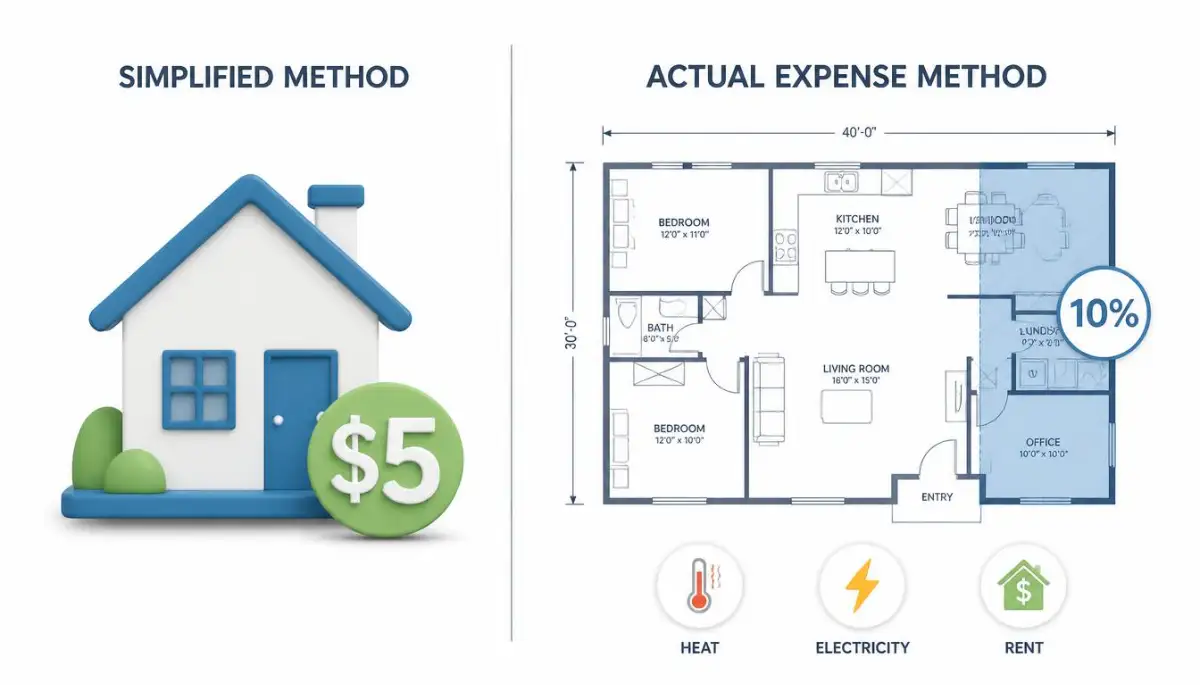
The first option is the simplified method, which is very easy and requires very little math. The government gives you a flat rate of five dollars per square foot of your home office.
This method has a limit of three hundred square feet, which means the maximum deduction you can get is fifteen hundred dollars. It is a great option if you do not want to keep track of every single utility bill. The second option is the actual expense method, which takes more time but often yields a larger deduction. With this path, you measure your office space and compare it to the total size of your home.
If your home office is one hundred square feet and your entire house is one thousand square feet, your office takes up ten percent of your home. This means you can write off ten percent of your rent, electricity, heating, and home insurance.
Before you start doing the math, watch this quick visual guide that simplifies the home office tax calculation process. It will help you choose the best savings method for your space before you continue reading our breakdown of monthly bills below.
Myth vs. Reality: Home Office Deductions
Myth: Claiming a home office deduction will instantly trigger an audit from the tax department.
Reality: This is a common fear, but it is not true. If your home office meets the exclusive use rule and you keep simple records, you can claim this deduction safely.
Writing Off Your Daily Utilities and Services
As a home-based business owner, your house is your primary place of work. This means your basic household utilities are actually business expenses that help you run your daily operations. Many solopreneurs do not realize they can write off a portion of their electric and heating bills. If you use the actual expense method, you can deduct a percentage of these bills based on your office size.
If your electricity bill is two hundred dollars a month and your office is ten percent of your home, you can write off twenty dollars. Over twelve months, those small numbers add up to a significant amount of savings.
Your Internet and Phone Connections
You cannot run a modern business without a fast internet connection and a reliable phone line. The tax department understands this and allows you to write off these services.
However, you cannot write off your entire internet bill if your family uses the same connection to watch movies at night. You must estimate the percentage of time you use the internet for actual business tasks. If you use your home internet eighty percent of the time for work, you can write off eighty percent of the monthly bill. The same rule applies to your mobile phone if you use it to talk to clients and answer emails.
My Personal "Audit-Proof" Rule:
I always take a photo of my workspace on the first of every month. Why? Because if the tax office ever asks, I have timestamped proof that my desk was actually used for business. It takes 10 seconds and gives me total peace of mind.
To make this completely safe, you should keep copies of your monthly bills. If you ever need to show your records, you can explain how you calculated your business use percentage.
Pro Tip: The Separate Bank Account Strategy
Our team always recommends opening a separate bank account and a dedicated credit card just for your business. Even if you are a sole proprietor and do not have an official company name, this single step will save you hours of stress.
"Honestly, my biggest mistake in my first year was using my personal bank card to buy both my weekly groceries and my business software. When tax time came, I spent three painful weekends with a yellow highlighter, trying to guess which purchase belonged to what. Ever since I set up a separate business account, my tax preparation time dropped from several frustrating weekends to just one single hour.
By running all your business income and expenses through one account, you create a clean paper trail. You will never have to guess whether a transaction was for personal use or business use when tax time arrives.
Finding the Hidden Deductions in Your Daily Work
There are many smaller expenses that solopreneurs pay for every month without thinking twice. These small costs are often completely deductible and can lower your tax bill significantly.
Every time you pay for a software subscription, you are paying a business expense. This includes your email marketing tools, photo editing software, and even your digital storage services.
Even the fees you pay to process credit card payments from your clients are deductible. If a payment service takes a percentage of your earnings, that fee is a cost of doing business.
Supplies and Professional Education
Do you buy printer paper, pens, notebooks, or external hard drives for your work? All of these office supplies are fully deductible in the year you buy them.
You can also write off the cost of books, online courses, and professional coaching that help you improve your business skills. If you buy a course to learn how to manage your business better, that is a legitimate write-off. The key to claiming these small deductions is to keep your receipts organized throughout the year. You do not need to keep physical paper receipts if you scan them and save them digitally.
You can use a simple phone app to take photos of your receipts and save them in a secure folder. This keeps your desk clean and ensures you do not lose important tax records over time.
Keeping Your Records Safe and Organized
The secret to a stress-free tax season is not a complex mathematical formula. It is simply having a clean and organized system for your financial records.
If you keep your receipts in a messy shoebox, you are highly likely to miss out on valuable deductions. It also makes you feel anxious because you do not know if your numbers are correct. You should spend just fifteen minutes at the end of every week updating your basic business records. This simple habit keeps your finances clear and prevents tax work from piling up at the end of the year.
By staying organized, you can claim every deduction you are legally allowed to take. This keeps more of your money in your bank account, allowing you to grow your business and enjoy your life.
Smart Tracking Systems for Long-Term Business Savings
When you work for yourself, finding hidden write-offs is one of the best ways to keep your profits. Many home business owners only focus on their desks and computers, but there is much more you can claim.
If you learn to think like an established company, you will spot opportunities for savings all around your home. The key is to start looking at your daily movements and routines through a financial lens.
Tracking Your Business Mileage the Right Way
Did you know that your travels can help reduce your tax liability? If you drive your personal car to meet a client, buy office supplies, or drop off mail, those miles are tax-deductible.
However, you cannot simply guess how much you drove at the end of the year. The government requires a detailed record of every business trip you take. We recommend keeping a small physical logbook in your glove compartment or using a dedicated tracking app on your phone. Write down the date of the trip, the starting point, the destination, and the exact purpose of the drive.
Over a year, even a few short trips to the local supply store every week can add up to hundreds of dollars in deductions. You can choose to use the standard mileage rate set by the government, which makes the math very simple.
Alternatively, you can track your actual car expenses, including fuel, maintenance, and insurance, and deduct a percentage of those costs. The choice depends on how much you drive and how detailed your records are.
Why You Must Plan for Quarterly Estimated Payments
When you work a traditional job, your employer automatically takes taxes out of your paycheck. As a self-employed business owner, you do not have anyone to do this for you. If you wait until the end of the year to pay your entire tax bill, you might face heavy penalties. The government expects you to pay your taxes in four equal parts throughout the year.
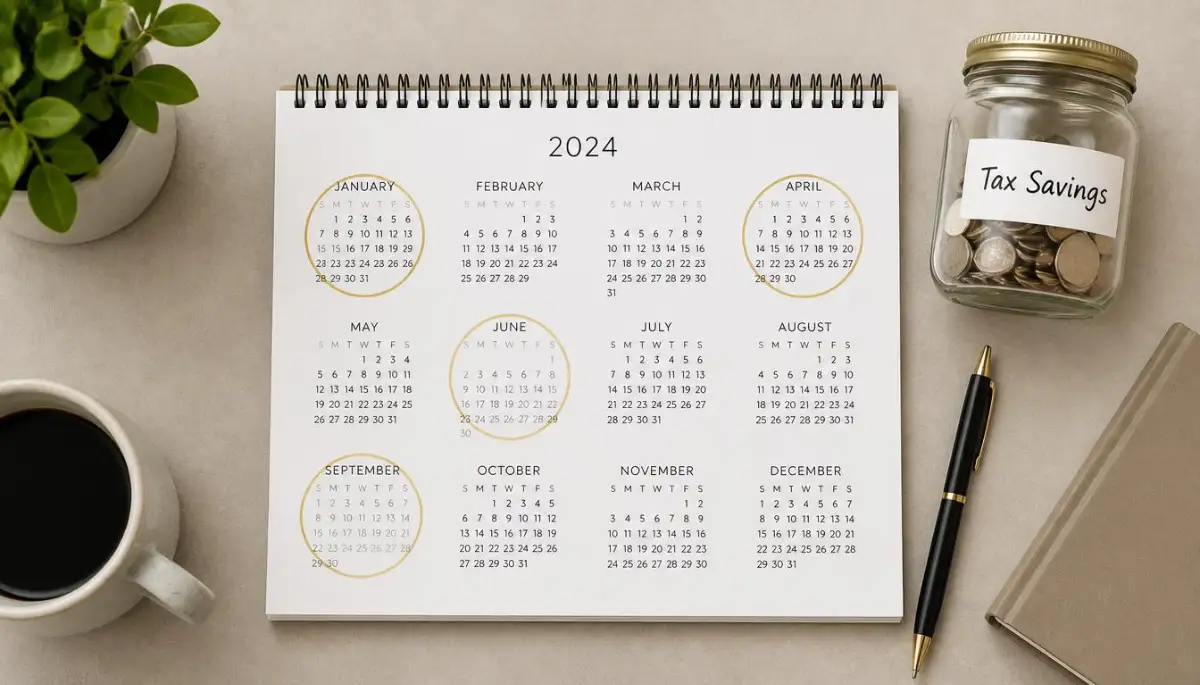
These are known as quarterly estimated payments, and they are calculated based on your expected income. Planning for these payments prevents you from experiencing a massive financial shock when the final tax deadline arrives. To make this process easier, you should set aside a fixed percentage of every payment you receive from your clients. We suggest placing thirty percent of your gross income into a separate savings account immediately.
This simple habit ensures you always have the funds ready when it is time to make your quarterly payment. For more details on how to calculate these payments correctly, you can review the official Small Business Administration's tax guide to stay compliant.
Building Wealth and Lowering Your Tax Bill Simultaneously
One of the best-kept secrets of successful solopreneurs is using retirement accounts to lower taxable income. Every dollar you contribute to a qualified retirement plan can reduce the amount of tax you owe today. As a self-employed individual, you have access to powerful retirement options that traditional employees do not have. You can set up a Simplified Employee Pension plan, often called a SEP IRA, or even a Solo 401k.
These accounts allow you to save a significant portion of your income for your future while getting an immediate tax break. It is a legal and highly effective way to grow your wealth while keeping your current tax bills low.
For example, if you earn fifty thousand dollars and put five thousand into a SEP IRA, the government only taxes you on forty-five thousand dollars. This strategy helps you secure your future self while protecting your current business earnings.

The Silent Financial Errors That Can Crash Your Solopreneur Journey
While finding deductions is highly rewarding, making mistakes in your bookkeeping can lead to severe consequences. Many home business owners fall into common traps simply because they want to save time.
Understanding these errors beforehand is the best way to protect your business and keep your mental peace. Let us look at the most common slip-ups that can cause major headaches down the road.
The Danger of Mixing Personal and Business Money
The easiest mistake to make as a new business owner is using one bank account for everything. You might use your personal credit card to buy groceries and then use the same card to buy a printer for your office. This habit creates a chaotic financial mess that is incredibly difficult to untangle later. Trying to sort through a messy bank statement after working a sixty-hour week is a recipe for complete exhaustion.
If you want to avoid severe stress, managing your business finances properly is just as important as knowing how to handle heavy workloads, a skill that is very similar to overcoming college burnout when you are overwhelmed. Keeping your accounts separate protects your time and your mental energy.
Forgetting to Log Small, Everyday Transactions
It is easy to remember a big purchase like a new computer or a professional camera. However, it is the small, daily expenses that people often forget to track. That five-dollar monthly cloud storage fee or the ten-dollar book you bought to learn a new skill might seem unimportant. But over a twelve-month period, dozens of these tiny expenses can add up to a massive sum of money.
If you do not save the receipts for these small purchases, you are essentially leaving free money on the table. Every single dollar you spend to keep your business running should be documented, no matter how small it seems.
Exaggerating the Size of Your Home Office
It can be tempting to claim that your home office takes up a huge percentage of your living space to get a bigger deduction. However, doing this without proper proof is a major warning sign for tax auditors.
If you claim that your office takes up half of your small apartment, you must be able to prove that this space is used only for work. Honest calculations are always the safest path to long-term success. You should measure the exact physical boundaries of your workspace with a tape measure. To be completely safe, take a few photos of your setup to keep on your computer as proof of your claim.
You can also cross-reference your measurements with the official IRS home office guidelines to make sure you are filing your claims accurately. Having clear photographic evidence and accurate measurements will give you absolute confidence if your return is ever reviewed.
Ignoring Your Legal Responsibilities and Changing Path Plans
Failing to report your income or neglecting your legal responsibilities can lead to severe legal trouble. If you ever find yourself facing legal action from a partner or vendor, you must know how to act immediately.
Having a plan ready when you are served with a civil lawsuit can protect your business assets from sudden ruin. Always make sure your business operates within clear legal and financial boundaries.
Also, keep in mind that changing your business structure or your career path can impact your long-term plans. For example, if you plan to buy a home, certain career transitions can affect your loan status.
Knowing how to handle a job change during mortgage applications can save you from major financial headaches. Your business taxes and your personal life plans are deeply connected, so prepare for both with care.
Your Practical Action Plan for Financial Peace of Mind
Managing your own taxes does not have to feel like a heavy burden that ruins your love for your business. With a few simple habits, you can take complete control of your finances and protect your hard-earned money.
By taking small, consistent steps, you will build a sustainable business that brings you both profit and peace of mind. Let us look at a simple plan you can start using today to organize your business.
Action Plan for Tomorrow
To help you get started right away, here is a simple three-step checklist you can complete this week:
- Step 1: Open a separate, free checking account used only for your business income and expenses.
- Step 2: Measure the exact square footage of your dedicated home office space and take a photo of your desk.
- Step 3: Set up a digital folder on your computer or phone to save scanned copies of all your business receipts.
Remember, every giant business started with simple, daily habits. You have the power to protect your earnings and build a bright, secure future for your home-based business.
"It took me a couple of years to finally get my system right, but the relief of heading into tax season with organized papers is completely worth the effort. Do not let fear hold you back from growing your business or claiming what you legally deserve. You built this dream with your own hands, and you now have the tools to protect it."
Disclaimer : The information provided in this article is for educational and informational purposes only. It does not constitute professional financial, legal, or tax advice. Tax laws can vary greatly depending on your specific location and individual situation. We highly recommend consulting with a certified public accountant (CPA) or a qualified tax professional before making any major financial decisions for your business.