The Secret Battle You Must Win Before Buying Your First Stock
Stop dreaming about 'get-rich-quick' stocks for a second. I once lost half my savings in less than a month, and it wasn't because the market crashed—it was because my own money habits were a disaster. Before you put a single dollar into a trade, you have to fix the leaks in your own wallet. I'm going to show you the unsexy, boring, but vital steps I took to turn my finances around so I could actually start winning as an investor.
But I was wrong. I was very wrong.
Within three weeks, I lost half of my money. I didn't lose it because the market was bad. I lost it because my personal life was a financial mess. I was trying to build a skyscraper on a foundation of wet sand. My habits were working against me.
I had no budget. I had debt. I didn't even know where my money went each month. I was just throwing cash at the screen and hoping for a miracle. That is not investing. That is gambling.
You might feel like you are working hard but staying in the same place. You want to grow your wealth, but your bank account stays empty. This cycle ruins your mental peace. It makes you feel like "money isn't for people like me."
But the truth is simpler. Investing is 20% knowledge and 80% behavior. If you don't fix your daily habits, the best investment in the world won't save you. You will just find a way to lose it.
I had to stop everything. I had to go back to the basics. I had to learn how to manage my own pockets before I could manage a portfolio.
This guide is what I wish someone had told me back then. It is not about fancy charts. It is about you, your wallet, and your future.
Creating a Clear Map for Your Cash Flow
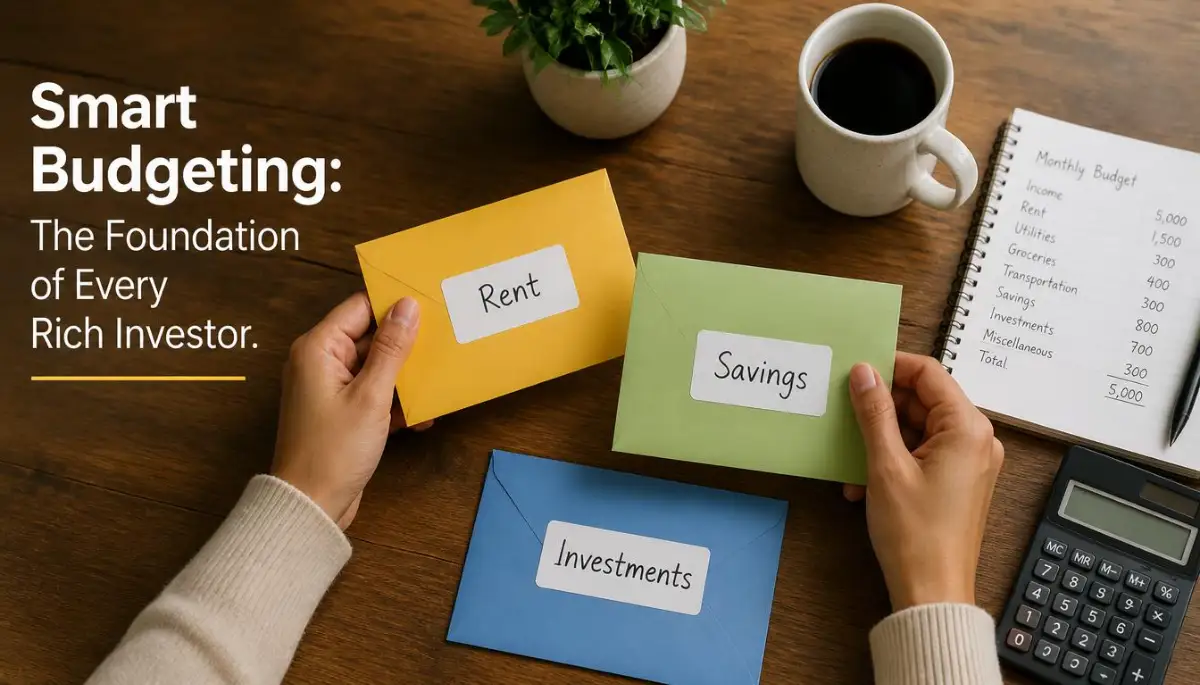
The first thing you need to do is stop guessing. Most people guess how much they spend on food or coffee. They are usually wrong by a lot. You cannot invest money that you don't even know you have.
### Before You Invest: The 3-Minute Summary
- Track Your Pennies: You can’t grow what you don’t measure. Use an app or a notebook for 30 days.
- Build a Wall: Get your emergency fund ready so a flat tire doesn't ruin your investment portfolio.
- Kill High-Interest Debt: Paying off a 20% interest credit card is the best 'guaranteed return' you will ever get.
- Be Patient: Real wealth is built through boring, automated habits, not 'get rich quick' tips.
You must track every single cent. This sounds boring, but it is your superpower. When you know where your money goes, you gain power over it. You stop asking "where did it go?" and start telling it where to go.
Start by using a simple notebook or a basic app. For thirty days, write down everything. Even that small pack of gum or that 2-dollar app subscription.
When I started doing this, I found out I was spending $200 a month on "small" snacks. That was money I could have been investing! It was a huge wake-up call for me.
The Magic of the "Safety Net" First
Never invest money that you might need next month. This is the biggest mistake beginners make. They put their rent money into a "hot stock" and then the stock goes down. Now they can't pay rent.
You need an emergency fund. This is a pile of cash sitting in a boring savings account. It is not for growing. It is for protecting you.
Try to save at least three months of your living costs. If you lose your job or your car breaks down, you won't have to sell your investments at a loss. This "Safety Net" gives you the courage to stay in the market when things get scary.

Killing the High-Interest Monsters
Before you look at the stock market, look at your debt. If you have credit card debt with a 20% interest rate, pay that off first.
Think about it logically. No investment can 100% guarantee a 20% return every year. But paying off that debt is a guaranteed 20% return on your money.
It is like trying to fill a bucket with water while there is a giant hole in the bottom. Fix the hole first. Your "Future Self" will thank you for this.
Pro Tip: I used to think that carrying a little debt was okay as long as I was investing. I was wrong. The stress of debt made me make emotional choices with my investments. Once I cleared my debt, my mind became clear too. I started seeing much better results because I wasn't scared anymore.
The "Wait 48 Hours" Rule for Spending
We live in a world that wants us to click "Buy Now" every five minutes. This is the enemy of the investor. Every dollar you spend on a whim is a dollar that cannot grow for you.
I started a rule for myself. If I want to buy something that isn't on my grocery list, I must wait 48 hours. Most of the time, after two days, I don't even want it anymore.
This habit builds delayed gratification. This is the #1 trait of successful investors. If you can wait two days for a pair of shoes, you can wait ten years for a stock to grow.
Understanding the Language of Wealth
You don't need to be a math genius. But you do need to know the basics. Do you know what an "Expense Ratio" is? Do you know the difference between a "Stock" and a "Bond"?
Spending just 15 minutes a day reading a simple financial book or blog can change your life. Knowledge is the best shield against scams. When you understand how things work, people cannot trick you with "too good to be true" offers.
Value Spending: The Investor’s Mindset
| Item | Price | Lifecycle | Cost Per Year |
| :--- | :--- | :--- | :--- |
| Cheap Sneakers | $20 | 4 Months | $60 |
| Quality Boots | $80 | 3 Years | $26.66 |
| Fast Food Meal | $12 | 1 Hour | N/A |
| Home Cooked Meal | $4 | 1 Hour | N/A |
Insight: Investing starts with making choices that save you money in the long run.
Watch this video to understand how small habits lead to big wealth over time.
The Power of Automation
Humans are lazy. We forget things. We get emotional. That is why you should automate your savings.
Set up your bank account so it moves a small amount of money to your "Investment Prep" account every payday. Do this before you buy anything else. This is called "Paying Yourself First."
If you wait until the end of the month to see what is left, the answer will usually be "nothing." But if the money moves automatically, you will learn to live on the rest. You won't even miss it.
Learning to Distinguish Price from Value
An investor needs to know that "cheap" does not mean "good." This applies to your life too.
Buying a $5 t-shirt that falls apart in a month is more expensive than a $20 t-shirt that lasts two years. Start looking at the world in terms of long-term value.
This habit will help you when you start looking at companies to invest in. You won't just look at the price of the stock. You will look at what the company is actually worth.
Keeping Your "Lifestyle Creep" in Check
When you get a raise at work, what is the first thing you do? Most people buy a better car or move to a bigger house. This is called "Lifestyle Creep."
It is a trap. If your spending goes up every time your income goes up, you will never be rich. You will just be a person with nicer things and the same empty bank account.
The best investors keep their living costs low even when they start making more money. They use that extra gap to buy assets. Assets are things that put money in your pocket.
Building a Circle of Support
You are the average of the five people you spend the most time with. If all your friends spend every weekend at the mall, you will too.
Find people who talk about ideas and growth. You don't have to leave your old friends, but you should find a community of like-minded people. Join a group of beginners who are also learning to save. Share your wins and your struggles.
The Consistency Habit
Investing is not a one-time event. It is a long game. You have to show up every month.
It is better to save $50 every single month than to save $1000 once a year. Consistency builds the habit. It makes "being an investor" part of your identity.
When it becomes who you are, it stops being hard. It just becomes something you do, like brushing your teeth.
The Power of Starting Small (Real Numbers):
Let’s say you skip one $5 coffee a week and invest that $20 a month instead. If you get a 10% return:
- In 10 years, you have $4,000.
- In 30 years, you have $45,000.
- That’s the difference between a drink you forgot in an hour and a house deposit later in life.
Developing a "Loss Tolerance" Mindset
Before you put your first dollar into the market, ask yourself: "How will I feel if this drops by 20% tomorrow?"
If the answer is "I will panic and cry," then you aren't ready yet. You need to work on your mindset. The market goes up and down. That is normal.
You need to train your brain to see a "down" market as a "sale." But you can only do that if you have followed the other habits, like having an emergency fund.
Practicing Patience as a Skill
Patience is a muscle. You can practice it in small ways every day. Wait for your turn in traffic without getting angry. Wait for the weekend to watch your favorite show instead of binging it now.
This daily practice makes you a calm investor. A calm investor is a profitable investor. Most people lose money because they get scared or greedy and act too fast.
Evaluating Your Progress Monthly
Every 30 days, sit down and look at your numbers. Are you spending less than last month? Is your "Safety Net" growing?
Don't judge yourself. Just look at the data. If you had a bad month, it’s okay. Just start again the next day. The goal is progress, not perfection.
Setting Specific, Non-Money Goals
Instead of saying "I want to be rich," say "I want to have $5,000 in my emergency fund." Or "I want to read three books on index funds."
Specific goals give you a target. When you hit those targets, your confidence grows. You start to realize that you can do this. You are not just a dreamer; you are a person with a plan.
Avoiding the "Noise"
The news is designed to make you scared. They want you to click on their headlines. "The Market is Crashing!" or "This Coin will make you a Millionaire!"
Learn to ignore the noise. Stick to your habits. Stick to your plan. The best investors are often the ones who check their accounts the least.
Preparing for Your First Move
Once you have tracked your spending, built your emergency fund, and killed your bad debt, you are ready. You have mastered the habits.
You aren't just a beginner anymore. You are someone with a solid foundation. Your first investment won't be a scary gamble. It will be the natural next step in your journey to freedom.
You have done the hard work that 90% of people refuse to do. You have fixed yourself before trying to fix your finances. That is the true secret to long-term success.
Moving Beyond the Basics to Build Real Wealth
Now that you have your basic budget and safety net ready, it is time to look at the bigger picture. Many people stop at saving, but true investors look for ways to make their money work harder. You need to think like a pro even before you put your first dollar into a stock or a bond.
One of the most effective things you can do is understand your tax situation. In many countries, there are special accounts that help you save on taxes. If you don't use these, you are basically giving away free money to the government every year. You should research things like retirement accounts or tax-free savings options available in your region.
You should also look into how your income flows. If you rely on only one source of income, your investment strategy might feel risky. Many successful people use smart budgeting methods for self-employed pros with unstable income to manage their cash flow. Even if you have a regular job, treating your side hustle or extra income with this kind of discipline is a game-changer.
The Art of Asset Location
Most people talk about asset allocation, which is what you buy. But "Asset Location" is about where you keep those things. Some investments grow better in tax-protected accounts, while others are fine in regular ones. This tiny change can add thousands of dollars to your wealth over many years.
I learned this the hard way by paying way too much in taxes on small gains early on. I didn't realize that my choice of account mattered just as much as my choice of stock. It is like choosing the right soil for a plant. The plant might be healthy, but if the soil is bad, it won't grow as tall as it could.
Managing Your "Mental Capital"
Investing is stressful if you don't have a strong mind. You need to build "Mental Capital." This means having the knowledge and the calm heart to stay the course when everyone else is panicking. You can start by reading reports from trusted places like the U.S. Securities and Exchange Commission (SEC) to understand how markets are protected.
When you understand the rules of the game, you stop being afraid of the players. You realize that the market is just a place where people trade pieces of businesses. It is not a magic machine or a monster. This shift in thinking helps you stay calm during "red days" when prices go down.
Diversifying Your Skills Before Your Portfolio
Before you worry about diversifying your stocks, diversify your skills. The more you can earn, the more you can invest. Investing is a multiplier. If you invest $10, it won't change your life much. But if you invest $1,000 every month because you improved your job skills, that is where the magic happens.
The Annual Financial Audit
Once a year, you should do a deep dive into your finances. Look at your insurance, your subscriptions, and your bank fees. Are you paying for a gym you never visit? Are you paying high fees on a credit card you don't use?
These small leaks can sink a big ship. I once found that I was paying $15 a month for a streaming service I hadn't opened in six months. That is $180 a year! Over thirty years, if that money was invested, it could have been thousands. Small wins add up to big freedom.
Understanding the Role of Technology
In today's world, you need to use tools to stay ahead. But you also need to stay safe. If you use online banking or investment apps, make sure your data is private. For example, many people don't realize that their gadgets might be tracking them. You should learn how to block smart tv tracking and protect your home network.
Security is part of your investment strategy. If your account gets hacked, your "perfect" investment plan doesn't matter. Treat your digital security as seriously as you treat your bank vault. Use strong passwords and two-factor authentication for everything related to your money.

Hidden Roadblocks That Can Drain Your Savings
Many people jump into investing with a lot of hope but very little caution. This is where things get dangerous. There are traps in the financial world that are designed to take your money. If you aren't careful, you can lose years of hard work in a single afternoon.
The biggest trap is FOMO, or the Fear Of Missing Out. You see a friend making money on a random coin or a new tech company. You feel like a fool for sitting on the sidelines. So, you jump in without a plan. This is almost always when the price is at its highest point.
I have seen people lose their house deposits because they followed a "hot tip" they saw on social media. It breaks my heart to see that kind of pain. They weren't investing; they were chasing a ghost. By the time they realized the mistake, the money was gone.
The Danger of Ignoring Small Fees
Another silent killer of wealth is the fee structure. Whether you are buying stocks or dealing with digital assets, fees matter. For instance, people often complain about saving money on gas fees when using crypto. But the same logic applies to traditional bank fees and mutual fund costs.
If you pay 1% more in fees than you should, you might lose 20% or more of your total wealth over your lifetime. It sounds small, but it is like a tiny hole in a boat. Eventually, it will sink you. Always look for the lowest cost way to reach your goal.
Following the Crowd Instead of the Math
The crowd is usually wrong at the extremes. When everyone is screaming that you "must buy," it is often time to be careful. When everyone is crying that the world is ending, it might be the best time to look for deals.
This is hard to do because we are social creatures. We want to belong. But the stock market does not reward people for belonging. It rewards people for being right when others are wrong. You need to develop the habit of looking at the numbers, not the headlines.
The "I'll Start Tomorrow" Syndrome
Procrastination is the most expensive mistake of all. People wait for the "perfect" time to start. They wait for the market to drop, or they wait for a pay raise. But time is the most powerful tool an investor has.
According to research by the National Bureau of Economic Research (NBER), the power of compounding interest is the primary driver of wealth for the middle class. Every month you wait is a month of growth you can never get back. It is better to start with $20 today than to wait five years to start with $200.
Relying on Personal Loans to Invest
This is a massive mistake. Some people think they can beat the interest rate of a loan by investing the money. This is incredibly risky. If the investment goes down, you still owe the bank, plus interest.
I've seen many people struggle because first time personal loans fail to provide the relief they expected. Using borrowed money to invest is like juggling fire while standing on a tightrope. One mistake and everything you own could be lost. Always invest with your own saved cash.
Ignoring the Signs of a "Bad Deal"
Sometimes we want something to be true so badly that we ignore the red flags. This happens a lot with real estate or "private" investment offers from friends. If someone promises you high returns with no risk, they are lying to you.
It is like ignoring a strange sound in your car. If you hear a noise, you should check it. For example, ignoring silent brake wear warning signs leads to a crash. In finance, ignoring a lack of transparency leads to an empty bank account. Always ask the hard questions before handing over your money.
Your Journey Starts with One Small Step
Becoming an investor is one of the best decisions you will ever make. It is the path to freedom and security for your family. But remember, it is a marathon, not a sprint. You don't need to be a millionaire tomorrow. You just need to be a little bit better than you were yesterday.
Focus on your habits. Keep your costs low. Stay curious and keep learning. The world of money can seem scary, but once you master the basics, it becomes a tool for good in your life. You have the power to change your future starting right now.
I really believe that anyone can do this if they stay patient. I started with a very small amount and a lot of mistakes. But by sticking to these simple rules, I found peace and growth. I want that same feeling of safety for you. Don't wait for the perfect moment—just take one small action today to improve your money habits.
Common Questions About Starting Your Investment Journey
How much money do I really need to start investing?
You can actually start with as little as $5 or $10 through many modern apps. The amount is less important than the habit of doing it every month. It is better to start small and be consistent than to wait until you have a large sum of money.
Is it better to pay off my debt or start investing first?
Usually, it is best to pay off high-interest debt like credit cards first. These debts often cost you more in interest than you would earn from most investments. Once your high-interest debt is gone, you can use that extra money to build your wealth much faster.
How do I know which stocks or funds to buy as a beginner?
For most beginners, a low-cost index fund is a great place to start. These funds buy a little bit of many different companies, so you don't have to worry about one single company failing. It is a simple way to grow with the overall market without needing to be an expert.
Should I invest in cryptocurrency if I am just starting out?
Crypto can be very exciting, but it is also very risky and changes in price very quickly. If you are a beginner, only put in money that you are completely okay with losing. It is often better to build a solid foundation in traditional investments before trying more volatile options.
What should I do if the market goes down right after I invest?
Don't panic! The market goes up and down all the time. If you have a long-term plan and you don't need that money for several years, the best thing to do is usually nothing. History shows that markets tend to recover over time if you are patient.
Disclaimer: This content is for educational and informational purposes only. I am not a financial advisor. Investing involves risk, and you could lose money. Always do your own research or talk to a certified professional before making big financial decisions. We are not responsible for any financial losses you may experience.