The Day I Almost Lost My Life Savings to a Single Click
I used to think my biggest enemy in the stock market was a bad economy. I was wrong. It was actually my own reflection in the mirror. After watching years of my hard-earned savings vanish in a few days of panic-selling, I realized that my brain was wired to make me poor. If you’ve ever felt that sick feeling in your stomach when the market drops, this is for you. Let's talk about how to stop your emotions from lighting your money on fire.
My palms were sweaty as I hovered my mouse over the "Sell All" button. I was terrified that if I didn't get out now, I would lose everything. I felt a cold knot in my stomach. Without thinking clearly, I clicked. I sold everything at the lowest point of the year. Two days later, the market bounced back, but I was left with a massive loss. I didn't lose money because of the market; I lost money because of my own fear.
It took me a long time to admit that my brain was my own worst enemy. Most of us think investing is about numbers, charts, and math. But after that painful day, I realized it is actually about how you handle your own feelings. If you can’t control your emotions, you can’t control your money. This is a hard lesson that many beginners learn too late.
The Hidden Cost of Being Human in a Digital Market
When the market drops, it’s not just your bank account that takes a hit. It’s your mental peace. You stop sleeping well. You check your phone every five minutes. You start snapping at your family because you are stressed about a "dip" in the market. This constant state of worry is what I call the "panic tax." It’s the invisible price we pay for letting our emotions drive the car.
It is heartbreaking to see someone work hard for years, only to throw it away because of a week of bad news. But it doesn't have to be this way. You can learn to build a "firewall" between your feelings and your finances. It starts with understanding why we feel this way and how to spot the traps before we fall into them.
The Psychology of the Panic Button: Why We Do What We Do
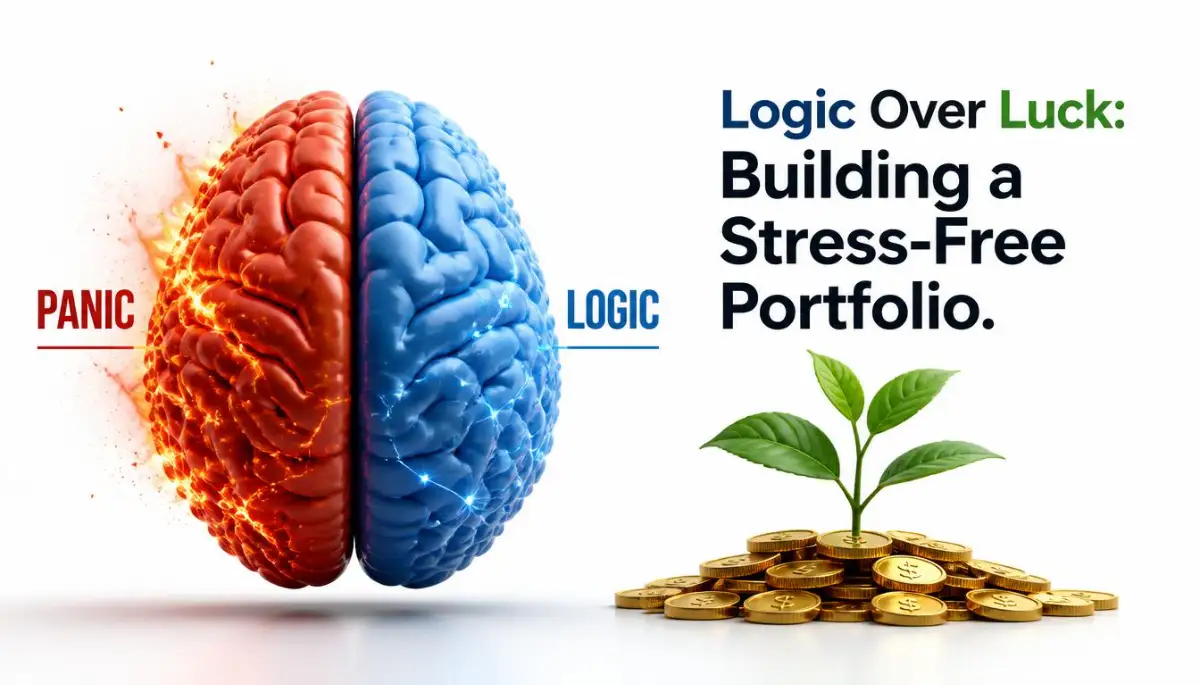
Our brains are amazing, but they are old-fashioned. They haven't changed much in thousands of years. Back then, if you saw something scary, you had to act fast. Today, that same instinct makes us want to sell our stocks when we see a red arrow. Scientists call this "Loss Aversion." It means that the pain of losing ten dollars feels twice as strong as the joy of gaining ten dollars.
When you see your portfolio go down, your brain's alarm system—the amygdala—takes over. It shuts down the logical part of your brain. Suddenly, you aren't thinking about your ten-year goal. You are only thinking about making the pain stop right now. This is where the danger lies. You make a permanent decision based on a temporary feeling.
Quick Reality Check: Investing Myths vs. Facts
- Myth: You need to check your stocks daily to stay safe.
- Fact: Checking daily increases your stress by 80% and leads to "panic-clicks."
- Myth: A red market means your money is gone.
- Fact: It’s only a "paper loss." You only actually lose money if you hit the sell button.
- Myth: You can outsmart the market with news updates.
- Fact: By the time you read the news, the price has already changed.

The Trap of "Fear of Missing Out" (FOMO)
Fear doesn't just make us sell; it also makes us buy things we shouldn't. Have you ever seen a stock price go up and up, and everyone on social media is talking about it? You feel a strange pressure to jump in before it’s too late. This is FOMO. You are afraid of being left behind.
I once bought a stock just because my friend told me it was "the next big thing." I didn't look at the company. I didn't check the risks. I just didn't want to miss the party. Of course, the price crashed soon after I bought it. Buying because of hype is just as emotional as selling because of fear. Both come from a place of not having a plan.
The Ostrich Effect: Why Ignoring Your Money is Just as Bad
On the other side of the coin, some people deal with fear by putting their heads in the sand. When the market is bad, they stop looking at their accounts entirely. They stop their monthly contributions. They pretend the problem isn't there. This is called the "Ostrich Effect."
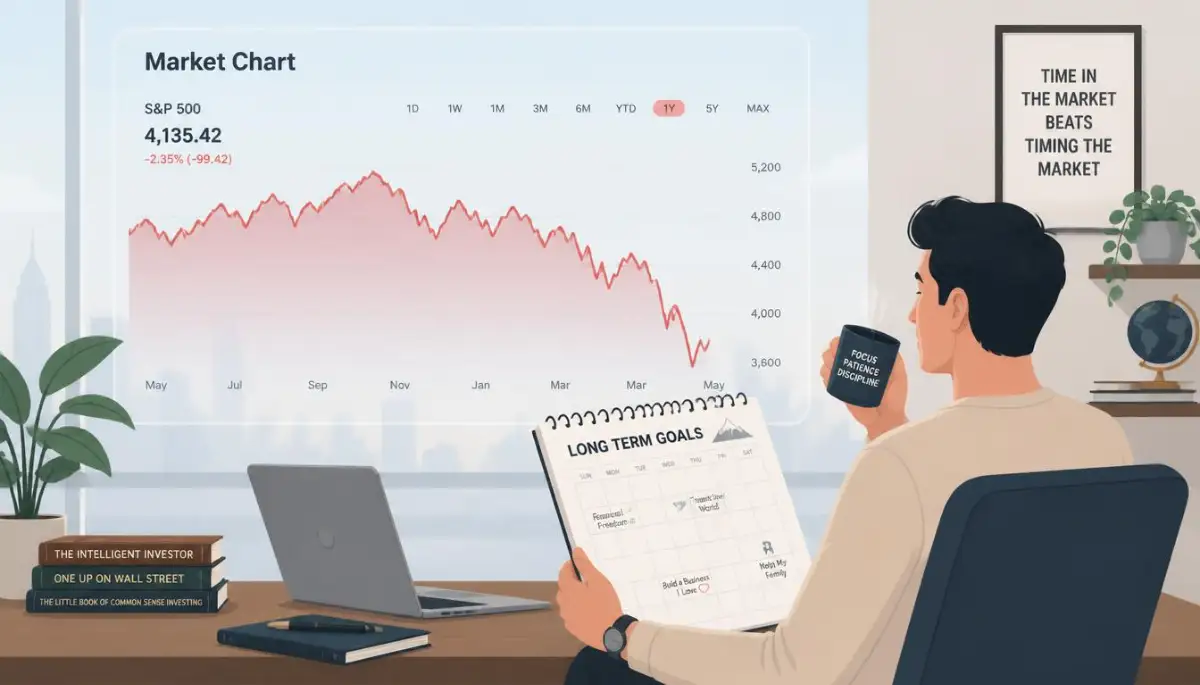
While not panicking is good, completely ignoring your strategy is dangerous. You might miss chances to buy assets at a lower price. Or you might miss a sign that your original reason for investing has changed. Balance is what we are looking for. We want to be aware but not reactive.
A Simple Strategy to Protect Your Wealth from Your Brain
If you want to win at investing, you need a system that works even when you are scared. You can't rely on willpower alone. Here are the steps I used to stop my emotions from ruining my future.
💡 Fast Track: How to Win the Mental Game
- The 24-Hour Rule: Never trade on the same day you feel a strong emotion (fear or excitement).
- Kill the Noise: Delete trading apps if you check them more than once a week.
- The Shield: Never invest money you might need in the next 12 months.
- Focus on Value: Treat a market crash like a "Half-Price Sale" at your favorite store.
Step 1: Write Down Your "Why" Before the Storm Hits
When everything is calm and the market is green, sit down with a piece of paper. Write down exactly why you are investing. Is it for a house? For retirement? For your kids' education? Write down your timeline. If your goal is twenty years away, why does a bad week today matter?
Keep this paper in a place where you can see it. When the market starts to shake, read your own words. It reminds your "scared brain" what your "smart brain" already decided. This is your anchor. Without an anchor, you will drift wherever the wind blows.
Step 2: Create a "Waiting Period" Rule
One of the best things I ever did was implement the 24-hour rule. I promised myself that I would never make a trade on the same day I felt the urge to do so. If I feel like selling because of bad news, I have to wait until the next day.
Usually, after a night of sleep and a cup of coffee, the panic goes away. The news doesn't seem so scary anymore. Most mistakes are made in the heat of the moment. By giving yourself space, you let your logical mind come back online. This simple rule has saved me thousands of dollars over the years.
Step 3: Stop Watching the "Noise"
The financial news is designed to keep you watching. They use scary words and bright red colors because fear gets views. But for a long-term investor, 99% of daily news is just noise. It doesn't affect the value of the companies you own over the next decade.
I stopped checking my portfolio every day. Now, I only check it once a month or even once a quarter. If you don't see the tiny ups and downs, you won't feel the urge to react to them. Think of your investments like a tree you planted. If you dig it up every day to check the roots, it will die. Just let it grow.
Check out this expert insight on how the pros handle market volatility without losing their cool:
Turning Volatility into a Friendly Tool
Most people think volatility—the way prices jump around—is a bad thing. But if you are a beginner with a long-term view, volatility is actually your friend. It is the reason you can get a good deal on great companies.
The Power of Dollar-Cost Averaging
Instead of trying to "time" the market (which is impossible), I started using Dollar-Cost Averaging. This means I invest the same amount of money every month, no matter what the price is.
- When the market is high, my money buys fewer shares.
- When the market is low, my money buys more shares.
This takes the emotion out of the process. I don't have to worry if it’s a "good time" to buy. Every time is a good time because I am looking at the long term. This strategy turned my fear into a simple routine. It’s like a subscription for my future wealth.
The "Sleep Well" Test (Personal Strategy)
Before you buy any stock or fund, ask yourself these three questions. If you can't say "Yes" to all of them, your emotions will likely win:
- "Am I okay with this money being locked away for at least 5 years?"
- "If this dropped 30% tomorrow, would I be tempted to buy more instead of selling?"
- "Do I actually understand how this company makes money?
Understanding the Difference Between Price and Value
This was a big realization for me. The price is what you see on the screen. The value is what the company is actually worth. Sometimes, the price of a great company drops because people are scared, not because the company is doing poorly.
Imagine you are at a grocery store and your favorite coffee is 50% off. Do you run out of the store in fear? No! You buy more because it’s a great deal. The stock market is the only place where people run away when things go on sale. When you understand value, a market drop looks like a clearance sale rather than a disaster.
Pro Tip from My Experience:
I used to think I was a "tough" investor until my first big crash. I realized that my plan was too risky for my personality. I had to change my portfolio to include more stable assets so I could sleep at night. Don't be afraid to adjust your plan if it's making you too anxious; a slower path that you can actually stick to is better than a fast path that makes you quit.
The Myth of the "Perfect" Investor
We often see stories of people who made millions overnight. This creates a false image of what investing should look like. The truth is, even the best investors make mistakes. The difference is they don't let those mistakes spiral out of control.
They know that being "right" 100% of the time isn't the goal. The goal is to stay in the game long enough for the math to work in your favor. Investing is a marathon, not a sprint. If you trip and fall in a marathon, you get back up and keep running. You don't go home just because you bumped your knee in the first mile.
How to Build an "Emotional Shield" for Your Portfolio
Protection isn't just about what you buy; it's about how you organize your life. If you are using money you need for rent to buy stocks, you will always be emotional.
The Emergency Fund: Your Best Mental Health Tool
Before you put a single dollar into the market, you must have an emergency fund. This is three to six months of living expenses sitting in a boring savings account.
Why is this an "emotional shield"? Because if the market crashes and you lose your job at the same time, you aren't forced to sell your stocks at a loss. You have your shield. Knowing that your daily life is safe allows you to be much calmer about your investments. I noticed that my stress levels dropped by 80% once I had my emergency fund finished.
Diversification: Not Putting All Your Eggs in One Basket
If you own only one stock and it goes down, you will panic. If you own a piece of 500 different companies (like in an Index Fund) and one goes down, it doesn't hurt as much. This is called diversification.
It’s like having a team of players. If one player has a bad day, the rest of the team can still win the game. For beginners, this is the easiest way to lower the "fear factor." You aren't gambling on one "winner"; you are betting on the entire economy to grow over time.
The Role of Education in Reducing Fear
Fear often comes from not knowing how things work. When I first started, I didn't know that market drops are a normal part of history. I thought it meant the end of the world.
Once I started reading about the history of the stock market, I saw a pattern. The market goes up, it goes down, but over time, it keeps moving higher. Learning about this history gave me the "logic" I needed to fight my "fear." Education is the best cure for panic. The more you know, the less you fear.
Practical Checklist for a Calm Investing Life
If you are feeling overwhelmed right now, here is a simple checklist to get your emotions back under control.
- Stop the Screen Time: Close the apps. Stop looking at the ticker.
- Verify Your Goals: Remind yourself that this money is for the future, not for today.
- Check Your Cash: Do you have enough for your bills this month? If yes, you are okay.
- Talk to a Friend: Sometimes just saying "I'm scared" out loud to someone you trust helps the feeling go away.
- Focus on What You Can Control: You can't control the market, but you can control how much you save and how you spend your time.
Investing should be boring. If it feels like gambling or a high-stakes thriller movie, you are probably doing it wrong. The goal is to set it up so it runs in the background of your life. This allows you to focus on your job, your family, and your hobbies while your money works quietly for you.
Developing an Unshakeable Investor Mindset for the Long Run
I used to think that the most successful investors had some secret math formula that I didn't know. I spent hours trying to find the perfect stock or the perfect time to buy. But after years of watching my own mistakes and talking to experts, I realized that the "secret" isn't in a spreadsheet. It is in your head.
To really win at this game, you have to move past basic advice and start thinking like a professional. Professionals don't get excited when the market goes up, and they don't cry when it goes down. They look at the market as a tool, not as a boss. One of the best things I ever did was start an "Investment Journal" where I wrote down my feelings every time I made a trade.
Writing down my thoughts helped me see patterns in my own behavior. I noticed that I always wanted to buy more when I saw people on social media bragging about their wins. This was a huge red flag. By tracking my emotions, I learned to step back when I felt too much "hype" or too much "fear." This is the first step to building a truly professional mindset.
The Power of an Automated Wealth Machine
If you want to keep your results good over many years, you have to take "yourself" out of the equation as much as possible. I call this building an automated wealth machine. When I was younger, I used to wait until the end of the month to see if I had money left over to invest. This was a bad idea because I usually spent it on things I didn't need.
Now, I have my bank account set up so that a portion of my income goes straight into my investments the day I get paid. I don't even see the money, so I don't "feel" like I'm losing it. This is a great way to handle your money, especially if you are using smart budgeting methods for self-employed pros who have different income amounts every month.
When you automate your savings, you stop having to make a "choice" every month. Every choice you have to make is a chance for your emotions to get in the way. By making the choice once and setting it on autopilot, you protect your future self from your current feelings. It is one of the most powerful tricks I have ever learned.
The Role of Rebalancing Your Portfolio
Another "pro secret" that most beginners ignore is rebalancing. Let's say you want to have 50% of your money in stocks and 50% in safer bonds. If the stock market goes way up, suddenly stocks might make up 70% of your portfolio. This means your risk is now much higher than you wanted it to be.
A professional investor will sell some of those stocks (selling high!) and buy more bonds (buying low). This keeps your risk levels where they should be. It feels strange to sell something that is doing well, but it is the best way to make sure you stay on track. You can read more about managing long-term goals in this first-time buyer guide which talks about building equity.
I try to check my balance once or twice a year. If things have shifted too much, I move them back to my original plan. This forces me to follow the "sell high, buy low" rule without having to guess when the top or bottom is. It is a logical system that beats emotional guessing every single time.
Thinking in Decades, Not Days
The biggest difference between a beginner and a pro is their time horizon. When I see a market drop of 5%, I remind myself that I am holding these assets for thirty years. A 5% drop today is just a tiny blip on a very long line. According to historical data from the CFA Institute, investors who hold for long periods almost always outperform those who trade frequently.
I like to imagine my investments as a retirement home I am building. I wouldn't stop building my house just because it rained for one day, right? Of course not. I would wait for the rain to stop and then keep working. Your portfolio is the same way. Bad days are just "rainy days" in your financial life.
If you can train your brain to think in 10-year blocks, your stress levels will vanish. You will start to see market volatility as just "noise" that doesn't matter for your big goals. This kind of thinking is what allows people to stay calm while everyone else is panicking. It is the ultimate competitive advantage in the world of money.

The Expensive Traps That Drain Your Savings Without You Noticing
Even if you have a good plan, there are several "traps" that can pull you back into emotional investing. I have fallen into almost all of them, and they cost me a lot of money. One of the most dangerous traps is the "Guru Trap." This is when you start following a specific person online who claims they know exactly what will happen next.
If they are wrong, you lose the money, not them. This often happens to people who are looking for safe emergency cash and end up taking advice from bad sources.
I learned that it is much better to trust a broad market strategy than to trust a single person's "hot take." When you trust a person, you get emotional when they change their mind. When you trust a system, you can stay calm because the system doesn't have feelings.
The Danger of Checking Your Portfolio Too Often
I used to check my investment app ten times a day. Every time I saw a red number, I felt a tiny bit of pain. Every time I saw a green number, I felt a tiny rush of dopamine. I was basically gambling with my own emotions. Studies have shown that the more often you check your portfolio, the more likely you are to make a mistake.
When you check every day, you see all the tiny fluctuations. These tiny moves mean nothing, but they trigger your "fight or flight" response. I now suggest deleting the apps from your phone if you find yourself checking them too much. If you have to log in on a computer, it adds a layer of effort that keeps you from acting on an impulse.
Think about it like checking your weight while trying to get healthy. If you weigh yourself every hour, you will go crazy because the numbers change with every glass of water. But if you check once a week, you see the real trend. The same goes for your money. Stop looking at the tiny details and start looking at the big picture.
The "Recency Bias" Nightmare
Our brains tend to believe that what happened recently will keep happening forever. If the market has been going up for three years, we think it will never go down. If it has been crashing for a week, we think it will go to zero. This is called "Recency Bias," and it is a portfolio killer.
I remember a time when everything seemed perfect, and I was tempted to put all my extra cash into the stock market. I even thought about helping a family member by putting their money in too. But I stopped when I remembered the unspoken risks of co-signing a personal loan and how bad things can turn if you don't have a safety net.
When you feel like the market can only go one way, that is exactly when you should be most careful. Don't let the last few months of news dictate your entire strategy. Stay balanced, stay diversified, and remember that cycles are a natural part of the economy. If you forget this, you will buy at the top and sell at the bottom every single time.
Getting Caught in the "Complexity" Trap
Many beginners think that because investing feels hard, the solution must be complex. They start looking into things like options trading, crypto-leveraging, or "alternative assets." I did this too, thinking I was being "smart." In reality, I was just making it harder for myself to stay calm.
Complexity creates more room for fear. When you don't fully understand what you own, you will panic much faster when things go wrong. A simple portfolio of broad index funds is easy to understand and easy to hold during a storm. Simplicity is a form of protection.
I have found that the most successful people I know have very boring portfolios. They aren't trying to be fancy. They are just trying to be consistent. If you are a student or someone just starting out, check out the ultimate survival guide for working college students for tips on keeping your life simple while managing money. Simple wins in the long run.
Your Roadmap to Financial Serenity Starting Today
The journey of an investor is mostly a journey of self-discovery. You will learn more about your own fears and strengths in the stock market than almost anywhere else. But remember, the goal of all this isn't just to have a big number in a bank account. The goal is to have the freedom and peace of mind to live the life you want.
When you master your emotions, you aren't just saving money; you are saving your health and your relationships. You won't be the person who is grumpy at dinner because some stocks went down. You will be the person who knows that their future is secure because they have a solid, logical plan in place.
It takes time to build this "emotional muscle," so don't be hard on yourself if you feel nervous sometimes. Every great investor felt that way at the beginning. The difference is that they chose to act based on their plans, not their feelings. You have the power to do the exact same thing.
The First Step You Can Take Right Now
If you want to start fresh, I suggest doing one small thing today. Take a look at your current investments and ask yourself: "Do I have a written plan for what to do if the market drops 20%?" If you don't, write one down right now. It can be as simple as: "If the market drops, I will turn off the news and keep my automatic deposits running."
This one sentence can save you from a lifetime of regret. It is your promise to your future self. Once you have that promise in writing, you will feel a weight lift off your shoulders. You are no longer guessing; you are leading.
I truly believe that anyone can be a great investor if they focus on their behavior more than their bank balance. My own journey from a panicked seller to a calm, long-term holder has been one of the most rewarding parts of my life. I want that same feeling of peace for you too. Start today, keep it simple, and trust the process.
A Personal Message to You:
I have been exactly where you are, feeling the fear of losing everything I worked for. My biggest mistake wasn't the stocks I picked, but the moments I let my panic take the wheel. I promise that if you stay patient and focus on your long-term "why," you will look back years from now and be so glad you stayed the course.
Common Questions About Managing Investment Fear
How do I know if I am being too emotional about my stocks?
If you are checking your account more than once a week or if you feel a "knot" in your stomach when the market is red, you are likely being too emotional. Another sign is if you are making trades based on a news headline you just read. A calm investor usually has a set schedule for checking their accounts.
Is it ever okay to sell when the market is crashing?
The only logical reason to sell during a crash is if your original reason for buying the asset has changed. For example, if you bought a company because they were the leaders in their field, and now they are going bankrupt, selling makes sense. But selling just because the price is lower is usually a mistake.
What is the best way to handle bad financial news?
The best way is to limit your exposure to it. Most financial news is designed to create a reaction, not to give you helpful advice. I suggest following a few trusted sources that focus on long-term trends rather than daily price moves. Check out the Federal Reserve’s education page for unbiased information on how the economy actually works.
How can I start investing if I am afraid of losing money?
Start very small. You don't have to put your whole life savings in at once. Start with an amount of money that you won't miss if it goes down for a while. As you see how the market works and you get used to the ups and downs, you can slowly increase your contributions. This builds your confidence over time.
Disclaimer: This article is for informational and educational purposes only. It does not constitute professional financial, investment, or legal advice. Investing involves risk, including the possible loss of principal. Always conduct your own research or consult with a certified financial advisor before making any financial decisions. The author and the website are not responsible for any financial losses resulting from the use of this information.