
The Cold Morning My Fender Bender Turned Into a Confusing Financial Struggle
I still remember the sound of metal scraping against metal on a wet Monday morning. I sat in my driver's seat, staring at the crumpled hood of my sedan after a minor collision. My heart hammered against my ribs, and my hands trembled on the steering wheel as I realized what had just happened.
I thought having full collision coverage meant my insurer would handle everything without any hassle. Instead, a few days later, I was handed an estimate sheet that looked like a foreign language. The adjuster explained that I had to pay my own deductible before the repair shop could even touch my car.
I felt completely lost, staring at terms like aftermarket parts, depreciation, and labor rates. That stressful week was my first introduction to how the insurance claim system actually works. It was a painful and expensive lesson that I could have avoided with the right knowledge.
When you are involved in a crash, the physical shock is only the first challenge you face. Soon after, you are forced to deal with a confusing wave of paperwork, phone calls, and visits from inspectors. This complex process often leaves everyday drivers feeling helpless and stressed out.
Many people feel anxious because they do not know if their insurance company is offering a fair deal. They worry that the repair estimate is too low to cover the actual cost of fixing their vehicle safely. This fear can make you feel taken advantage of during an already difficult time.
The good news is that you do not have to remain in the dark about how these numbers are decided. Understanding how adjusters calculate damage can help you speak their language and advocate for yourself. Let us look closely at the step-by-step methods professionals use to put a price tag on your car's repair needs.
The Inspection Process: How Adjusters Put a Price on Metal Damage
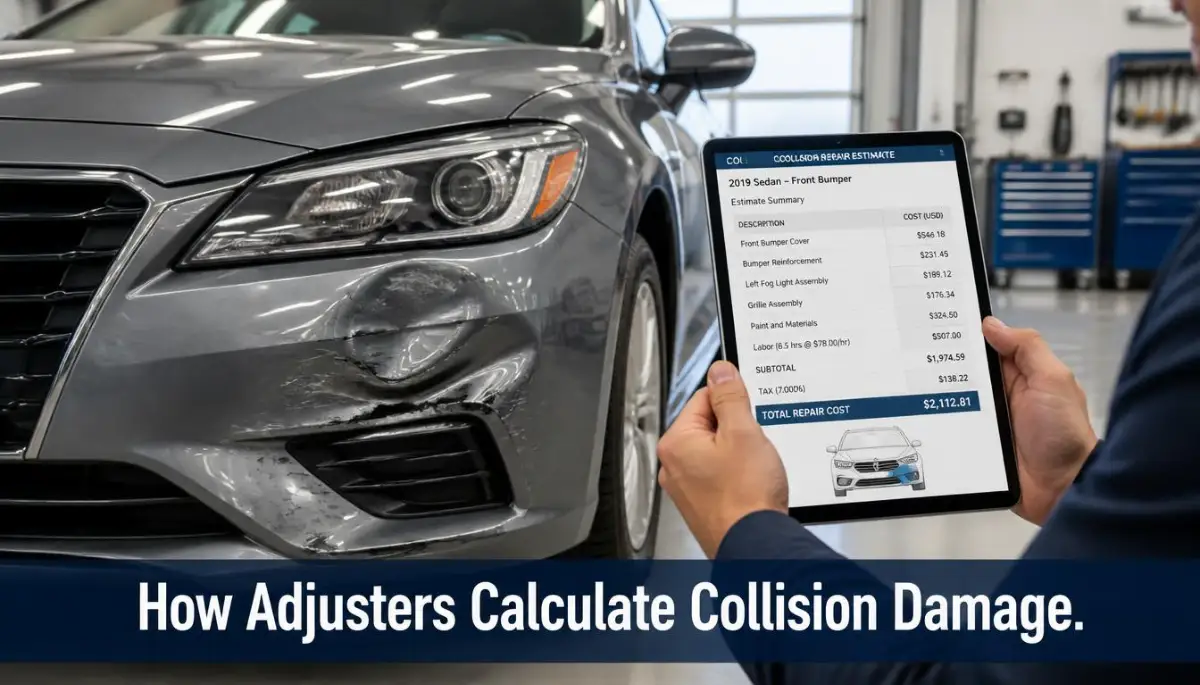
An insurance adjuster's job is to evaluate the physical damage to your car and determine the cost of repairs. They do this by acting as investigators who examine the vehicle from bumper to bumper. They look at the obvious dents, but they also search for hidden structural issues that could affect your safety.
The Initial Physical Walkaround
The evaluation always begins with a detailed physical inspection of the vehicle. The adjuster will take dozens of high-resolution photos of the damaged areas from multiple angles. They will also photograph the overall condition of the car to establish its pre-accident value.
During this walkaround, they inspect the paint transfer, the alignment of the doors, and the gaps between the panels. They are looking to see if the impact was strong enough to bend the underlying frame of the car. A bent frame is highly expensive to repair and often pushes a vehicle close to being declared a total loss.
Using Specialized Estimating Software
Once the physical inspection is complete, the adjuster inputs their findings into advanced estimating software. Programs like CCC ONE or Audatex help them calculate the exact labor times needed for each repair. These programs are connected to massive databases that list the average prices of parts and labor in your local area.
The software generates a line-by-line list of every single clip, screw, panel, and paint stroke required. This automated process helps ensure the estimate matches standard industry rates. However, adjusters still have the power to manually adjust these numbers based on their professional judgment.
The Battle of the Parts: Original, Aftermarket, and Recycled Options
One of the most important factors in your repair estimate is the type of replacement parts the adjuster selects. Insurance companies always look for ways to keep repair costs as low as possible. This goal often leads to a debate over whether your car should get brand-new factory parts or cheaper alternatives.
Original Equipment Manufacturer (OEM) Parts
OEM parts are made by the company that originally built your car, such as Ford, Toyota, or Honda. These parts fit perfectly and are identical to the ones your vehicle had before the accident. However, they are also the most expensive option on the market.
Many insurance policies state that the insurer only has to pay for parts of "like kind and quality." This clause means they are not obligated to buy brand-new OEM parts unless your car is brand new. If your car is a few years old, the adjuster will likely look for cheaper alternatives to save money.
Aftermarket and Recycled Parts
Aftermarket parts are made by third-party companies, not the original manufacturer of your vehicle. While they are designed to fit your car, they are much cheaper than OEM parts. Some drivers worry about the quality of aftermarket parts, but many of them are certified by safety organizations to perform just like original parts.
Another common option is recycled parts, which are high-quality, used OEM parts salvaged from similar vehicles. Adjusters love using recycled parts because they are genuine factory parts but cost a fraction of the price of new ones.
To help you understand these differences, here is a simple comparison of your parts options:
How Your Deductible Fits Into the Final Payout Formula
Many people believe their insurance company pays the repair shop directly, and then the driver pays the deductible to the insurer. In reality, the process works in the opposite direction. Your deductible is subtracted from the final claim check before the insurance company sends the payment.
The Basic Payout Calculation
Let us say the adjuster estimates the total repair cost for your crumpled bumper at $4,000. If you have a $1,000 collision deductible, your insurance company will write a check for $3,000. This check is usually made out to both you and your chosen repair shop.
You are then responsible for paying the remaining $1,000 directly to the repair shop once the work is finished. The shop will not release your car back to you until they receive this deductible payment. This system ensures that you share a portion of the financial responsibility for the accident.
Pro Tip
When I was dealing with my first car claim, I tried to find a repair shop that promised to "save my deductible" by inflating the estimate. I quickly learned that this practice is highly illegal and can lead to serious fraud charges. Now, I always advise drivers to work with honest, certified shops that write transparent estimates matching the adjuster's numbers.
What Happens If the Estimate Is Too Low?
It is incredibly common for a repair shop to find hidden damage once they begin taking your car apart. For example, they might remove a damaged fender and discover that the underlying radiator support is bent. When this happens, the shop will submit a "supplemental estimate" to your insurance company.
The adjuster will review this new evidence, often visiting the shop to inspect the newly discovered damage. If they agree with the shop's findings, they will approve the extra payment directly to the shop. Your deductible does not change or increase when a supplement is approved; it remains the same fixed amount you agreed to when buying your policy.
To help you visualize this entire process from the crash to the final repair shop payment, take a moment to watch this helpful guide.
The Total Loss Threshold: When a Car Is Not Worth Saving
Sometimes, the damage to a vehicle is so severe that repairing it does not make financial sense. When this occurs, the insurance company will declare the vehicle a "total loss." This decision is based on a mathematical formula, not just the physical appearance of the car.
Understanding the Total Loss Formula
Most states and insurance companies use a specific percentage to determine if a car is totaled. This threshold is typically between 70% and 80% of the car's actual cash value (ACV). If the estimated repair cost exceeds this percentage, the car is declared a total loss.
For example, if your car is worth $10,000 and has a 75% threshold, it is totaled if repairs cost more than $7,500. The insurance company will not pay to fix the car in this scenario. Instead, they will write you a check for the car's actual cash value, minus your deductible.
How Actual Cash Value Is Determined
The actual cash value is not the price you paid for the car, nor is it the cost of buying a brand-new replacement. Instead, it is the market value of your car right before the crash occurred, taking depreciation into account.
Adjusters calculate this value by looking at recent sales of similar vehicles in your local area. They adjust this price based on your car's mileage, overall pre-accident condition, and any special features it had. Understanding this calculation can help you negotiate a fairer payout if your vehicle is totaled.
Preparing Yourself for a Successful Claims Experience
Dealing with a car accident is never easy, but being prepared can make the claim process much smoother. By understanding how adjusters evaluate damage and how your deductible is applied, you can protect your wallet. You will be able to talk to your adjuster with confidence and make sure your car is repaired safely.
Review your auto insurance policy details tonight to make sure you know your exact deductible amount. Knowing this number now will help you build a small emergency savings fund specifically for unexpected car repairs. Being proactive is the best way to eliminate financial stress before an accident ever happens.
Behind the Claims Desk: Pro Strategies for Negotiating with Auto Adjusters
Many car owners do not realize that an insurance adjuster's initial repair estimate is not a final, unchangeable document. You have the right to ask questions, present your own evidence, and negotiate for a fairer calculation. Understanding how to handle these conversations will help you protect your wallet and ensure your car is repaired safely.
Write Your Own Damage Inventory Immediately
Before the insurance representative ever visits your car, you should create your own detailed inventory of the damage. Walk around your vehicle and write down every single scratch, dent, or broken piece of plastic you can see. Compare your personal list directly with the adjuster's final paperwork to make sure they did not overlook anything.
If your accident happens while traveling far from home, the situation can feel even more stressful. Managing a vehicle crash on a road trip requires quick thinking and calm decision-making. Knowing how to handle these sudden road events is just as important as knowing what to do if you missed your connecting flight here is exactly what to do next to keep your travel plans on track.
Know Your Rights Regarding Replacement Parts
You should carefully review your policy to see what it says about the use of original factory parts. If your car is still under a manufacturer warranty, using aftermarket parts might actually void that warranty. You can use this important fact to negotiate with the adjuster for brand-new original parts instead of cheaper alternatives.
Negotiating with an insurance company requires you to stay completely calm, patient, and professional during phone calls. Using clear communication habits will help you explain your repair needs without causing unnecessary arguments. You can practice active listening hacks for professionals to keep your talks with the claims department smooth and highly productive.
Data published by the Insurance Information Institute shows that keeping a written record of every phone call can speed up your claim approval. Always write down the name of the representative you spoke with, the date, and the exact details of your conversation.
The Power of the Independent Appraisal Clause
If you and your insurance company cannot agree on the cost of repairs, you have another option. Most policies include an "appraisal clause" that allows you to hire an independent appraiser to review the vehicle. This independent professional will write an unbiased report that can be used to challenge the adjuster's lower estimate.
While hiring an appraiser costs money, it can be highly beneficial if the adjuster's estimate is thousands of dollars too low. It gives you a powerful tool to demand a fair payout that covers the true cost of professional repairs.

Pricey Mistakes: The Hidden Pitfalls of the Auto Claim Inspection
When you are dealing with the aftermath of a car accident, it is easy to make quick decisions that you might regret later. These common errors can lead to unpaid bills, delayed repairs, or a vehicle that is no longer safe to drive on the highway. Being aware of these pitfalls will help you avoid expensive financial traps.
Accepting the First Cash Settlement Too Quickly
The biggest mistake you can make is accepting a cash settlement before your car has been completely disassembled by a mechanic. Often, the most severe structural damage is completely hidden behind the plastic bumper covers. If you sign a final release form too early, you might lose the right to ask for more money when the mechanic finds these hidden problems.
The National Highway Traffic Safety Administration warning guidelines state that hidden structural damage can prevent your car's airbags from deploying correctly in a future crash. Always wait until a certified technician has inspected the underlying frame before you sign any final settlement paperwork.
Detail Cleaning Your Vehicle Before the Inspection
Some drivers think they should wash and vacuum their car before the adjuster arrives to make a good impression. However, cleaning the vehicle too thoroughly can actually wash away helpful evidence of the impact. Loose dirt, minor paint transfers, and small plastic fragments can help the adjuster understand exactly how the collision occurred.
Leave the car in its post-accident state until the official inspection is completely finished. This allows the adjuster to see the true physical effects of the crash without any interference.
Failing to Plan for Your Deductible Payment
Many people assume they have plenty of time to worry about their deductible while their car is being repaired. However, if you do not have the cash ready when the repairs are finished, the mechanic will not let you take your car home. This sudden cash need can cause massive stress, especially if you do not have emergency savings.
If you find yourself short on cash, you might look into quick borrowing options, but you must be extremely cautious. Understanding why first-time personal loans fail and how to fix it can keep you from falling into high-interest debt traps when trying to cover a deductible.
For those who are self-employed or have an unstable monthly income, saving for these sudden emergencies can be quite difficult. It is highly useful to set up a dedicated emergency fund specifically for your vehicle deductible. You can study smart budgeting methods for self-employed pros with unstable income to learn how to save money consistently even when your monthly earnings change.
Driving Confidently into a Secure Financial Future
Navigating a car accident claim does not have to be a source of constant worry and sleepless nights. Once you understand the inspection process and how deductibles are subtracted, you can handle the situation with complete confidence. You will be able to protect your finances and ensure your car is restored to its original, safe condition.
Your Ultimate Post-Accident Checklist
To help you stay organized during a stressful claim, keep this quick checklist in your glove compartment:
- Document the scene: Take clear photos of both vehicles, the road conditions, and any nearby traffic signs.
- Get the police report: Always call the police to the scene so you have an official, unbiased record of the accident.
- Call your insurer quickly: File your claim as soon as possible to start the evaluation process.
- Choose your own repair shop: Remember that you have the legal right to choose any certified repair shop you trust.
- Review the estimate line by line: Make sure every damaged part you noticed is listed on the adjuster's paperwork.
The mental stress of dealing with insurance adjusters, repair shops, and rental car companies can cause major emotional exhaustion. This heavy mental load can make you feel completely drained of energy and motivation. If you are feeling overwhelmed by the process, exploring overcoming college burnout real recovery strategies for high achievers can offer great stress-management practices that apply to any difficult life situation.
Just as you protect your physical assets by keeping your mortgage approved during a career transition, you protect your vehicle by managing your insurance claim files carefully. If you are currently facing other major financial decisions, understanding how a job change during mortgage how to keep your home loan approved works can help you keep your overall household budget secure and stable.
I know how stressful it feels to stand by a damaged vehicle and wonder if you will get a fair deal. Once I learned how to read a repair estimate and negotiate with the adjuster, the entire process became simple and clear. Take a few minutes to read through your current auto insurance policy today so you can protect your wallet before you ever need to file a claim.
Clear Answers to Common Auto Damage Questions
Can my insurance company force me to use a specific repair shop?
No, your insurance company cannot legally force you to use a specific repair shop. They can recommend their own network of preferred shops, but you always have the final right to choose any licensed mechanic you trust.
What if the repair cost is higher than my car's actual value?
If the estimated cost to repair your vehicle is close to or higher than its actual cash value, your insurer will declare it a total loss. They will then pay you the market value of your car, minus your deductible, instead of fixing it.
Will my car insurance deductible increase after an accident?
Your deductible amount is a fixed number that you chose when you purchased your policy, so it will not increase because of an accident. However, your monthly premium payments might go up when your policy renews if you were found to be at fault for the crash.
What is a supplemental estimate in auto insurance?
A supplemental estimate is an additional claim submitted by the repair shop when they find hidden damage after taking your car apart. The insurance adjuster will review this new damage and approve extra payments directly to the shop to cover the costs.
Disclaimer: This article is for educational and informational purposes only and does not constitute official legal, financial, or professional auto repair advice. Auto insurance laws, deductible rules, and claims processes vary widely depending on your country, state, and specific policy agreement. Always consult with a licensed insurance agent, a legal professional, or your insurance provider's claims department to verify your specific coverage details and legal rights after an accident.