
The Night I Almost Gave Up on Sleep
Forget the Pinterest-perfect nurseries for a second. If you’re currently hiding in the kitchen drinking cold coffee while your baby finally naps for twenty minutes, I see you. I’m not a doctor, but I’m a parent who survived the 3 AM 'zombie phase' by stoping the guesswork and looking at the actual science. This isn't just another sleep guide; it’s a breakdown of what actually works when you're too tired to even think.
That night was a turning point for me. I realized that my baby wasn't trying to be difficult. He just didn't know how to sleep the way I did. My frustration was growing every day, and it started to affect my mood and my relationship. I felt like a zombie walking through a fog. The lack of rest makes everything feel ten times harder than it actually is. It steals the joy of those early weeks and leaves you feeling drained and alone.
I decided to stop guessing and start learning how a baby’s brain actually works. I spent weeks reading about sleep science and talking to experts. What I found changed everything for my family. It wasn't about "training" the baby to be a robot. It was about understanding the natural rhythm of their little bodies. Once I understood the science, the nights became much easier to handle.

Why Your Baby’s Brain Works Differently at Night
To help your baby, you first need to know that their sleep is not like yours. Adults have long sleep periods where we go deep into rest for hours. Newborns are different because their brains are growing at a massive speed. They spend about half of their sleep time in a stage called "Active Sleep." This is why you see them twitching, smiling, or even making little grunts while they rest.
💡 4 Things You Can Change Tonight
- Watch the Clock: Don't wait for crying; look for the "blank stare" to start the nap routine.
- The 5-Minute Rule: Give your baby a moment to settle before jumping in to help.
- Keep it Boring: No lights or talking during night feeds. Think "Ninja Mode."
- Cool & Dark: Treat the nursery like a cave—dark, cool, and filled with steady white noise.
In this stage, their brain is busy processing everything they learned during the day. It might look like they are waking up, but they are actually still asleep. If you jump in and pick them up too soon, you might accidentally wake them up fully. I made this mistake for weeks! I thought every little noise meant he was awake and needed me. In reality, I was the one interrupting his rest.
Understanding this "active sleep" phase is the first step to getting more rest yourself. If you see your baby moving or hear a small whimper, wait for a minute. See if they settle back down on their own. Often, they will drift right back into a deeper sleep without any help from you. This small change in my behavior helped my baby stay asleep for much longer stretches.
The Science of Short Sleep Cycles
A typical adult sleep cycle lasts about 90 minutes. A baby’s sleep cycle is much shorter, usually only 40 to 50 minutes. This means they "surface" from sleep twice as often as we do. When they reach the end of a cycle, they enter a very light state of sleep. This is the moment when they decide if everything is okay or if they need to call for help.
If something has changed since they fell asleep, they will wake up fully and cry. For example, if they fell asleep in your warm arms and woke up in a cold crib, they will feel confused. It’s like you falling asleep in your bed and waking up on the kitchen floor! You would scream too, right? This is why the environment where they start their sleep is so important.
We want to make the transition between these cycles as smooth as possible. If we can help them feel safe and comfortable in their own space, they are more likely to connect those short cycles. Instead of waking up every 45 minutes, they might start sleeping for two or three cycles in a row. That is the goal we are working toward together.
Creating a Sleep-Friendly Sanctuary
Your baby's room plays a big role in how well they rest. It doesn't need to be fancy or expensive, but it does need to be consistent. I used to think the room had to be totally silent, but that actually backfired. Tiny noises from the street or the kitchen would startle my baby because the room was too quiet.
My Pro Tip for Peace:
I found that using a simple white noise machine made a huge difference. It mimics the loud, rushing sounds they heard inside the womb. I once thought total silence was the key, but I realized that a gentle "shushing" background noise actually helps them stay in the zone. It masks those sudden sounds that usually wake them up.
Sleep Environment: Myth vs. Reality
Try to keep the room very dark. Even a little bit of light can signal to their brain that it is time to be awake. Use blackout curtains if you can. Also, keep the temperature cool. A baby who is too warm will be restless and wake up more often. A comfortable, dark, and slightly noisy room is the perfect recipe for a long nap.

Want to see how to set up the perfect nursery for sleep? Watch this video to see a real-life example of a sleep-safe environment.
Spotting the "Sleep Window" Before It Closes
One of the biggest lessons I learned is that timing is everything. There is a "magic window" when a baby is tired but not yet "overtired." If you miss this window, their body produces a chemical called cortisol. This is like a shot of caffeine for a baby. It makes them cranky, hyper, and much harder to put down.
I used to wait until my baby was crying before I tried to put him to sleep. That was my biggest mistake. By the time they are crying, they are already overtired. You want to look for the "quiet signs" instead. These are things like staring into space, turning their head away from toys, or rubbing their ears.
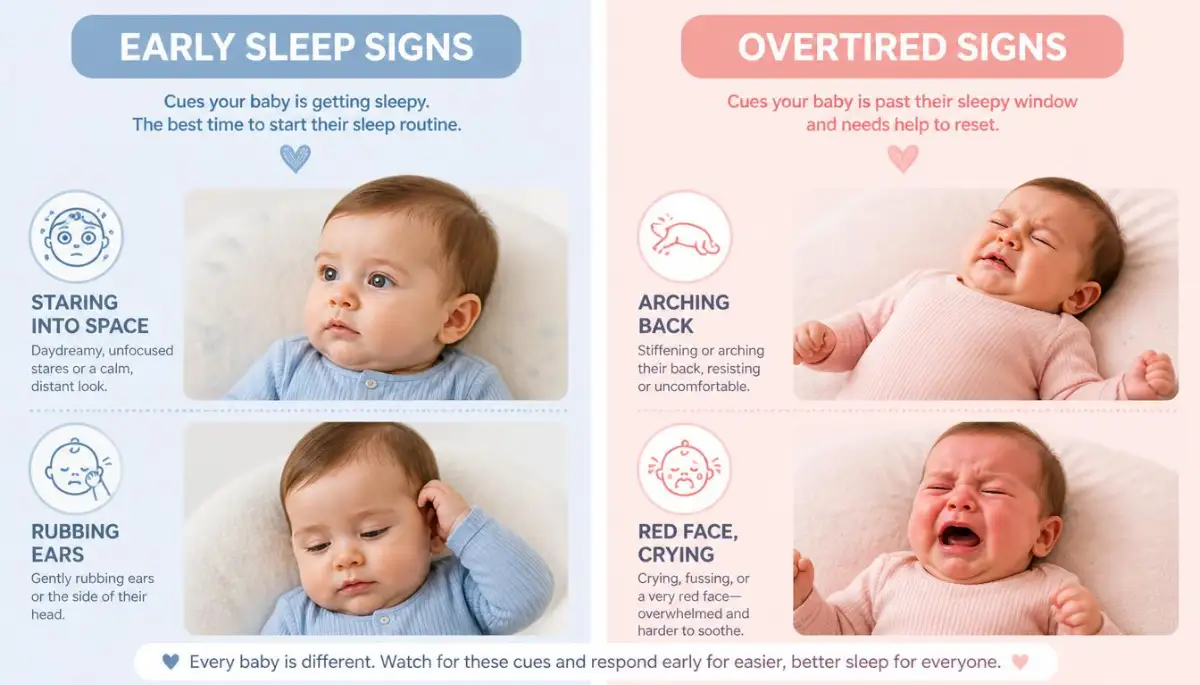
When you see these signs, act fast! This is the best time to start your soothing routine. If you catch them right at the start of their sleep window, they will drift off much faster. It feels like a superpower when you get the timing right. You save yourself twenty minutes of rocking and a lot of stress.
The Power of a Simple Routine
You don't need a complicated 10-step plan to help your baby sleep. In fact, simple is better. Babies love knowing what comes next. It makes them feel safe and relaxed. A basic routine tells their brain, "Hey, it's time to slow down now."
Our routine was very basic: a warm bath, a fresh diaper, a quick feeding, and a soft song. We did the exact same thing every single night. At first, it didn't seem to do much. But after about a week, I noticed my baby started yawning as soon as the bath water started running. His body was learning the cues.
Consistency is the most important part of this. Even if you are traveling or have guests over, try to keep the routine the same. It acts as an anchor for your baby. It gives them a sense of control in a world that is still very new and confusing to them.
Handling the Nighttime Feedings
It is very normal for newborns to wake up because they are hungry. Their stomachs are tiny and they need fuel to grow. However, how you handle these feedings matters. You want to keep the "vibe" very boring during the night.
Don't turn on bright overhead lights. Don't talk to them in an excited voice. Keep things dim and quiet. Feed them, burp them, and put them back down as soon as they are done. You want them to learn that daytime is for playing and talking, while nighttime is only for sleeping and eating.
If you make nighttime too fun, they will want to stay awake and hang out with you. As much as we love their smiles, we want those smiles to happen at 10 AM, not 2 AM. By keeping the night boring, you help them understand the difference between day and night much faster.
Understanding the "Fourth Trimester"
Many experts call the first three months of life the "Fourth Trimester." This is because human babies are actually born a bit early compared to other mammals. They still think they are part of you. They miss the warmth, the heartbeat, and the constant motion of your body.
Knowing this helped me be more patient. I stopped expecting my baby to be independent. I realized that my touch was a biological need for him. Using things like swaddles or baby carriers during the day can help satisfy that need for closeness.
A snug swaddle can work wonders because it prevents the "startle reflex." This is when a baby's arms jump out suddenly and wake them up. It mimics the tight feeling of being in the womb. Just make sure the swaddle is safe and their hips can move freely. It’s one of the best tools for helping a newborn feel secure enough to fall into a deep sleep.
Patience and Practice
Sleep is a skill that takes time to learn. Just like walking or talking, your baby won't get it right every single time. There will be good nights and there will be very hard nights. The key is to stay calm and stick to your plan.
Be kind to yourself during this process. If you feel your anger rising, it is okay to put the baby in a safe crib and walk away for five minutes to breathe. A baby is safe in their crib, even if they are crying for a moment. You need to be okay so that you can help them be okay.
The Role of Natural Light
Daylight is a powerful tool for setting your baby’s internal clock. During the day, make sure your baby gets plenty of natural light. Take a walk outside or sit near a bright window. This helps their brain realize that daytime is for being alert.
When the sun goes down, start dimming the lights in your house. This helps their body start producing melatonin, the hormone that makes us sleepy. By using light and dark correctly, you are working with their biology instead of against it. It is a simple, free way to improve their sleep cycles over time.
I started taking my baby for a 10-minute walk every morning. Not only did the fresh air help me feel more human, but it also seemed to help him settle better for his morning nap. It’s these small, natural habits that build a strong foundation for healthy sleep in the future.
Mastering the Art of Quiet Nights with Your Little One
Once you have the basics down, it is time to look at some of the "ninja moves" that experienced parents use. These are the small, subtle changes that can turn a two-hour sleep stretch into a four-hour one. I learned these through a lot of trial and error, and sometimes just by accident.
One of the most effective tricks is the "Dream Feed." This is when you gently feed your baby one last time right before you go to bed yourself, usually between 10 PM and midnight. The key is to keep the baby asleep or in a very drowsy state. You don't change their diaper or talk to them. You just offer the breast or bottle. This fills their tummy right as you are starting your own long sleep, which often helps everyone stay asleep until the early morning.
Another advanced tip is watching the "Wake Windows" like a hawk. A wake window is simply the amount of time your baby is awake between naps. For a newborn, this might only be 60 to 90 minutes. If you push them past this, their body gets stressed. Just like we might struggle with overcoming college burnout, a baby can get "burned out" by being awake too long. Keeping a simple log on your phone can help you spot these patterns before the baby gets cranky.
The Magic of the "Le Pause"
In some cultures, parents use a technique often called "The Pause." When your baby makes a noise in the middle of the night, don't rush in immediately. Wait for exactly five minutes. Many times, babies are just moving between sleep cycles and will settle back down on their own. If you jump in too fast, you might actually wake them up fully.
My Personal "Pause" Rule:
I started doing what I call the "Sneaky Peek." Instead of rushing in at the first grunt, I’d count to 60—twice. If the crying intensified, I went in. If it stayed at a whimper, I stayed back. 8 out of 10 times, my son was just "sleep-talking" and settled himself back down within 3 minutes. Give them that chance!
This teaches them the very early skills of self-soothing. It is not about letting them cry for hours. It is about giving them a tiny bit of space to figure out how to fall back asleep. It is amazing how often they just need a moment to get comfortable again. If they start crying hard, of course, you go to them, but those few minutes of waiting can change your life.
Fine-Tuning the Senses
Your baby’s senses are incredibly sharp, and they are always scanning for changes. To keep them in a deep sleep, you need to manage their environment with precision. Many parents use a white noise machine, but they set it too quiet. According to experts at the American Academy of Pediatrics, the sound should be consistent but safe for their ears. It should sound like a soft rain or a humming fan.
Also, think about the smell of the room. Babies are very comforted by the scent of their parents. I used to sleep with the baby’s crib sheet for one night before putting it back on their mattress. Having my scent right there helped him feel like I was close by, even when I was in the other room. It sounds a bit strange, but it works wonders for babies who are very attached to their mothers or fathers.

Hidden Traps That Can Ruin a Good Night
Even with the best plan, there are some common traps that many parents fall into. I know I fell into almost all of them! One of the biggest ones is overstimulating the baby during the "wind-down" time. We often think that playing hard with the baby will tire them out. In reality, it does the opposite.
If you have a house full of bright lights, loud TV sounds, and lots of bouncing right before bed, the baby’s brain stays on high alert. It is much like how block smart TV tracking protects your digital privacy; you need to "block" the extra noise to protect your baby's sleep. Keep the hour before bed very boring and very dim.
The Danger of Inconsistency
Another trap is changing your strategy every single night. I remember one night I tried rocking, the next night I tried a pacifier, and the night after that I tried driving him around in the car. This was a huge mistake. The baby had no idea what to expect, and it made him more anxious.
Babies feel safe when things are predictable. When you keep changing the rules, they never get the chance to learn the routine. It is better to pick one gentle method and stick with it for at least a week. Consistency is the secret sauce to better sleep. Without it, you are just guessing, and your baby will feel that confusion.
Ignoring the "Day-Night Confusion"
Many newborns have their days and nights mixed up. They sleep all day and want to party all night. A big mistake parents make is keeping the house quiet and dark during the day to help the baby nap longer. This actually makes the problem worse.
During the day, let the sun in. Keep the normal household noises going. Vacuum the floors, talk on the phone, and let the light hit their face. This helps their internal clock realize that day is for being awake. Save the silence and darkness for the night. If you don't fix this confusion early, you will be stuck in a cycle of being a "night owl" parent for a long time.
Forgetting About Your Own Well-being
We often put our babies first and forget that we are humans too. If you are exhausted and stressed, your baby will pick up on that energy. They are like little sponges for our emotions. If you are tense while holding them, they will find it harder to relax and fall asleep.
Sometimes, we need to treat ourselves with the same care we give our kids. Just like someone might need to speak less and connect more in a professional setting, we need to listen to our own bodies. If you are reaching your breaking point, ask for help. A rested parent is a much better "sleep coach" than a parent who is running on fumes.
Your Path to More Rest and Happier Mornings
Getting your baby to sleep through the night is a journey, not a race. You have learned about sleep cycles, wake windows, and the importance of a calm environment. These tools are now in your hands, and they will help you build a better routine starting tonight. Remember that every baby is unique, and what works for one might take a little longer for another.
The most important thing is to stay patient and stay positive. You are doing a great job, even on the nights when it feels like nothing is working. Each night is a new chance to try again and learn more about your little one. Before you know it, those long, sleepless nights will be a distant memory, and you will be waking up feeling refreshed and ready for the day.
I know how heavy your eyelids feel right now, but I promise you that this phase will pass. I used to think the sun would never come up, but eventually, my baby found his rhythm, and yours will too. Keep your head up and trust the process—you and your baby are a team, and you’ve got this!
Common Questions About Newborn Sleep
How long does it take for a newborn to develop a sleep routine?
Most babies start to develop a more predictable sleep-wake cycle around 6 to 8 weeks of age. However, a true routine usually doesn't stick until they are about 3 to 4 months old. Be patient during the first few weeks as their brain is still adjusting to the world outside the womb.
Should I wake my baby to feed them at night?
In the first few weeks, doctors usually recommend waking a baby if they haven't eaten in 3 or 4 hours. Once your baby has reached their birth weight and is healthy, you can often let them sleep longer. Always check with your pediatrician to make sure it is safe to let them sleep through the night.
Is it safe to use a pacifier for sleep?
Yes, many studies, including those from the Mayo Clinic, suggest that using a pacifier at sleep time can actually reduce the risk of SIDS. If the pacifier falls out while they are sleeping, you don't need to put it back in unless they wake up and cry for it. Just make sure to wait until breastfeeding is going well before introducing one.
What should I do if my baby only sleeps while being held?
This is very common because babies love the warmth and heartbeat of their parents. You can slowly transition them by letting them fall asleep in your arms and then moving them to the crib once they are in a deep sleep. Try warming the crib mattress slightly with a heating pad (remove it before putting the baby down) so the temperature change isn't so sudden.
Can a baby be too tired to sleep?
Yes, this is called being "overtired." When a baby stays awake too long, their brain triggers a stress response that makes them hyper. This makes it much harder for them to fall asleep and stay asleep. Keeping an eye on their wake windows is the best way to prevent this from happening.
How do I know if my baby's sleep problem is medical?
Most sleep issues are just part of normal development. However, if your baby is having trouble breathing, snoring loudly, or seems in constant pain, you should talk to a professional. It is always better to be safe, much like how people learn to prove medical negligence if things go wrong; early action is always best.
Disclaimer: The information in this post is for educational purposes only and does not replace professional medical advice. Always talk to your pediatrician before making changes to your baby’s sleep or feeding routine. Every baby is different, and a doctor can provide the best guidance for your specific situation.
I want you to take a deep breath and realize that you are the exact parent your baby needs. My own journey through the "sleep fog" taught me that love and consistency are more powerful than any fancy gadget or book. Start small tonight, stay calm, and know that better rest is waiting for you just around the corner.