
Tummy Time Doesn't Have to Be a Scream-Fest: My Real-World Guide
Let’s be honest: most "tummy time" advice makes it sound like a peaceful yoga session. In reality, for most of us, it starts with a red-faced baby screaming at the floor while we count down the seconds in guilt. If you feel like a failure because your little one hates being on their belly, take a deep breath. I’ve been exactly where you are. I’m going to show you why the "standard" way failed me and the simple, stress-free tweaks that actually worked for my baby.
It wasn’t just a small whimper; it was a full-blown meltdown. I felt like a failure immediately. My heart sank, and I picked them up after only ten seconds. I told myself, "Maybe they just aren't ready yet."
I spent the next few days feeling guilty and worried. I saw other babies on social media pushing themselves up like tiny bodybuilders. My baby, on the other hand, just face-planted and cried. I realized I was doing something wrong, but I didn't know what it was.
It took me weeks of trial and error to figure out the truth. The problem wasn't my baby. The problem was the way I was approaching the whole process. I was making small mistakes that were causing a lot of stress for both of us.
Many parents feel this same way every single day. You want the best for your child, but sometimes the advice you get is confusing. You might feel like you are hurting them or pushing them too hard. This mental stress can make you want to give up on tummy time altogether.
I want you to know that you are not alone in this struggle. It is okay to feel overwhelmed and unsure. Most of the time, the fix is much simpler than you think. By making a few small changes, you can turn a crying session into a fun bonding moment.
The Hidden Errors Holding Your Baby Back From Moving
Many parents think that tummy time is just about plopping a baby on the floor. If only it were that simple! One of the biggest things I noticed was the timing of the session. I used to try it right after a feeding, which was a huge mess.
💡 Quick Summary: How to Win at Tummy Time
- Timing is Key: Wait 30-40 minutes after a feed to avoid spit-ups.
- Firm is Better: Ditch the soft bed; use a firm floor mat for better grip.
- Short Bursts: Three 2-minute sessions are better than one long, stressful one.
- Get Low: Your face is the best motivation your baby has. Get on the floor with them!
- Early Start: Don't wait—start with "chest-to-chest" time as a newborn.
Babies have very small stomachs, and putting pressure on them right after milk is a bad idea. It leads to spit-ups and a very unhappy infant. You should wait at least thirty to forty minutes after they eat. This gives them time to digest so they can focus on their muscles.
Another big slip-up is using a surface that is way too soft. I started by putting my baby on our plush memory foam bed. I thought it was safer and more comfortable. In reality, it was like trying to do a push-up on a giant marshmallow.
My baby couldn't get any grip or leverage to push up. Their face just sank into the fabric, which is also a safety risk. Switching to a firm play mat on the floor changed everything instantly. A firm surface gives them the resistance they need to build shoulder strength.
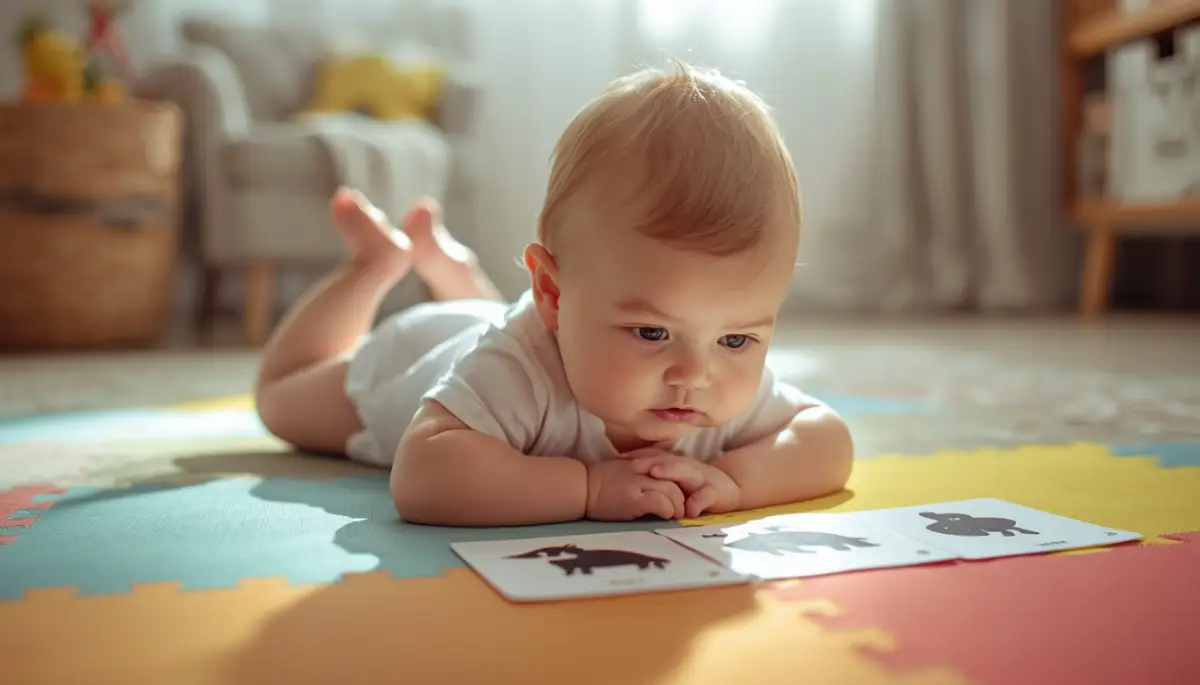
I once thought that more time was always better, but I was wrong. I tried to force a ten-minute session when my baby was already tired. I realized that three sessions of three minutes are much better than one long session of misery. Short bursts help them build stamina without getting frustrated.
Creating the Perfect Environment for Physical Growth
If you want your baby to succeed, you have to look at the room around them. A boring room leads to a bored baby. If they are just staring at a brown rug, they won't have any reason to lift their head. You need to give them a "why" for their hard work.
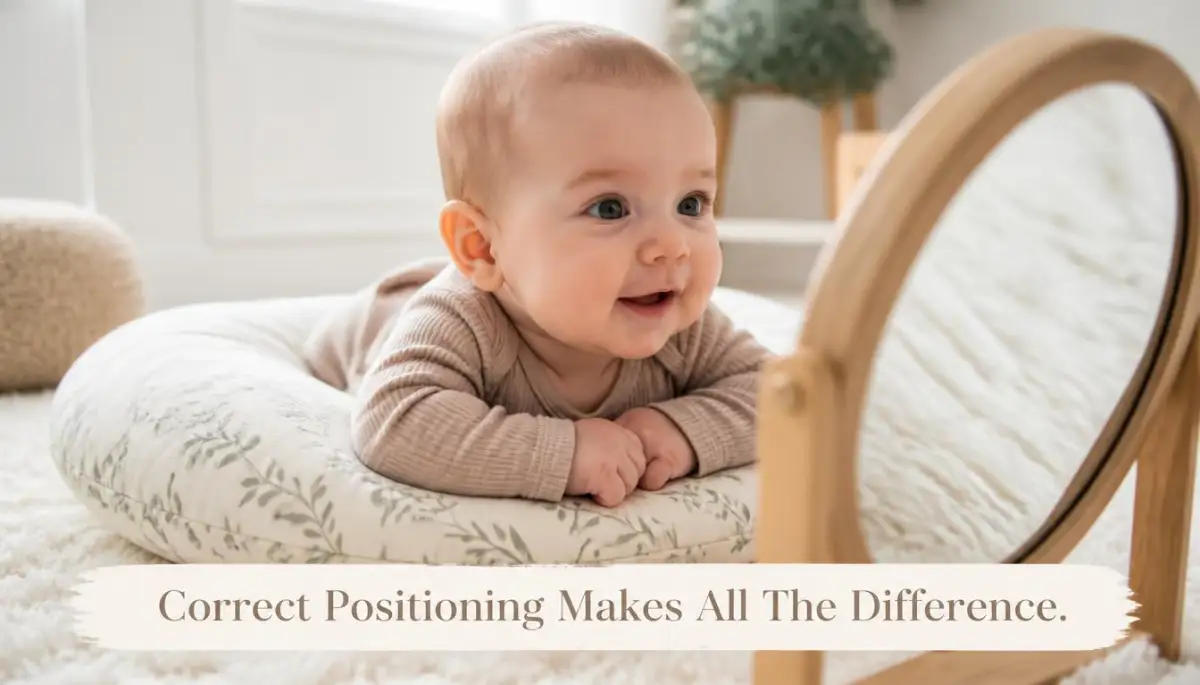
Use high-contrast toys like black and white cards or bright mirrors. Place these items just out of reach but within their line of sight. This encourages them to use their neck muscles to look up and around. It turns a workout into a game of discovery.
You should also check the temperature of the room before you start. A baby who is too cold or too hot will be cranky before they even begin. A comfortable, draft-free area makes a world of difference. Make sure there are no distractions like a loud TV nearby.
The Role of Your Own Body Language
Believe it or not, your baby feeds off your energy. If you are hovering over them with a worried face, they will get scared. They think something is wrong because you look stressed. I had to learn to smile and talk in a happy, high-pitched voice.
Get down on the floor with them! Don't just stand above them looking down. When you lie on your belly facing them, you become the best "toy" in the room. They want to see your face, and they will work hard to lift their head to find your eyes.

This face-to-face interaction is a powerful motivator. It builds trust and makes them feel safe in a vulnerable position. You can sing songs or make funny faces to keep them engaged. This simple change can double the amount of time they stay on their tummy.
Tummy Time: Myths vs. Reality
Watching a pro show you how to do this can make things much clearer. Check out this helpful guide on positioning your baby for success without the tears.
Why Consistency Beats Intensity Every Single Time
I used to think I could make up for a missed day by doing a long session the next day. This is a common trap that many parents fall into. Physical development doesn't work like that for infants. Their muscles need regular, gentle stress to grow stronger.
If you only do tummy time once a week, your baby will never get used to it. Every time will feel like the first time, leading to more crying. If you do it every single day, it becomes a part of their normal routine. They eventually learn that this is just what we do after a diaper change.
Think of it like going to the gym. If you only go once a month and lift heavy weights, you just get sore. If you go every day for fifteen minutes, you get fit. Your baby is the same way; they need that daily "workout" to thrive.
The Danger of Waiting Too Long to Start
Some parents wait until the baby is two or three months old to start. They think the baby is too "fragile" before then. However, pediatricians often suggest starting as soon as you get home from the hospital. The earlier you start, the more natural it feels to the baby.
For newborns, you don't even need the floor. You can start by laying the baby on your own chest while you reclined on a chair. This is still tummy time! It helps them get used to the feeling of being on their belly while feeling the safety of your heartbeat.
Starting late often leads to more resistance. An older baby has more opinions and a stronger cry. A newborn is often more willing to just hang out in that position. By starting early, you set a foundation for all the milestones that come next.
Skipping the "Side-Lying" Transition Phase
Did you know that tummy time isn't the only way to build core strength? Many experts suggest "side-lying" as a great alternative for babies who hate their bellies. If you skip this, you might be missing a great stepping stone.
Lying on their side helps babies bring their hands together in the middle. It helps them learn how to balance their weight. You can prop them up with a small rolled-out towel behind their back. This builds the same muscles they will need for rolling over later on.
It also gives them a break from the intense pressure of being on their chest. You can alternate between side-lying and tummy time throughout the day. This variety keeps their brain engaged and prevents them from getting bored with one position.
Relying Too Much on Baby Gear and Containers
We live in a world full of swings, bouncers, and car seats. These are great tools, but they can be a trap. If your baby spends all day in a "container," they aren't using their muscles. This is often called "Container Baby Syndrome."
When a baby is in a bouncer, their head is always supported. They don't have to work to keep it steady. This can lead to weak neck muscles and a flat spot on the back of the head. It's easy to leave them in a swing because they are happy, but it slows down their progress.
Try to limit the time spent in these devices. For every hour in a seat, try to give them at least fifteen minutes of floor time. The floor is the best playground a baby can have. It offers total freedom of movement that a plastic seat simply cannot provide.
The Mistake of Ignoring "The Push"
When your baby is on their tummy, look at their arms. Are they tucked under their chest, or are they pushed forward? If their arms are stuck behind them, they can't lift their head properly. They will feel like they are drowning on dry land.
Help them by tucking their elbows under their shoulders. This creates a solid "tripod" for them to lean on. It makes it much easier for them to look up at toys. If you see them struggling with their arm position, give them a gentle hand to fix it.
Once they find that sweet spot, you will see a huge change. They will start to look around with curiosity instead of frustration. This small physical adjustment is often the "ah-ha" moment for many struggling infants.
Using the Wrong Toys at the Wrong Time
I used to put a big, noisy stuffed animal in front of my baby. It was too much for them to handle. For a young infant, simple is always better. A mirror is usually the best choice because babies are obsessed with human faces—even their own!
If a toy is too far away, they will give up. If it’s too close, they might hit their head on it. You have to find that "Goldilocks" zone. Move the toy slowly from side to side to encourage them to turn their neck. This builds the lateral muscles that are needed for rolling.
Also, avoid toys that are too heavy or have sharp edges. As they get stronger, they will try to reach for things. If they grab something heavy and it falls on them, they will associate tummy time with pain. Keep the play area soft, safe, and visually stimulating.
Overlooking the Power of a Tummy Time Pillow
Some people think using a prop or a nursing pillow is "cheating." I used to think that too. But then a physical therapist told me it’s actually a great tool for beginners. A small pillow under the chest takes some of the weight off their arms.
It gives them a "lift" that makes seeing the world much easier. This can be the difference between a five-minute session and a thirty-second meltdown. As they get stronger, you can gradually move the pillow away. It’s like using training wheels on a bicycle.
Make sure the pillow is firm and that you are watching them every second. Never leave a baby alone with a prop like this. Safety is always the number one priority. But don't be afraid to use tools that make the learning process easier for your child.
Why You Should Never Compare Your Baby to Others
This is perhaps the biggest "mistake" parents make, and it’s a mental one. Every baby is on their own unique timeline. Some babies have larger heads and take longer to lift them. Some babies have a different temperament and just don't like being on their bellies.
Comparing your child to the "star student" at daycare only causes you stress. That stress then transfers to your baby. If you are worried, talk to your doctor, but don't let social media dictate your happiness. Focus on your baby's small wins, like lifting their head for just one second longer than yesterday.
Progress isn't always a straight line. Some days they will do great, and other days they will act like they’ve never done it before. This is normal. Stay patient, stay positive, and keep showing up for them. Your consistency is the most important factor in their success.
Final Thoughts on Physical Milestones
Tummy time is the foundation for crawling, sitting, and walking. It is a big deal, but it doesn't have to be a battle. By avoiding these common mistakes, you are giving your baby the best start possible. Remember to keep it short, keep it firm, and keep it fun.
You are doing a great job, even on the days when it feels hard. Every minute they spend on the floor is a minute they are getting stronger. Trust the process and trust your baby. They will get there in their own time, and you will be there to cheer them on every step of the way.
Just keep going, stay relaxed, and enjoy these small moments of growth. Before you know it, they will be crawling across the room, and you'll be wishing they would stay still for just a second!
Secrets to Speeding Up Your Baby’s Physical Strength
Once you have the basics down, you might feel like you are just waiting for something to happen. I felt that way for a long time. I would watch my baby on the floor and wonder if they were actually getting stronger. It turns out that there are a few "pro-level" tricks that can make this process move much faster.
One of the best things I started doing was the "Texture Tour." Most parents just use one play mat every single day. But babies learn about their bodies through their skin. I started placing my baby on different safe surfaces, like a cool cotton sheet, then a fuzzy rug, and even a slightly bumpy yoga mat.
This sensory input tells their brain more about where their body is in space. It makes them more aware of their arms and legs. When they feel something new, they often wiggle more to explore it. This extra wiggling is actually a hidden workout for their core muscles.
I also learned that "Angle is Everything." If your baby is really struggling to lift their head, don't just keep them flat. I started using a very slight incline. You can do this by putting a tiny folded towel under their chest.
This small change shifts their center of gravity. It makes the "heavy" part of their head feel a little lighter. Once I saw my baby could hold their head up at an angle, I slowly lowered the incline over a week. It was like they were lifting weights but didn't even know it!
The "No-Stress" Tummy Time Checklist
If you feel stuck and the crying won't stop, I found that following this simple daily flow changed everything for us. You don't have to do it all at once; just pick one and try it:
- The 30-Second Rule: After every diaper change, flip your baby over for just 30 seconds. It’s so short they won't even have time to get mad!
- The Human Airplane: Instead of the floor, lay your baby tummy-down across your lap or arms while you walk. They get to see the world, and it still builds those back muscles.
- Mirror Magic: Put a safe, unbreakable mirror right in front of them. Babies love looking at themselves. My little one would stay up twice as long just to stare at the "other baby" in the reflection.
- Skin-to-Skin: If the floor feels too scary for them, lie down and put them on your bare chest. The warmth of your skin keeps them calm while they practice lifting their head to see your face.
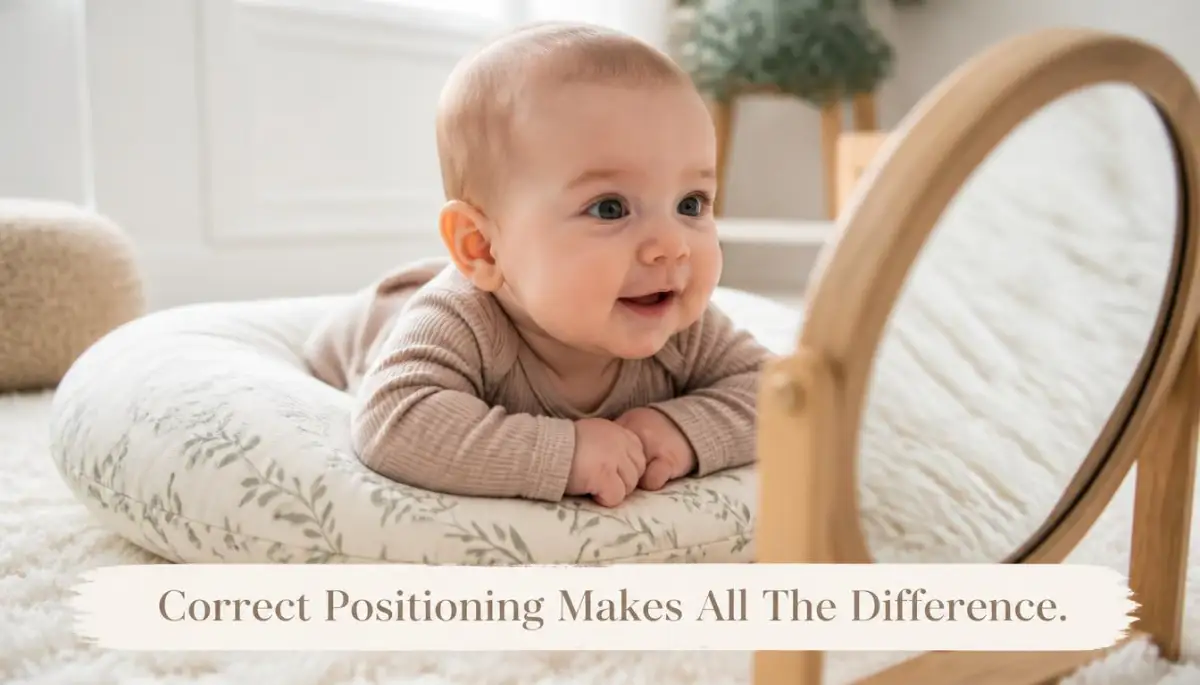
Another secret is what I call "The Mirror Trap." Babies are naturally vain in the cutest way possible. They love looking at faces, especially their own. Instead of putting the mirror flat on the floor, I propped it up at a 45-degree angle.
This forced my baby to look "up and out" rather than just "down." It really helped build those upper back muscles that are needed for sitting up later. I noticed that my baby would stay on their tummy twice as long just to stare at the "other baby" in the glass.
You should also try the "Side-to-Side Toy Chase." Don't just put a toy right in front of them. I started moving a bright red ball slowly from the left side to the right side. My baby had to shift their weight from one arm to the other to follow the movement.
This weight shifting is a huge milestone. It is the exact skill they need before they can start crawling. By practicing this early, you are prepping their brain for the complex movements of moving across the floor. It’s like a pre-crawling drill that feels like a game.
Lastly, don't forget about the "Skin-to-Skin" tummy time. If your baby is having a really hard day, take off their shirt and yours. Lay them on your bare chest while you lie back. The warmth of your skin and the sound of your heart calms them down instantly.
They will still try to lift their head to look at your face. This counts as tummy time, and it’s often much more peaceful than the floor. I used this trick every time my baby was teething or extra cranky. It kept our routine going without the stress of a meltdown.
To keep these results long-term, you need to make it a lifestyle. Don't think of it as a "task" you have to finish. Think of it as your baby’s primary way of playing. The more they see the floor as a fun place, the faster they will want to move around on it.
For example, if you want to speak less and connect more with your baby, you have to watch their cues carefully. They will tell you when they are tired or when they want more. Listening to these non-verbal signs builds a strong bond of trust.
The Hidden Traps That Can Stall Your Baby’s Progress
It is very easy to make mistakes without even realizing it. I know I did. One of the most painful things for me was realizing I was accidentally making my baby hate the floor. I was so worried about "getting the minutes in" that I ignored their crying for too long.
This is a huge pitfall. If you let your baby scream on their tummy, they will start to associate that position with fear and pain. Their brain will go into "stress mode" instead of "learning mode." Once that happens, they won't want to try at all the next day.
It’s an emotional cycle that can be hard to break. You feel like you have to push them, but pushing too hard backfires. I had to learn to pick my baby up before the full-blown meltdown happened. This taught them that I was always there to help, which made them feel safe enough to try harder next time.
Another mistake is relying on "The Screen Trap." I’ve seen many parents put a phone or tablet on the floor to keep the baby quiet. This is a bad idea for a few reasons. First, the American Academy of Pediatrics recommends no screen time for infants.
Second, a screen is "passive." The baby just stares at it and stops moving. Tummy time should be "active." They need to be reaching, grabbing, and looking around at real objects. A screen actually slows down their brain's connection to their muscles.
I also see many parents using "The Wrong Clothes." If your baby is in a long, slippery dress or very loose pajamas, they can't get any traction. Their knees and elbows will just slide around on the mat. It’s like trying to run on ice in socks.
I found that my baby did much better in just a diaper or a tight-fitting onesie. This let their skin grip the mat. That little bit of friction gave them the power they needed to push their chest up. It seems like a small thing, but it makes a massive difference in their confidence.
We also have to talk about the "Soft Surface Danger." I mentioned this before, but it is worth repeating because it is so common. Putting a baby on a soft couch or a plush duvet is not just bad for their muscles; it's a safety risk. According to the Mayo Clinic, soft surfaces can increase the risk of suffocation.
Always stick to a firm, flat surface. If you are worried about them bumping their head, a standard foam play mat is plenty of protection. It provides the right balance of safety and support. Using a bed or a sofa is a shortcut that often leads to slower physical progress and unnecessary risks.
Lastly, don't let "Comparison Anxiety" ruin your peace of mind. I used to spend hours looking at baby development groups online. I would see a four-month-old crawling and feel like my baby was "behind." This stress made me act differently during our play sessions.
My baby could feel my tension. They became more clingy and less willing to play on the floor. I had to stop looking at those groups for a while. Just like spotting the subtle signs of prediabetes requires a calm and steady eye, watching your baby's growth requires patience, not panic.
If you keep making these mistakes, your baby might take much longer to reach their milestones. They might develop a "flat spot" on their head because they spend too much time on their back. They might also have weaker core muscles, which can lead to delays in sitting and walking. It’s much easier to fix these small habits now than to deal with delays later on.
A Bright Path Toward Your Baby’s First Steps
Watching your baby grow is one of the most exciting parts of being a parent. Every time they lift their head a little higher, it’s a victory. You are building the foundation for their entire future of movement. It starts with these small, daily moments on the floor.
Don't worry if today didn't go perfectly. There is always tomorrow to try a new toy or a different room. The fact that you are reading this and trying to learn shows that you are an amazing parent. Your baby is lucky to have someone so dedicated to their growth.
Stay positive and keep the atmosphere light. Use songs, use mirrors, and most importantly, use your own beautiful face to guide them. You are their favorite person, and they will work harder for you than for any toy in the world. Trust your instincts and enjoy the journey of discovery together.
I remember feeling so lost during those first few weeks of parenting. I thought I would never get the hang of it, but I did. I started small, stayed patient, and eventually, I saw my baby thrive. I know you can do the same thing, starting today.
Just take it one minute at a time and celebrate every tiny bit of progress you see. My journey taught me that love and patience are the best tools we have. I really hope these tips help you feel more confident as you help your little one grow stronger every single day.
Common Questions About Baby Physical Progress
How long should my baby stay on their tummy if they are crying?
You should never let your baby "cry it out" on their tummy. If they start to get upset, try to distract them with a toy or a song for a few seconds. If the crying continues, pick them up and try again later. The goal is to keep the experience positive so they don't grow to hate the floor.
Can my baby do tummy time on my chest instead of the floor?
Yes, absolutely! For newborns especially, doing tummy time on a parent's chest is a wonderful way to start. It still works the neck and back muscles but feels much safer for the baby. Just make sure you are awake and alert while they are on you.
What should I do if my baby only likes to look in one direction?
This is a common issue and can sometimes lead to a tight neck muscle. Try placing all their favorite toys and mirrors on the "boring" side to encourage them to turn. If you notice they still won't look the other way, it’s a good idea to mention it to your pediatrician. For more health-related awareness, you can look into how sitting for six hours affects your veins, as movement is key for all ages.
Is it okay to use a nursing pillow for support every time?
While a pillow is a great tool for beginners, you shouldn't use it for every single session. Your baby needs to learn how to lift themselves from a flat surface eventually. Use the pillow for a few minutes to build confidence, but always include some "flat" time during the day as well.
How do I know if my baby is making progress?
Progress isn't just about how long they stay down. Look for "quality" signs like lifting their head to a 90-degree angle or pushing up through their forearms. If they are starting to look around and reach for toys, they are doing great. Even the CDC Milestones show that every baby moves at a slightly different pace.
Disclaimer: The information provided in this article is for educational and informational purposes only. It is not intended to be a substitute for professional medical advice, diagnosis, or treatment. Always seek the advice of your pediatrician or other qualified health provider with any questions you may have regarding a medical condition or your baby’s physical development. Never disregard professional medical advice or delay in seeking it because of something you have read here.