
The Silent Panic in the Baby Aisle: My Personal Label Struggle
Walking down the baby food aisle feels more like a science test than a shopping trip. I used to stare at formula cans for twenty minutes, trying to figure out if 'organic' actually meant 'safe' for my son’s red, itchy skin. If you’re tired of reading labels that look like a secret code, I’m here to help you cut through the noise and find what really works for your baby.
My heart would race every time I turned a can around to read the tiny, black text on the back. I felt like I needed a chemistry degree just to understand what I was feeding my child. It was a dark time filled with guilt and constant worry about his health.
You might be feeling that same heavy weight in your chest right now. It is hard to trust a brand when your baby is crying in discomfort or breaking out in a rash. I spent nights staying awake, searching for answers and wondering if I was missing something big.
The fear of a hidden allergen causing a severe reaction is enough to keep any parent up at night. You just want peace of mind, knowing that every scoop is safe and nourishing. It is not just about food; it is about the safety and comfort of your precious little one.
I know how it feels to doubt every choice you make for your baby's nutrition. That pressure to get it right is immense, and the lack of clear information makes it even harder. We are going to change that today by looking at what those words really mean.

Decoding the Language of Organic Formula Labels
When you pick up a container of organic formula, the word "Organic" feels like a warm hug. It makes us think of green fields and happy cows, which is a great start. However, organic does not always mean it is free from things that might upset your baby's stomach.
### 🛑 Cheat Sheet: What to Check Before You Buy
Before you dive into the deep details, keep these 4 rules in my mind:
- The Top 3 Rule: The first three ingredients are what your baby eats the most. Make sure they aren't sugars like corn syrup.
- Watch for 'Hidden' Soy: If your baby is fussy on dairy, they might also be reacting to the 'Soy Lecithin' at the bottom of the list.
- Extraction Matters: Look for labels that say 'Hexane-Free' when it comes to DHA and ARA oils.
- Give it 14 Days: Never switch brands after just one bad night. A baby’s gut needs two weeks to adjust to new proteins.
The first thing I learned is that "Organic" mostly refers to how the ingredients were grown. It means no synthetic pesticides or fertilizers were used on the farms. But even a natural, organic ingredient can be a strong allergen for a sensitive newborn.
I used to think that if it was organic, it was automatically safe for my baby’s sensitive skin. That was my first big mistake, and I realized I had to look much deeper into the list. You have to look past the big shiny letters on the front of the pack.
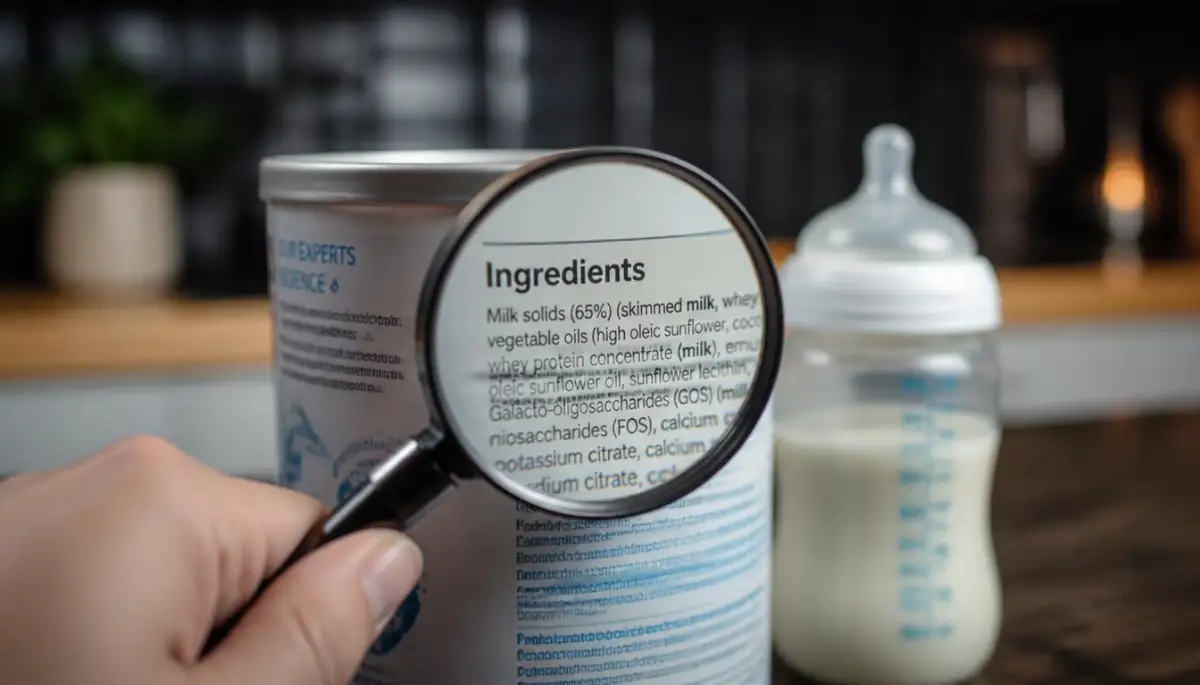
Identifying the Main Culprits: Milk Proteins and Sensitivities
Most organic formulas use cow's milk as their main base because it is full of nutrition. For many babies, this is perfectly fine and helps them grow big and strong. But for others, the proteins in cow's milk are like a tiny alarm bell for their immune system.
There are two main proteins to watch for: whey and casein. In some babies, these proteins can cause gas, bloating, or even those scary skin rashes I mentioned earlier. If your baby seems fussy after every bottle, the protein structure might be the reason.
You might see terms like "Milk Protein Concentrate" or "Nonfat Milk" on the label. These are very common, but they are also the most likely sources of a dairy allergy. It is helpful to know exactly what kind of milk protein your baby is drinking.
The Hidden Names for Sugar and Their Effects
I was shocked to find out how many different names companies use for sugar. Even in organic brands, they need a carbohydrate source to give the baby energy. They often use things like "Corn Syrup Solids" or "Brown Rice Syrup" to do this.
While these are organic, some babies react poorly to specific types of sugars. For example, some infants have trouble breaking down lactose, which is the natural sugar found in milk. This can lead to a lot of crying and a very unhappy tummy for your little one.
Look for words like "Maltodextrin" or "Sucrose" on the label if you are worried about sensitivities. These are not always "bad," but they are things you should be aware of. Knowing the source of the sweetness helps you understand why your baby might be extra gassy.
o make it easier, here is a quick look at the sugars I often see in organic brands:
Why Soy Lecithin and Soy Oil Might Be a Concern
Soy is another very common ingredient that pops up in almost every organic formula. It is often used as an emulsifier, which just means it helps the powder mix smoothly with water. You will see it listed as "Soy Lecithin" near the bottom of the list.
Many babies who have trouble with dairy also have a hard time with soy. It is like their little bodies see the soy protein as a twin to the milk protein. If you are avoiding dairy, you might need to be extra careful about these hidden soy additions.
I once found a "Dairy-Free" option that was packed with soy, and it caused the same issues for us. It taught me that I had to check for every single source of protein, not just the main one. It is all about being a detective for your baby's health.
Pro Tip: I used to think I had to memorize every single chemical name to be a good parent. My big realization was that I just needed to look for the top five ingredients, as they make up most of the bottle. If you don't recognize the first few items, take a moment to look them up before you feel overwhelmed.
Understanding the Role of Oils in Infant Nutrition
Companies add a blend of oils to formula to mimic the healthy fats found in breast milk. You will often see a mix of palm oil, coconut oil, sunflower oil, or soy oil. These fats are vital for your baby's brain and eye development.
However, palm oil can sometimes cause firmer stools or even constipation in some infants. If your baby is struggling with dirty diapers, the oil blend might be worth looking into. It is a small detail that can make a huge difference in daily comfort.
Some parents prefer formulas that use coconut oil or high-oleic sunflower oil instead. There is no one-right-way for every baby, but knowing which oil is used helps you troubleshoot. It is all about finding the balance that keeps your baby's digestion moving smoothly.
Myth vs. Fact: The Truth About Formula Oils
- Myth: Palm oil is the most natural fat for babies because it has palmitic acid.
- Fact: While it's common, palm oil can actually lead to harder poop and lower calcium absorption in some infants. If your baby is constipated, look for a 'Palm-Oil Free' label.
- Myth: All soy oil is bad.
- Fact: Soy oil itself isn't the problem, but many babies with milk allergies also react to soy proteins. It’s about your baby's specific gut, not the oil itself.
How to Spot Synthetic Additives in Organic Options
Even in the world of organic food, some synthetic nutrients are allowed to be added. These are usually vitamins and minerals that are required by law to make the formula complete. They ensure your baby gets everything they need to grow healthy.
But some additives, like "DHA" or "ARA," can be extracted using a chemical called hexane. While many organic brands use water-extraction instead, it is not always clear on the label. You want to make sure the nutrients are added in the cleanest way possible.
Check if the label mentions "Hexane-Free" or if the DHA comes from natural sources like algae. These tiny details are what separate a good formula from a great one. It gives you that extra layer of safety that we all crave as parents.
Learn how to properly read and compare baby formula labels with this helpful guide.
The Truth About Prebiotics and Probiotics
You have probably seen words like "Galactooligosaccharides" (GOS) on the back of the tin. These are prebiotics, which are basically food for the good bacteria in your baby's gut. They are added to help build a strong and healthy immune system.
While these are generally very helpful, some babies with extremely sensitive tummies might react to them. It can cause a bit of extra gas as their gut starts to change and grow. It is usually a good thing, but it is something to watch if your baby seems uncomfortable.
If you see "Bifidobacterium" or "Lactobacillus," those are probiotics, or the actual good bacteria. These are great for babies who might have a bit of colic or digestive upset. Understanding these long words helps you see the benefits they bring to the table.
Navigating "May Contain" and Cross-Contamination Warnings
Sometimes, the allergy risk isn't in the ingredients themselves, but in how they are made. You might see a small note saying, "Manufactured in a facility that also processes soy." This is a legal warning for parents of children with severe allergies.
For most babies, this cross-contamination is not a problem at all. But if your doctor has told you that your baby has a high risk of reactions, this note is very important. It shows you that the company is being honest about their manufacturing process.
I used to ignore these small notes, thinking they weren't important since they weren't in the main list. Now, I see them as a sign of a brand that cares about transparency and safety. It helps you make a truly informed choice for your family.
Looking for "Hypoallergenic" vs. "Organic"
It is important to know that most organic formulas are not technically "hypoallergenic." A truly hypoallergenic formula has proteins that are already broken down into tiny pieces. This makes it much easier for an allergic baby to digest without a reaction.
If your baby has a diagnosed milk allergy, a standard organic formula might still cause issues. You might need to look for an "Extensively Hydrolyzed" option, which is a big word for "easy to digest." Always check with your pediatrician if you suspect a real allergy.
Mixing the worlds of "Organic" and "Hypoallergenic" can be tricky because there aren't many options that do both. Knowing the difference helps you stop searching for something that might not exist in the way you think. It simplifies your journey and saves you a lot of stress.

The Importance of Ingredient Order
Did you know that ingredients are listed in order of how much is in the product? The first ingredient is what the formula is mostly made of. This is a huge secret for parents who want to avoid certain fillers or sugars.
If "Corn Syrup" is the first thing on the list, that formula is mostly sugar. If "Organic Skim Milk" is first, then the base is primarily dairy. This simple rule changed how I shopped for everything, not just baby formula.
I always look at the first three items now to get a clear picture of the product's quality. It is the fastest way to scan a label when you are in a hurry at the store. It puts the power back in your hands as a consumer and a parent.
Final Thoughts on Your Formula Journey
Feeding your baby should be a time of peace and happiness, not a time of fear and confusion. By learning these simple terms, you are taking a massive step toward protecting your child. You are doing a great job, even on the days when it feels hard.
Remember that every baby is different, and what works for one might not work for another. Be patient with yourself and your little one as you find the perfect fit. Your dedication to reading these labels shows just how much you love them.
Stay curious and keep asking questions about what goes into your baby's body. The more you know, the more confident you will feel every time you prepare a bottle. You have the tools now to navigate any label with ease and clarity.
Your Smart Guide to Managing Formula Choices Long-Term
I found that the best way to keep my baby safe wasn't just about one single check. It was about creating a system that I could follow every week. You should start a simple feeding diary to track how your little one reacts to different batches of powder.
Sometimes, even the same brand can have small changes in their supply chain. By writing down the date and any skin or tummy changes, you can spot patterns quickly. This helps you feel more in control of your baby's health journey every single day.
You might want to think about how you store the formula once the tin is open. Organic powders often lack the heavy preservatives found in standard options. I always make sure the lid is tight and the tin stays in a cool, dark cupboard.
How to Introduce New Formula Batches Without the Stress
When you get a new container, don't just dump the old powder out. I like to mix a little bit of the new batch with the old one over a few days. This gives your baby's tiny digestive system time to adjust to any slight variations in the organic ingredients.
If you notice a small red bump or a bit more gas, don't panic right away. Sometimes the body just needs a moment to recognize the new proteins. But if the reaction stays the same for three days, it might be time to look closer at the label again.
You should also look into how your own health habits might influence how you perceive these changes. For example, understanding how sitting for six hours affects your veins shows how small daily habits impact our overall well-being. Keeping yourself healthy helps you stay alert to your baby's needs.
The Role of Water Quality in Formula Safety
I never realized that the water I used was just as important as the powder itself. If your tap water has high levels of minerals or fluoride, it can change how the formula works. Some minerals might even make an existing allergy look worse than it actually is.
You can use a simple water filter or buy nursery water that is specifically made for infants. This removes one more variable from the puzzle of why your baby might be fussy. It gives you a clean slate to see exactly how the organic formula is performing.
Mixing the water at the right temperature is another big secret I learned late. If the water is too hot, it can actually break down the healthy probiotics added to organic brands. I aim for lukewarm water to keep all the good bacteria alive and ready to help my baby's gut.
Communicating with Your Pediatrician Like a Pro
When you go to the doctor, don't just say "my baby is crying." I found it much better to bring my feeding diary and show the specific ingredient lists I was worried about. This helps the doctor give you much better advice based on real data.
You can even take photos of any skin rashes or diaper changes that look unusual. Having a visual record takes the guesswork out of the conversation. It makes the appointment much faster and more productive for everyone involved.
Understanding Protein Hydrolysis in Organic Options
Some organic brands are starting to offer "partially hydrolyzed" proteins. This means the big milk proteins are pre-cut into smaller pieces for easier digestion. I think this is a great middle-ground for babies who are just a little bit sensitive.
It still keeps the organic certification but makes the milk much gentler on the stomach. If you are struggling with a standard organic milk, ask your doctor about these options. They might be the perfect solution for a baby with a mild dairy sensitivity.
Remember that these are still made from cow's milk unless stated otherwise. They are not a cure for a full-blown milk allergy, but they help with general comfort. I wish I had known about this choice when my son was first starting his bottles.
Balancing Organic Standards with Nutritional Needs
I used to worry that if a formula wasn't 100% organic, I was doing something wrong. But sometimes, a baby needs a specific nutrient that is only available in a non-organic form. Your baby's growth and comfort should always come before a label on a can.
If your doctor suggests a specific medical formula that isn't organic, please listen to them. The American Academy of Pediatrics provides great resources on why nutritional balance is the top priority. A healthy, growing baby is the ultimate goal of every parent.
You can always go back to organic solid foods once your baby is older and their gut is stronger. Right now, the focus is on making sure they get the calories and vitamins they need without pain. Trust your gut and the experts to find the right balance for your family.

The Danger of "Formula Hopping" Too Quickly
I see so many parents changing brands every two days because their baby had one bad night. This is one of the biggest mistakes you can make for your little one's stomach. Every time you switch, the gut has to start its learning process all over again.
Imagine if you changed your entire diet every 48 hours; you would feel pretty sick too! I always try to give a new organic formula at least two weeks before I decide it isn't working. This gives the body a real chance to settle down and accept the new ingredients.
Switching too fast makes it impossible to know what is actually causing the problem. You might leave a great formula just because of a normal growth spurt or a bad night of sleep. Stay patient and give each choice a fair trial.
Adding Extra Ingredients to the Bottle Without Advice
I have heard of people adding rice cereal or extra oils to organic formula to help their baby sleep. This can be very dangerous and can lead to serious choking risks or nutritional imbalances. The formula is already designed to be a complete meal on its own.
Changing the recipe without a doctor's okay can also hide real allergy symptoms. If you add cereal, you might think the baby is full, but they might actually be lethargic from a reaction. Stick to the instructions on the back of the tin for the safest results.
If you feel like your baby is still hungry, talk to a professional before you change the mix. Just like why first-time personal loans fail because of poor planning, feeding failures often come from not following a proven path. Keep things simple and follow the expert guidelines provided.
Trusting "All-Natural" Claims Without Reading the Back
Marketing teams are very good at making a package look healthy and safe. They use soft colors and pictures of nature to gain your trust immediately. But I learned that the front of the box is for selling, while the back of the box is for telling.
Never assume a product is allergen-free just because it says "clean" or "pure." These words don't have a legal definition in the same way that "Certified Organic" does. You still need to do the work of checking the actual ingredient list every time.
I once bought a "pure" brand that contained a hidden corn derivative my son couldn't handle. It was a big lesson in not letting my guard down because of pretty packaging. Always be the detective your baby needs you to be.
Ignoring Mild Symptoms as "Just Part of Being a Baby"
It is easy to tell yourself that a little bit of gas or a small rash is normal for newborns. While some fussiness is expected, constant discomfort is a sign that something is wrong. I regret waiting so long to address the mild signs I saw in my own son.
Small issues can grow into bigger problems if the gut stays inflamed for a long time. Pay attention to the CDC guidelines on infant health to know what signs are truly serious. Early action is much easier than fixing a major health crisis later on.
If your baby is arching their back or pulling their legs up in pain, take it seriously. It might not be "just colic," but a direct reaction to an ingredient in their bottle. Listening to these early cues will save you both a lot of tears.
Following Advice from Unverified Social Media Groups
I spent way too much time reading horror stories and "miracle cures" in Facebook groups. While other parents mean well, they are not doctors or nutrition experts. What worked for one baby in another country might be terrible for your child.
Some groups suggest making your own formula at home using raw milk or other ingredients. This is extremely risky and has led to severe illness in many infants. Always rely on trusted sources like the National Institutes of Health for medical facts.
Your baby’s health is too precious to base on a "like" or a "share" from a stranger. If you need help, reach out to a certified lactation consultant or a pediatric nutritionist. They have the training to give you safe, evidence-based advice.
Your Journey Toward Confident Parenting
You have taken a huge step today by learning how to protect your baby's nutrition. It feels amazing when you can finally look at a label and understand exactly what is inside. This knowledge is a gift that will keep your baby safe and happy.
Don't let the big words or the long lists scare you anymore. You are now equipped with the tools to spot hidden risks and choose the best path forward. Your baby is lucky to have a parent who cares this much about their well-being.
Every small change you make today builds a foundation for a healthy future. Stay focused on the progress you are making, even if it feels slow at times. You are doing an incredible job, and your little one feels that love in every bottle.
I know the road can feel long and tiring, but your dedication is making a real difference. I am so proud of you for putting in the work to become an expert on your baby's needs. Trust yourself, stay patient, and watch your baby grow into a strong and healthy child!
Common Questions About Formula Allergens
How can I tell if my baby has a milk allergy or just gas?
An allergy usually shows up with skin rashes, vomiting, or blood in the stool. Simple gas often goes away after a good burp and doesn't cause long-term skin issues. If you see hives or swelling, call your doctor immediately.
Is goat milk formula safer for babies with dairy allergies?
Many babies who are allergic to cow's milk will also react to goat's milk because the proteins are very similar. It is not a guaranteed safe alternative for a diagnosed allergy. You should always test this under the guidance of a medical professional.
Can organic formula cause constipation in newborns?
Yes, some organic brands use palm oil which can lead to firmer stools in some babies. If your baby is struggling, look for a formula that uses a different oil blend like coconut or sunflower oil. Always make sure you are using the correct amount of water when mixing.
How long does it take for formula to leave a baby's system?
It usually takes about two weeks for a baby's digestive system to fully clear out old proteins and adjust to a new formula. You might see some improvement in a few days, but the full results take longer. Be patient and wait for the full fourteen days before making a new change.
Does a "Soy-Free" label mean the formula is completely safe?
A soy-free label only removes one allergen, but the formula could still contain dairy or other hidden ingredients. You still need to read the full list to ensure there are no other triggers for your baby. Never rely on just one claim on the front of the packaging.
Disclaimer: The information on this blog is for educational purposes only and does not replace professional medical advice. Always consult with a qualified pediatrician or healthcare provider before making changes to your baby's diet or if you suspect a food allergy. We do not promote specific brands and encourage parents to seek medical guidance for their specific situation.