
The Silent Room and the Secret Worry of Every New Parent
Ever sat in your living room with a 6-month-old and realized you have absolutely nothing to say? It feels pretty awkward talking to someone who just stares back and blows bubbles. I used to worry that my silence was actually hurting my son’s brain, but I learned that helping a baby talk isn't about being a teacher—it's just about being a noisy roommate. Here is how I turned my quiet house into a chatterbox home without feeling like a weirdo.
I would see other parents at the park chatting away with their babies like they were old friends. Their babies seemed so alert, making little "coo" sounds in response. I started to wonder if I was failing at one of the most basic parts of being a parent. My mind was full of questions. Am I doing enough? Will he fall behind in school later? Why does it feel so hard to just talk? This quiet struggle is something many of us face, but we rarely talk about it with others.
The weight of this silence can feel heavy on your heart. You want the best for your child, and you hear all these stories about "brain windows" and "critical periods." It creates a kind of pressure that makes every quiet moment feel like a missed chance. You look at your baby and feel a desperate need to help them find their voice, yet the words just won't come. It is not just about teaching them to say "mama" or "dada." It is about that deep connection you crave but don't know how to build through speech.
I realized that I wasn't alone in this. Many parents feel like they are talking to a brick wall in those early months. But here is the truth: your baby is a sponge, even when they are silent. They are mapping your voice, your face, and your emotions. The stress you feel is just a sign of how much you care. Once I stopped trying to be a "teacher" and started just being a "companion," everything changed. The pressure lifted, and the words began to flow more naturally.
The reality is that language is not a school subject; it is a social bond. When we stop viewing it as a task to check off, we open up a world of growth for our little ones. You don't need fancy toys or expensive classes. You just need your voice and a bit of time. The journey from silence to that first "I love you" is built one small word at a time, and it starts with the simple things you do every single day.
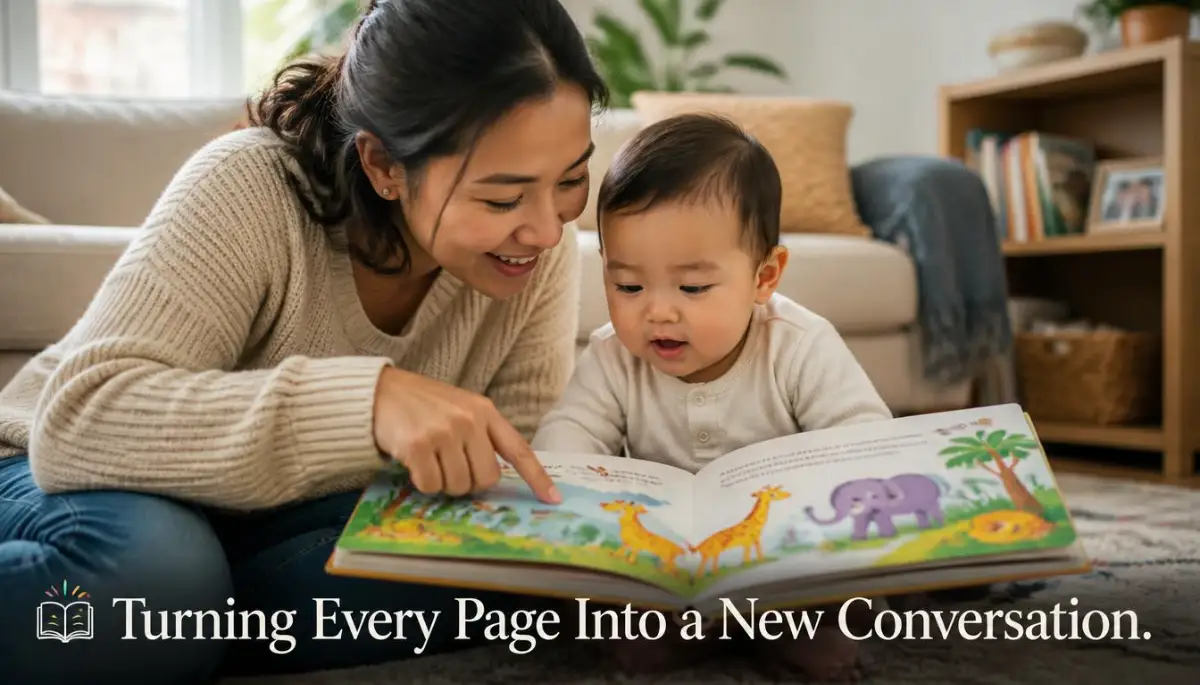
Turning Daily Routines Into Your Baby’s First Classroom
The most powerful tool for language growth is already in your house. It is the way you live your life. You do not need to set aside "study time" for a ten-month-old. Instead, you can turn your regular chores into a rich world of sounds and meanings. This is often called "narrating your life," and it is a game-changer for early speech. When you describe what you are doing, you are giving your baby a dictionary of the world in real-time.
### Too Busy to Read? Here is the Cheat Sheet:
- Narrate Everything: Act like a sports commentator for your baby’s daily life (diaper changes, cooking, laundry).
- Wait for the Return: When your baby coos, wait 5 seconds before responding to give them space to 'think.'
- Ditch the Screens: Your face and voice are 10x more effective than 'educational' videos.
- Keep it Simple: Use real words, but speak in a happy, rhythmic tone (Parentese).
| Daily Activity | What to Say (The "Narrator" Mode) | Why it Helps |
| :--- | :--- | :--- |
| Feeding Time | "The oatmeal is warm and sticky. Yum!" | Connects textures to words. |
| Folding Laundry | "Here is a tiny blue sock. One, two socks!" | Introduces colors and counting. |
| Walking Outside | "Look at the green leaf. The wind is blowing it." | Teaches cause and effect. |
Think about a simple diaper change. Instead of doing it in silence while thinking about your to-do list, talk through it. Tell your baby, "Now I am opening the tabs. Brrr, the wipes are a little cold! Now you have a clean, dry diaper. Doesn't that feel better?" It might feel weird at first, but your baby is learning the rhythm of conversation. They are hearing the rise and fall of your voice and connecting words to physical feelings.
This method works because it is repetitive. Babies love repetition. They need to hear a word hundreds of times before they try to say it themselves. By talking through your morning coffee or the laundry, you are providing that repetition in a natural way. You are showing them that words have power and that they are used to describe the things we see and touch every day.
The Magic of the "Serve and Return" Method
Science tells us that the best way to grow a baby's brain is through "serve and return" interactions. Think of it like a game of tennis. Your baby "serves" by making a sound, a facial expression, or a gesture. You "return" the ball by responding with a word or a smile. This back-and-forth is the foundation of all human communication. It builds the neural paths that will later hold complex sentences and thoughts.
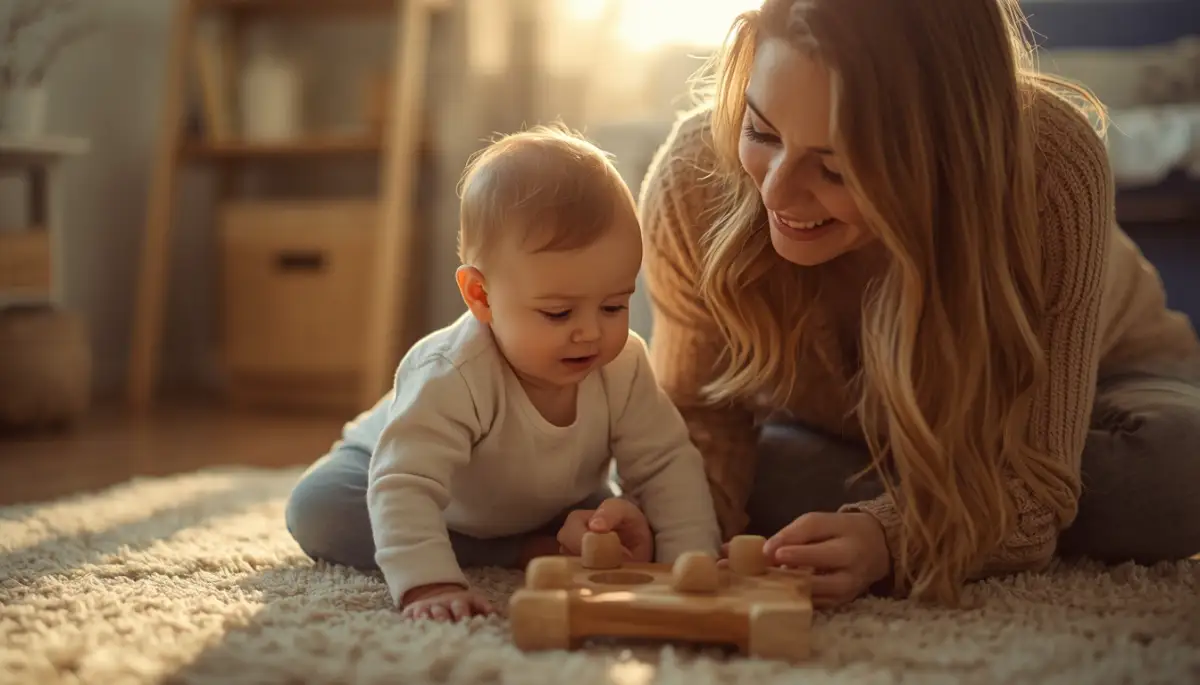
When your baby points at a dog in the park, they are serving. If you look at the dog and say, "Yes, that is a big brown dog! He is wagging his tail," you have returned the serve. This tells your baby that their attempts to communicate are successful. It encourages them to try again. If we ignore these "serves," babies eventually stop trying as hard because they don't see the point.
Pro Tip: I used to think I had to wait for my baby to make a "real" word before I responded. I was wrong! I learned that even a tiny grunt or a focused look at an object is a call for conversation. Now, I treat every little noise like the most interesting thing I've ever heard, and it has made my baby much more vocal.
The key here is to wait. After you return the serve, give your baby time to process. Their little brains work a bit slower than ours. Count to five in your head before you speak again. This silence gives them the space to try a "return" of their own. It teaches them that conversation involves listening and waiting for a turn.
The 5-Second Rule for Baby Talk:
I found that I was talking too much. My expert tip? After you ask your baby a question or show them something, count to five in your head. Usually, by 'four,' they’ll make a sound or a face. That’s them 'answering' you. If you keep talking, you’re basically cutting them off!"
Why Eye Level and Facial Expressions Change Everything
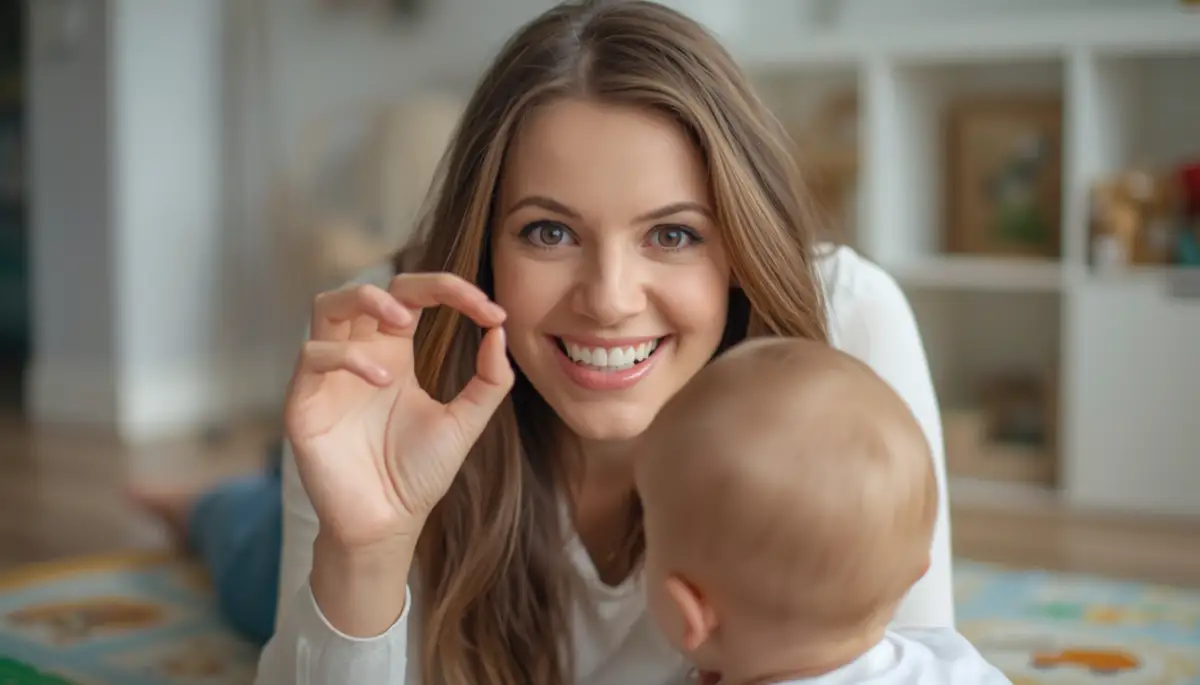
If you want your baby to learn how to make sounds, they need to see how your mouth moves. Talking to your baby while you are looking at your phone or the TV doesn't have the same impact. When you get down on the floor and get eye-to-eye, you are creating a focused learning environment. They watch your lips, your teeth, and your tongue to figure out how to replicate those sounds.
Facial expressions are just as important as the words themselves. Babies are experts at reading emotions long before they understand vocabulary. If you say the word "happy" with a big smile and wide eyes, they learn the meaning through your face. Use "Parentese"—that high-pitched, sing-song voice we naturally use with babies. It isn't "baby talk" (which uses made-up words); it is a way of speaking that helps babies tune into the specific sounds of a language.
Watch This to See How Interaction Shapes the Brain
Seeing these interactions in real-time can help you understand how to react to your baby's babbles. This video shows the science behind the bond we build through talk.
The Power of Object Labeling in Natural Settings
One of the easiest ways to build a vocabulary is to name everything. This is called "labeling." When you are at the grocery store, don't just shop in silence. Hold up a banana and say, "Look, a yellow banana. It feels smooth." When you put on their shoes, say, "Here is your blue shoe. One shoe, two shoes." You are building a mental map of their world.
Try to follow your baby's lead. If they are staring at a ceiling fan, don't try to talk to them about a toy on the floor. Talk about the fan! Say, "The fan is spinning. Round and round it goes." When you talk about what they are already interested in, the information sticks much better. They are already paying attention, so you are just adding the words to the experience they are having.
Using Music and Rhyme to Build Sound Awareness
Rhythm and rhyme are like vitamins for a baby's ears. Songs like "Twinkle Twinkle Little Star" or "The Itsy Bitsy Spider" use repetitive patterns that are easy for babies to track. The melody helps them remember the words, and the actions (like the spider's legs) help them connect the words to movements. You don't need to be a good singer. Your baby thinks your voice is the best sound in the world.
Songs also introduce the idea of "syllables" without you even trying. When you clap along to a rhyme, you are breaking down words into smaller bits. This helps babies later when they start trying to put sounds together. It makes the language feel like a game rather than a lesson. We want our children to love communicating, and music is the fastest way to make that happen.
The Importance of Reducing Background Noise
In our busy homes, it is easy to have the TV or a podcast running in the background all day. For an adult, this is just "white noise." For a baby trying to learn a language, it is a major distraction. It makes it hard for them to pick out your voice from the other sounds. Their brains have to work extra hard to filter out the noise, which means they have less energy to focus on learning your words.
Try to have "quiet hours" where the electronics are off. This doesn't mean the house has to be silent. It just means that the primary sound should be human interaction. When the environment is calm, your baby can hear the subtle differences between "b" and "p" or "d" and "t." These small sounds are the building blocks of speech, and they need a clear channel to reach your baby's ears.
Reading Together: More Than Just a Story
Books are amazing because they introduce words we don't usually use in daily life. You might not talk about "giraffes" or "submarines" while eating lunch, but a book will! Reading to your baby from day one is one of the best things you can do. But you don't even have to read the words on the page. You can just talk about the pictures.
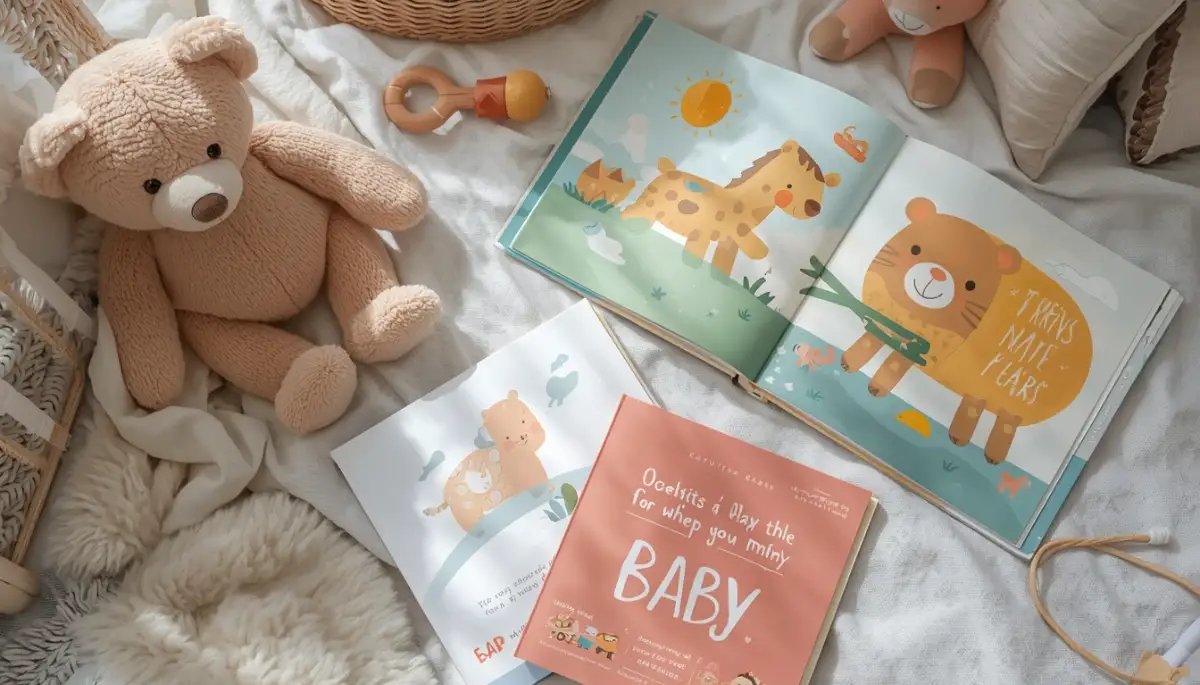
Ask questions, even if they can't answer. "Where is the red bird? Oh, there he is! He is sitting on the tree." Point to the pictures as you name them. This helps your baby understand that symbols (like pictures or letters) represent real things in the world. It builds the foundation for reading and writing years before they ever go to school.
The Role of Play in Language Development
Play is the "work" of a child. When you play with blocks, cars, or dolls, you are creating endless opportunities for talk. Use "action words" during play. "Push the car," "Stack the blocks," or "The doll is sleeping." These verbs are just as important as nouns. They help your baby understand how the world moves and how people interact with things.
Keep it simple. You don't need toys that talk or light up. In fact, simple toys like boxes, spoons, or wooden blocks are often better. They require the baby (and you) to provide the sounds and the "story." When a toy does all the talking, the parent and the baby tend to stay quiet. The best toy for a baby's language development is a parent who is willing to play and chat.
Encouraging "Vocal Play" and Mimicry
Before babies say words, they experiment with sounds. They blow raspberries, make clicking noises, and screech. This is "vocal play." It is how they learn to control their breath and their mouth muscles. When your baby makes a funny sound, copy it back to them! This usually leads to a "sound battle" where you both take turns making silly noises.
This mimicry is the first step toward repeating actual words. It shows your baby that making sounds is fun and that you are paying attention. When they realize that their voice can get a reaction out of you, they become much more motivated to keep trying. It turns the hard work of learning to speak into a joyful game shared between the two of you.
Staying Patient During the "Quiet" Phase
Every baby grows at their own pace. Some babies are "chatty" from the start, while others are "observers" who take everything in before they try to speak. It is easy to get frustrated or worried if you don't see immediate results. But remember, the learning is happening inside, even if you can't hear it yet. Your job is to keep providing the "input" through your daily talk.
Think of it like watering a seed. You don't see the plant for a long time, but if you stop watering it, it won't grow. Your words are the water. Keep talking, keep singing, and keep responding to their tiny cues. One day, the "output" will happen, and you will be amazed at everything they have been storing up in their little minds. Your consistency is the greatest gift you can give their developing brain.
Moving Forward: Building a Lifetime of Communication
Early language acquisition is a beautiful journey that shapes your child's future. It is about more than just vocabulary; it is about building a world where your child feels heard and understood. Every time you explain a flower, sing a song, or respond to a coo, you are laying a brick in the foundation of their intelligence and emotional health.
You are your child's first and best teacher. You don't need a degree or a special kit. You just need to be present and willing to share your world with them. The silence that once felt awkward will soon be filled with the sounds of their laughter and their first stumbling words. Keep going, stay patient, and enjoy the wonderful process of watching your baby find their voice. It is a slow process, but the rewards last a lifetime.
Advanced Techniques to Expand Your Baby’s World of Words
Now that you have started narrating your day, it is time to look at more focused ways to build those brain connections. One of the best secrets is a method called expansion. This is when your baby makes a small sound or says one word, and you build a bigger sentence around it. If your baby points to a car and says "Ca!", you can say, "Yes, that is a fast red car!"
This technique shows your baby how to add more detail to their thoughts. You are taking what they already know and giving them the next piece of the puzzle. It makes them feel like a successful communicator because you understood their first attempt. This tiny boost in confidence is what encourages them to try bigger words later on. It is like helping them walk by holding their hands before they take a solo step.
Another powerful tool is scaffolding, which is very similar but focuses on the "why" and "how." If your baby is playing with a ball, don't just name the ball. Talk about what it is doing. You could say, "The ball is rolling under the chair. Oh no, it’s gone!" You are teaching them about space, movement, and cause and effect all at once.
Experts at Zero to Three emphasize that these back-and-forth exchanges are the most important part of early growth. You are not just teaching words; you are teaching how the world works. When you use this method, you are acting as a bridge between their current skills and their future potential. It takes a little more effort than just labeling, but the results are worth it.
You should also pay close attention to joint attention. This happens when both you and your baby are looking at the same thing at the same time. If a bird flies by and you both watch it, that is the perfect time to talk. Language sticks much better when the child is already focused on the object. It reduces the "work" their brain has to do to figure out what you are talking about.
For parents who spend a lot of time on the floor playing, it is important to stay physically active too. Understanding how sitting for six hours affects your veins can help you remember to stretch and move while you play with your little one. A healthy parent is a more engaged teacher. When you feel good, your energy for these "serve and return" moments stays high throughout the day.
Don't forget the power of descriptive praise. Instead of just saying "Good job," try to be specific. Say, "I love how you used your words to ask for more milk!" This helps the baby understand exactly what behavior you liked. It reinforces the idea that using language is a positive and rewarding experience. They learn that their voice has a specific impact on the people around them.
Research from the Harvard Center on the Developing Child shows that these interactions actually shape the physical structure of the brain. You are literally building a stronger brain every time you respond to a coo or a gesture. It is a slow and steady process that builds up over months. You won't see a change every day, but a year from now, you will see a huge difference.
To keep these results going for the long term, make sure you are consistent. You don't need to be perfect, but you do need to be present. Try to set a goal to have at least five "deep" conversations a day. These are moments where you are fully focused on each other without any distractions. This habit will serve your child well into their school years.
Common Traps That Can Slow Down Your Baby’s Progress
One of the biggest mistakes parents make is relying too much on digital screens. It is very tempting to put on a "learning" video when you are exhausted and need a break. However, screens are passive. They don't respond to your baby's unique sounds or facial expressions. A baby can hear a word ten times from a tablet and not learn it, but they might learn it in one try from your face.
The human connection is the "secret sauce" for learning. Without that live interaction, the sounds are just noise to a developing brain. If you feel like your baby is spending too much time with technology, try to swap screen time for "face time." Even five minutes of real interaction is better than an hour of a high-tech cartoon. Your face is the most interesting thing in the world to your baby.
Another trap is constantly correcting your baby's pronunciation. When a toddler says "wabbit" instead of "rabbit," don't make them stop and repeat it correctly. If you do this too much, they might become afraid to speak at all. They might start to think that talking is a test they are failing. Instead, just model the correct word back to them naturally.
If they say "wabbit," you just say, "Yes, that is a soft white rabbit!" You have given them the correct sound without making them feel bad. This keeps the conversation flowing and keeps their confidence high. We want them to love talking, not fear it. Language should be a tool for connection, not a source of stress for a tiny child.
Many parents also fall into the habit of over-talking. Sometimes, we get so excited about "teaching" that we don't leave any room for the baby to respond. If you are talking non-stop, the baby never gets a chance to "serve" the ball back to you. They become a passive listener instead of an active participant. Remember to use those long pauses we talked about earlier.
Silence is not a bad thing. It is an invitation for your baby to fill the gap. If you always fill the silence, they might become "lazy" communicators because they know you will do all the work. Give them the space to struggle a little bit as they find the right sound. That struggle is where the real learning happens and where their muscles get stronger.
I have seen many families get stressed about milestones, leading to a "pushy" environment. This stress can make a baby shut down. If the house feels like a classroom all the time, the joy of discovery is lost. Try to keep things light and fun. If you are worried about your own stress levels, checking for subtle signs of prediabetes or other health issues can help you ensure you have the physical stamina to stay patient.
A quiet home can sometimes be a sign of a busy parent, but it can also lead to a "language delay" that is easily avoided. If you are going through a big life change, like a job change during a mortgage process, your mind might be elsewhere. It is easy to forget to talk when you are worried about bills or moving. Try to use your baby as a way to destress. Talk to them about your day to clear your own head.
Lastly, don't assume that it is "too early" to start. Some people think there is no point in talking to a newborn because they don't understand. This is a big mistake. The foundation for language is built in the first few weeks of life. Even if they don't know what a "refrigerator" is, they are learning the sounds that make up the word. Starting late means your baby has to work twice as hard to catch up later.
Your Daily Path to a Confident Little Speaker
The journey of language is one of the most exciting parts of being a parent. You are watching a human being find their voice and start to share their inner world with you. It doesn't require any expensive kits or "genius" programs. It just requires you to be there, to listen, and to chat. Every small interaction is a seed planted for their future success in school and in life.
Think of your daily conversations as a long-term investment. Just like building home equity faster requires small, consistent payments, building a vocabulary requires small, daily chats. You won't see the "wealth" of their language overnight. But after a few years, you will be amazed at the complex and beautiful things your child can say.
Try to make your home a "language-rich" environment. Keep books in every room. Turn off the TV when no one is watching it. Talk about the weather, the food, and the way the cat stretches. There is no topic too small for a baby. They are interested in everything because everything is new to them. You are their guide to this big, exciting world.
If you ever feel overwhelmed, just remember to simplify. You don't have to be a perfect teacher. You just have to be a loving parent who talks. Your voice is the most comforting and educational tool your baby will ever have. Trust yourself and trust the process. The words will come in their own time, and when they do, it will be the best music you’ve ever heard.
I remember when I first started being intentional about talking to my baby. At first, I felt like I was talking to myself, and it was a bit lonely. But then, one day, he looked at me and made a sound that perfectly matched my tone. That tiny moment made all the "silly" narration worth it, and I know you will have that same moment of joy very soon. Just keep talking and keep listening; you are doing an amazing job.
Common Questions About Baby Speech Habits
How many words should my baby know by their first birthday?
Most babies will have at least one or two "real" words like "mama" or "dada" by age one. However, they understand much more than they can say. Focus more on their ability to follow simple directions, like "Where is the ball?" This shows their brain is processing language correctly even if their mouth isn't ready yet.
Does using a pacifier all day cause speech delays?
Using a pacifier too much can limit the time a baby spends "babbling" and practicing sounds. It is okay for sleep or comfort, but try to keep it out of their mouth during playtime. This gives them the freedom to move their tongue and lips to experiment with new noises.
Should I teach my baby sign language to help them talk?
Yes, baby sign language can actually help speech development rather than slow it down. It gives the baby a way to communicate their needs before they have the physical ability to speak. This reduces frustration and builds the "communication" habit in their brain.
What if my baby isn't making any sounds by six months?
If your baby is very quiet and doesn't coo or respond to your voice, it is a good idea to mention it to your doctor. Often, it is just a minor delay or even a simple ear infection causing temporary hearing issues. Early checks are the best way to ensure everything is on the right track for their growth.
Can a noisy house affect how my baby learns to speak?
A house that is always loud with music or TV can make it hard for a baby to hear the specific sounds of your voice. Try to have some quiet time every day where the only thing they hear is you. This helps them focus on the building blocks of language without being distracted by background noise.
Disclaimer: This article is for informational purposes only and does not replace professional medical or developmental advice. Always consult with a pediatrician or a qualified speech-language pathologist if you have specific concerns about your child's milestones or health. Every child is unique and develops at their own individual pace.