
The Midnight Panic of Studying Everything and Remembering Nothing
Let’s be honest: studying hard doesn’t always mean you’ll get an A. I used to spend all night reading every single page of my textbook, yet I’d still freeze up when the exam paper landed on my desk. It felt like I was playing a guessing game where the teacher always had the upper hand. If you’re tired of feeling like your brain is a blank slate during finals, you need to stop reading and start investigating. Here is how I learned to "read" my teachers' minds by looking at their old tests.
Many of us face this exact struggle during every major exam cycle. We pour endless hours into highlighting pages and rereading chapters, hoping something will stick. This unstructured approach drains our energy and leaves us feeling completely burned out.
The mental toll of this constant worry is incredibly high. You lie awake at night wondering if you focused on the wrong topics. Your stomach knots up every time you think about the upcoming test day, ruining your peace of mind.
We desperately try to find a shortcut, but general study tips online feel too vague to help. We are left guessing what our teachers will actually ask when the test paper is handed out. This constant guessing game makes studying feel like a high-stakes gamble instead of a structured journey.
Cracking the Teacher's Code: How to Spot Patterns in Old Exams
Teachers are creatures of habit just like anyone else. They have specific topics they find highly important and concepts they love to test. When we analyze past papers, we are not just looking at questions; we are studying the minds of our examiners.
Think of an old exam paper as a map left behind by a seasoned explorer. By studying the paths they took before, you can easily predict the obstacles you will face next. This systematic review turns a guessing game into a clear and predictable path to success.
🚀 Your 3-Step "Test Detective" Plan
If you're in a hurry, here is the secret sauce to ace your next exam:
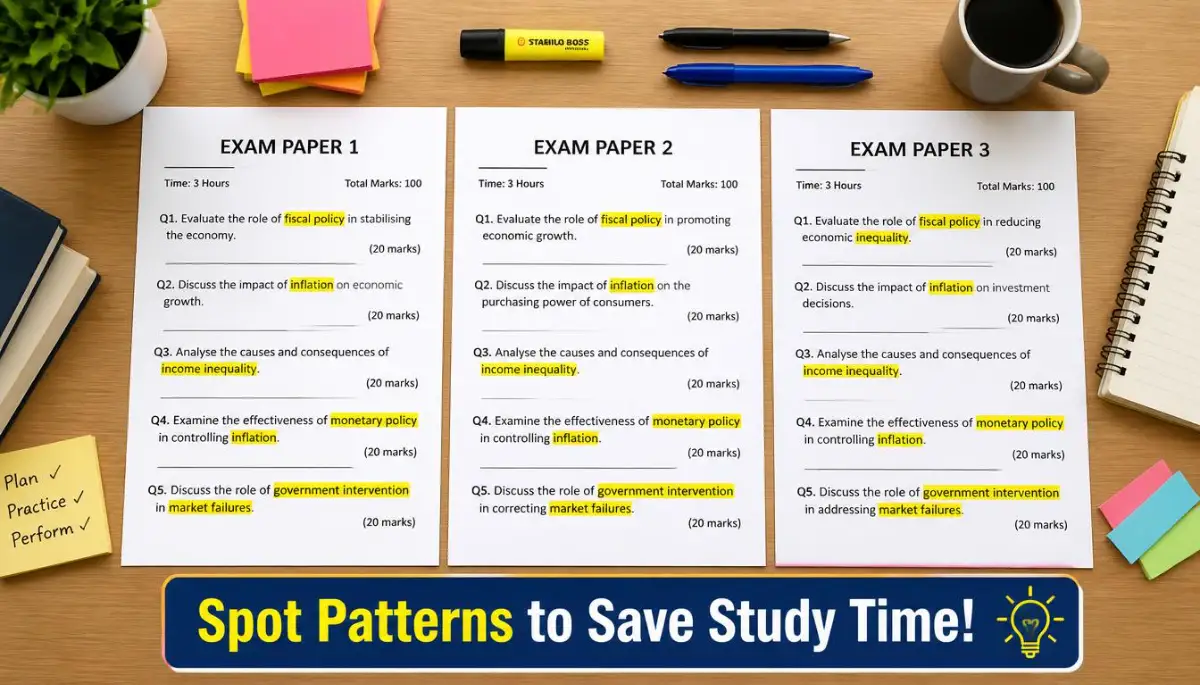
- Spot the Patterns: Grab 3 old tests and highlight topics that show up in every single one.
- Follow the Points: Focus 80% of your time on the sections that carry the most marks (like long-form essays).
- Clock It: Don't just read the answers. Sit down, set a timer, and try to solve a past paper without looking at your notes.
Grouping Repeating Topics by Theme
Gather at least three past exam papers from the same course or instructor. Lay them out side by side on a large table so you can see them all at once. Look closely at the big essay questions or high-point problems first.
You will quickly notice that certain chapters appear on every single test paper. Even if the specific numbers or wording change, the core concept remains exactly the same. Mark these recurring topics with a bright highlighter so they stand out immediately.
This simple exercise shows you where your teacher expects you to show deep understanding. It saves you from wasting hours on minor details that are highly unlikely to be tested. You can now direct your energy toward the concepts that actually carry the most weight.
The Hidden Clues in Exam Point Allocation
Look at how many points are assigned to each section of the old test. If multiple-choice questions only account for ten percent of the grade, do not spend all your time practicing them. Instead, focus heavily on the short-answer or problem-solving sections that carry the real power.
This distribution of points reveals what your instructor values most in their students. It shows whether they want you to memorize terms or demonstrate deep application skills. Aligning your study sessions with this point system is a highly efficient way to boost your score.
The "High-Yield" Strategy Table
Don't treat every chapter the same way. Use this simple guide to decide where your energy goes:
If you want to see a visual demonstration of how to map out exam points on a simple spreadsheet, this quick video guide is incredibly helpful. It shows how to spot patterns in under ten minutes.
Categorizing the Styles of Questions
Some teachers love to ask definition questions, while others prefer scenarios where you must apply a theory. By analyzing old tests, you can easily determine which style of questioning your instructor prefers. This allows you to practice writing answers in the exact format they expect to see.
If the past papers are full of wordy scenarios, stop memorizing simple dictionary terms. Start creating your own practice scenarios and solving them using the class theories. This active preparation ensures you will not feel shocked when you open the real test paper.
My Pro Tip: I used to think all questions on old tests were equally important to review. Then I started highlighting repeating topics in pink, and I immediately saw that eighty percent of the points came from just three main chapters. This simple discovery completely changed how I managed my study time before finals.
Unmasking the Subtle Traps in Multiple-Choice Questions
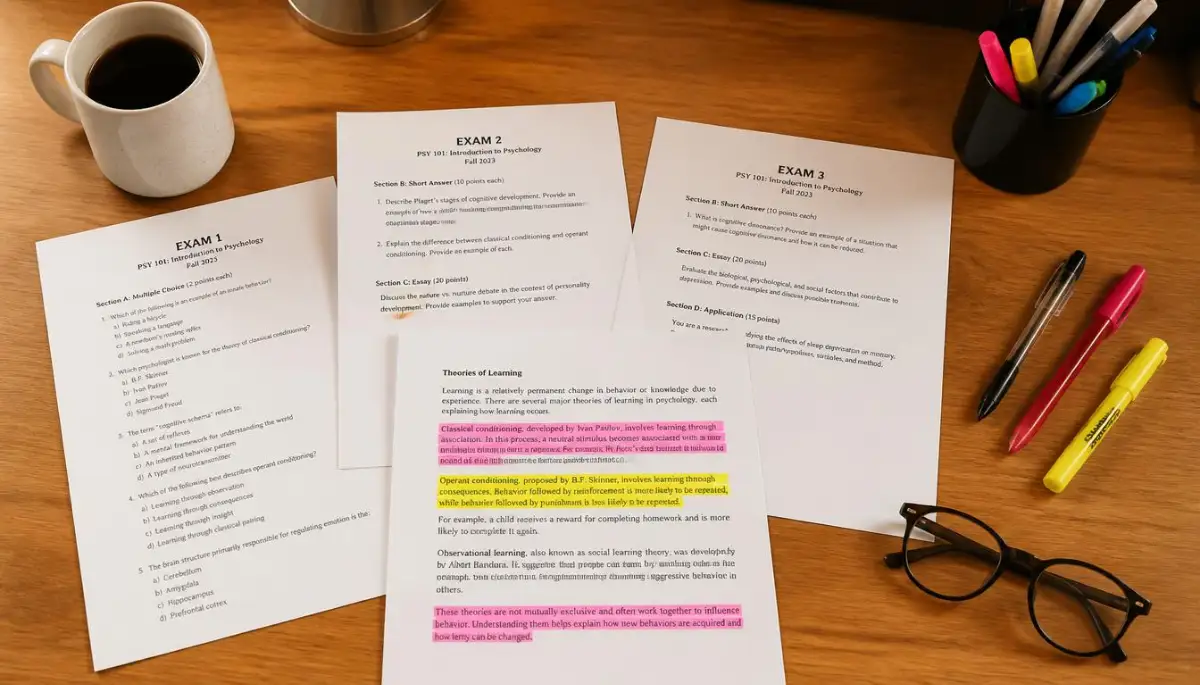
Multiple-choice questions are rarely designed to be simple; they often contain clever traps to test your attention to detail. Instructors usually include one or two options that look correct at first glance but contain a minor error. By studying past questions, you can learn to recognize these common distractors before they catch you off guard.
Real Talk: Myths vs. Reality about Past Papers
I’ve heard so many students say they don't use old tests because they think it's "cheating" or "useless." Let's clear that up:
- Myth: The teacher won't repeat the same questions twice.
- Fact: They might not copy-paste, but they almost always test the same concepts.
- Myth: Studying old tests is a shortcut for lazy people.
- Fact: It’s actually "data-driven studying." You are working smarter, not just harder.
Pay close attention to words like "always," "never," or "except" in the old question stems. These absolute words often change the entire meaning of the question and point to the correct choice. Learning these tiny linguistic habits of your teacher makes you a much sharper test-taker.
It is also highly useful to analyze the wrong answers on past tests. Try to figure out exactly why the teacher included those specific incorrect options. This exercise deepens your subject knowledge and keeps you from falling into similar traps on your upcoming exam.
The Scientific Method of Recreating Test Conditions
Simply reading through old exam questions with the answer key open beside you is a highly passive way to study. Your brain feels comfortable because it recognizes the answers, creating a false sense of confidence. To get real value, you must use these past papers to run a realistic mock trial.
Find a quiet room, set a timer for the exact duration of the real test, and put your books away. Treat this mock exam with the same level of seriousness as the actual test day. This practice builds your physical stamina and teaches you how to manage your time under pressure.
When the timer stops, use the official grading rubric to score your own work strictly. Be honest about your mistakes and identify the areas where your logic broke down. This active feedback loop is the fastest way to turn your weak spots into areas of strength.
Managing Your Time Allocation and Testing Stamina
Many students fail exams not because they do not know the material, but because they run out of time. They spend way too long on difficult early questions and never reach the easier points at the end. Recreating test conditions helps you practice pacing yourself so you can finish every section comfortably.

Develop a simple time budget based on the points allocated to each section of the test. If a section is worth half the total grade, it deserves half of your total testing time. Sticking to this strict budget prevents panic and ensures you do not leave easy points blank.
This physical and mental conditioning is just as important as memorizing the actual facts. It keeps your mind sharp and focused during the final hours of a long, challenging exam. With practice, you will enter the testing hall feeling calm, controlled, and ready to succeed.
Analyzing the Language and Vocabulary of the Examiner
Every teacher has a unique academic vocabulary they use when writing test questions. They might prefer words like "compare" instead of "describe," or "analyze" instead of "list." Paying close attention to these action verbs on old papers helps you understand exactly what kind of answer they want.
If a question asks you to "compare," simply listing facts about one topic will not get you full marks. You must actively explain the similarities and differences between two separate concepts. Using the teacher's preferred verbs in your practice answers makes your work look highly professional and complete.
This attention to detail shows your instructor that you are truly engaged with the course material. It makes grading your paper an easy, pleasant task for them, which can often lead to better marks. Speak their language on the page, and you will see a noticeable rise in your final grades.
Tracking the Shift in Core Material Across Different Semesters
Sometimes, a course updates its curriculum or adopts a new textbook over time. Comparing past tests from different semesters helps you spot which core concepts have remained steady and which ones have been dropped. This comparison ensures you are not wasting time on outdated materials that are no longer part of the course.
Focus heavily on the newest old exams first, as they represent the most accurate picture of your teacher's current style. Use the oldest papers merely to practice basic problem-solving and vocabulary. This smart prioritization keeps your study sessions highly aligned with the exact test you will write.
It also helps you see if the instructor is gradually moving toward a more modern, analytical testing format. Spotting this shift early allows you to adjust your preparation before your classmates even realize there is a change. You can then study with the peace of mind that comes from being perfectly prepared.
The Psychological Advantage of Predictive Study Habits
When you enter an exam room knowing exactly what types of questions to expect, your brain behaves very differently. Instead of triggering a stressful fight-or-flight response, your mind remains calm and analytical. This positive mental state allows you to access your stored memories quickly and write much clearer answers.
Anxiety often causes students to misread simple instructions or make silly math errors. By using old tests to predict the exam layout, you eliminate the element of surprise that triggers this anxiety. You transform the test room from a place of fear into a familiar practice field where you are in control.
This confidence is not based on wishful thinking; it is built on real, historical data from past exams. You know exactly what concepts are coming because you have done the detective work beforehand. This mental preparation is often the main difference between average grades and top scores.
Building a Mock Exam Folder with Classmates
You do not have to do all this investigative work alone; collaborating with classmates can make the process much faster and more fun. Create a shared digital folder where everyone can upload different past tests, notes, and teacher guidelines. This collective database gives you access to a much wider range of practice questions.
Work together to write custom mock tests based on the patterns you have all identified in the old papers. Swap your practice exams with a friend and grade each other's work using the official criteria. This collaborative feedback helps you spot minor errors in your writing that you might have missed on your own.
It also builds a supportive learning environment where everyone helps each other succeed. Having study partners to discuss difficult questions reduces the loneliness of exam preparation. You will find that studying becomes a shared journey instead of an individual struggle.
Advanced Tactics for Spotting Hidden Exam Trends
Old tests are incredible tools, but their value changes when a course introduces new reading materials. To stay ahead, you must cross-reference your past papers directly with the current syllabus requirements. Look for areas where the teacher has added fresh topics while quietly dropping older themes.
If a specific concept has been featured on every old exam and is still prominently listed on your current syllabus, it is almost guaranteed to appear again. On the other hand, if a topic has been removed from the weekly readings, you can safely skip analyzing those specific past questions. This systematic cross-referencing saves you from wasting valuable storage space in your brain.
The Art of Reverse-Engineering Question Stems
Instead of simply solving a past problem, try to break down the actual language of the question itself. Examine the verbs the teacher uses to frame their questions, such as "evaluate," "compare," or "summarize." Each of these terms requires a completely different type of academic response from you on test day.
When you master this linguistic decoding, you can draft practice answers that perfectly match what your professor wants to see. This method is incredibly useful when managing heavy academic workloads, helping you study with a highly targeted focus. If you find yourself struggling with academic pressure or feeling overwhelmed, you can read about overcoming college burnout to regain your balance and clarity.
Let us look at a professional study on how question framing affects cognitive processing in student assessment. For a deeper understanding of this phenomenon, you can read the published research on how question phrasing influences student performance to refine your writing style. This approach ensures your answers always align with standard academic expectations.
Establishing a Personal Pattern Repository
To achieve excellent results over the long term, you should build a dedicated binder or digital folder for your exam analysis. Treat this repository like a private database where you track different test structures, question styles, and grade distributions. Over time, you will start to see broad patterns that run across different courses and different teachers.
This long-term tracking helps you develop a natural instinct for recognizing what is highly likely to be tested. You stop viewing exams as sudden threats and start seeing them as predictable, logical puzzles.
Managing tight schedules requires you to treat your study hours with the same care as a financial plan. You can use this guide on smart budgeting methods for self-employed pros as a metaphor for managing unstable resources, showing you how to allocate your limited energy where it matters most. By investing your time in high-yield study habits, you protect yourself from burnout.

Dangerous Pitfalls: The Blind Spots That Leave Students Exposed
A heartbreaking mistake many students make is memorizing the exact answers to past questions word for word. They walk into the test hall hoping the teacher will copy and paste the old exam on the new page. When the instructor makes a minor change to the numbers or the scenario, these students freeze in absolute panic.
Rote memorization bypasses the actual learning process, leaving you completely unprotected when the questions shift. In fact, comprehensive scientific research on rote learning disadvantages shows that it actively limits your brain's ability to apply old knowledge to new problems. If you do not learn the core concepts, you are setting yourself up for a devastating academic setback.
This issue of relying too much on static patterns is a common theme in modern education discussions. To see how reliance on static systems is being studied globally, you can read this academic guide on balancing foundational learning with modern automated systems to see why deep thinking remains so valuable. Understanding the logic behind the system is what gives you true academic freedom.
The Danger of Studying in a Passive Silent Vacuum
Another massive mistake is keeping your exam analysis completely to yourself, never discussing your predictions with your peers. Studying in isolation prevents you from seeing different interpretations of how a question might be framed. You miss out on the collective brainpower of your classmates, who could easily spot a pattern you overlooked.
When we discuss past papers in a study group, we challenge our assumptions and clarify our muddy logic. It is during these active discussions that the true structure of the upcoming exam becomes crystal clear. Sharing your thoughts and listening to others is a natural way to test your preparation before the actual day.
This type of collaborative work is built on open communication and deep understanding of other people's views. If you want to make your group study sessions far more productive, look into improving conversational active listening to build stronger study relationships. By truly listening to your peers, you can find hidden exam patterns that you would have missed on your own.
Assuming Every Past Paper is Equally Reliable
Not all old exams are created equal, and treating them as such can lead to severe preparation errors. An exam from five semesters ago might have been written by a completely different professor with a different teaching style. If you study that old paper without checking who wrote it, you are preparing for a test that does not exist.
Always verify the authorship of your past papers before you begin your analysis. Focus your valuable study time on papers written by your current instructor, as their unique habits will guide the new test. Ignoring this simple step can leave you feeling deeply confused and frustrated when you open your real exam sheet.
If you need a comprehensive view of how to balance high-stress academic responsibilities with your busy schedule, refer to this survival guide for working college students to find peace and direction. This collection of strategies will help you avoid common mistakes while keeping your mental health balanced.
Stepping Into Your Next Test Hall with Quiet Confidence
Predicting your next exam questions is not a magical trick; it is a logical science based on historical data. By analyzing past papers, you take back control of your grades and eliminate the stress of the unknown. You transform the test from a scary guessing game into a familiar set of challenges you are ready to solve.
The quiet confidence you feel when walking into the exam room is built on consistent, smart preparation. You have done the analytical work, decoded the patterns, and practiced under real testing conditions. Now, all that is left is to put your plan into action and watch your hard work turn into excellent scores.
Your Next-Day Study Checklist
To make this strategy part of your routine, print out three past papers for your hardest course tomorrow. Spend just thirty minutes marking the repeating topics with a bright highlighter. This small, active step will immediately show you where to focus your attention for the rest of the week.
To see how global academic institutions approach exam standards and testing patterns, you can check the academic resources on student assessment to see why pattern recognition is highly valued by educators worldwide. This perspective confirms that your predictive study habits are backed by professional educational science.
Remember that academic success is not about studying harder; it is about studying smarter. By focusing on high-value patterns, you save your energy and build long-term confidence. Start your analysis tomorrow, and take the first step toward stress-free study sessions.
What Students Always Ask About Predictive Study Methods
How many past papers do I need to find reliable exam patterns?
You generally need at least three past exams from the exact same professor to identify reliable trends. Having five papers is even better, as it allows you to spot long-term shifts in topic focus. If you only have one old test, use it to study question styles rather than predicting specific repeating topics.
What should I do if my professor does not release past exam papers?
If past papers are unavailable, look for chapter review questions at the back of your course textbook. Teachers often use these textbook problems as the exact blueprint for their real test questions. You can also review your weekly quizzes, as they contain the basic building blocks of your upcoming exam.
Can predicting exam questions lead to missing important course material?
This predictive method does not mean you completely ignore the rest of your course readings. Instead, it helps you prioritize your limited study hours so you master the high-yield topics first. Once you are completely confident with the predicted material, you can easily review the remaining details.
How do I know if a past paper is too old to be useful?
Any exam paper that is more than three to four years old might contain outdated theories or obsolete syllabus requirements. To verify if an older paper is still relevant, compare its questions directly with your current course syllabus. If the topics are no longer listed in your weekly guide, you should skip those old questions.
In my own educational journey, I have watched my anxiety disappear the moment I stopped guessing and started analyzing past tests systematically. My proudest moments are when my predictions perfectly match the actual test questions, turning a stressful day into an absolute victory. I encourage you to try this smart method today and experience the incredible peace of mind that comes from being truly prepared.
Disclaimer: The exam prediction and study strategies discussed in this guide are intended solely for educational purposes. While analyzing past exam papers is an exceptionally effective study method, individual results will vary depending on your curriculum, personal effort, and specific teacher grading policies.