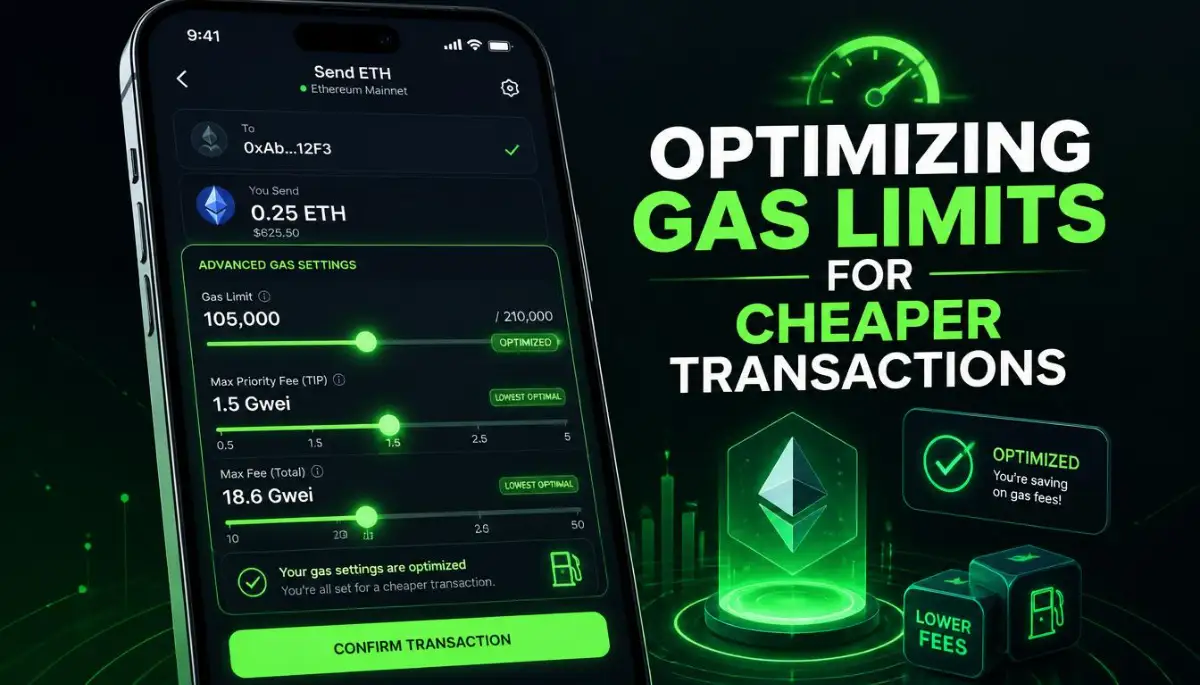
The Invisible Drain on Your Crypto Wallet: A Real-World Nightmare
Watching your money disappear into Ethereum gas fees feels like paying a hidden tax you never signed up for. I’ve been there—staring at a $60 fee for a simple $50 transfer. It’s frustrating, and honestly, it makes you want to quit crypto altogether. But after losing hundreds of dollars to failed transactions and peak-hour traffic, I finally figured out how the system actually works. You don’t have to just accept high fees; you just need a better game plan.
You sit there staring at your phone screen in absolute disbelief. Your heart sinks because you feel completely stuck, helpless, and cheated by the very technology that promised cheap, global payments.
This is the frustrating reality of network fees, commonly known as gas fees.
I remember a night when I wanted to buy a small digital collectible. The item itself was worth thirty dollars, but the fee to claim it was over ninety dollars. I decided to wait, hoping the price would go down, but the network stayed busy for hours. By the time the fees dropped to a reasonable level, the digital item was already sold out.
It felt like walking into a bank and being told you have to pay a fifty-dollar fee just to cash a twenty-dollar check. This constant stress makes many beginners want to walk away from decentralized finance altogether. You feel like you are throwing your hard-earned money into a digital black hole with no way to stop it.
The worst part is when a transaction fails. You still lose your fee money, but your transfer never actually goes through.
Getting stuck in traffic, and then being kicked out of the car halfway to your destination while still having to pay the full fare. You do not have to accept these high fees as an unavoidable tax. Once you understand how the system measures traffic, you can start taking control of your transactions.
Let us look at exactly why this happens and how you can protect your wallet from getting drained.

How the Gas System Actually Works : How Ethereum Calculates Your Fees
To stop wasting your money, we first need to break down how the network calculates these fees.
⚡ Too Busy to Read? Here is the Strategy:
- Time it Right: You can save up to 50% just by trading on Sunday mornings or late at night (EST).
- Go to Layer 2: Move your main activity to Arbitrum or Base to pay pennies instead of dollars.
- Don't Panic: Never lower your "Gas Limit" manually; only adjust the "Max Fee" or "Priority Fee."
- Check First: Always keep a gas tracker open in your browser before you even think about hitting 'Send'.
Think of the blockchain as a highway and your transaction as a car trying to get to the other side. If there are only a few cars on the road, the toll is incredibly cheap because the network wants to encourage drivers.
However, when thousands of people try to use the highway at the exact same moment, space becomes limited. Since the blockchain can only process a set number of transfers per second, miners and validators prioritize the people who pay the highest toll.
This brings us to a term you have probably seen in your wallet: Gwei.
Gwei is simply a very small unit of Ethereum, similar to how pennies are small units of a dollar. When you set your transaction fee, you are choosing how many Gwei you are willing to pay for every unit of computational work your transfer requires.
Let us look at the basic formula that determines your final cost:
Total Fee = Gas Limit × (Base Fee + Priority Fee)
This might look slightly confusing, but it is actually very simple when you break it down.
The Gas Limit is the maximum amount of work you are willing to let the network perform for your transaction.
The Base Fee is the minimum price set by the network itself to get your transaction into the next block.
The Priority Fee is an optional tip you give to validators to speed up your transaction when you are in a rush.
If you set your settings incorrectly, you will either pay too much or your transaction will get stuck forever in a digital waiting room.
Common Misconceptions: Separating Gas Myths From Reality
Many people make costly mistakes because they believe incorrect advice they read online.
Myth: Increasing your gas limit makes transactions faster.
Reality: This is completely false.
The gas limit is simply the maximum budget you set for the transaction, like telling a mechanic you will pay up to a hundred dollars to fix a squeaky car door. If the mechanic fixes the door for forty dollars, they only charge you forty dollars.
If you set the gas limit higher, the network does not speed up; it just means you are protected if the transaction requires more work than expected. However, if you set the gas limit too low, the work will stop halfway, the transaction will fail, and you will lose your fee forever because the network still did the work up to your limit.
Myth: The developers of Ethereum pocket your gas fees.
Reality: The developers do not get this money.
Since a major network update, the majority of the base gas fee is actually permanently destroyed, or "burned," to help control the supply of Ethereum. The rest of the small tip goes to the thousands of computer operators around the world who keep the network secure and decentralized.
Actionable Strategies to Lower Your Transaction Costs Right Now
Now that you understand the mechanics, let us explore the actual methods you can use today to save money.
1. Master the Clock: Time Your Transactions for Low Network Traffic
Just like utility companies charge less for electricity during the night, the Ethereum network is cheaper at specific times of the day. If you trade during busy hours, you are competing with millions of other users, which drives prices up.
Studies show that the busiest hours usually align with the United States and European business days. During these hours, institutional traders and retail investors are actively buying, selling, and moving assets.
If you can wait, try to schedule your transactions for late-night hours in US time zones or early morning hours in European time zones.
Weekends are also historically much cheaper than weekdays. Most offices and development teams do not run heavy testing or deploy major projects on Saturdays and Sundays. By simply waiting until Saturday night to perform your non-urgent transfers, you can easily save up to fifty percent on your fees.
You can use free tracking websites like gas price monitors to see real-time fee charts before you open your wallet.
My "Cheat Sheet" for Lowest Gas Fees (EST Time)
2. Learn to Set Custom Fees Manually inside Your Wallet
Most cryptocurrency wallets try to make things simple by automatically suggesting a gas fee for you. Unfortunately, these automated systems are often too cautious. They will suggest a very high fee to ensure your transaction goes through in under a minute, even if you are not in a hurry.
You can change this by clicking on the "Advanced Settings" or edit icon next to the estimated fee in wallets like MetaMask.
This allows you to manually adjust the base fee and the priority tip. If you are sending a standard transfer and do not mind waiting ten or fifteen minutes, you can lower the priority fee significantly. Just be careful not to lower the base fee below the current network minimum, or your transaction will sit pending until network traffic drops.
I always check a reliable gas tracker to see the actual current "low" fee and match my manual settings to that number.
3. Take Advantage of Simulated Transactions Before Committing Real Money
Did you know you can test a transaction before you actually pay for it? Several free tools allow you to simulate smart contract interactions to see if they will succeed. This is incredibly helpful when dealing with decentralized exchanges or complex platform interactions.
If the simulation fails, it means your settings or balances are wrong.
By discovering this error in a free simulator, you prevent a real-world failed transaction that would have cost you precious Ethereum. I make it a habit to use these tools whenever I am interacting with a new platform for the first time.
4. Group Your Transactions to Maximize Efficiency
If you have multiple transfers to make, do not send them one by one throughout the day. Each separate transaction requires its own base fee and setup costs.
Instead, try to group your activities into a single session during low-fee hours. Some modern smart wallets even allow you to batch multiple actions into a single transaction.
This means you can approve a token and swap it in one single click, saving you from paying two separate gas fees. It takes a little bit of planning, but the savings add up quickly over a month of trading.
The Smart Road Ahead for Ethereum Users
Managing your network fees is all about patience, knowledge, and using the right tools.
Once you stop relying on automatic wallet estimates and start timing your transactions, you will notice an immediate difference. You will no longer feel the anxiety of watching your balance disappear into unnecessary fees. In our next guide, we will explore advanced scaling solutions that can reduce your fees to pennies while still keeping your assets secure on the main blockchain network.
Scaling Up Your Savings: Advanced Protocols and Next-Level Tricks
Moving beyond basic timing strategies, we can explore advanced technical solutions to keep your transaction fees near zero. These methods require a slightly deeper understanding of blockchain tools, but the financial payoff is immense. By changing how you interact with decentralized applications, you can stop paying high fees on the main network altogether.
The Power of Off-Chain Roads: Layer 2 Rollups
The most effective way to protect your wallet from high fees is to migrate your activities to secondary networks. When you use Ethereum Layer 2 scaling solutions, your transactions are grouped together off-chain before being secured on the main network. This process spreads a single transaction fee among thousands of different users.
Popular networks like Arbitrum, Optimism, and Base use these methods to reduce transaction costs dramatically. A simple token swap that might cost you fifteen dollars on the main network often costs less than five cents on a rollup. You still enjoy the underlying security of the main network without having to pay its high entry prices.
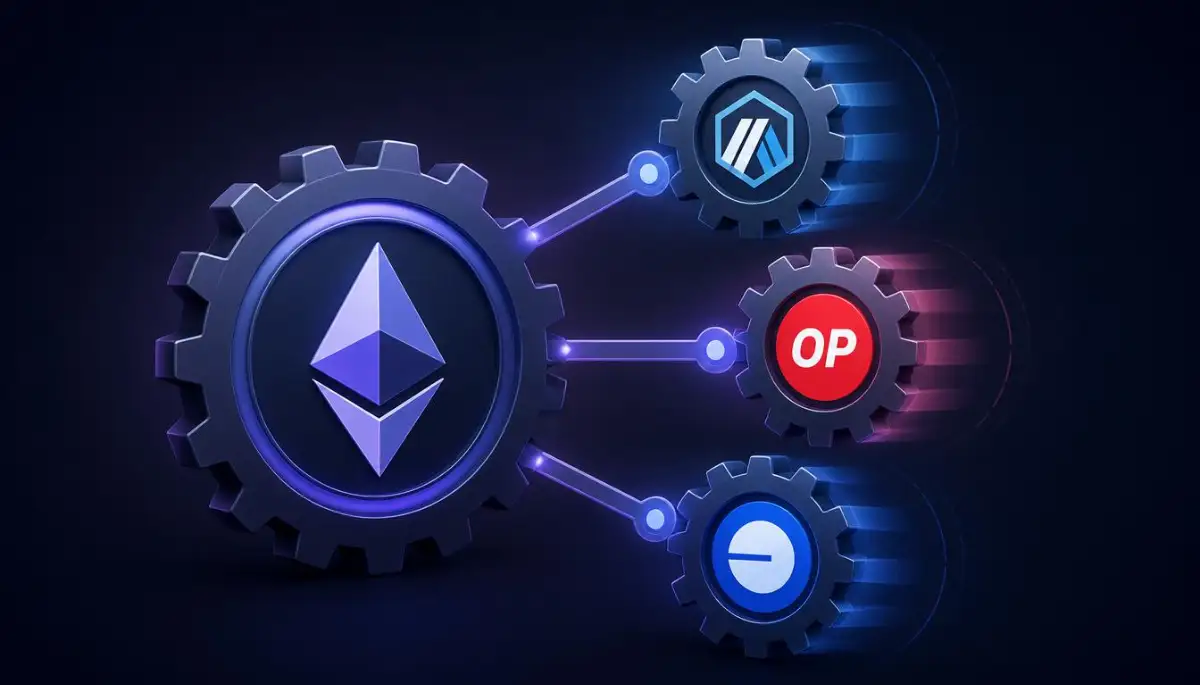
Most major decentralized exchanges and lending platforms already support these networks. All you need to do is bridge your assets from the main network to a Layer 2 network once. After your assets are on the secondary network, you can trade, lend, and borrow repeatedly with almost zero fees.
Smart Router Protocols and Gasless Trading Platforms
Another expert secret is to use decentralized platforms that support off-chain signature approval. Traditional trading platforms require you to submit an on-chain transaction to approve a token before you can swap it. This process forces you to pay two separate network fees just to complete one simple trade.
Modern protocols solve this issue by using batch auctions and gasless trade signatures. You sign a digital message with your wallet to authorize the trade, which does not cost any network fee at all. The platform then groups your order with other traders and processes them together.
The transaction fees are deducted directly from the target asset you are buying, meaning you do not even need to hold Ethereum in your wallet to cover the cost. This method also protects you from automated bots that try to front-run your transactions to steal your slippage.
Smart Contract Wallets and Account Abstraction
The rise of account abstraction is changing how we interact with decentralized applications. Traditional wallets are simple digital keypairs, but smart contract wallets are fully programmable mini-applications. This programming allows for highly advanced fee management options. With a smart contract wallet, you can use features like "paymasters" to optimize your network fees. Paymasters are third-party services that can sponsor your transaction fees in exchange for viewing an advertisement or completing a simple task.
Long-Term Asset Management: A Financial Parallel
When you save money on transaction costs, you can put those savings toward larger financial goals. It is very similar to learning how to build a bulletproof emergency fund fast to protect your real-world assets.
Both strategies require you to look closely at where your money is leaking and plug those holes immediately. By reducing your on-chain overhead, you allow your digital portfolio to grow much faster without being eaten away by network taxes.

The Silent Wealth Slayers: Costly Errors That Drain Crypto Wallets
It is incredibly painful to watch your digital assets vanish because of a simple setting error. Many beginners and even intermediate users make simple mistakes that result in lost funds and failed transfers. Let us examine these traps so you can avoid them entirely.
The Low Gas Limit Trap: Why Being Too Cheap Costs More
The most common mistake is manually reducing the gas limit in your wallet settings to save money. People often confuse the gas limit with the gas price, thinking they can just lower the limit to reduce the total cost. When you set the gas limit below what the smart contract actually needs to execute, the transaction will start processing but run out of fuel halfway through. The network must still reward the validator for the computer work they completed up to that point.
As a result, your transaction fails, your assets stay where they were, and the network still takes your fee. You are left with a failed transaction and a lighter wallet. Always leave the gas limit at its default setting and only adjust the gas price (Gwei) to change your costs safely.
The Panic Cancellation Mistake: Paying Double in a Rush
When a transaction gets stuck during high network congestion, many users panic. They assume their assets are lost in space, so they try to send the transaction again with a higher fee.
This action often creates a bottleneck in your wallet queue because transactions must process in a specific numerical order called a nonce. If transaction number five is stuck, transaction number six cannot go through until number five is either confirmed or canceled. If you send multiple panicked transactions, you might end up paying double or triple the fees once the network congestion finally clears. To fix a stuck transfer safely, you must send a zero-value transaction with the exact same nonce number as the stuck one, but with a much higher priority fee to overwrite it.
Falling for Too-Good-To-Be-True Gas Reducer Scams
When fees are high, people naturally search online for fast solutions. This desperation makes them easy targets for malicious actors on social media. Scammers often promote fake software or browser extensions that claim to magically reduce Ethereum network fees by ninety percent. These tools are actually phishing traps designed to steal your private keys or seed phrase.
Remember that no software can bypass the physical rules of the blockchain network. If a tool asks you to import your wallet or enter your recovery words to save on gas, it is always a scam. You can check the official Etherscan gas tracker to see the actual real-time network fees before making any transfers.
The Cost of Disorganized Finances
Falling into these digital traps is a major setback, much like the personal loan mistakes you must avoid when navigating high-stakes financial commitments.
If you lose control of your transaction queue, it can spiral into a panic similar to wondering what happens if you miss a personal loan emi payment and trying to scramble for a quick fix. The secret to avoiding these stressful situations is simple preparation and methodical planning.
Your Roadmap to Frictionless and Low-Cost Crypto Transactions
Managing your network fees does not have to be a source of constant frustration. By changing a few simple habits, you can take complete control of your digital wallet.
Action Plan for Tomorrow
To help you get started immediately, I have created a simple checklist you can follow for your next transaction:
- Step 1: Before you open your wallet, check an online gas monitor to see if the network is currently busy.
- Step 2: If the Gwei price is high and your transaction is not urgent, wait until the weekend or late-night hours.
- Step 3: Use a Layer 2 network like Arbitrum or Base whenever the decentralized applications you use support them.
- Step 4: Double-check your gas settings in your wallet and make sure you never manually lower the gas limit.
- Step 5: Keep your transactions organized to avoid stuck queues and pending transaction panic.
Taking charge of your digital transaction fees is the first step toward masterly financial management. Just as learning how to consolidate multiple debts without hurting your credit score can clean up your real-world liabilities, mastering gas fees cleans up your on-chain assets.
By applying these simple steps, you can navigate the decentralized space with absolute confidence. You will keep more of your hard-earned crypto in your wallet where it belongs, allowing you to build your digital future safely and efficiently.
Disclaimer: The information provided in this article is for educational and informational purposes only. It does not constitute financial, investment, or legal advice. Cryptocurrency investments and on-chain interactions carry a high level of risk. Always conduct your own research and consult with a certified financial advisor before making any financial decisions.
Quick Pro Tip from My Experience: If your transaction is stuck, don't just "Speed Up" in MetaMask. Often, it's cheaper to just wait it out if the price is dropping. I always use the Blocknative Gas Estimator or Etherscan's Gas Tracker on a second tab while I work. It has saved me at least $200 in the last month alone!