The Hidden Cost of Dirty Solar Glass: A Homeowner's Quiet Struggle
When I first saw a thick, yellow layer of pollen and dust covering my brand-new solar panels, my heart sank. I almost ran to the garage to grab a harsh scrub sponge, but the fear of ruining my expensive system stopped me in my tracks. It took me months of trial and error to figure out how to clean them safely without making a single mark.
You spent hard-earned money to install a beautiful solar panel system on your roof. You watched the installers mount those gleaming dark glass panels, dreaming of tiny electric bills and a green home. But lately, you might have noticed a frustrating change.
Your monthly electric bill is starting to creep back up, and your solar monitoring app shows a dip in daily energy production. You step outside, look up at your roof, and see a thick, dull layer of yellow pollen, grey dust, and stubborn bird droppings baked onto the glass. It feels incredibly annoying to watch your clean energy investment lose its power simply because of basic dirt.
The temptation to grab a garden hose, a scrubbing brush, and some kitchen dish soap is almost overwhelming. You want to climb up there and scrub those panels clean so you can see those high energy numbers again. However, a deep sense of worry stops you in your tracks.
You know that solar glass is highly sensitive and expensive to replace. One wrong move with a rough sponge or the wrong cleaning liquid could leave permanent micro-scratches across the entire system. These tiny scratches do not just look bad; they permanently block sunlight and ruin your power output forever.
It feels like a stressful trap. You either leave the panels dirty and lose money on your electric bills, or you try to clean them yourself and risk ruining a massive investment. Fortunately, you do not have to live with this anxiety or pay hundreds of dollars for professional cleaning services every single month.
The Science of Scratch-Free Solar Cleaning: Your Safe Step-by-Step Guide
To clean your solar panels safely, you must understand what makes them so sensitive. The top layer of your solar panel is made of specialized tempered glass designed to let maximum light pass through to the silicon cells underneath. When dust settles on this glass, it often contains tiny, sharp mineral particles like silica and quartz sand.
If you rub these dry mineral particles against the glass with a dry cloth or a stiff brush, you act like sandpaper. You will grind those hard minerals into the tempered surface, creating thousands of microscopic scratches.
To prevent this, you must follow a scientific, friction-minimizing process that lifts the dirt away safely. Let us walk through the exact steps you need to take to achieve a spotless, scratch-free clean.
Understanding the Thermal Shock Hazard: Timing Your Wash
The very first rule of safe solar cleaning has nothing to do with water or brushes. It is all about.
Solar panels absorb intense heat from the sun all day long. During a warm afternoon, your solar glass can easily reach temperatures above 140 degrees Fahrenheit.
If you spray cold tap water onto that boiling-hot glass, the sudden temperature drop causes the glass to contract rapidly. This extreme physical stress leads to thermal shock, which can instantly shatter the tempered glass pane.
To avoid this disaster, always clean your panels in the early morning or late evening. During these hours, the glass is cool to the touch, and water will not evaporate too quickly, preventing ugly water spots.
The Battle of the Cleaning Tools: What is Safe for Your Glass?
Before you touch your roof, you must gather the correct tools. Using household cleaning items like kitchen sponges, abrasive scrubbers, or stiff-bristled brooms will quickly damage the anti-reflective coating on your panels.
Microfiber is your best friend because its tiny fibers are designed to trap and lift dirt away from the glass rather than dragging it across the surface. A soft, long-reach squeegee with a microfiber cloth attachment allows you to clean safely from the ground or a secure ladder.
Why Tap Water Can Leave Permanent Mineral Scratches
Most homeowners assume that simple tap water from a garden hose is perfect for cleaning. However, tap water in many regions is "hard water," meaning it contains high levels of dissolved calcium and magnesium.
When hard water evaporates on your warm solar panels, it leaves behind white, crusty calcium deposits. These mineral spots do not just block sunlight; they are also highly abrasive.
If you try to wipe those dry mineral spots later, they will scratch the glass. For the safest results, use demineralized, distilled, or purified water to rinse your panels. Pro Tip: I learned this the hard way during my first year of owning solar panels when I used regular hose water and ended up with ugly white spots that took days to remove. Now, I always keep a gallon of distilled water handy for a quick, spot-free clean whenever bird droppings appear. If you must use tap water, make sure you dry the glass completely with a soft rubber squeegee so no water droplets can dry in the sun.
The Safe Pre-Rinse: Floating the Abrasive Grit Away
Never touch a dry solar panel with a cloth or sponge, even if the cloth is extremely soft. The dry dust on the panel is full of sharp microscopic rocks waiting to scratch the surface under any pressure.
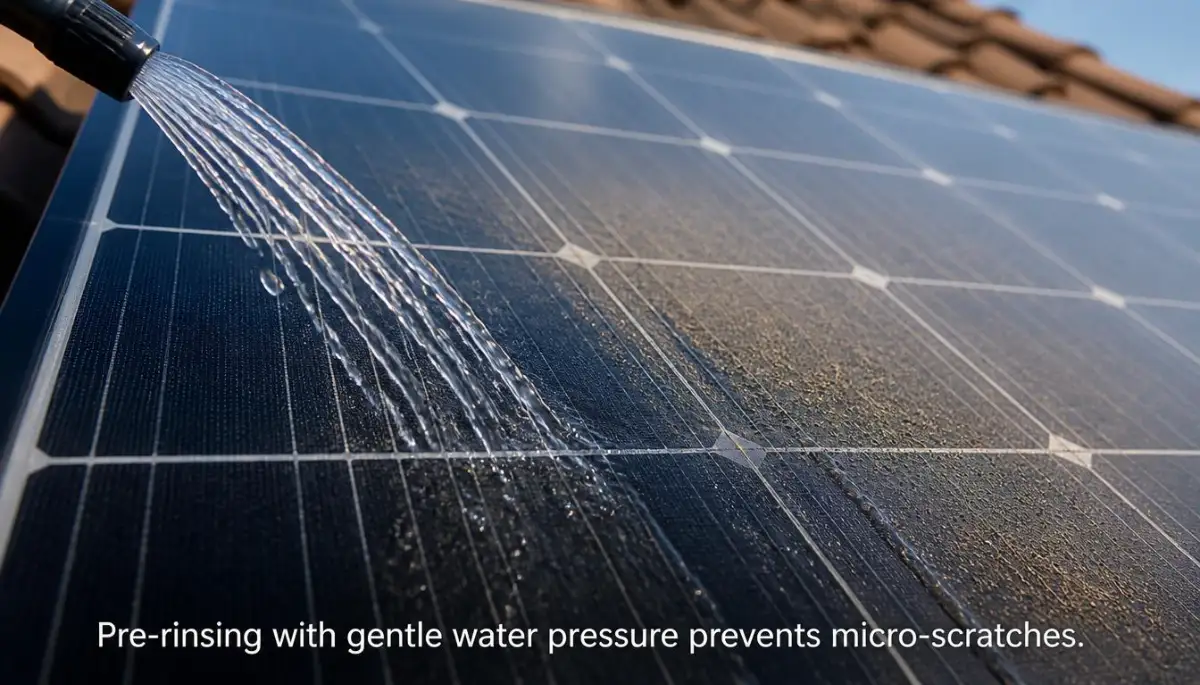
Start your cleaning process by pre-rinsing the panels with a gentle spray of water from your hose. Do not use a high-pressure washer, as the intense water pressure can force water past the rubber seals and damage the internal electrical wiring.
Let the gentle water pool on the panels for two to three minutes. This softens stubborn bird droppings and floats away the loose, abrasive dirt particles without any physical friction.
The S-Curve Wipe Technique: Managing Friction Safely
Once the loose dirt is rinsed away, you can tackle the remaining grime using your soft microfiber squeegee. Instead of rubbing back and forth in rapid motions, use the S-Curve wiping technique.
Want to see exactly how to glide your squeegee without leaving a single scratch? Watch this quick, helpful demonstration video to master the safe wiping technique before you head up to your roof!
Start at the top-left corner of the solar panel and gently glide the squeegee down in a smooth, continuous "S" pattern. This technique ensures that any remaining dirt is gently pushed ahead of the squeegee blade rather than being ground back into the glass.
Dealing with Baked-On Grime Without Scrubbing
Sometimes, you will encounter stubborn tree sap or bird droppings that refuse to wash away with a simple rinse. Your instinct might be to scrub harder with a sponge, but you must resist this urge.
Instead, soak a soft microfiber cloth in warm, pure water and lay it directly over the stubborn spot. Let the wet cloth sit on the grime for five to ten minutes.
The moisture will naturally break down the organic compounds in the sap or bird droppings. Afterward, you can easily wipe the spot clean with zero pressure and zero risk of scratching.
Understanding Your Solar Warranty and Safety Limits
Before you begin any DIY cleaning, always read your solar panel manufacturer's manual. Many solar companies have very specific rules about what cleaning methods are allowed.
Using unauthorized soaps, chemicals, or pressure washers can immediately void your warranty. Keeping your system under warranty is far more valuable than saving a few dollars on a cleaning job.
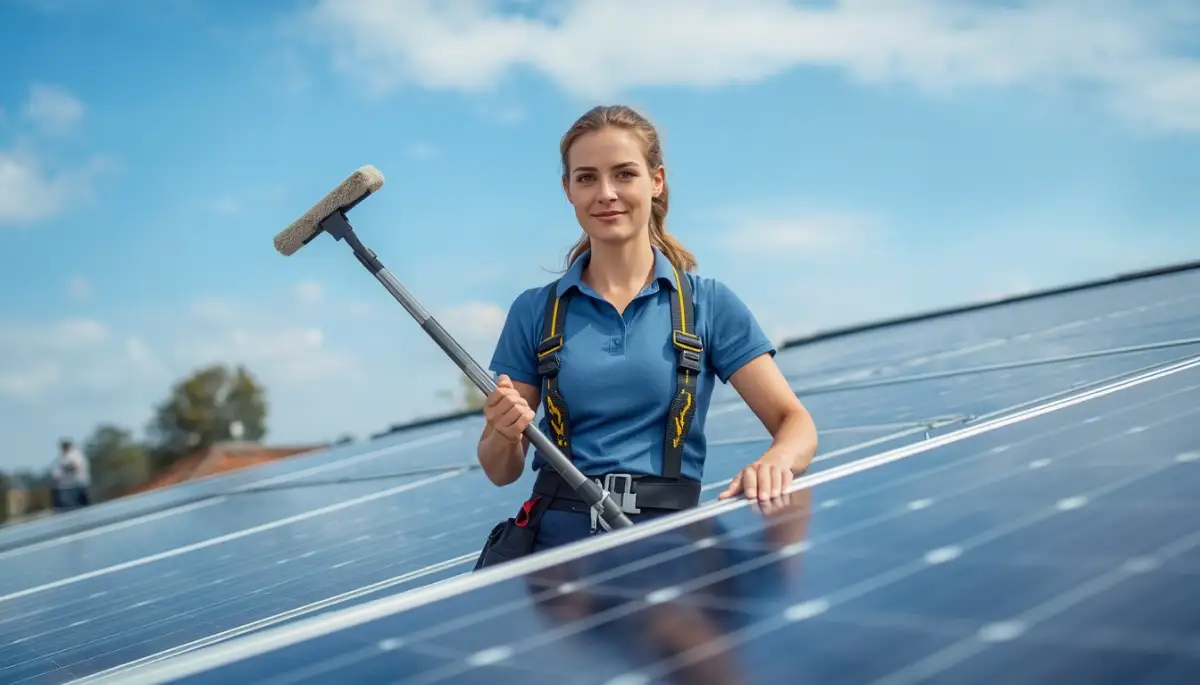
Additionally, always prioritize your personal safety. If your roof is steep, high, or difficult to access, do not risk climbing up with buckets of water. Instead, invest in a high-quality extension pole that allows you to clean your panels safely while keeping both of your feet planted firmly on the ground.
Keeping Your Solar Investment Sparkling and Efficient
To wrap up, keeping your rooftop solar panels clean does not have to be a stressful chore. By understanding the physics of glass and avoiding harsh friction, you can safely wash away energy-blocking dust at home.
Remember to work in the cool morning hours, pre-rinse the glass thoroughly, and use only soft microfiber tools with pure water. These simple, low-pressure habits will protect your expensive solar investment and keep your green energy production running at its absolute peak for decades to come.
Smart Maintenance Strategies to Keep Your Rooftop Glass Pristine for Years
We want to build on the basic cleaning steps to show you how the real experts protect solar systems. These advanced strategies will save you time and keep your energy bills low. Implementing these small habits can make your home solar setup run smoothly for a long time.
The Secret of Pure Water Systems and Natural Rainwater Harvesting
Using standard garden hose water can slowly ruin your solar array due to hard water spots. To prevent this, professional cleaners always use pure, demineralized water. You can actually set up a simple home rainwater collection barrel near your roof to catch clean water.
Rainwater is naturally soft because it does not contain the heavy soil minerals found in groundwater. When you wash your panels with collected rainwater, it dries without leaving behind white chalky residue. This keeps your glass incredibly clear and helps you get the maximum amount of sunlight into your system.
Setting Up Safe Barrier Systems to Prevent Stubborn Debris
A major headache for many homeowners is dealing with birds and squirrels nesting under the panels. When animals live under your system, they drop acidic mess all over your glass. Just like noticing subtle bodily changes helps you act before it s too late to avoid chronic health problems, spotting early bird activity around your roof can prevent massive panel damage.
You can easily install soft wire mesh guards around the edges of your solar array to block pests. These critter guards are inexpensive and do not require any drilling into your roof or panels. They simply clip onto the frame, keeping your system safe from animal-related grime.
Developing an Easy Seasonal Inspection Routine
You do not need to clean your panels every single week. In fact, washing them too often can increase the risk of accidental scratches. Instead, set up a simple seasonal routine to check the glass after major weather changes.
Look at your solar monitoring app once a month to see if there is a sudden drop in power. If your local area gets a lot of dry wind or pollen, plan a quick rinse before the hot summer begins. For those who want detailed technical advice, the U.S. Department of Energy Operations Guide provides great official standards on maintaining home renewable systems.
Using Hydrophobic Glass Treatments Safely
Some homeowners like to apply special rain-repelling liquid coatings to their solar panels. These hydrophobic coatings make water slide off the glass instantly, taking dust along with it. However, you must be extremely careful before choosing any product for your home.
Many standard car window coatings contain heavy silicones that can actually bake under the sun and cloud the glass. Only use anti-static coatings that are officially approved by your panel manufacturer. If you are unsure, it is always safest to stick to pure water and a clean microfiber cloth.
The Role of Angle and Tilt in Clean Energy Maintenance
The angle of your roof plays a very large role in how dirty your panels get. Flat roof installations accumulate dirt much faster because dirty water pools on the glass and dries. If your panels have a very low tilt, you will need to rinse them more often than a steep roof.
Steeply angled panels benefit from a natural cleaning process called the self-cleaning rain effect. When it rains, the water flows quickly down the steep glass, carrying away fresh dust. Knowing your roof tilt helps you plan exactly when a manual wash is actually needed.
The Costly Cleaning Blunders That Can Ruin Your Solar System
Why High-Pressure Washers Are a Major Threat to Your Roof
It can be tempting to pull out a powerful pressure washer to reach high roof panels from the ground. Many people believe this is a smart way to blast away stubborn bird droppings without climbing a ladder. However, this is one of the most dangerous mistakes you can make with home solar.
High-pressure water streams can easily crack the tempered glass or break the waterproof seals around the panel frames. Once water leaks inside the electrical box behind the panel, it can cause a short circuit or a total system failure. Just like how driving on a broken oxygen sensor slowly destroys your car's engine performance, using high pressure on solar panels quietly ruins their internal cells.
The Chemical Trap: How Harsh Soaps Slowly Destroy Glass Coatings
Another common blunder is using standard household detergents, glass sprays, or dish soaps to wash your panels. These soapy liquids leave a thin chemical film on the glass that attracts dust like a magnet. Within a few days of cleaning, your panels will actually look dirtier than before you washed them.
Even worse, many kitchen detergents contain abrasive chemicals that strip away the anti-reflective coating on the glass. This thin coating is essential for letting maximum light reach the solar cells. Once that coating is gone, your system will permanently lose its ability to generate high power.
Using Metal Scrapers or Hard Plastic Cards
When bird droppings bake onto the glass in the hot sun, they become as hard as cement. Homeowners often try to scratch these dry spots off using plastic scrapers, razor blades, or metal tools. This direct scraping action is guaranteed to leave deep scratches on your panels.
These scratches block sunlight and create hot spots on your solar panels. Over time, these hot spots can overheat and permanently damage the silicon cells underneath. Always let water do the heavy work by soaking the dried debris until it easily melts away.
The Danger of Stepping on Your Panels
When climbing onto the roof, some people make the mistake of walking or resting their knees on the solar panels. Even if the tempered glass does not shatter under your weight, this pressure is incredibly damaging. Your body weight creates invisible micro-cracks inside the silicon cells.
These tiny internal cracks cannot be seen with the naked eye. However, they stop the flow of electricity and cause parts of the panel to stop working. Never put any physical pressure on the glass surface while cleaning or doing roof maintenance.
Avoiding Abrasive Sponge Pads
Do not use the rough green side of your kitchen scrub sponge to wash solar glass. Those green scrub pads contain tiny mineral pieces designed to scratch away burnt food on metal pots. On a solar panel, they will leave a cloudy network of fine scratches that ruin your system's efficiency.
Your Clean Energy Action Plan: Taking the First Safe Step
Your Simple Weekend Solar Maintenance Checklist
Cleaning your solar panels does not have to be a difficult project. With the right tools and a gentle hand, you can easily maintain your system yourself. Let us look at a simple, stress-free action plan for your next free weekend:
- Wait for a cool, overcast morning or clean late in the evening.
- Rinse the loose dust off your panels using a gentle garden hose.
- Use a soft microfiber mop soaked in clean, pure water to wipe the surface.
- Gently squeegee the water off the glass to prevent mineral spots from drying.
- Check your energy app to see your clean panels boost your daily savings.
Embracing Safe Habits for Long-Term Energy Savings
Taking care of your home solar panels is an important part of owning a green home. When you clean them safely without scratching the glass, you protect your wallet and the environment. You will enjoy lower electricity bills and the peace of mind that comes with a well-maintained system.
Do not let dust and bird droppings steal your clean energy. Grab a soft cloth, some fresh water, and start your safe cleaning journey today. Your clean, scratch-free panels will thank you with maximum power output for many seasons to come.
From my own experience, taking that first gentle step to clean your panels is incredibly rewarding when you see your energy numbers jump back up. You do not need to overcomplicate things; just stay safe, use soft tools, and start protecting your investment today.
Disclaimer: The information provided in this article is for educational and informational purposes only. Working on roofs involves inherent safety risks, including the danger of falls and electrical hazards. Always read your specific solar panel manufacturer's manual and warranty guidelines before attempting any maintenance