The Frustrating Loop of Memorizing Symbols
Stop trying to memorize every bracket and semicolon. It’s a trap that keeps most beginners stuck in 'tutorial hell' for months. I spent weeks staring at a blank screen, feeling like a failure because I knew the keywords but couldn't build a simple app. The truth? You don't need a better memory; you need to change how you think. Let’s talk about why your brain is struggling and how to finally start 'thinking' like a developer.
I thought that if I knew the "grammar" of the language, I would be a programmer. But I was very wrong. One afternoon, I tried to build a simple calculator app. I stared at the blank screen for thirty minutes.
My mind was a total blank. I knew the words, but I had no idea how to tell the computer what to do. I felt like a failure. I felt like I just wasn't "smart enough" for this tech stuff.
Maybe you feel this way right now. You are trying to learn a language, but you get stuck the moment you leave the tutorial. You feel like you are just copying and pasting without actually knowing why. It is a lonely and stressful feeling.
This struggle is the number one reason why people quit coding. They spend all their energy on the rules of the language. They forget that the language is just a tool. The real magic happens in your head before you ever type a single line.
When you focus only on syntax, your progress feels slow. You might spend all day fixing a missing comma. This kills your motivation. It makes you feel like you are not making any real progress toward your dream job.
If you don't change your focus, you might stay stuck in "tutorial hell" forever. This is where you can follow a video but can't build anything on your own. It is a cycle of frustration that ends in giving up. But it doesn't have to be this way for you.
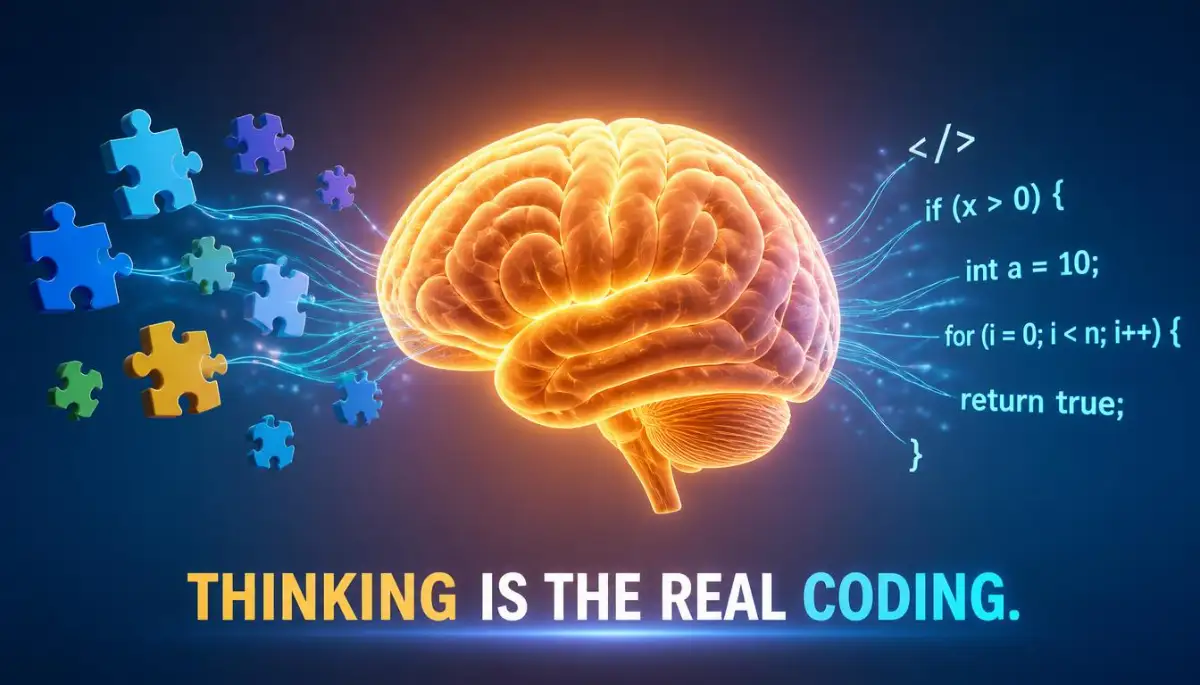
Why Syntax Is Just the Wrapper for Your Ideas
Think about a recipe for a cake. The "syntax" is the language the recipe is written in. It could be English, Spanish, or French. If you can read the words but don't know how to crack an egg or mix flour, you still won't have a cake.
### Quick Roadmap to Stop Getting Stuck
Before you read the details, here is the 'cheat sheet' for your coding journey:
- Logic First: Spend 70% of your time planning on paper and only 30% typing.
- Speak Plainly: If you can’t explain your code to a 5-year-old in plain English, you don’t understand it yet.
- Spot Patterns: Stop learning 'Python' or 'Java'—start learning how 'Loops' and 'Conditions' solve problems.
- Don't Memorize: Use Google for the symbols; use your brain for the steps.
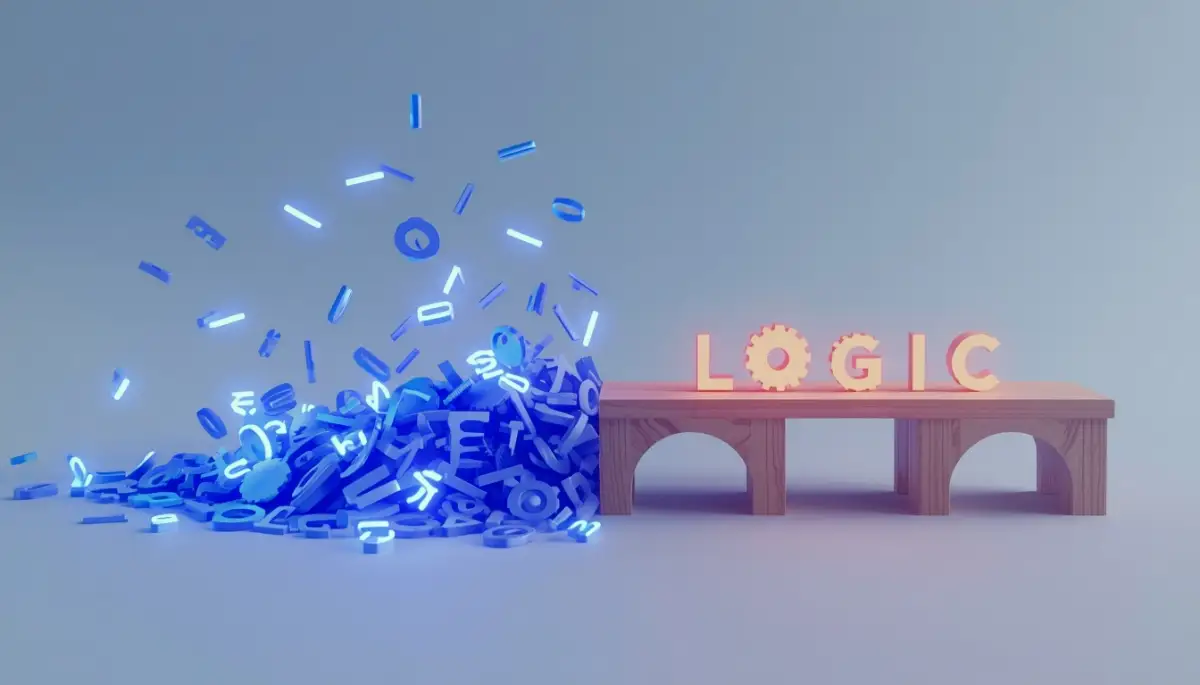
In the world of tech, the syntax is just the set of rules. It tells you where to put dots and brackets. But the logic is the actual recipe. It is the step-by-step plan that solves a problem.
If you understand the logic, you can switch from one language to another very easily. You see, most languages do the same things. They all have ways to store data and repeat tasks. The only thing that changes is the "wrapper" or the syntax.
Here is a quick breakdown to help you see the difference clearly:
When you focus on logic first, you build a strong foundation. You stop being a person who "knows Python" and you become a "problem solver." This is what big companies actually look for when they hire people.
They don't want a human dictionary of code. They want someone who can look at a messy problem and break it down into small pieces. Once the pieces are small enough, any language can be used to write the solution.
I should have spent that time with a pen and a piece of paper. My biggest mistake was thinking that the computer would solve the problem for me. It won't. You have to solve the problem first.
Breaking Down Big Problems into Tiny Steps
The most important skill you can have is "decomposition." This is a fancy word for breaking things down. When you see a big problem, it looks scary. But when you break it into five small steps, it becomes easy.
Myth vs. Fact: The Coding Mindset
- Myth: You need to be a math genius to code.
- Fact: You just need to be good at giving very specific directions.
- Myth: Professional coders never use Google.
- Fact: We Google the syntax (the symbols) every single day, but we never Google the basic logic because that's what we built ourselves."
Imagine you want to make a program that tells you if it is raining. Don't think about the code yet. Think about the steps. Step one: Check the sky. Step two: See if water is falling. Step three: If yes, say "Bring an umbrella."
This is how you build a logical mindset. You talk to yourself like you are explaining a task to a five-year-old. If you can't explain it simply, you don't understand the logic yet. And if you don't understand the logic, the syntax won't help you.
Start by writing your plan in "plain English." Some people call this pseudo-code. It helps you see the flow of your ideas. Once your plan looks solid, then you can go look up the syntax for a "loop" or an "if-statement."
By doing this, you are training your brain to be a builder. You are not just a person who follows a manual. You are the architect. This makes the learning process much more fun and way less stressful.
Pro Tip: I used to get stuck for hours on tiny errors. Now, whenever I start a new task, I close my laptop. I use a physical notebook to draw out the steps. It sounds old-school, but it keeps my brain focused on the solution rather than the syntax errors.
Watch this helpful video to see how professional developers plan their logic before they ever start typing code. It will change the way you look at your screen!
The Power of Patterns in Logical Thinking
Once you stop worrying about the rules, you start seeing patterns. You notice that every program you build uses the same few logical structures. These patterns are like the building blocks of the digital world.
For example, almost every app needs to make a choice. "If the user is logged in, show the home page. If not, show the login page." This is a pattern. It doesn't matter if you write it in JavaScript or C++. The choice logic is the same.
Another pattern is repeating a task. If you want to send an email to 100 people, you don't write the code 100 times. You use a "loop." The logic says, "Keep doing this until you reach the end of the list."
When you focus on these patterns, you become much faster at learning. Instead of learning 1,000 different things, you realize you only need to learn about 10 core concepts. Everything else is just a variation of those blocks.
This realization is very powerful. It takes the weight off your shoulders. You don't need to be a genius to remember 10 things. You just need to practice how to combine them in different ways to solve different problems.
Why Logic Makes You a Better Collaborator
In a real job, you will work with other people. You might write the logic for a feature, and someone else might finish the code. If your logic is clear, they will understand your work instantly.
If you only care about syntax, your code might look "correct," but it will be a mess to read. It will be like a book with perfect grammar but a story that makes no sense. Nobody wants to read that.
Great developers focus on "clean logic." This means making your steps as simple and direct as possible. When your logic is clean, your code naturally becomes easier to maintain and fix when things go wrong.
It also makes it easier for you to ask for help. Instead of saying, "My code doesn't work," you can say, "I am trying to move this data from point A to point B, but the loop stops too early." This shows you know what you are doing.
People love helping others who understand the "why" behind their work. It shows that you are a serious learner and a future pro. It builds trust between you and your mentors or teammates.
The Scientific Reason Logic Sticks Better Than Syntax
Our brains are not built to memorize thousands of abstract symbols like brackets and semi-colons. We are built to solve problems and understand stories. This is why you remember a movie plot but forget a phone number.
When you learn logic, you are working with how your brain naturally functions. You are creating "mental models." These models stay in your long-term memory because they are tied to a meaning.
Syntax, on the other hand, is stored in short-term memory. If you don't use a specific language for a month, you will forget the syntax. But you will never forget how an "if-statement" works logically.
This is why experienced programmers can learn a new language in just a weekend. They already know the logic. They just need to look up the new "keywords" for the ideas they already have in their heads.
By focusing on logic now, you are future-proofing your career. Tech changes every day. New languages come and go. But the ability to solve a problem logically will always be in high demand.
How to Practice Logic Without Using a Computer
You can actually practice your coding skills while you are doing the dishes or walking to the store. Just look at the world around you and try to find the logic in everyday tasks.
Think about a vending machine. What is the logic? "If money is enough AND button is pressed, THEN drop the snack. ELSE, ask for more money." This is pure programming logic without a single line of code.
Try to do this for three things every day. Think about how a traffic light works. Think about how your microwave decides when to stop. This keeps your "problem-solving muscle" strong and active.
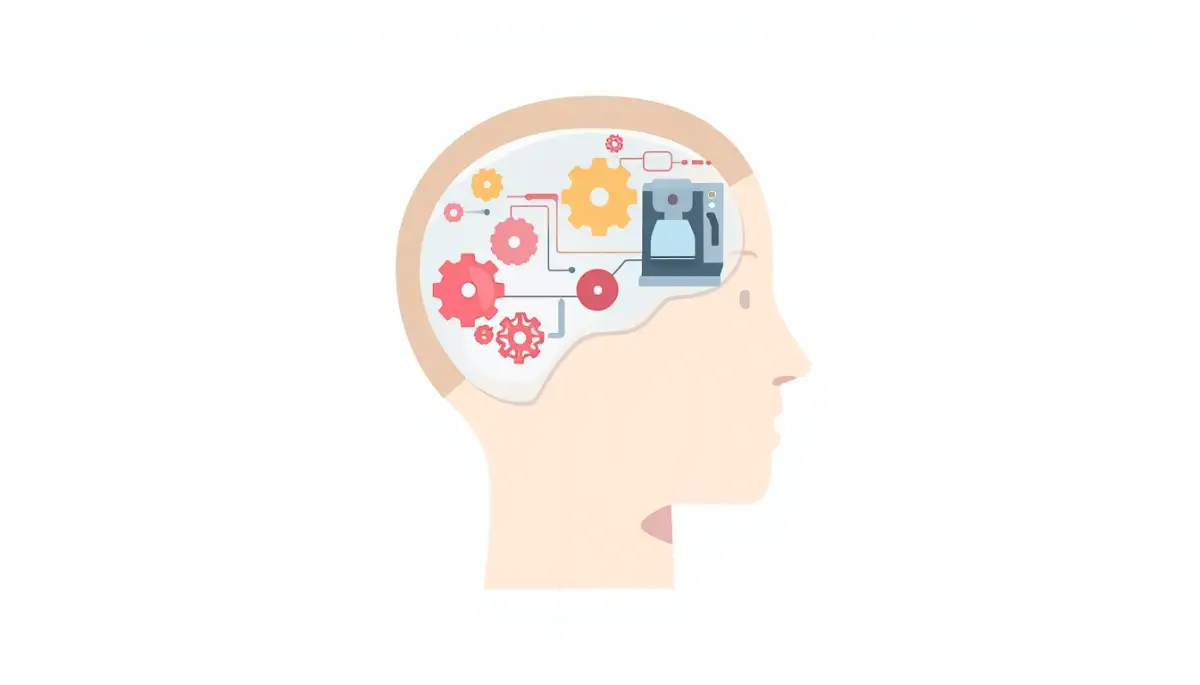
When you finally sit down at your computer, you will feel much more confident. You will see that coding is just a way to express the logic you already see in the real world. It makes the screen feel less like a wall and more like a tool.
I found that my coding improved the most when I started explaining things out loud. I would talk to my pet or even a rubber duck. If I could explain the logic of my code to the duck, I knew I was on the right track.
Avoiding the "Copy-Paste" Trap
It is very tempting to just search for an answer on the internet and paste it into your editor. We all do it sometimes. But if you don't understand the logic of the code you are pasting, you are hurting yourself.
Every time you copy code, you miss a chance to grow your brain. It is like looking at the answer key of a math test without trying the problem first. You might get the right answer, but you didn't learn the math.
If you must use code from the internet, take five minutes to read it line by line. Ask yourself: "What is the logic here? Why did they use this specific step?" This turns a lazy moment into a learning moment.
Slow down. It is not a race to see who can finish the project the fastest. It is a journey to see who can become the best thinker. The person who understands the logic will always win in the long run.
Your goal is to become independent. You want to be able to build your own ideas from scratch. That only happens when you value your own thinking more than a quick fix from a search engine.
Setting Realistic Goals for Your Logic Journey
Don't expect to be a master of logic in one week. It takes time to rewire your brain. Be patient with yourself. Some days, you will feel like a genius. Other days, you will feel like you forgot everything.
Start small. Don't try to build the next Facebook on your first month. Build a program that tells a joke. Build a simple game where you guess a number. These small wins build your "logic confidence."
Focus on one logical concept at a time. This week, just focus on how "conditions" work. Next week, focus on "loops." By breaking your learning into pieces, you avoid getting overwhelmed.
Remember, every expert was once a beginner who felt confused. The only difference is that they didn't stop when things got hard. They kept breaking the problems down until the problems weren't scary anymore.
You have the power to do this. You have a brain that is designed to solve puzzles. Coding is just a big, digital puzzle. Focus on the pieces and how they fit together, and the syntax will eventually become second nature.
Mastering the Hidden Logic of Great Software
Once you get past the basics, you need a plan to keep growing. It is not enough to just know what a loop does. You have to know why you are using it in that specific moment. This is where most people stop, but this is where the real fun begins for you.
When I was starting out, I thought I needed to learn every new tool that came out. I was constantly chasing the latest trends. I soon realized that the most successful people I knew weren't doing that. They were focusing on how to think better, not just how to use new tools.
You should treat your brain like a high-performance engine. It needs the right fuel and the right settings to work well. This means moving away from memorization and moving toward "computational thinking." This is a way of looking at the world that makes even the hardest problems feel like simple puzzles.
To really get ahead, you should start looking at how different pieces of a system talk to each other. Don't just look at one line of code. Look at the whole flow. How does the data change as it moves through your plan? When you understand this flow, you are no longer a beginner.
It is also very helpful to see how logic works in other fields. For example, understanding how creatives and AI work together can show you how human logic and machine speed combine. It gives you a broader view of what you are actually building.
Developing a Sharp Problem-Solving Mindset
One secret that experts use is called "Step-Wise Refinement." This sounds like a big term, but it is actually very simple. You start with a big, blurry idea and keep making it clearer and smaller. You do this until you have a list of tasks that are so simple they are impossible to get wrong.
I used to try and solve the whole problem at once. This led to a lot of stress and messy work. Now, I write down one tiny goal. Once that goal is met, I move to the next. This keeps your mind calm and helps you avoid the feeling of burnout that many new learners face.
Another great trick is to use "Mental Tracing." This is when you follow the logic of your plan in your head before you ever use a computer. It helps you find mistakes early. If you can't trace the path of your logic, it means your plan is too complicated.
You should always aim for simplicity. A simple solution that works is always better than a complex one that is hard to explain. Simple logic is easier to fix, easier to share, and much faster to build. This is the mark of a true professional.
Building Your Personal Logic Library
Think of every problem you solve as a new book in your mental library. Over time, you will notice that new problems are just versions of things you have solved before. You don't need to reinvent the wheel every single time you start a project.
I keep a small journal of logical patterns that I find interesting. When I see a clever way to handle a choice or a list, I write it down in plain words. This helps me remember the "shape" of the solution. When I face a similar challenge later, I just pull that "book" off my shelf.
This habit also helps you stay organized. Being organized is a huge part of being a good developer. Just like managing a budget for self-employed pros, managing your logic requires a clear and consistent system.
Don't be afraid to go back and look at your old work. You will probably find ways to make the logic even better. This is a great way to see how much you have grown. It turns your past mistakes into valuable lessons for your future self.
The Power of Talking Through Your Ideas
One of the best ways to sharpen your logic is to talk about it with others. When you have to explain a concept to someone else, your brain has to organize the info in a very clear way. This often reveals gaps in your own understanding that you didn't see before.
In the professional world, this is often done through "peer reviews." But you can do this with a friend or even by writing a blog post. If you find it hard to explain a part of your logic, that is exactly where you need to spend more time learning.
This practice also builds your communication skills. In any tech role, being able to explain "why" something works is just as important as making it work. It helps you connect better with other professionals and makes you a much more valuable team member.
I have found that the best ideas often come when I am not even at my desk. Sometimes, talking about a problem over lunch is enough to find the missing piece. It lets your subconscious mind do some of the heavy lifting for you.

The Trap of Perfecting Your Code Too Early
A huge mistake I see people make is trying to make their code look "pretty" before it even works. They worry about the perfect variable names or the newest syntax tricks. This is like painting a house before you have finished building the walls.
If you focus on the "looks" too early, you lose track of the logic. You might spend an hour making one line of code look cool, only to realize later that you don't even need that line. This wastes time and energy that you should be using to solve the actual problem.
Always make it work first. Once the logic is solid and the problem is solved, then you can go back and clean things up. This "make it work, then make it right" approach will save you from a lot of unnecessary headaches.
I learned this the hard way after spending days on a project that I had to delete entirely. I was so focused on the small details that I missed a huge flaw in my main plan. It was a painful lesson, but it taught me to always value the foundation over the decoration.
Why Jumping Languages Too Fast Will Hurt You
It is very tempting to try and learn three or four languages at the same time. You see people on social media talking about how great a new language is, and you feel like you are falling behind. But this is a big trap for your brain.
When you switch languages too often, you never get deep enough to learn the core logic. You stay at the surface level where everything is about syntax. You end up knowing a little bit about everything but not enough to actually build anything real.
Stick with one language until you can solve complex problems with it. Once you master the logic in one place, you will find that learning something new becomes five times faster. The logic stays the same; only the words change.
I spent my first year bouncing between different tools. I felt like I was working hard, but I wasn't getting anywhere. It wasn't until I sat down and focused on one path that I finally started to see real progress. Don't make the same mistake I did.
Ignoring the Basics of How Systems Work
Sometimes we get so caught up in our own ideas that we forget how the computer actually handles them. You don't need to be an electrical engineer, but having a basic idea of how data is stored and moved is very helpful.
If you ignore these basics, your logic might be correct but very slow. For example, website speed can be affected by server location. Similarly, your program's speed is affected by how you organize your logic and data.
Think of it like driving a car. You don't need to know how the engine works to drive. But if you know that the car needs oil and water, you can keep it running for a lot longer. Knowing the "basics" of the computer helps you write logic that is efficient and smart.
Take a little time to learn about how memory works or how the internet sends information. This small effort will give you a huge advantage over people who only care about the surface level. It makes you a more complete and well-rounded developer.
Letting Small Errors Damage Your Confidence
The biggest danger in the learning process isn't a hard problem. It is the loss of your own confidence. When you hit a wall and can't find a solution, it is easy to tell yourself that you aren't "cut out" for this.
I have seen so many bright people give up because they got stuck on a small logic error. They took the error personally. They thought it meant they weren't smart enough. But errors are just part of the process. They are actually signs that you are pushing your limits.
If you feel your confidence slipping, take a break. Walk away from the screen. Remind yourself that you have solved hard things before. Just like fixing a tracking setting on a smart TV, most problems have a simple fix if you look in the right place.
Your mindset is your most important tool. Protect it. Stay positive and remember that every mistake is just data telling you how to get better. If you keep a cool head, you will eventually find the logic you are looking for.
Your Path to Becoming a Master Solver
Learning to think logically is the most rewarding thing you can do for your career. It opens doors that stay closed for people who only know how to copy syntax. It gives you the freedom to build anything you can imagine.
Start today by looking at every task as a logic puzzle. Don't rush into the code. Take a deep breath, grab a pen, and plan your steps. You will be amazed at how much easier and more fun coding becomes when you have a clear map in your hand.
The world of tech is always growing, but the need for clear thinkers never goes away. By focusing on your logic, you are putting yourself in the top tier of learners. You are building a skill that will serve you for your entire life, no matter what language you choose to use.
I truly believe that anyone can learn this skill if they focus on the right things. I have seen people from all walks of life become amazing developers just by changing their focus from "words" to "ideas." You have everything you need to be one of them.
My best advice is to stay curious and never stop asking "why." Every time you find a solution, take a moment to enjoy the win. You are building a better future for yourself, one logical step at a time. I am excited to see where this journey takes you, so go ahead and start your next project today!
Common Questions About Logic in Programming
Is logic more important than math in programming?
For most types of programming, logic is much more important than high-level math. You need to be able to think through a series of steps and choices clearly. Unless you are working in data science or game physics, basic math is usually enough as long as your logic is strong.
How can I improve my logical thinking for free?
You can practice by solving puzzles, playing strategy games, or using free websites that offer logic challenges. Even writing out the steps for daily tasks like cooking or cleaning can help train your brain to think in a structured way.
Will AI replace the need for human logic?
AI is great at writing syntax, but it still needs a human to provide the logic and the "big picture" plan. By mastering logic, you become the person who tells the AI what to build. This makes you much more valuable in a world where code is easy to generate but hard to plan.
Can I learn logic while learning my first language?
Yes, you should definitely learn them together! The best way to do this is to focus on the concepts (like loops and conditions) first. Understand what they do logically before you worry about the exact way to type them in a specific language.
How long does it take to think like a programmer?
It varies for everyone, but most people start to see a shift in their thinking after a few months of consistent practice. The key is to solve problems every day and always try to understand the "why" behind every solution you find.
Disclaimer: This article is for educational purposes only and does not guarantee specific job results or career outcomes. Learning programming takes time and individual effort. Always consult with professional mentors for specific career advice.