When Miles Feel Like Mountains: My Story of a Broken Heart
My phone buzzed on the nightstand at 3 AM, and for the first time in three years, I didn't want to pick it up. I already knew what the message said, and I knew my long-distance relationship was crashing down. If you are staring at your screen right now with a knot in your stomach, wondering if distance makes it impossible to fix a broken heart, I want you to take a deep breath. I’ve been in that dark place, and I figured out how to turn those miles back into a bridge instead of a wall. Here is how we actually fixed things when I couldn't even reach out to hold their hand.
My partner was thousands of miles away. We had promised to be honest, but I just found out about a lie that changed everything.
I felt so alone. In a long-distance relationship, your phone is your only bridge to the person you love. When trust breaks, that bridge feels like it is made of glass.

I spent weeks wondering if I should just walk away. I asked myself if it was even possible to fix something when I couldn't even reach out and touch their hand.
It was the hardest time of my life. I had to decide if our love was worth the pain of rebuilding from zero.
I know exactly how you feel right now. You are likely staring at your screen, waiting for a message, but feeling a knot of anxiety instead of excitement.
The Silent Pain of Doubting Someone You Can’t See
Living with broken trust is like living with a constant shadow. In a normal relationship, you can see where your partner is. You can feel their energy when they walk into the room.
### Before You Read: The 60-Second Recovery Roadmap
If you’re in a rush, here is the core strategy to save your long-distance love:
- Stop the Spy Games: Constant social media checking keeps the wound open. Switch to planned transparency instead.
- Routine is God: Set a 'no-fail' call schedule. Predictability kills anxiety.
- The 24-Hour Rule: If you feel triggered, wait 10 minutes before texting, but never wait more than 24 hours to talk about it.
- Build New Memories: Stop talking about the 'lie' for at least one hour a day. Focus on fun virtual dates to remind yourself why you stay.
In a long-distance setup, you only have words and pixels. When those words become untrustworthy, your mind starts to play tricks on you.
You might find yourself checking their social media every ten minutes. You look at their "last seen" status on WhatsApp and wonder why they aren't talking to you.
Every time they don't answer the phone, your brain jumps to the worst possible scenario. It is a mental prison that drains your energy and kills your sleep.
This lack of peace affects your work, your friendships, and your health. You feel like a detective instead of a partner.
It is an exhausting way to live. You want to believe them so badly, but the fear of being hurt again keeps you guarded and angry.
Why Distance Makes Trust Issues Feel Like a Nightmare
When you are far apart, you lack the physical reassurance that heals wounds. A hug can say more than a thousand words, but you don't have that luxury.
Physical touch releases chemicals in the brain that help us feel safe. Without it, the brain stays in a state of "high alert."
Every small mistake feels ten times bigger because of the distance. If they forget to call, it feels like they are hiding something.
The gap between you creates a "data void." When you don't have facts, your imagination fills the gap with fears.
This is why rebuilding trust from afar requires a completely different strategy than a local relationship. You have to be more intentional and much more patient.
It is not just about saying "I'm sorry." It is about creating a new way of living that makes the other person feel safe again.
Setting the Foundation: The Raw Honesty Session
The first thing we had to do was have a conversation that felt like pulling teeth. You cannot fix a house if the foundation is rotting.
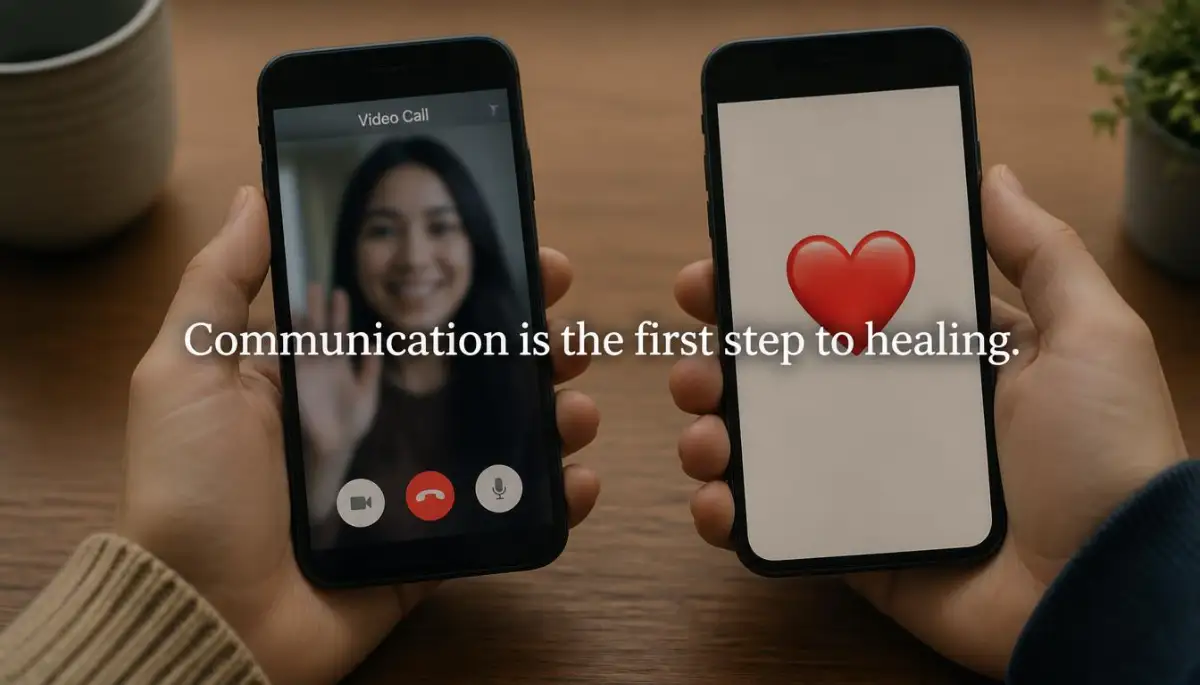
You need to set aside a time for a long video call. Not a text chat, not an email, but a face-to-face digital meeting.
The person who broke the trust must be ready to answer every single question. No matter how small or how painful the answer is.
If you are the one who was hurt, you need to ask everything that is on your mind. If you keep secrets or hidden doubts, they will turn into bitterness later.
This session is not about shouting or blaming. It is about getting all the facts out on the table so there are no more surprises.
Once the truth is out, you have to decide together: "Are we both 100% committed to fixing this?" If one person is unsure, the process won't work.
Radical Transparency: Opening the Digital Windows
In a long-distance relationship, privacy is often where trust goes to die. To fix this, you might need to try "Radical Transparency" for a while.
This means sharing things you usually wouldn't. It could be sharing your location for a few weeks or showing your screen during a call.
Some people say this is controlling. However, when trust is shattered, the hurt partner needs "proof" to help their brain stop worrying.
Think of it like a cast on a broken leg. You don't wear the cast forever, but you need it until the bone is strong enough to walk on its own.
This transparency helps lower the anxiety of the person who was hurt. It gives them a chance to see that there is nothing to hide anymore.
Over time, as the fear fades, you can slowly return to normal levels of privacy. But in the beginning, openness is your best friend.
Establishing a Predictable Routine to Calm the Mind
Anxiety loves the unknown. If your partner is unpredictable, your brain will stay in a state of panic.
We found that having a strict "Check-In" routine was a lifesaver. We agreed on specific times to call and text every single day.
If one of us was going to be late, we had to send a quick text before the scheduled time. This simple act shows respect and care.
When you follow through on small promises, you are slowly rebuilding the "trust muscle." You are proving that your word means something again.
It might feel boring or like a chore at first. But for a person with a broken heart, predictability feels like safety.
Don't skip these calls. Even if you are tired or have nothing to say, show up just to show that you are still there.
Pro Tip: The Power of Small Reassurances
I realized that the biggest fights often started from the smallest silences. I started a habit of sending "thinking of you" photos throughout the day.
It wasn't just a text. I would send a photo of my lunch or the street I was walking on.
This made my partner feel like they were part of my real life, not just a voice on a phone. It removed the mystery of "where is he and what is he doing?"
Watching the Experts: How to Heal Your Connection
If you feel like you are stuck and don't know what to say next, watching others explain the logic of love can help. This video explains how to talk so your partner actually listens and understands your pain.
Watch this to understand the psychology of healing distance:
The Science of Forgiveness: Why It Takes Time
Rebuilding trust isn't just an emotional journey; it's a biological one. Your brain has a "danger sensor" called the amygdala.
When someone hurts you, this sensor stays on. It takes months of positive experiences to convince your brain that the danger is gone.
You cannot rush this. You might have three great weeks and then one bad day where the pain comes rushing back.
This is normal. It doesn't mean you are failing. It just means your brain is doing its job of trying to protect you.
Both partners need to understand this "two steps forward, one step back" rhythm. Patience is the only way through the storm.
If the person who broke trust gets angry that the other person "isn't over it yet," the healing will stop. You must be willing to wait for the heart to catch up.
Myth vs. Reality: Long-Distance Trust
Learning to Handle the "Triggers" Together
A trigger is something that reminds you of the lie or the hurt. It could be a certain song, a social media post, or even a specific tone of voice.
In a long-distance relationship, triggers happen often because you are alone with your thoughts. You need a plan for when this happens.
We made a rule: If I feel triggered, I tell you immediately. I don't sit and let it boil inside me.
The partner's job is not to get defensive. Their job is to say, "I understand why you feel that way, and I am here for you."
Validating the pain is the fastest way to make the trigger lose its power. When you feel heard, the anger starts to melt away.
Over time, these triggers will happen less often. But in the start, you must handle them with a lot of grace.
The Role of Meaningful Virtual Dates
Trust isn't just about avoiding bad things. It is also about building good things. You need to create new, happy memories to replace the old, painful ones.
Since you can't go to a movie theater together, get creative. Watch a movie at the same time while on a video call.
Play online games together or cook the same recipe while chatting. These "shared experiences" create a sense of togetherness.

They remind you why you fell in love in the first place. It shifts the focus from "fixing a problem" to "enjoying a person."
A relationship that is only about "fixing trust" becomes heavy and sad. You need laughter to balance the hard work of healing.
Try to have at least one "fun date" a week where you don't talk about the relationship issues at all.
Effective Communication: Using "I" Statements
When you are hurt, it is easy to say, "You did this" or "You always make me feel bad." This makes the other person want to fight back.
Instead, try using "I" statements. Say, "I feel scared when I don't hear from you for five hours."
This explains your feelings without attacking their character. It makes it easier for them to listen and help you.
In a long-distance setup, tone is hard to read. Always assume the best intentions unless you have proof of the opposite.
The 'I Feel' Script (Copy and Paste This)
When you’re hurt but don't want to fight, send this:
'Hey, my brain is playing tricks on me because of the distance. I’m feeling a bit anxious about [mention the specific event]. I’m not accusing you of anything, but could I get a little extra reassurance tonight? It would really help me feel safe.'
This works because it focuses on your needs, not their mistakes.
If a text message sounds mean, ask for a voice note. Hearing the warmth in their voice can prevent a huge misunderstanding.
Small changes in how you speak can stop a fire before it starts.
Setting New Boundaries for the Future
A boundary is not a punishment. It is a fence that keeps the relationship safe. You need to decide what is okay and what is not okay from now on.
Maybe the boundary is "no hanging out with that specific person" or "no deleting message history."
Whatever the rules are, they must be clear. Vague rules lead to more broken trust.
Both people must agree to these boundaries. They are the "safety manual" for your new version of the relationship.
If a boundary is broken, you need to talk about it immediately. Don't let small cracks grow into big holes.
Remember, these boundaries are there to help you both feel comfortable and loved.
The Importance of Self-Care for the Hurt Partner
If you were the one lied to, you cannot make the relationship your whole world. If you do, your anxiety will crush you.
You need to focus on your own life, your hobbies, and your friends. The more you grow as a person, the less power the betrayal has over you.
Go to the gym, read a book, or learn a new skill. When you feel strong in yourself, you won't feel so desperate for their reassurance.
Self-care gives you the mental clarity to decide if the relationship is truly getting better. It stops you from being a "trust detective" 24/7.
A healthy person makes for a healthy relationship. Take care of your heart first.
The distance might be hard, but your own mental health is more important than any phone call.
Why Small Wins Matter More Than Big Promises
Don't look for a "magic fix" that makes everything perfect in one day. Look for small signs of progress.
Did they call when they said they would? That is a win. Did they tell you the truth about something difficult? That is a win.
These small wins act like bricks. One brick doesn't make a wall, but a thousand bricks do.
Celebrate the weeks where things felt "normal." Acknowledge the effort your partner is putting in.
If you only focus on the past pain, you will miss the current growth. Notice the small changes.
Over time, these bricks of trust will build a wall that is even stronger than the one you had before.
How to Handle the Jealousy Monster
Jealousy is a natural reaction to broken trust, but it can be toxic. You have to learn how to manage it without destroying the relationship.
When you feel jealous, take a deep breath before you send that angry text. Ask yourself, "Is this a fact or just a feeling?"
Often, our feelings are based on old wounds, not what is happening right now. Talk to your partner about the feeling rather than accusing them.
The partner should respond with comfort, not by getting defensive. If they are truly trying to fix things, they will understand your fear.
Jealousy thrives in the dark. Bring it into the light, talk about it, and let it go.
With enough time and honesty, the "jealousy monster" will eventually get smaller and smaller.
Building a Vision for the Next Time You Meet
Long-distance is only a temporary state. You need a "light at the end of the tunnel" to keep going.
Start planning your next visit. Talk about what you will do, where you will go, and how it will feel to finally be together.
Having a date on the calendar gives you both something to work toward. It makes the hard work of rebuilding trust feel worth it.
The physical reunion will be a huge milestone in your healing. It will be the chance to prove that the trust you built digitally works in the real world.
Keep that vision alive. Use it as fuel when the nights feel long and the doubts start to creep back in.
Mastering the Long Game: Pro Strategies for Lasting Distance Harmony
Once you have started to fix the initial cracks, it is time to build a wall that nothing can knock down. Rebuilding trust is not just about stopping the bad habits.
It is also about creating a new way of relating to each other that is better than before. Many couples think that once the crying stops, the work is done.
In my experience, the real work starts when things get quiet again. This is when you have to prove that your growth is permanent.
One of the most effective ways to do this is by practicing what I call "Active Emotional Response." This means being present even when you are not physically there.
When your partner shares a small worry about their day, don't just say "that's nice." Listen to the feeling behind the words.
I found that using active listening hacks for professionals actually works wonders in romantic relationships too. It helps your partner feel truly seen and heard across the miles.
Another secret is to have "uncomfortable check-ins" once a week. You both agree to spend 15 minutes talking about things that feel slightly awkward.
Ask questions like, "What did I do this week that made you feel safe?" or "Is there anything I said that triggered a memory of the past?"
The Weekly 'Trust-Check' Scorecard
Try grading your week on these three simple points to see where you stand:
- Consistency: Did we both show up for calls on time? (Yes/No)
- Transparency: Did I feel the need to hide my phone today? (Yes/No)
- Comfort: Did we have at least one laugh that wasn't about our 'problems'? (Yes/No)
- If you get three 'Yes' markers, you’re moving faster than you think.
This stops small hurts from growing into giant mountains. It keeps the communication lines clean and fresh.
If you notice a sudden change in how often they call or the tone of their texts, address it with kindness immediately.
Finally, consider the concept of "Digital Co-Presence." This is more than just a video call.
It is about keeping a shared digital space where you both contribute. This could be a shared photo album, a private blog, or even a shared note where you write things you love about each other.
According to experts at the Gottman Institute, successful couples have a high ratio of positive interactions to negative ones. In a long-distance setup, you have to work twice as hard to keep that ratio high.
Build a culture of appreciation. Tell them thank you for being patient while you heal.
Tell them you admire their strength. These words act like glue for a broken heart.

The Hidden Traps That Can Reset Your Progress to Zero
Even with the best intentions, it is very easy to fall back into old, toxic patterns. One of the biggest mistakes I see is the "Detective Trap."
This is when the hurt partner becomes obsessed with finding more clues of betrayal. They check every social media like, every new follower, and every tagged photo.
While you might feel like you are protecting yourself, you are actually keeping the wound open. You cannot heal if you are constantly picking at the scab.
If you find yourself stuck in this loop, you might need to step back. Focusing too much on "monitoring" prevents you from actually "connecting."
Another huge mistake is using the past as a weapon during unrelated arguments. If you are fighting about a missed call, don't bring up the lie from six months ago.
This makes the other person feel like they can never truly be forgiven. It creates a feeling of hopelessness.
If they feel like they are "always the bad guy," they might eventually stop trying to be good. Forgiveness means letting go of the right to punish the other person.
You also need to watch out for "Revenge Behavior." This is when the hurt partner tries to "get even" by being cold or acting suspicious themselves.
This only creates a cycle of pain. Two wrongs never make a relationship right.
If you are feeling the urge to hurt them back, talk to a friend or a therapist instead. Don't use your relationship as a battlefield.
Some couples also make the mistake of hiding their healing process from others. They feel ashamed that they are staying after a betrayal.
But trying to handle this all alone is like moving WordPress to a new host without a guide. It is stressful and you are likely to make mistakes.
Find a trusted friend who supports your decision to stay and heal. Having someone to vent to can keep you from taking your frustration out on your partner.
Lastly, don't ignore the "Silence of Safety." Sometimes, when things start to feel okay, people stop doing the work.
They stop the check-ins and the transparency. This is dangerous because trust is not a destination; it is a daily habit.
Just like you wouldn't stop washing rooftop solar panels if you want them to keep working, you can't stop cleaning your relationship.
Keep the habits that saved you. They are the same habits that will keep you together for the long term.
Designing a New Chapter Together
Healing is not about going back to how things were. It is about creating something entirely new.
The old version of your relationship had a flaw that allowed trust to break. The new version should be built with better materials.
This means having more honest conversations about your needs and fears. It means being brave enough to be vulnerable.
Think of this period as a "Relationship Reset." You are both different people now than you were before the trust broke.
You have to get to know this new version of your partner. What do they need now? What makes them feel loved in this new stage?
I often think about how people deal with medical errors and negligence. When a mistake happens in a hospital, they don't just say sorry; they change the whole system to make sure it never happens again.
You must do the same for your love life. Change the system of how you communicate and share your lives.
Use technology to your advantage. There are apps designed specifically for long-distance couples to share moods and schedules.
Check out resources like Psychology Today for articles on "Attachment Theory." Understanding your attachment style can help you understand why you react the way you do.
If you have an "anxious attachment," the distance will naturally be harder for you. Knowing this allows you to ask for specific types of reassurance.
If your partner has an "avoidant attachment," they might pull away when things get too emotional. Talking about these styles helps you not take their reactions personally.
It is all about building a roadmap that works for both of you. A map that shows where the pitfalls are and how to avoid them.
The Power of Small Wins in the Digital Void
In a long-distance relationship, you don't have the big moments as often. You don't have the weekend getaways or the dinner dates.
This means the small moments are everything. A quick text to say "I am proud of you" can change their whole day.
A surprise delivery of their favorite snack shows that you are paying attention. These small acts of kindness are like deposits in a trust bank.
You need to make a lot of deposits before you can start making withdrawals. Every time you show up for them, you are adding to that bank.
Don't underestimate the power of a handwritten letter sent through the mail. In a world of instant texts, something physical that they can hold is very special.
It becomes a physical reminder of your commitment. It is something they can look at when the internet is down or when they feel lonely.
I remember how much it helped me to have a physical object from my partner. It made the relationship feel more "real" and less like a digital dream.
Focus on being the best version of yourself as well. Don't let the relationship drama stop you from pursuing your goals.
Whether you are overcoming college burnout or working on a big project at work, keep pushing forward.
A partner who is growing and happy is much more attractive and trustworthy than one who is stuck in the past.
Show your partner that you are moving toward a bright future. Invite them to come along with you.
Your Action Plan for Emotional Recovery
If you want to see real change, you need to start today. Don't wait for the "perfect moment."
Start by sending a message that is 100% positive. No complaints, no questions about where they are, just love.
Then, set a time for your next "Heart-to-Heart" video call. Prepare one thing you are grateful for and one thing you want to work on.
Consistency is your most powerful tool. If you say you will call at 8 PM, call at 8 PM.
Be the person they can set their watch by. This reliability is the foundation of trust.
It takes courage to stay and fight for a long-distance love. Most people would say it is too hard.
But if the love is real, the distance is just a test. And like any test, you can pass it if you study and prepare.
Believe in your ability to heal. Believe in your partner's ability to change.
The road might be long, but the view at the end is worth it.
Common Questions About Rebuilding Trust
How long does it take to trust again in a long-distance relationship?
There is no fixed timeline, but it usually takes several months of consistent honesty. Your brain needs time to see a new pattern of behavior before it feels safe again.
Can a relationship survive a big lie across the distance?
Yes, but only if both partners are completely committed to the truth. It requires radical transparency and a lot of patience from both sides to move past a major betrayal.
Should I share my social media passwords with my partner?
While it can help in the short term to provide peace of mind, it is not a long-term fix. True trust comes from knowing they won't lie, not just because you are watching them.
What if I can't stop feeling jealous despite their efforts?
If jealousy is ruining your life, you might need professional help or a break to focus on yourself. Sometimes the wound is too deep to heal while still in the situation that caused it.
How do I know if they are actually changing?
Look for consistent actions over a long period. If their stories match their actions every single time for months, they are likely making a real change.
A Brighter Future Awaits You Both
Rebuilding what was broken is one of the hardest things you will ever do. But it is also one of the most rewarding.
I have seen couples come back from the edge of a breakup and build a bond that is unbreakable. The distance that once felt like a curse can become the thing that proves how strong your love really is.
I truly believe that if you follow these steps with an open heart, you will find your way back to each other. Don't let one mistake define your whole story.
Take a deep breath, pick up the phone, and start the conversation that changes everything. You have the power to create a beautiful new chapter starting right now.
Disclaimer: The information provided in this article is for educational and informational purposes only. It is not intended to be a substitute for professional relationship counseling or mental health advice. Always seek the advice of a qualified professional with any questions you may have regarding your personal situation.