
Why I Woke Up with a "Broken" Face Every Single Morning
I spent years fighting my own face. Every single morning, the mirror showed me the same red, itchy, and tight skin that made me want to hide under the covers. I thought my skin was just 'sensitive,' but the truth was much simpler: I was accidentally destroying my skin barrier every night before bed. If your face feels like it’s three sizes too small, you don't need a miracle cream—you need to stop these common nighttime mistakes.
It took a long time for me to realize that the problem wasn't my products. The problem was what I was doing right before my head hit the pillow. My "innocent" habits were actually stripping away my skin's natural protection. Once I figured this out, my skin changed almost overnight.
The Hidden Mental Toll of a Damaged Skin Barrier
When your skin barrier is broken, it’s not just a physical problem. It’s a mental struggle that follows you throughout the day. You find yourself constantly checking every reflection you pass—store windows, car mirrors, even your phone screen. You wonder if people see the flakiness around your nose or the weird red patches on your cheeks.
🛑 Stop the Damage: Tonight’s Cheat Sheet
Before you read further, here is the "Fix-it-Fast" summary to save your skin tonight:
- Temperature Check: Stop using hot water; it melts your skin's natural "glue."
- Fabric Swap: Move to a silk pillowcase to prevent moisture loss.
- The Wet Rule: Apply your cream while your face is still slightly damp.
- Simplify: Use only ONE active ingredient (like Retinol) at a time, not five.
- Humidity: Use a humidifier if you sleep with the heater or AC on.
It makes you feel older than you are. It makes you feel like you aren't taking care of yourself, even when you are trying your hardest. That feeling of "tightness" in your skin is a constant reminder that something is wrong. You lose that sense of comfort in your own body.
Many people don't realize that their skin is screaming for help. They think it's just "sensitive skin," but it's actually an injury. This injury is caused by small, repetitive mistakes we make while we are tired and ready for bed. Let’s look at how we can stop this cycle and finally give your face the peace it deserves.

The Danger of Using Water That Is Too Hot
We all love a warm wash before bed. It feels relaxing after a long day of work. However, your skin barrier absolutely hates hot water. When you use water that is too hot, you are basically melting away the natural oils that keep your skin soft.
Think of your skin like a brick wall. The cells are the bricks, and the natural oils are the mortar holding them together. Hot water washes away that mortar. This leaves your "bricks" exposed to the air, which leads to massive moisture loss.
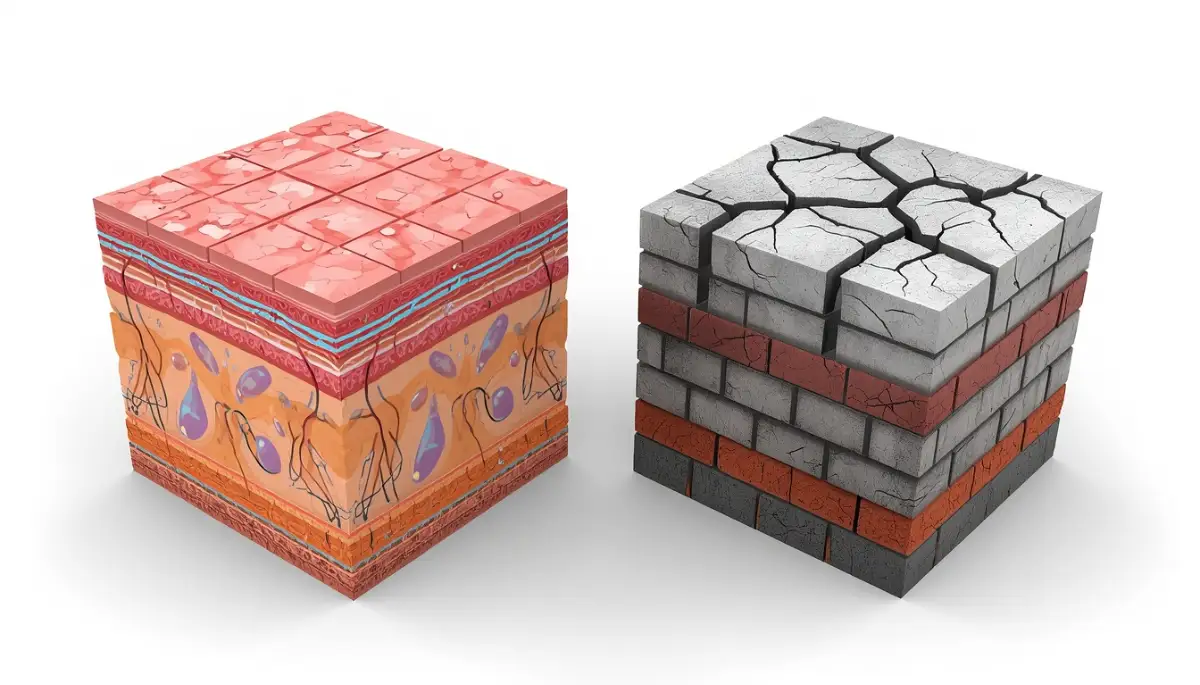
I used to think "the hotter the better" meant my pores were getting cleaner. I was so wrong. Now, I only use lukewarm water. It doesn't feel as "steamy," but my skin doesn't feel like it’s shrinking after I dry it.
| Habit | What it does to your skin | The Better Alternative |
| :--- | :--- | :--- |
| Hot Water | Melts natural protective oils | Use Lukewarm water only |
| Cotton Pillowcase | Sucks out moisture & causes friction | Switch to Silk or Satin |
| Scrubbing | Creates tiny micro-tears | Use your fingertips and a cream cleanser |
| Air Drying | Causes evaporation of skin's water | Apply moisturizer while skin is still damp |
Your Pillowcase Is a Secret Breeding Ground
How often do you change your pillowcase? If the answer is once a week, your skin barrier is likely under attack. Every night, your pillow collects sweat, hair products, and dead skin cells. Then, you press your face against that mixture for eight hours.
This creates a lot of friction. If you use a cotton pillowcase, it actually sucks the moisture out of your skin while you sleep. It’s like sleeping on a giant sponge that wants your face to be dry.
Switching to a silk or satin pillowcase was a huge turning point for me. Silk doesn't absorb your night cream, and it lets your face slide instead of rubbing. It feels like a small change, but your skin barrier will thank you every morning.
Scrubbing the Day Away Too Harshly
We often feel like we need to "scrub" the city dirt and stress off our faces. Using grainy exfoliants or rough washcloths right before bed is a recipe for disaster. This creates tiny "micro-tears" in your skin barrier.
You might feel clean in the moment, but you are actually breaking the seal of your skin. This lets bacteria in and lets hydration out. I learned the hard way that "squeaky clean" is actually a sign of damage.
Your skin should feel soft and plump after washing, not tight and shiny. If your skin feels like a drum after you dry it, you are being too rough. Switch to a gentle, creamy cleanser and use only your fingertips.
The Nighttime "Pro Tip" for Instant Relief
I used to rub my face dry with a towel as hard as I could. I thought I was getting the water off. One day, I decided to stop using a towel on my face entirely. Now, I just gently pat my face with my hands or let it air dry slightly before applying moisturizer to damp skin.
Pro Tip: Always apply your moisturizer while your skin is still a little bit wet. This traps that water inside your skin barrier. It was a total game-changer for my redness.
Why Sleeping with Your Phone Is Ruining Your Glow
We all do it. We scroll through social media until our eyes get heavy. But think about where your phone has been all day. You touch door handles, keyboards, and money, and then you touch your phone.
When you put that phone near your face or leave it on your pillow, those bacteria jump onto your skin. Also, the blue light from the screen can actually mess with your skin's natural repair process. Your skin thinks it is still daytime!
Try to keep your phone away from your bed. If you must use it, wash your hands before you finally close your eyes. Your skin needs total darkness and a clean environment to fix the damage from the day.
Watch this expert guide on how to identify if your skin barrier is actually damaged.
Using Too Many Active Ingredients at Once
I used to think that using five different serums would make my skin perfect faster. I would use Retinol, Vitamin C, and AHA all in one night. My skin barrier basically gave up. It was too much for my face to handle at once.
Your skin barrier needs simplicity at night. Nighttime is for healing, not for attacking your skin with strong chemicals. When you use too many products, they clash and cause inflammation.
Now, I follow a "less is more" rule. I pick one active ingredient and pair it with a very simple moisturizer. My skin is much calmer now because it isn't fighting a chemical war every night.
My "Barrier-First" Rule of Thumb:
If you are trying to heal your skin, follow the 3-Ingredient Rule. Look for products that contain at least one of these:
- Ceramides (The 'glue' for your skin cells)
- Glycerin (To pull water in)
- Squalane (To mimic your skin's natural oils)
The Importance of Room Temperature
Did you know the air in your bedroom affects your skin barrier? If you have the heater on high during winter, the air becomes very dry. This air will literally pull the water out of your skin while you sleep.
This is why many people wake up with "winter itch" or flaky skin. I started using a small humidifier next to my bed. It keeps the air moist, so my skin stays hydrated all night long.
If you don't have a humidifier, even a bowl of water near the radiator can help. Keeping the room cool and slightly humid is the best environment for your skin to repair itself.

Forgetting to Wash Your Hair Products Off
This was a mistake I made for years. I would put oil or leave-in conditioner in my hair and then go to sleep. My hair would touch my face all night. The ingredients in hair products are often too heavy for facial skin.
These products clog your pores and irritate your barrier. If you have long hair, try tying it in a loose bun or wearing a silk bonnet. This keeps the hair chemicals away from your delicate facial skin.
I noticed that the breakouts on my forehead and cheeks disappeared once I started keeping my hair away from my face at night. It’s a simple fix that makes a massive difference.
The Myth of the "Squeaky Clean" Feel
A healthy skin barrier should feel "bouncy" and hydrated. If you are using a foaming cleanser that leaves you feeling like a piece of paper, throw it away. Your skin needs those natural oils to stay young and healthy.
I switched to a non-foaming, hydrating cleanser. At first, I didn't think it was working. But after a week, the redness on my nose was gone. My skin finally felt like it belonged to me again.
Why You Shouldn't Skip Nighttime Moisturizer
Some people think that letting their skin "breathe" at night is good. They skip moisturizer because they have oily skin. This is a huge mistake. When you skip moisturizer, your skin thinks it is dry and starts producing more oil to compensate.
This leads to a broken barrier and more acne. Every skin type, even oily skin, needs a barrier-supporting cream at night. Look for ingredients like ceramides or glycerin.
I used to skip cream because I was afraid of pimples. Once I started using a lightweight, barrier-repair cream, my oil production actually leveled out. My skin became balanced for the first time in my life.
The Danger of Dirty Makeup Brushes
If you do your skincare routine but then touch your face with dirty hands or tools, you are wasting your time. Even worse, if you use a dirty towel to dry your face, you are putting old bacteria back onto your clean skin.
I started using single-use paper towels or just letting my face air dry. It sounds strange, but it stopped the constant cycle of tiny bumps on my chin. Your skin barrier is very sensitive to old bacteria.
Keep your environment as sterile as possible before you go to bed. Clean your phone, change your pillowcase often, and never touch your face with dirty hands. These small habits are the foundation of a strong skin barrier.
Understanding the pH Balance of Your Skin
Your skin is naturally slightly acidic. Many soaps and cleansers are very alkaline. When you use these, you throw off the pH balance of your skin barrier. It takes hours for your skin to fix its pH level.
If you keep doing this every night, your skin never gets a chance to be healthy. Always look for "pH balanced" on your skincare labels. This ensures you aren't shocking your skin every time you wash it.
I never used to check labels. I just bought what looked cool. Now, I am very careful. My skin is much more resilient because I stop attacking its natural pH balance every single evening.
Final Thoughts on Nighttime Recovery
Taking care of your skin barrier isn't about buying the most expensive products. It is about stopping the habits that cause damage. When I stopped using hot water and started using a silk pillowcase, my skin finally had a chance to heal.
You don't need a 10-step routine. You just need to be gentle. Your skin knows how to fix itself if you just stop getting in its way. Start tonight by making one small change, like turning down the water temperature.
Your future self—and your reflection in the morning—will thank you for it. Healing your barrier is a journey, but it starts with the very next time you head to the bathroom to get ready for bed.
Professional Strategies to Shield Your Skin Tonight
Now that we have covered the basics, I want to share some deeper secrets I learned from years of trial and error. Repairing your skin barrier is not a one-time fix. It is a long-term commitment to how you treat your face every single evening.
One of the best things I ever did was start layering my hydration. Think of it like dressing for cold weather. You don't just wear one thick coat; you wear layers to trap the heat. For your skin, you want to trap moisture. I started using a very thin, watery toner first, followed by a light serum, and then a thick cream.
This method ensures that every level of your skin gets the water it needs. If you just slap on a heavy cream, it might sit on top of your skin without actually sinking in. By layering, you are building a wall of protection that stays strong while you sleep. I noticed my face felt much "bouncier" in the morning when I did this.
Another secret is looking for specific ingredients like squalane and fatty acids. These are naturally found in your skin, but we lose them as we get older or when we use harsh soaps. When you put them back through your night cream, you are giving your skin the tools it needs to rebuild itself.
I also learned to pay attention to the detergent I use for my bed sheets. Many people use very strong scents and chemicals to wash their laundry. These chemicals stay in the fabric and rub against your face all night. I switched to a fragrance-free, sensitive skin detergent, which helped reduce the random red bumps on my cheeks. You can find more simple household swaps to shrink your plastic footprint easily that also happen to be much better for your skin and the environment.
The Power of Nightly Consistency
Your skin barrier loves a routine. When you change your products every two days, your skin gets confused and stressed. I used to be a "product hopper," trying every new sample I could find. My skin was a mess because it never had time to adjust.
It takes about 28 days for your skin cells to renew themselves. This means you need to stick to a gentle routine for at least a month to see real changes. I had to learn patience, which was hard. But once I stopped chasing "instant results," my skin finally started to calm down.
I also realized that my internal health shows up on my face. If I eat a lot of sugar or processed food before bed, my skin looks inflamed the next day. High sugar levels can lead to a process called glycation, which weakens the collagen in your skin. Just like spotting the subtle signs of prediabetes is a way to catch health issues early, watching your skin's reaction to food is a great way to monitor your internal inflammation.
If you want to keep your skin barrier strong for years, you have to look at the whole picture. It isn't just about the cream; it is about your sleep, your food, and your stress levels. When I started getting eight hours of sleep, my skin barrier seemed to heal twice as fast. According to research on sleep and skin health, your body produces growth hormones during deep sleep that specifically fix skin damage.

Dangerous Pitfalls That Keep Your Skin Red and Angry
Sometimes, we try so hard to fix a problem that we actually make it worse. One of the biggest mistakes I see people make is over-cleansing. They think if their skin is oily or has acne, they need to wash it three or four times a day. This is the fastest way to destroy your natural barrier.
When you wash too much, you strip away the "good bacteria" and the natural fats that keep your skin healthy. This leaves your skin open to infections and dryness. I had to teach myself that a little bit of natural oil is actually a good thing. It is your skin's own way of protecting itself from the world.
Another mistake is ignoring the neck and chest. We spend so much time on our faces but forget that the skin on our neck is very thin and sensitive. I used to stop my moisturizer at my jawline. Over time, I noticed my neck looked dry and irritated while my face looked okay. Now, I treat my neck exactly like my face, and the redness has totally vanished.
Many people also use body lotion on their face because it is cheaper. This is a bad idea. Body lotions are often full of heavy waxes and scents that are meant for the thick skin on your legs or arms. Using them on your face can clog your pores and cause a reaction that breaks your barrier. It is better to have one simple, high-quality face cream than a giant bottle of cheap body lotion that ruins your complexion.
The Hidden Danger of Dirty Tech
We talked about phones before, but I want to remind you how much we touch our faces while looking at screens. If you spend hours on a laptop or tablet before bed, you are likely resting your chin on your hand or touching your cheeks. This transfers oils and dirt directly to your skin.
Also, the blue light from your devices can dry out your eyes and the thin skin around them. I found that making easy screen adjustments that work right now helped me sleep better and reduced the puffiness around my eyes. When you sleep better, your skin barrier has more energy to repair itself.
I also realized that I was over-exfoliating. I thought using a scrub every night would make me glow. Instead, it made me look like I had a sunburn. Your skin does not need to be scrubbed like a kitchen floor. It needs to be handled like silk. If you use a chemical exfoliant, once or twice a week is more than enough.
If you continue to make these mistakes, the damage can become permanent. You might end up with chronic sensitivity or even skin conditions like rosacea. I wish someone had told me years ago that "less is more." Protecting your barrier is much easier than trying to fix a skin that is already raw and bleeding.
Why Your Sleep Position Actually Matters
I know it sounds strange, but how you lay your head can affect your skin barrier. I used to be a stomach sleeper. I would press my face deep into the pillow for hours. This caused "sleep lines" and put a lot of pressure on my skin.
This pressure stops blood from flowing properly to the surface of your skin. Just like how sitting for six hours affects your veins, pressing your face against a pillow for eight hours restricts the oxygen your skin needs to heal. I forced myself to learn how to sleep on my back.
It was hard at first, but it made a massive difference. My morning puffiness went away, and my skin felt more relaxed. If you can't sleep on your back, at least try to switch sides during the night so one side of your face doesn't take all the damage.
Your New Nightly Ritual for a Glowing Morning
If you want to start seeing results tomorrow, you need a plan. Don't try to change everything at once. Start with the most important things and build from there. I like to keep a small checklist near my bathroom mirror so I don't forget.
First, I wash my hands before touching any skincare. Then, I use my lukewarm water and gentle cleanser. I pat my face with a clean, soft cloth—never the same one I use for my body. Then, I apply my layers of hydration while my skin is still damp.
Before I get into bed, I make sure my hair is tied back loosely. I check that my phone is on the nightstand and not under my pillow. I take a deep breath and let myself relax. Stress is a major cause of skin barrier issues, so finding a way to calm down before bed is a key part of the process.
I promise you, if you follow these steps, your skin will start to change. You will wake up without that "tight" feeling. You will look in the mirror and see a face that looks rested and healthy, not red and angry. It is a wonderful feeling to finally trust your skin again.
Common Doubts About Your Skin's Protective Layer
How do I know if my skin barrier is actually damaged?
If your skin stings when you apply simple moisturizer, your barrier is likely broken. You might also see red patches, peeling skin, or feel a constant tightness that doesn't go away even after using lotion. Healthy skin should feel comfortable and flexible, not like it is two sizes too small for your face.
Can I fix my skin barrier if I have oily skin?
Yes, and it is very important that you do. Oily skin with a broken barrier often looks "shiny but dry." This means you have plenty of oil on the surface, but no water inside. Fixing your barrier will actually help control your oil production because your skin won't feel the need to overcompensate anymore.
Is it okay to use fragrance in my night cream?
If your skin is currently irritated, it is best to avoid fragrance. Scents are one of the most common causes of skin allergies and barrier damage. I always choose "fragrance-free" over "unscented," because unscented products sometimes use chemicals to hide the smell of the ingredients.
How long does it take to see a difference?
You might feel a difference in the "tightness" in just a few days. However, for the redness and texture to fully improve, it usually takes about three to four weeks of consistent care. Your skin needs time to grow new, healthy layers from the bottom up.
Should I stop using my anti-aging products while fixing my barrier?
Yes, I highly recommend taking a break from strong anti-aging products like retinol or high-strength acids for at least two weeks. Focus only on healing. Once your skin feels strong and doesn't sting anymore, you can slowly bring those products back into your routine, one at a time.
A Fresh Start for Your Skin
I want you to know that you are not alone in this struggle. I spent so many nights feeling sad about my skin, thinking I would never have that "glow" everyone talks about. But the truth is, your skin is incredibly smart. It wants to heal; it just needs you to stop hurting it.
Protecting your natural barrier is the best gift you can give yourself. It saves you money on expensive "miracle" cures and saves you the stress of hiding your face. Start tonight by being a little bit more gentle with yourself. You deserve to feel comfortable in your own skin.
I truly believe that when you fix your bedtime habits, you fix more than just your face. You improve your sleep, your confidence, and your overall peace of mind. I started this journey out of desperation, but I stayed on it because of the amazing results I saw every single morning.
Disclaimer: This article is for informational purposes only and does not replace professional medical advice. If you have a severe skin condition, persistent pain, or signs of infection, please see a licensed dermatologist. Always do a patch test before trying new skincare products to ensure they are safe for your unique skin type.