
The Heavy Weight of the Graduation Cap
Graduation feels like a huge win until that first loan bill shows up in your inbox. Suddenly, your diploma feels less like a trophy and more like a bill you can't pay. I know that gut-punch feeling of looking at a five-figure balance and having zero clues on how to fix it. This isn't just a guide; it’s the honest talk I wish I had before my first payment was due.
A few weeks later, a different kind of heavy feeling hit me. I opened my mailbox and found that first official notice about my federal student loans. My stomach did a somersault as I looked at the total balance. I had spent years studying for my career, but I had spent zero hours learning how to actually pay for it.
I felt lost, scared, and honestly, a bit ashamed that I didn't have a plan. I spent nights staring at the ceiling, wondering if I would be in debt forever. It felt like a dark cloud was following me, even when I finally landed my first job.
If you are feeling this way right now, please know that you are not alone. Most of us start our adult lives with this massive weight on our shoulders. The system is confusing, and the words they use can feel like a foreign language.
The stress of student debt is more than just a money issue. It affects how you sleep, how you dream about your future, and even your health. You might feel like you can’t buy a car, move into your own place, or even go out for dinner with friends.
I want to tell you that there is a way out of this fog. You don’t have to be an expert in finance to master your loans. You just need to take it one small step at a time and understand the tools that are already available to you.
We are going to walk through this together, and I promise to keep it simple. No fancy talk, just real advice from someone who has been exactly where you are standing right now. Let’s turn that mountain into a manageable path.
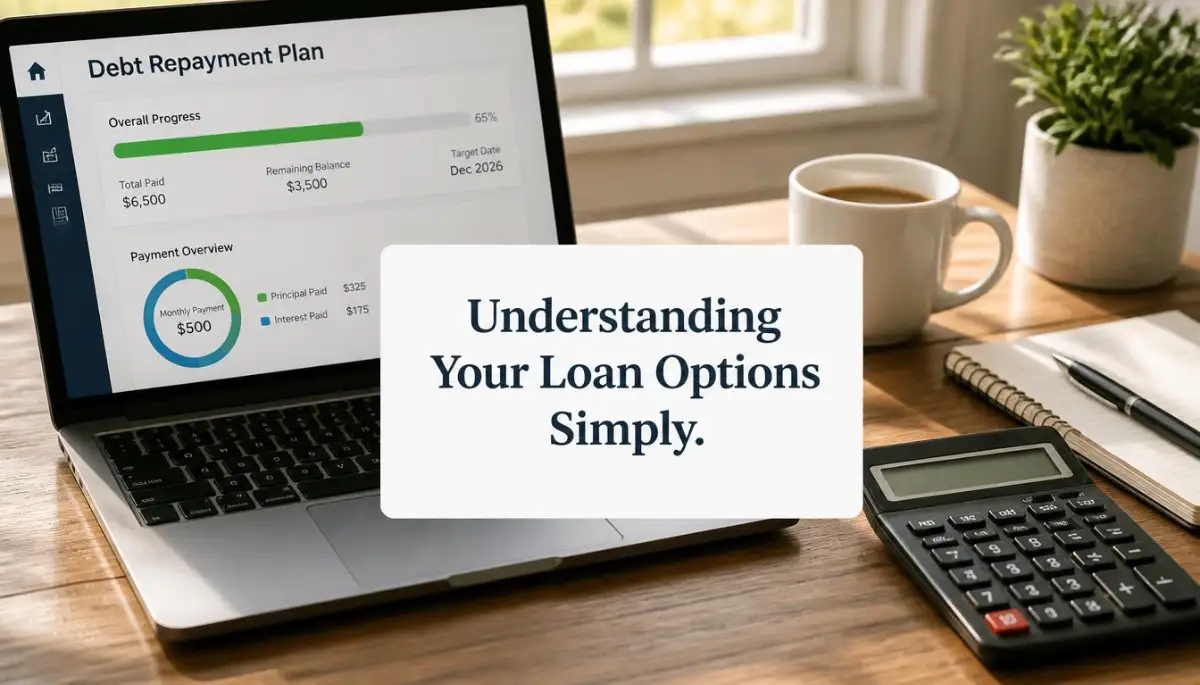
Your First Move: Facing the Numbers
### Cheat Sheet: How to Handle Your Loans Right Now
- Log In Immediately: Go to StudentAid.gov and find out who is actually holding your debt.
- Watch the Interest: If your loans are 'unsubsidized,' start paying the interest today to stop the balance from ballooning.
- Pick a Plan: Don't just stick with the 'Standard' 10-year plan if you can't afford it; look into IDR options.
- Stay Federal: Avoid private refinancing unless you are 100% sure you don't need government safety nets or forgiveness."
The scariest part of managing debt is often just looking at the total amount you owe. I used to keep my loan statements at the bottom of a drawer because I was too afraid to read them. But you cannot fix what you do not face.
Your first real step is to log into your Federal Student Aid account. This is the central hub where all your loan data lives. You need to know who your loan servicer is because they are the company you will actually send money to.
I remember being so confused because my loan was with one company, but then it got moved to another. This happens a lot, and it is totally normal. Just make sure your contact information is updated so you don't miss any important mail or emails.
Knowing your interest rates is also a big deal. Not all federal loans are the same. Some might have higher rates than others, and knowing this helps you decide which ones to focus on later. Write everything down on a simple piece of paper or a basic spreadsheet.

Understanding the Grace Period Magic
Most federal student loans come with a six-month grace period after you graduate. This is your time to breathe and get your feet on the ground. Think of it as a head start to build a small savings cushion before the bills start coming.
Pro Tip: I used to think I should just ignore my loans during the grace period, but that was a mistake. If you have "unsubsidized" loans, they are growing interest even while you are in school and during this grace period. If you can afford to pay even twenty dollars a month right now, it helps stop that interest from piling up.
Here is a quick breakdown to help you see where your money goes during that grace period:
Use these six months to track your spending. See how much money you actually have left after paying for rent and food. This will help you choose the right repayment plan when the time is up. Don't let the end of the grace period surprise you.
If you want to see a visual breakdown of how the grace period works, check out this helpful guide below.
This video explains exactly what happens to your interest during those first six months after graduation.
Picking the Right Repayment Path
The standard repayment plan is what the government puts you on by default. It breaks your balance into equal payments over ten years. While this is the fastest way to pay off your debt, the monthly bill can be very high for a new graduate.
If the standard plan feels like it will break your budget, don't panic. There are other options called Income-Driven Repayment (IDR) plans. These plans look at how much money you actually earn and set your monthly payment based on that income.
In some cases, if your income is low enough, your monthly payment could be as low as zero dollars. And the best part is that a zero-dollar payment still counts as a "on-time" payment. This keeps your credit score safe while you look for a better-paying job.
There are different types of IDR plans, and they all have slightly different rules. Some are better for married people, while others are better for people working in public service. The goal is to find the one that gives you the most breathing room each month.
Student Loan Myth-Busting:
- Myth: You have to be broke to get an Income-Driven Plan.
- Fact: Even people with decent middle-class jobs use these plans to keep their monthly bills low while they save for a house or a car.
- Myth: Loan consolidation lowers your interest rate.
- Fact: It just takes the average of your current rates. It's about making your life easier, not necessarily cheaper."
The Power of Loan Consolidation
You might have several different loans from different years of school. Keeping track of five or six different due dates is a headache. Loan consolidation allows you to combine all those federal loans into one single loan with one single monthly payment.
This doesn't usually lower your interest rate, but it makes your life much simpler. It can also give you access to more repayment plans that you might not have qualified for before. It is like cleaning up a messy room so you can finally see the floor.
Just be careful not to consolidate federal loans into private loans. If you do that, you lose all the government protections like income-driven plans and forgiveness programs. Keep your federal loans within the federal system to stay safe.
Public Service Loan Forgiveness (PSLF)
If you work for a non-profit, a school, or the government, you might be eligible for a huge benefit. The PSLF program can forgive the entire remaining balance of your loans after you make ten years of payments. This is a game-changer for teachers, nurses, and social workers.
I have a friend who worked at a local library for years. She stayed consistent with her paperwork, and last year, her remaining thirty thousand dollars in debt was wiped clean. Seeing the look of relief on her face was something I will never forget.
The key to this program is the paperwork. You have to verify your employment every year to make sure you stay on track. It takes a little bit of effort, but the reward of being debt-free is worth every single minute of form-filling.

How to Deal with Your Loan Servicer
Your loan servicer is the middleman between you and the government. They are there to help you, but you have to be your own advocate. If you are struggling to make a payment, call them immediately.
Don't wait until you miss a payment. If you call them early, they can often put you on a temporary pause called "deferment" or "forbearance." This prevents your credit score from being ruined while you deal with a short-term financial problem.
I once spent forty minutes on hold just to ask a simple question, and I almost hung up. But staying on the line saved me from a late fee. Be patient, take notes during the call, and always ask for the name of the person you are talking to.
Avoiding the Trap of Private Refinancing
You will probably get a lot of mail from private companies offering to "lower your student loan rate." They make it sound very tempting. They use bright colors and big promises to get your attention.
While private refinancing can lower your interest, it comes with a big catch. You lose all federal benefits. You won't get subsidized interest, you won't get income-driven plans, and you won't be eligible for any government forgiveness.
For most recent graduates, the safety net of federal loans is much more valuable than a slightly lower interest rate. Unless you have a very high-paying job and a huge emergency fund, it is usually better to stay with federal options.
Building a "Student Loan" Habit
Paying back loans is a marathon, not a sprint. The best way to win is to make it automatic. Almost every loan servicer offers a small interest rate discount if you sign up for "auto-pay." It is usually a small amount, but it adds up over ten years.
Setting up auto-pay also means you never have to worry about forgetting a due date. It builds your credit score silently in the background while you live your life. It takes the "decision" out of the process, which reduces your mental stress.
If you get a raise or a tax refund, try to put a little extra toward your loans. Even an extra fifty dollars a year can shave months off your total repayment time. It’s all about creating small, positive habits that lead to big results over time.
What to Do if You Lose Your Job
Life is unpredictable, and losing a job is one of the scariest things that can happen. If this happens to you, the federal government has protections in place. You can apply for an unemployment deferment, which pauses your payments.
This is why federal loans are better than private ones during tough times. The government understands that people go through hard patches. They would rather you pause your payments than go into "default," which is when you stop paying altogether.
Stopping your payments officially is much better than just ignoring the bills. Ignoring them will hurt your credit for years, making it hard to rent an apartment or buy a phone. Always communicate with your servicer, no matter how bad the situation feels.
The Role of Subsidized vs. Unsubsidized Loans
When you look at your loan list, you will see these two words. Subsidized loans are the "good" ones because the government pays the interest while you are in school. Unsubsidized loans start growing interest the moment the money is sent to your college.
When you start making extra payments, focus on the unsubsidized loans first. Since they grow faster, paying them off quickly saves you the most money in the long run. It is a simple math trick that keeps more money in your pocket.
I wish someone had explained this to me in my first year of college. I would have tried to pay off that small interest balance every summer. But it's never too late to start being smart with how you allocate your money.
Watching Out for Scams
Sadly, there are many people who try to take advantage of graduates who are stressed about debt. If a company asks you for money to "process" your loan forgiveness, it is a scam. The government never charges you a fee to apply for repayment plans.
If someone calls you and sounds very urgent, hang up and call your loan servicer directly using the number on their official website. Real government agencies will not pressure you over the phone or ask for your password.
Keep your login information private and change your password every few months. Protecting your digital identity is just as important as managing your money. Stay alert and trust your gut if something feels "too good to be true."
The Mental Shift: From Debt to Freedom
It is easy to look at your loan balance as a mistake or a burden. But try to remember why you took those loans in the first place. They were an investment in yourself, your brain, and your future career.
That money paid for the classes that gave you your skills. It paid for the library books and the late-night study sessions. You didn't just "spend" that money; you "used" it to build a better version of yourself.
When you make a payment, try to think of it as paying yourself back for all that hard work. This small change in how you think can make the process feel much less painful. You are not just a person with debt; you are a person with an education and a bright future.
Staying Organized in a Digital World
Digital clutter can make loan management feel overwhelming. Create a specific folder in your email just for student loan messages. Save copies of every document you sign and every confirmation number you receive.
If you have a physical file cabinet, keep a "Student Loan" folder there too. Having everything in one place makes it easy to find answers when you need them. You won't have to hunt through piles of mail when you are trying to apply for a new apartment or a car loan.
Organization is the enemy of stress. When you know where your information is, you feel more in control. And when you feel in control, the debt doesn't feel like it owns you anymore.
Planning for the Future While Paying the Past
You don't have to wait until your loans are gone to start living your life. You can still save for a house, invest in a retirement account, and go on vacations. It’s all about balance and finding the right repayment plan that allows for those things.
Some people think they should put every single penny toward their debt. But if you have no emergency savings, one car repair could send you into a tailspin. Build a small safety net first, then tackle the debt.
Your life is happening right now, not ten years from now. By managing your federal student loan repayment options wisely, you can enjoy your today while still securing your tomorrow. You've got this, and you are doing much better than you think.
Taking Your Loan Strategy to the Next Level
Once you have the basics down, it is time to look at the smarter, more advanced moves. You don't want to just pay your bills; you want to win the game. I found that most people just set their payments and forget them.
But if you want to be debt-free sooner, you have to be active. One of the best "secrets" I learned is the power of targeted payments. If you have several loans, they all have different interest rates.
Instead of spreading extra money across all of them, pick the one with the highest interest rate. Pay the minimum on everything else and throw every extra dollar at that one high-interest loan. This is often called the "Avalanche Method."
It feels amazing to see that one balance drop to zero. It gives you a mental win that keeps you going. Plus, it saves you a lot of money because that high interest isn't eating your paycheck anymore.
Another trick is to look at your employer benefits. Some companies now offer to help pay off your student loans as a perk. It is just like a retirement match but for your debt.
I actually know someone who got five thousand dollars a year from their job just for their loans. They didn't even know the program existed until they asked HR. Always check your employee handbook or talk to your manager about this.
You should also think about your tax refund. It is very tempting to spend that "extra" money on a new gadget or a trip. But putting that refund directly toward your principal balance can cut months off your repayment timeline.
If you are working for yourself or have a side hustle, things are a bit different. You might want to check out some smart budgeting methods for self-employed pros to keep your cash flow steady. Managing loans with an unstable income requires a very specific type of discipline.
The goal is to make your money work as hard as you do. Don't let it sit idle in a low-interest savings account if your loans are growing at a higher rate. Be aggressive when you can, and be steady when things are tight.
I also recommend checking your credit report once a year. Your student loans are a big part of your credit history. Making on-time payments helps you build the score you need for the future.
If you are feeling overwhelmed by the transition from student life to the working world, you are not alone. Many graduates face overcoming college burnout while trying to figure out their finances. Taking care of your mind is just as important as taking care of your wallet.
The Consumer Financial Protection Bureau offers some great tools to help you compare these advanced options. They have worksheets that make the math look a lot less scary. Use every tool you can find to stay ahead of the curve.
Remember, this is a long-distance race. You don't need to finish it today, but you do need to keep moving. Small, smart choices add up to massive freedom over time.

The Mistakes That Could Cost You Thousands
We all make mistakes, but some financial blunders are harder to fix than others. One of the biggest traps is "The Silence Trap." This happens when you get overwhelmed and just stop opening your mail or checking your loan portal.
I have seen people ignore their loans for months because they were afraid. But the interest doesn't stop just because you aren't looking at it. In fact, that is when the debt grows the fastest and starts to hurt your future.
Another common error is forgetting to "recertify" your income-driven plan. These plans are not "set it and forget it." You have to prove your income every single year.
If you miss the deadline, your monthly payment could suddenly jump up to a much higher amount. This can cause a lot of panic when your bank account suddenly drops. Set a recurring reminder on your phone so this never catches you off guard.
Don't fall for the "Minimum Payment Myth" either. Paying the minimum on an income-driven plan might keep you in good standing, but it might not cover the interest. This means your balance could actually grow even while you are making payments.
If you have a little extra money, always try to cover at least the interest. This prevents your debt from "snowballing" out of control. It is a small step that protects your future self from a much bigger mountain of debt.
Many people also make the mistake of changing jobs without checking their loan status. If you are aiming for Public Service Loan Forgiveness, your new job must also be a qualifying employer. If you move to a private company, you might lose years of progress toward forgiveness.
I've talked to people who didn't realize that a job change during mortgage or loan repayment could change everything. Always look at the fine print before you sign a new employment contract. Your career moves and your debt moves are tightly linked.
Lastly, be very careful with co-signers. If you have a family member who helped you get a loan, your mistakes affect them too. There are many unspoken risks of co-signing a personal loan or a student loan that people don't talk about enough.
Protect your relationships by staying on top of your bills. If you think you might miss a payment, tell your co-signer before it happens. Honesty is always better than a surprise phone call from a debt collector.
If you ever feel like the system is working against you, reach out for help. Organizations like the National Foundation for Credit Counseling provide professional advice for people in your shoes. You don't have to carry this burden by yourself.
Turning Your Debt into a Success Story
It might not feel like it right now, but you are in the driver's seat. Managing your loans is a skill that will serve you for the rest of your life. It teaches you about budgeting, interest, and the value of a long-term plan.
Think of this period as your "financial basic training." Once you master this, you will be ready for bigger goals like buying your first home. In fact, understanding these loans helps when you are a first-time buyer guide.
The discipline you build today is the foundation for your wealth tomorrow. Don't let the numbers on the screen define your worth. You are much more than a balance or a credit score.
Every payment you make is a vote for your future freedom. It is a step toward the life you want to live. Be proud of yourself for taking these steps and for looking for answers.
If you are a working student right now, I know how hard it is to balance a job and a loan. You might find some relief in the ultimate survival guide for working college students. It’s a tough road, but the view from the top is going to be amazing.
Stay focused on your "why." Why did you get this degree? What kind of impact do you want to have on the world? Let that purpose drive you when the financial journey feels long.
Don't wait until tomorrow to check your balance or call your servicer. Take one small action today, even if it is just logging into your account. You have the power to change your story, one payment at a time.
I know how scary it is to look at those big numbers, but I promise you, it gets easier. Every time I hit "submit" on a payment, I felt a little bit stronger and a little more free. You are doing a great job, and your future self will thank you for the work you are doing right now.
Clear Answers to Your Loan Questions
Will my student loans stop me from buying a house?
Not necessarily, but they do play a role in your debt-to-income ratio. Lenders look at your monthly student loan payment, not the total balance. If you are on an income-driven plan, your lower payment might actually help you qualify for a mortgage.
Can I change my repayment plan more than once?
Yes, you can change your federal repayment plan at any time for free. This is very helpful if your income goes up or down. Just contact your loan servicer to discuss which plan fits your current situation.
What happens if I go back to grad school?
Usually, your federal loans can be put into "in-school deferment." This means you won't have to make payments while you are enrolled at least half-time. However, interest may still grow on your unsubsidized loans during this time.
Is student loan forgiveness real or a scam?
There are real government programs like PSLF and Teacher Loan Forgiveness. However, there are also many scams that ask for money to help you. Always apply through the official Federal Student Aid website to stay safe.
Does my spouse's income affect my payments?
It depends on the plan you choose and how you file your taxes. Some plans look at your joint income, while others only look at yours if you file separately. This is a big decision, so it is often helpful to talk to a tax professional.
Disclaimer: This article is for informational purposes only and does not constitute professional financial, legal, or tax advice. Student loan regulations and programs can change frequently. Always consult with the Department of Education or a certified financial advisor before making major decisions regarding your debt.