Why My First Business Almost Failed Because of a Leaky Bucket
I remember the first time I started a small digital service. I had a great plan, a solid product, and people actually started signing up. I was so happy every time my phone buzzed with a new notification. But then, a month later, something changed that almost broke my heart.
People started leaving as fast as they had joined. I watched my dashboard every morning, and it felt like I was trying to fill a bucket that had a giant hole at the bottom. I was working so hard to find new users, but I was losing the ones I already had. It was a very scary time because I didn't know what I was doing wrong.
I felt like my product wasn't good enough, and I started to doubt myself. I was spending all my money on ads just to stay in the same place. My stress levels were through the roof, and I couldn't sleep at night. I kept asking myself: "Why don't they want to stay?"
This is a struggle that almost every business owner faces in the world of subscriptions. You build something you love, you think it adds value, but people still click that "cancel" button. It feels personal, like a direct rejection of your hard work. It's not just about the money; it’s about the feeling of failure.
When you see your churn rate go up, your mental peace disappears. You start to worry about paying your bills or your team. You feel like you are on a treadmill that is moving too fast, and you are about to fall off. The constant pressure to get "new" people while the "old" ones leave is exhausting.
Most people try to fix this by offering more discounts or yelling louder in emails. But I learned that people don't leave just because of the price. They leave because our brains are wired in very specific ways. If you don't understand how the human mind makes choices, you will always be fighting a losing battle.
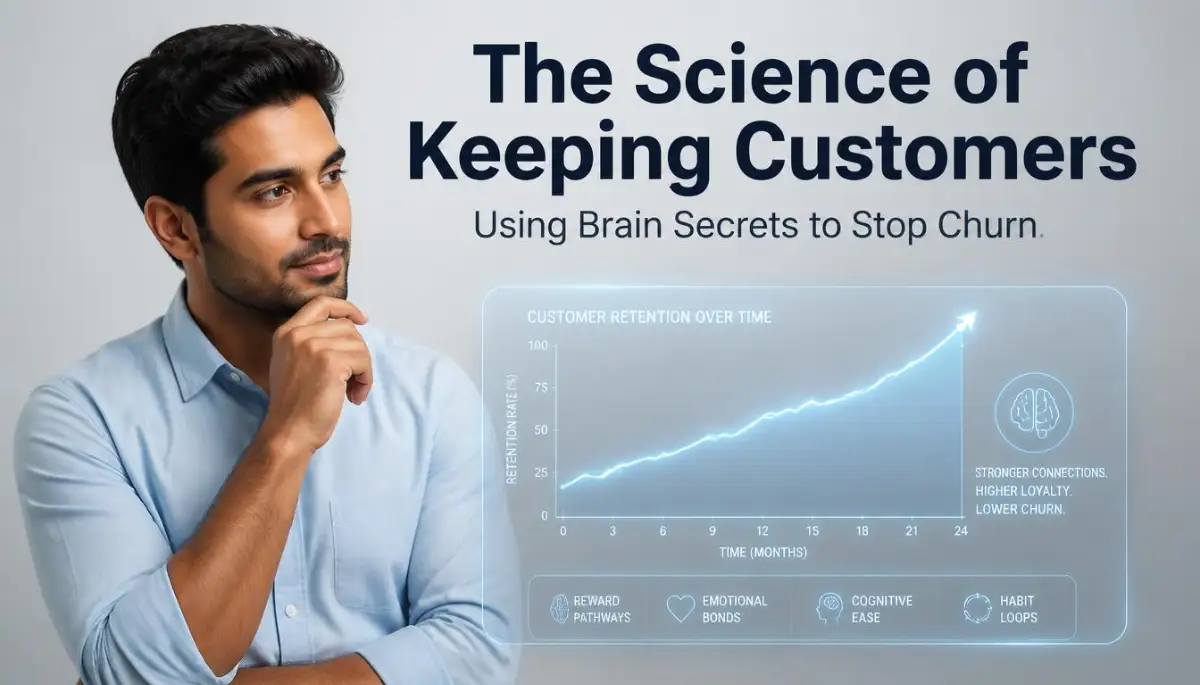
Once I started looking into how people actually think, everything changed. I realized that keeping a customer is not about magic; it is about science. You have to understand the small triggers that make someone stay or go. I want to share what I found so you don't have to suffer like I did.
The Science of "Why We Stay": A Better Way to Look at Users
In the world of business, we often think that people are rational. We think they sit down with a calculator and decide if our service is worth the money every single month. But the truth is, humans are not calculators. We are emotional, messy, and often very lazy when it comes to making choices.
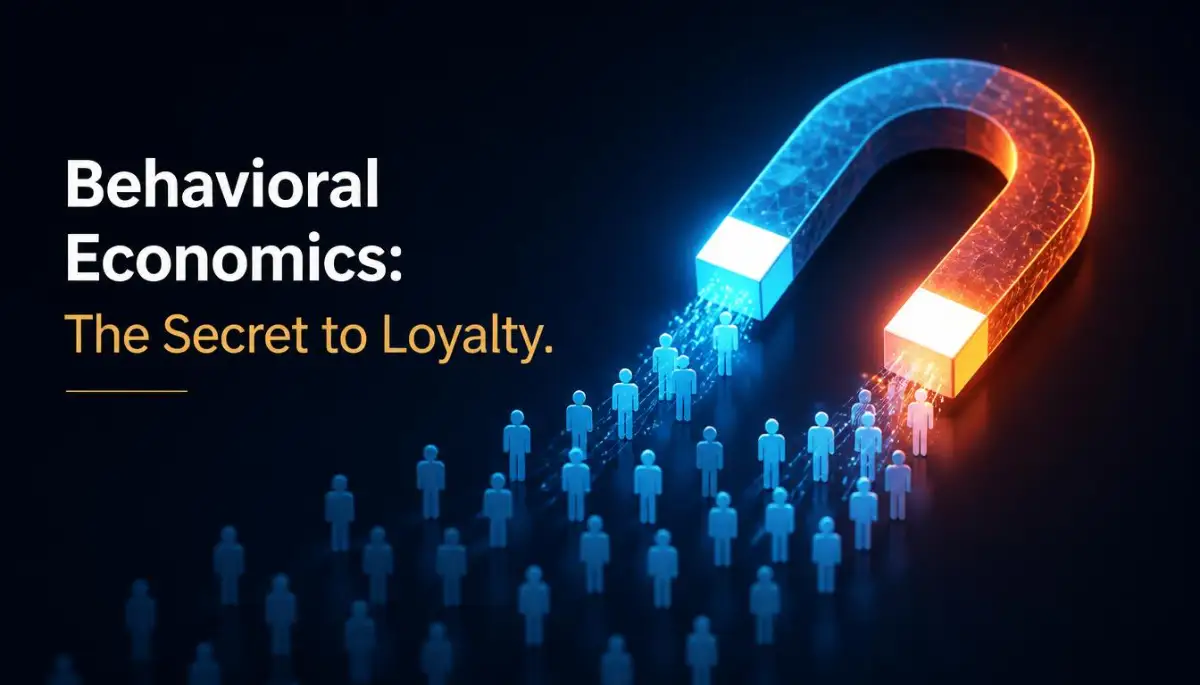
This is where behavioral economics comes in. It is the study of how people actually behave, not how we "think" they should behave. When you use this in a subscription model, you stop guessing and start knowing. You learn that a small change in a word or a button can keep thousands of people from leaving.
One of the biggest concepts is called the "Default Effect." People usually stick with whatever is already chosen for them. This is why auto-renewal is so powerful. But if you make that process feel hidden or sneaky, people will feel tricked and leave out of anger. The trick is to make the "staying" part the easiest path while still being honest.
Turning "Losing" into a Tool for Keeping
Have you ever noticed that it hurts more to lose ten dollars than it feels good to find ten dollars? This is a psychological rule called "Loss Aversion." Our brains are built to avoid losing what we already have. You can use this to help your users see the value of staying.
Instead of telling a customer what they "get" if they stay, try telling them what they will "lose" if they leave. If they cancel their subscription, will they lose their saved data? Will they lose their special "early bird" pricing? When people feel like they are about to lose a benefit, they are much more likely to keep their subscription active.
I made a big mistake early on by just letting people cancel with one click without saying anything. Now, I realize that I should have reminded them of the progress they had made inside my tool. I should have shown them the "trophies" they had earned. When I started doing this, I saw a huge drop in people leaving my service.
Making the "Pain of Paying" Feel Less Heavy
Every time a customer sees money leave their bank account, their brain feels a tiny bit of "pain." It is a real psychological reaction. In a subscription model, this pain happens every month. If you want people to stay, you have to find ways to make that pain feel lighter or less frequent.
One way to do this is by focusing on the "Value-to-Price" ratio in their mind. If they only see the charge but don't see the benefit, the pain wins. You should send "Success Emails" that don't ask for anything but instead show them what they achieved last month. Remind them of the time they saved or the money they made using your service.
Pro Tip: I used to think that "no news is good news" when it came to my customers. I thought if I didn't bother them, they would just keep paying. I was so wrong. If you don't talk to them, the only time they think about you is when they see the bill. I realized that I need to be a part of their success story, not just a line on their bank statement.
Another great way to reduce the pain of paying is to offer yearly plans. While this sounds simple, it uses the "Malleability of Memory." If someone pays once a year, they only feel that pain one time. For the next eleven months, the service feels "free" to their brain. This builds a very strong habit of using the tool without constant financial stress.
If you want to see a great visual breakdown of how these behavioral triggers work in real life, check out this video.
The Power of Small Rewards and Hitting the Finish Line
Human beings love to finish things. We have a natural drive to complete a set or reach a goal. This is called the "Endowed Progress Effect." If you show a user a progress bar that is already 20% finished, they are much more likely to do the work to get to 100%.
In a subscription model, you can use this by giving users "achievements" or "levels." If a user feels like they are on "Level 4" of your program, they won't want to cancel because they don't want to lose their rank. It makes the subscription feel like a game or a journey rather than just a bill.
I started adding small badges to my user profiles for things like "3-Month Legend" or "Daily Power User." It sounds silly, but people actually care about these small symbols of status. It makes them feel like they belong to a community. When a person feels like they belong, they are very hard to lose.
Using "Nudge Theory" to Guide Better Choices
A "nudge" is a small push that helps someone make a better decision without forcing them. You can use nudges to help your subscribers get more value out of your product. If a user hasn't logged in for a week, send them a friendly nudge. Don't say "We miss you," but instead say "Did you see this new feature that saves you ten minutes?"
The goal is to move them from being a "passive" user to an "active" user. Passive users are the ones who cancel because they don't see the point anymore. Active users are the ones who stay because the product is part of their daily life. Nudges are the bridges that take people from one side to the other.
You can also use "Social Proof" as a powerful nudge. Sometimes, people stay just because they know other people like them are staying. Showing a message like "Join 5,000 other professionals using this tool today" makes the user feel safe. It tells their brain that they made the right choice and should keep going.
Breaking the Habit of "Checking Out"
Sometimes, people cancel just because they are bored or because they had one bad day. This is often an emotional choice, not a logical one. You can use a technique called "Choice Architecture" to help them reconsider. When someone clicks "cancel," don't just say goodbye.
Instead, give them a choice to "Pause" their subscription instead of quitting. Or let them move to a smaller, cheaper plan for a while. Many times, people don't want to leave forever; they just need a break. By giving them a "middle ground," you keep them in your ecosystem.
I once had a user who was going on a long vacation. They wanted to cancel because they wouldn't be using the tool for a month. I offered them a "one-month pause" button. They were so happy! They came back after their trip and stayed as a customer for another two years. If I hadn't offered that choice, I would have lost them forever.
The Role of "Reciprocity" in Business Growth
Reciprocity is the idea that if I do something nice for you, you will want to do something nice for me. In business, this means giving your subscribers unexpected value. Send them a free guide, a bonus feature, or a simple "Thank You" note that isn't trying to sell anything.
When a customer feels like you care about them more than just their credit card number, they develop a sense of loyalty. Their brain thinks: "This company treats me well, so I want to keep supporting them." It turns a cold business deal into a warm human relationship.
I started sending a personal video to my long-term subscribers once every six months. It took me a few hours, but the response was amazing. People felt seen and valued. They told their friends about it, and my churn rate dropped even more. It’s a simple trick that most big companies forget to do.
Dealing with "Choice Overload" and Keeping It Simple
If you give your users too many choices, their brains will get tired and they will just quit. This is called "Choice Overload." If your subscription has ten different plans and fifty different add-ons, it’s too much. You want to make the decision to stay as simple as possible.
The most successful models usually have three simple choices. A basic one, a popular one, and a high-end one. This makes the "Popular" choice the "Anchor." It gives the user a clear path and stops them from feeling confused. A confused mind always says "No" and clicks the cancel button.
I simplified my pricing page last month and removed two confusing tiers. Guess what happened? My retention rate actually went up! People didn't feel overwhelmed anymore. They knew exactly what they were getting and why they should stay. Sometimes, less truly is more.
Building Trust Through Transparent Hashing of Choices
Trust is the foundation of any subscription. If a user feels like they can't leave when they want to, they will start to hate you. This is why you should always be transparent about your billing and your cancelation process. It sounds strange, but making it "easy to leave" actually makes people "more likely to stay."
When people feel like they are in control, they don't feel the need to escape. They trust that you aren't trying to trap them. This trust builds a long-term bond that is much stronger than any marketing trick. Be the company that treats its users with respect, and they will reward you with their loyalty.
I learned that being honest about when a trial is ending or when a bill is coming is the best policy. It stops people from feeling shocked when they see their bank statement. A shocked customer is an angry customer. A customer who was reminded of their bill is a customer who feels respected.
Deep Mental Hacks to Lock in Loyalty for Years
I once sat down with a friend who ran a fitness app. He was frustrated because people joined in January but vanished by March. He thought the workouts were the problem, but after looking at his data, I realized it was his timing.
The human brain suffers from something called "Hyperbolic Discounting." This means we value a small reward right now way more than a big reward later. If your subscription only promises results in six months, the brain gets bored and wants to quit today.
To fix this, you must give your users "Micro-Wins" every single week. These are small, immediate rewards like a digital badge, a personal progress report, or a "Great Job" notification. When the brain gets these tiny hits of dopamine, it stops looking for the "Cancel" button.
You can also use the "Ben Franklin Effect" to build a stronger bond. This theory says that if you ask someone for a small favor, they will actually like you more. In your business, ask your long-term users for a quick 30-second opinion on a new feature.
This makes them feel like they own a piece of your success. People rarely walk away from something they helped build. It moves them from being a "customer" to being a "partner" in your growth story.
Managing these small interactions is part of being a smart business owner. If you are working for yourself, you might also want to learn about smart tax deductions for home-based solopreneurs. Saving money on the backend gives you more room to invest in these psychological tools.
Another pro-level secret is using "Variable Rewards." This is the same logic that keeps people checking their social media feeds. If the reward for using your service is exactly the same every day, it becomes a chore.
Try adding an element of surprise to your service. Maybe it is a random "Bonus Tip" that pops up or a surprise free guide sent via email. When users don't know exactly what they will get next, they stay curious and stay subscribed.
This type of engagement is especially useful if you are using safe AI at work. You can use AI tools to personalize these "surprises" for each specific person. This makes every single subscriber feel like you are talking only to them.
According to a study by the Behavioral Scientist, personalized nudges can increase long-term engagement by over thirty percent. This is not about being pushy; it is about being relevant to their specific needs.
To keep these results for a long time, you need a "Loyalty Roadmap." This is a document where you plan exactly how a user feels at day thirty, day ninety, and day three hundred. You should have a specific psychological trigger ready for each stage of their journey.
For example, at day ninety, you can offer them a "Legacy Status" discount. This makes them feel like a VIP who has earned their place in your community. It uses the "Sunk Cost" logic to make leaving feel like losing a hard-earned title.
If you are a creative professional, you can see how beyond-automation-how-creatives-and-ai-work-better-together can help you create these roadmap assets faster. The more you automate the "boring" stuff, the more time you have to think about the "human" stuff.
Loyalty is not a one-time event; it is a series of small, honest moments. If you keep showing up for your users in ways they don't expect, they will show up for you every month. It is a beautiful cycle that builds a business that lasts forever.

The Silent Mistakes That Kill Your Monthly Income
It breaks my heart when I see a great business die because of "Dark Patterns." These are sneaky ways companies try to trick people into staying, like hiding the cancel button. You might think this saves you money in the short term, but it is actually a slow poison for your brand.
When a customer feels trapped, their brain moves into "Fight or Flight" mode. They won't just cancel; they will tell everyone on social media how much they hate you. A single bad review caused by a "trap" can cost you a hundred new customers.
I once worked with a startup that made it impossible to quit without calling a phone number. They thought they were being smart, but their reputation was falling apart. Once we made the exit easy and friendly, their new sign-ups actually went up because people finally trusted them.
Another massive mistake is ignoring your "Ghost Users." These are the people who are paying but haven't logged in for months. Many business owners are happy to take their money, but this is a huge risk.
Eventually, these people will wake up, see the charges, and feel a deep sense of anger. They will file a "chargeback" with their bank, which costs you extra fees and hurts your standing with payment processors. It is better to reach out to them and ask, "Are you still with us?"
If they aren't using the tool, offer them a way to pause or get a partial refund. This act of honesty creates a "Peak-End Rule" effect. People remember the end of an experience as much as the start, and a kind exit means they might come back later.
I have seen many people fail because they didn't have a backup plan for their money. If you find yourself struggling with cash flow because of churn, learn why first-time personal loans fail and how to fix it. Understanding the financial side is just as important as the psychological side.
Many owners also forget to look at "Contextual Churn." This is when people leave not because of you, but because their life changed. Maybe they lost their job or moved to a new city.
If you don't offer a "hardship" discount or a way to scale back, you lose them forever. By being empathetic to their life situation, you build a brand that feels human. Humans stay with humans; they leave cold machines.
Trying to fix churn with only "Price" is another pitfall. If your only tool is a discount, you are telling the world that your product isn't worth its full price. People start to wait for the discount instead of valuing the service.
Focus on "Outcome" instead of "Price." Remind them of the problem you are solving for them every single day. If they feel like they are winning, the price becomes a tiny detail they don't even think about.
I once stayed in a program for two years just because they sent me a handwritten note every December. That note cost them one dollar, but it kept me paying them hundreds of dollars. Never underestimate the power of a small, human touch in a digital world.
If you are feeling overwhelmed by all these tasks, you might be suffering from overcoming college burnout. It is okay to take a step back and breathe. Your business will only grow if you are mentally healthy enough to lead it.
According to the Social Science Research Council, emotional fatigue is a leading cause of poor decision-making in small businesses. Don't let your stress turn into bad choices that push your customers away.
Lastly, stop comparing your "Day One" to someone else's "Year Ten." I spent so much time worrying about how big companies handled retention that I forgot to talk to my own ten users. Those ten users have the answers you need, so listen to them before you listen to a textbook.
Your Action Plan for a Thriving Business
Building a business based on behavioral economics is like planting a garden. You have to prepare the soil, plant the seeds, and water them every day. But once those plants grow, they provide a harvest that keeps you and your family safe.
You now have the secrets of loss aversion, hyperbolic discounting, and the power of nudges. These aren't just tricks; they are ways to show your customers that you truly understand their needs. When a user feels "understood," they don't look for a way out.
I want you to take one thing from this guide and apply it to your business today. Maybe you send a thank-you note, or maybe you simplify your pricing page. Small actions taken today lead to giant results in the future.
Your journey is unique, and you have everything you need to succeed. The world needs the service you are building, so don't let churn stop you from making an impact. Keep learning, keep testing, and most importantly, keep being human.
I believe in you and the dream you are building. It takes guts to run a subscription business, but with these brain secrets, you are way ahead of the crowd. Go out there and turn those "one-time buyers" into "life-long fans."
I remember when I first started using these hacks; I felt like I had found a secret map. I was so excited to see my churn numbers drop and my revenue grow without any extra ads. I want you to feel that same excitement and peace of mind when you look at your dashboard tomorrow.
Common Questions About Keeping Subscribers
Is it ethical to use psychology to keep people paying?
Yes, as long as you are using it to help them get the value they signed up for. Psychology should be used to make the user experience better and easier. If you use it to trap people or lie to them, that is unethical and will eventually hurt your brand.
How do I know which psychological trigger to use first?
Start with the "Pain of Paying." If you see people canceling right after they get their bill, you know that the "pain" is winning over the "value." Focus on showing them their wins and successes before the bill hits their inbox.
Does this work for very expensive subscriptions too?
Actually, it works even better for high-ticket items. When people pay more, they have more "Buyer's Remorse," which is a psychological stress. Using reciprocity and personal nudges helps them feel that the high price is justified by the high level of care they receive.
How often should I "nudge" my customers?
The goal is to be helpful, not annoying. If you nudge them every day, they will develop "Banner Blindness" and ignore you. Try a "Quality over Quantity" approach, sending one highly relevant nudge once or twice a month based on their specific behavior.
What if my churn is caused by a bad product, not psychology?
Psychology cannot fix a broken product. If your tool doesn't work or your service is poor, no amount of "nudging" will keep people around. Always fix your core product first, then use behavioral economics to help people fall in love with it.
Disclaimer: The information provided in this blog post is for educational and informational purposes only. I am not a licensed financial advisor or a professional psychologist. While behavioral economics is a recognized field of study, individual business results may vary based on market conditions, product quality, and execution. I do not guarantee specific retention rates or financial success from using these tips. Always consult with a legal professional before changing your billing or cancelation policies to ensure you are following local consumer protection laws.