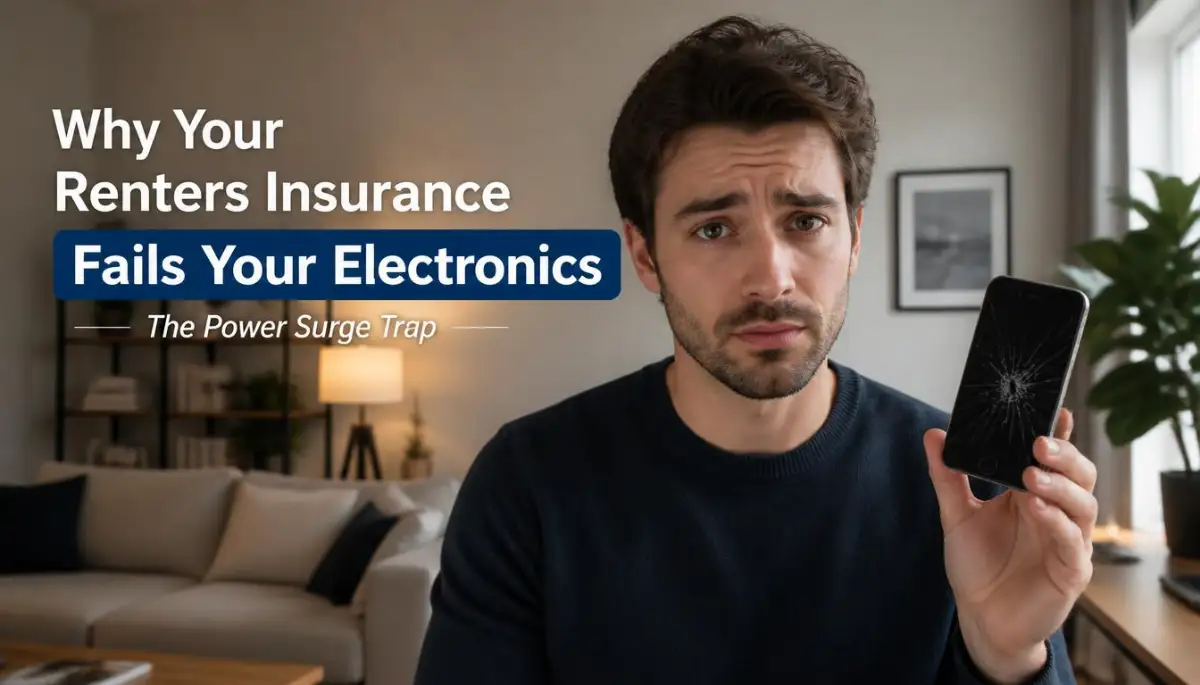
The Day My Living Room Went Dark (And My Policy Let Me Down)
I still remember the sudden flash that changed everything. I was sitting on my couch, typing away on my gaming laptop while my expensive television played in the background. Suddenly, a massive bolt of lightning struck nearby, and all the lights in my apartment flickered and died.
A strange, burnt smell filled the air. My heart sank as I realized my laptop screen was black and would never turn on again. That was my first real encounter with a power surge, and it cost me dearly.
Losing your primary work computer or your entertainment system in a split second is incredibly stressful. You sit there in the dark, feeling completely helpless as you realize how much money you just lost. It is not just about the money, but also the sudden loss of your daily routine and work.
Many people assume their renters insurance policy will easily step in and save the day when this happens. They sleep peacefully at night, thinking their monthly premium protects every single gadget they own. Sadly, this sense of safety is often a complete illusion that shatters the moment you try to file a claim.
The reality of dealing with insurance adjusters after a power surge can be an absolute nightmare. They ask endless questions, demand impossible receipts, and point to tiny words in your policy that you never noticed. It feels like a second disaster, leaving you emotionally drained and financially stranded.
This constant worry about unexpected accidents can ruin your peace of mind in your own home. Every time a storm rolls in, you find yourself unplugging everything in a panic instead of enjoying your evening. Let us look at why your standard policy might not be the safety net you think it is.
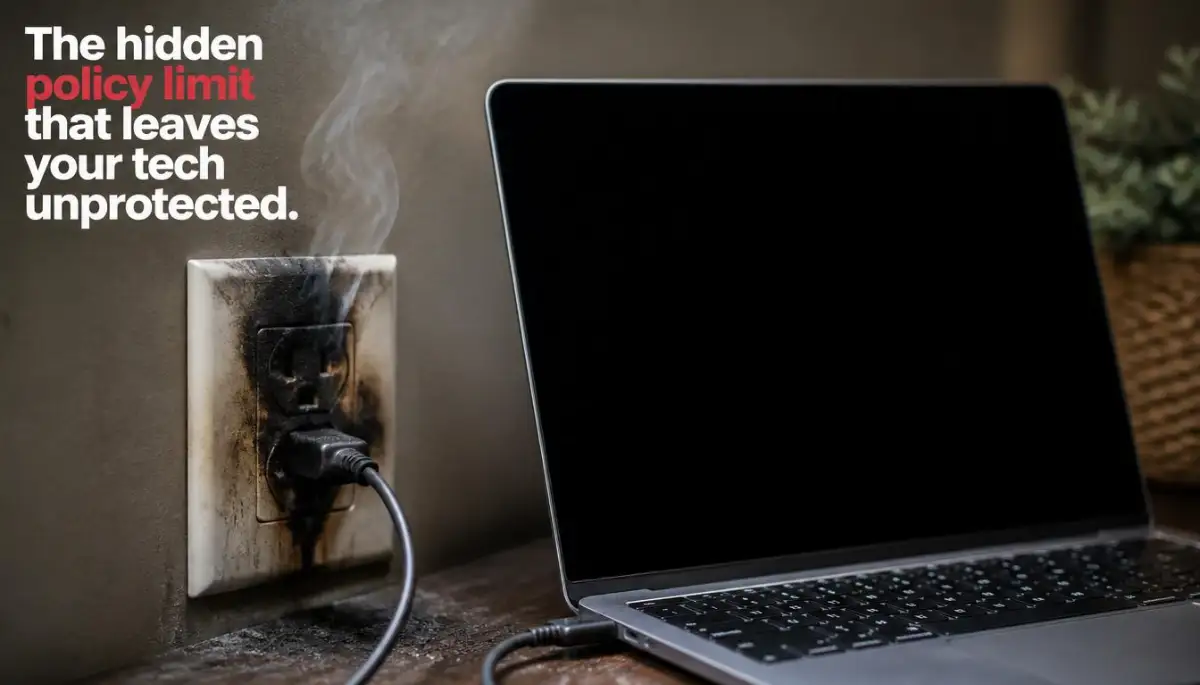
Why Your Policy Leaves Your Tech Unprotected: The Fine Print Explained
The Hidden Gaps in Your Renter's Coverage
Most renters assume that all personal property is covered equally under a standard policy. If you have twenty thousand dollars in total coverage, you think all your items are protected up to that amount. Unfortunately, insurance companies do not look at your belongings that way.
They use specific categories and limits to manage their own financial risk. Your policy likely has a section dedicated to special limits on certain types of items. This means even if you have plenty of overall coverage, your high-value tech might face a strict cap. As shown above, your basic furniture might be covered up to your total policy limit. However, your computers, tablets, and gaming consoles are lumped into a highly restricted category. Understanding these sub-limits is the first step to avoiding a terrible financial surprise.
Understanding Policy Sub-Limits on Electronics
Let us look at how these sub-limits work in a real-world scenario. Imagine you own a high-end desktop computer, a tablet, and a premium television worth four thousand dollars in total. A sudden power surge destroys all of them at once.
When you file your claim, you expect the insurance company to pay the full four thousand dollars. However, your claims adjuster points to a clause stating that electronics are capped at fifteen hundred dollars. This means you are instantly responsible for the remaining twenty-five hundred dollars out of your own pocket.
These sub-limits exist because electronics are high-risk items that get stolen or damaged easily. Insurance companies place these limits to protect themselves from large payouts on modern tech. If you do not read your policy document carefully, you will never know this limit exists until it is too late.
The Battle of the Causes: Lightning vs. Utility Company Faults
The source of the electrical surge plays a massive role in whether your claim gets approved or denied. Most standard renters insurance policies only cover specific "named perils". A named peril is a specific event that the policy explicitly promises to cover, such as lightning strikes.
If lightning directly hits your building and causes a surge, your insurance will likely cover the damage. But what happens if the surge is caused by your local utility company switching power grids?
Or what if a transformer down the street blows up and sends extra voltage to your outlets?
In those cases, your insurer might deny the claim because the surge did not come from a covered natural event. They will tell you to file a claim with the electric utility company instead. Anyone who has ever tried to get money from a massive utility company knows how frustrating and nearly impossible that process is.
Actual Cash Value vs. Replacement Cost Coverages
Another major trap for renters is the type of payout method written into their policy. There are two main ways insurance companies calculate the value of your damaged items. These are Actual Cash Value (ACV) and Replacement Cost Value (RCV).
If your policy is set to Actual Cash Value, the company will subtract depreciation from your payout. For example, your three-year-old laptop might have cost fifteen hundred dollars brand new. Under ACV, the insurer might decide its current market value is only four hundred dollars today.
After you subtract your five-hundred-dollar deductible, you end up receiving absolutely nothing from your claim. On the other hand, a Replacement Cost policy pays you enough to buy a brand-new equivalent model. Always check which version you have because it makes a massive difference in your recovery.
Why Your Power Strips Are Not True Surge Protectors
Many people believe they are safe because they plugged their computers into a cheap power strip. These simple plastic strips often look exactly like high-quality surge protectors. In reality, most of them are just multi-outlet extension cords with absolutely no surge protection inside.
A real surge protector contains a component called a Metal Oxide Varistor (MOV). This clever device redirects excess electricity away from your expensive gear and safely into the ground. A cheap power strip lacks this technology and will let high voltage pass straight into your devices.
Pro Tip: I learned the hard way that surge protectors do not last forever and actually wear out over time. Every time they absorb a tiny electrical spike, their internal protection degrades. I now replace my main living room surge protectors every two years to ensure my most valuable devices remain safe.
How to Document Your Tech Before Disaster Strikes
If you want your insurance claim to be approved quickly, you must provide solid proof of ownership. Adjusters will not simply take your word for it when you claim you owned an expensive computer. They need to see evidence that the item existed and was in your possession.
Start by taking clear photos and videos of all your electronics showing their serial numbers and model details. Store these digital files in a secure cloud storage account so you can access them from anywhere. Having this documentation ready can turn a weeks-long claim battle into a quick and easy process.
If you want to make your home completely safe from these unexpected electrical disasters, you need to understand the science of power management. This helpful guide explains exactly how to protect your household devices from sudden voltage spikes.
Watch this video to learn how to choose the right protection for your home tech:
The Shocking Reality of Deductibles
Before your insurance pays a single penny for your damaged electronics, you must pay your deductible. If your deductible is five hundred dollars and your damaged tablet costs four hundred dollars, your policy is useless. You will have to pay the entire replacement cost yourself.
Many renters choose a high deductible to keep their monthly premium as low as possible. While this saves money in the short term, it makes filing smaller claims completely pointless. It is important to find a healthy balance between an affordable monthly payment and a manageable deductible.
If your tech collection is worth several thousand dollars, a high deductible can leave you highly vulnerable. Think about how much cash you can easily access in an emergency before setting your deductible. This realistic assessment will save you from major stress when an accident finally occurs.
Practical Steps to Shield Your Electronics Today
Upgrade to High-Quality Surge Protectors
Your first line of defense is investing in high-quality surge protectors with a high Joule rating. The Joule rating tells you exactly how much energy the protector can absorb before it fails. For expensive computers and home theater systems, look for a rating of at least two thousand Joules. Never daisy-chain multiple surge protectors together, as this is a major fire hazard and voids most warranties. Plug the protector directly into a properly grounded wall outlet for it to work correctly. Taking this simple step provides a physical shield that stops electrical spikes in their tracks.
Consider a Uninterruptible Power Supply (UPS)
For your absolute most valuable items, a standard surge protector might not be enough. An Uninterruptible Power Supply, or UPS, offers the ultimate level of protection for computers and gaming consoles. A UPS is essentially a large battery backup that sits between your wall outlet and your device.
If the power suddenly goes out, the UPS instantly switches to battery power without interrupting your system. This gives you plenty of time to save your work and shut down your computer safely. It also cleans the incoming electricity, filtering out minor voltage sags and spikes before they reach your tech.
This constant, clean flow of power extends the overall lifespan of your sensitive electronics. While a good UPS is more expensive than a surge protector, it is much cheaper than replacing a broken motherboard. It is an essential investment for anyone who works from home or relies on a desktop computer.
Unplug Your Tech During Major Storms
No surge protector on earth can stop a direct lightning strike that hits your immediate building area. The sheer amount of voltage in a lightning bolt will easily jump across physical switches and destroy your gear. The only way to be absolutely safe during a severe storm is to physically unplug your electronics.
When you hear thunder rolling in, take a few minutes to disconnect your computers, televisions, and game systems. Do not just turn them off; physically pull the plugs completely out of the wall outlets. This creates a physical gap that the electrical current cannot cross, keeping your devices perfectly safe.
This simple habit costs nothing and is the most reliable protection method available. Make it a rule to unplug your main work setup whenever you plan to leave home for a long vacation. This eliminates the risk of coming home to a dead system after an unexpected summer storm.
Look Into Insurance Scheduled Personal Property Riders
If you want true peace of mind for your expensive tech, you should look into policy riders. A rider is an optional add-on to your standard renters insurance policy. It allows you to list specific high-value items and cover them for their exact value.
These riders often bypass your standard deductible and cover accidental damage, including power surges. This means if you drop your tablet or a power spike ruins your laptop, you are fully covered without paying a deductible. It usually adds only a few extra dollars to your monthly premium.
Talk to your insurance agent and ask about adding a "scheduled personal property" rider for your most expensive devices. They will likely require you to submit receipts or professional appraisals to prove the value of the items. Once active, this rider provides the most comprehensive protection possible.
Myth vs. Reality: Power Surges and Renters Policies
To help you navigate the confusing world of insurance, let us clear up some common myths. Many renters lose money because they believe outdated advice or misunderstand their policy terms.
The Big Misunderstandings Explained
- Myth: All power strips protect against surges.
- Reality: Most basic power strips are just extension cords and offer zero electrical protection.
- Myth: Renters insurance always pays for a brand-new replacement laptop.
- Reality: If you have an Actual Cash Value policy, you will only receive the depreciated value of your old laptop [2].
- Myth: If my building is hit by lightning, my claim is guaranteed to be approved.
- Reality: You must still provide solid proof of the event and document the specific damage to your items.
Understanding these differences will help you make better decisions about your coverage. It also prepares you for the specific questions an adjuster will ask if you ever need to file a claim. Being informed is your best weapon against unexpected financial losses.
Final Thoughts on Protecting Your Digital Life
Safeguarding your expensive electronics is all about taking action before a disaster strikes. Do not wait for a major storm to find out that your renters policy has a low limit on tech. Take the time today to read your policy documents, document your items, and invest in proper protection.
By upgrading your physical gear and adjusting your insurance coverage, you can sleep soundly during any storm. Your digital life is worth the small effort it takes to keep it fully protected. Take control of your home tech setup and make sure you are never left in the dark.
Advanced Strategies to Double-Check Your Home Grid Security
Installing a Whole-House Surge Protective Device
Many people do not realize that protecting individual outlets is only a partial solution to a larger electrical issue. If you want the ultimate security for your expensive gear, you need to stop high voltage before it ever enters your living space.
A whole-house surge protective device is installed directly into your main electrical panel by a licensed electrician. This advanced hardware acts like a heavy-duty pressure valve for your entire home.
When a massive spike from the power grid arrives, this panel-mounted protector instantly blocks it. It sends the dangerous excess energy safely down into the main grounding rod of the building.
This type of protection is highly recommended by national electrical safety organizations because it safeguards every single outlet. It protects things you cannot easily plug into a standard power strip, like your built-in microwave, refrigerator, and HVAC unit.
These heavy-duty devices are built to handle massive electrical currents that would easily melt a cheap plastic power strip. They work in perfect harmony with your outlet-level protectors to create a dual-layered shield.
To learn more about how industrial safety standards protect home appliances, check the official guidelines on electrical equipment ratings to see what safety certifications to look for. Installing one of these systems is a smart way to protect your long-term household investments.
Navigating the Maze of Electronic Equipment Warranties
When your insurance policy fails to pay for your damaged devices, you might still have a backup option. Many high-quality surge protectors come with an connected equipment warranty printed on the packaging.
This warranty is a legal promise from the manufacturer to repair or replace any gear damaged while properly plugged into their protector. However, getting a manufacturer to actually pay out on these promises requires extreme attention to detail.
Most companies require you to send them the damaged surge protector so their laboratory can test it for physical failure. If they find that the protector did not fail, or if you had other items plugged in incorrectly, they will deny your claim.
You must keep your original purchase receipts for both the surge protector and every single electronic device connected to it. If you cannot prove when you bought the protector, the manufacturer will likely reject your request immediately.
Additionally, these warranties often state they are secondary to your renters insurance policy. This means you must file a claim with your renter's insurance first and receive a formal denial letter before the manufacturer will consider paying you.
Always check if your devices have met rigorous independent safety testing by looking for official safety testing standards on the label. Knowing these rules beforehand will save you hours of frustration when trying to recover your losses.
Integrating Tech Safety Into Your Broader Budget
Protecting your high-value gear is not just about buying expensive gadgets; it is about smart financial planning. If you are self-employed or work as a freelancer from home, a dead computer can stop your income instantly.
You need to factor the cost of protective hardware and proper insurance riders directly into your monthly expenses. This proactive approach ensures you never have to scramble for emergency funds when a sudden storm strikes your neighborhood.
Taking these steps is just as important as learning smart budgeting methods to handle an unpredictable monthly income. When you treat your technology as a business asset, you protect your ability to earn a living.
You should also keep a dedicated emergency fund specifically for tech repairs and immediate replacements. This liquid cash cushion prevents you from falling behind on work while waiting for an insurance claim to process.
Even if you work from home, look into whether you can claim your protective gear as business expenses. Using smart tax deductions for solopreneurs can help offset the cost of buying premium power backups.
Investing in your physical home infrastructure is the absolute best way to guarantee your peace of mind. By spending a little money today on quality defenses, you prevent a massive financial setback tomorrow.

Severe Missteps That Leave Your Gadgets Exposed to Damage
Relying on the Visual Safety Indicator Lights
One of the most common errors renters make is assuming their old surge protector is still working because the little green light is on. That indicator light only tells you that the protector is plugged in and receiving power.
It does not guarantee that the internal safety circuits are still capable of stopping a high-voltage spike. The delicate metal oxides inside the unit slowly burn out over time with every small power fluctuation.
Once these internal components are exhausted, your protector becomes a regular extension cord. It will continue to feed power to your devices, but it will offer absolutely no defense during a real storm.
If you have been using the same power strip for several years, it is highly likely that its protective capabilities are completely gone. Replacing these units regularly is a small price to pay to avoid losing thousands of dollars in gear.
Leaving Internet and Cable Lines Unprotected
Many people carefully plug their smart television power cords into a high-end surge protector but completely ignore the cable lines. A destructive power surge does not only travel through your regular electrical wall outlets.
High voltage can easily travel through your coaxial cable lines, telephone wires, and ethernet cables. If lightning strikes a utility pole outside, the surge can travel through your internet router and directly into your computer.
To prevent this, look for surge protectors that include built-in coaxial and ethernet ports. You run your internet cable from the wall into the protector first, and then run a second cable to your router.
This creates a complete safety barrier for all entry points into your expensive home entertainment system. Neglecting these secondary pathways is like locking your front door but leaving your back windows wide open.
While you are updating your home entertainment setup, it is also a great time to review your device configurations. You can easily protect your digital privacy by learning how to block smart TV tracking through a few quick setting adjustments.
Procrastinating on Your Digital Backup Strategy
The emotional pain of a power surge is often much worse than the financial cost of replacing physical hardware. If your computer motherboard gets fried, you can buy a new one, but your personal data might be lost forever.
Think about the family photos, important financial documents, and personal projects stored on your local hard drives. If those drives are physically damaged by a voltage spike, recovery services can cost thousands of dollars with no guarantee of success.
Failing to set up an automated cloud backup system is a mistake that causes massive emotional stress for many families. When you lose irreplaceable memories, the psychological toll can be incredibly heavy to bear.
This kind of sudden digital loss can lead to extreme stress and frustration, similar to the feelings of academic exhaustion. Knowing the best burnout recovery strategies can help you manage stress, but preventing the loss in the first place is always the better path.
Set up a automatic backup system that copies your files to a secure online server every single night. This ensures that even if your physical computer is completely destroyed, your valuable data remains perfectly safe in the cloud.
Failing to Update Your Active Renter's Policy
Your lives and your belongings change over time, but many people let their insurance policies sit unchanged for decades. If you bought your renters policy when you owned very little, your coverage limit is likely too low today.
As you gradually upgrade your phone, buy a new computer, or purchase a modern television, your total asset value rises. If you do not report these changes to your insurer, you will find yourself underinsured when a disaster occurs.
Make it a yearly habit to review your total personal property limits with your insurance agent. This is especially true for web creators and online business owners who rely on premium local computer systems.
Understanding why server hardware is selected for performance can help you appreciate why high-quality local hardware needs proper protection too. Treat your home office with the same respect and safety standards that a professional data center uses.
Empowering Your Home Against Unexpected Electrical Events
Your Action Plan for Home Tech Safety
Taking control of your electrical safety does not have to be an overwhelming task. You can easily secure your home by following a simple, step-by-step checklist over the weekend.
First, walk through your apartment and count every device that is plugged directly into a wall outlet. Identify which of these items are high-value electronics that would be difficult or expensive to replace.
Next, replace any basic extension cords connected to these devices with certified, high-joule surge protectors. Write the installation date on a small piece of tape and stick it to the bottom of each new protector.
Finally, contact your renter's insurance agent and ask for a copy of your policy's electronic sub-limits. If those limits are too low, request a quote for a personal property rider to cover the true value of your tech
By completing these simple tasks, you remove the guesswork from your home safety strategy. You will no longer have to worry every time a storm is predicted in your area.
A Professional Guide to Filing a Successful Claim
If the worst happens and a power surge ruins your electronics, you must act quickly and logically. Your behavior in the first twenty-four hours after the incident will determine if your claim gets approved.
Do not throw away any of the damaged items or the surge protectors they were plugged into. The insurance company has a legal right to inspect the physical damage before they send your payout.
Take high-quality photos of the burnt outlets, melted plugs, and dead screens from multiple angles. Write down a detailed narrative of the event, including the exact time the power went out and any storm activity in your area.
Contact your local utility company and ask if they have records of grid issues or transformer failures at that specific time. This official documentation is incredibly powerful when presenting your case to your insurance adjuster.
You can also check the official database of the national insurance standards to understand your consumer rights during the claim process. Having this knowledge ensures you are treated fairly by your insurance provider.
Keep a clean record of all communications with your adjuster, including dates, times, and summaries of what was discussed. If your claim is unfairly denied, this organized paperwork will be your best asset during an appeal.
Protecting Your Peace of Mind
Your home should be a place where you feel completely safe, secure, and relaxed. You should not have to live with the constant anxiety of losing your digital life to a single random electrical spike.
By applying these advanced protection strategies, you build a solid defense system around your valuable devices. You protect not just your physical hardware, but also your personal memories, hard work, and daily comfort.
I know how painful it is to lose a beloved computer to a sudden accident because it happened to me. Taking these protective steps today is the absolute best way to ensure that your digital world remains safe and sound.
Your Questions About Insurance and Power Spikes Answered
Do regular renters policies protect against utility company grid switching?
Standard policies usually do not cover power surges caused by utility companies because they are not considered natural disasters. If a surge occurs due to a grid switch, you will typically have to file a claim directly with your electric utility provider. However, if the surge was triggered by a lightning strike hitting a utility pole, your renters policy should cover the damage under standard lightning protection rules.
How do I prove that a power surge destroyed my television?
To prove your claim, you should obtain a written diagnostic report from a professional electronics repair technician. This report should clearly state that the internal components of your television show physical signs of high-voltage damage. You must also provide photos of any burnt outlets and submit your original purchase receipts to verify the value of the device.
Will my policy pay for damaged smart home devices?
Smart home devices are typically covered under your personal property section, but they are subject to the same strict sub-limits as other electronics. If the total value of your damaged smart devices exceeds your policy's electronic limit, you will not receive a full payout. To avoid this, you should list your expensive smart home systems on a separate scheduled property rider.
Is a surge protector guarantee different from insurance?
Yes, a manufacturer's connected equipment warranty only covers damage that occurs when their specific surge protector fails to do its job. Renters insurance is a broader policy that covers many types of losses, including theft, fire, and natural disasters. A manufacturer's warranty is often secondary, meaning you must file a claim with your insurance company before the manufacturer will pay.
Disclaimer: This article is for educational and informational purposes only. Insurance policies, coverage limits, and local electrical regulations vary significantly by provider and location. Always consult with a licensed insurance professional and a certified electrician before making any changes to your policy or home electrical systems.