My Midnight Battle With a Bag of Chips
I remember sitting on my sofa at 2 AM, staring at an empty bag of potato chips. My stomach felt heavy, and my heart felt even heavier with guilt. I had promised myself just four hours earlier that I would start eating healthy.
This was not the first time I had broken a promise to myself. It felt like there was a second person living inside my head. One part of me wanted to be fit and energetic, but the other part just wanted salt and grease.
I felt like a total failure. I kept asking myself why I couldn't just "be stronger." I thought I lacked willpower, or maybe I was just lazy. It was a very dark and frustrating place to be.
Maybe you have felt this way too. Perhaps you want to wake up early, read more books, or stop scrolling on your phone for hours. You make a plan, you feel excited, and then... you fail again.
It feels like you are fighting an invisible monster. You start to lose trust in your own words. This is where the real pain starts, because when you can't trust yourself, your mental peace disappears.
I spent years in this cycle of trying and failing. I finally realized that the problem wasn't "me." The problem was that I didn't understand how my own brain was wired.
Why Good Intentions Often Fail So Quickly
Most people think that change is about having a strong "why." They think if they just want it enough, they will do it. But have you noticed that your brain seems to have a mind of its own?
When we try to change, we are actually fighting against years of deep brain wiring. Your brain loves efficiency. It wants to do things without thinking to save energy.
This is why you can drive home from work and not remember the drive. Your brain took over and did it for you. This is great for driving, but it is terrible when you are trying to stop a bad habit.
When you break a habit, your brain feels like it is in danger. It wants to go back to the "safe" and "easy" old way. This creates a huge amount of mental stress and anxiety.
You might feel restless or even angry when you try to change. Your friends and family might not understand why you are so moody. They just see you failing, but they don't see the war happening inside your skull.
This struggle makes people give up. They think they are "broken." But the truth is, your brain is just doing its job too well. It is trying to protect you by keeping things the same.
Is Your Brain Working Against You or For You?
Let's look at this through a different lens. Imagine your brain as a dense jungle. Every time you do something, you walk through the tall grass.
If you do the same thing every day, you create a very clear, flat path. It is easy to walk on that path. You don't even have to look where you are going.
Now, imagine trying to start a new habit. It is like trying to walk through a part of the jungle where there is no path. The grass is tall, the thorns scratch you, and it is very hard work.
Your brain looks at the easy path and the hard grass. It naturally wants to take the easy path. This is not a lack of character; it is just biology.
We often blame our "weakness" when we should be looking at our "wiring." Once you stop hating yourself for being human, you can start using science to build a better path.
The Secret Control Center: Basal Ganglia vs. Prefrontal Cortex
To understand habits, we have to look at two specific parts of your brain. Think of the Prefrontal Cortex as the smart "CEO" of your mind. This part handles your goals, your logic, and your long-term plans.
The Basal Ganglia, on the other hand, is like a "robot" that loves patterns. It doesn't think about "good" or "bad." It only cares about "easy" and "automatic."
When you decide to start a new habit, the CEO is in charge. You feel motivated and clear-headed. But the CEO gets tired very easily. After a long day of work, the CEO wants to take a nap.
When the CEO is tired, the Robot (Basal Ganglia) takes over. The Robot only knows how to do the old habits. This is why you eat the cookies after a stressful day, even if your "smart brain" told you not to.
The secret to lasting change is to move the new habit from the CEO's office to the Robot's memory. This takes time and a very specific process. You have to "train" the robot so that the new habit becomes the easy path.
I used to think I needed to be "stronger" every single day. I eventually realized that I just needed to stop tiring out my "CEO" and start training my "Robot" with tiny, easy steps.
The Anatomy of a Habit: Cue, Routine, and Reward
Every habit you have follows a simple three-step loop. If you understand this loop, you can take any habit apart like a clock. First, there is the Cue, which is a trigger that tells your brain to start.
The Cue could be a time of day, a place, or even a feeling like boredom. For example, my cue for eating chips was sitting on the sofa and turning on the TV. The TV was the signal for the "Robot" to start looking for food.
Next is the Routine. This is the actual behavior you do. It could be smoking a cigarette, checking Instagram, or going for a run. This is the part we usually try to change, but it's the hardest part to fix by itself.
Finally, there is the Reward. This is the "prize" your brain gets for doing the routine. It could be the taste of sugar, a hit of dopamine from a "like" on a photo, or the feeling of relaxation.
Your brain is a reward-seeking machine. If there is no reward, the "Robot" won't remember the habit. This is why people fail at the gym—they don't feel a "reward" immediately, so the brain thinks it's a waste of time.
Why Dopamine is Both Your Friend and Your Enemy
We often hear about dopamine as the "pleasure" chemical. But science tells us it is actually the "anticipation" chemical. It is the feeling of "I want that" rather than "I like that."
When your brain sees a Cue, it releases a tiny spark of dopamine. This creates a "craving." It is a physical itch that you feel you must scratch.
If you check your phone every time it pings, that is dopamine at work. Your brain isn't happy after you check the phone; it is excited before you check it. The "ping" is the cue that promises a reward.
To create a new, positive habit, you have to find a way to get that dopamine spark for the right things. You have to "trick" your brain into wanting the new behavior. This is much more effective than trying to use willpower.
Willpower is like a battery that runs out. Science-based habit building is like building a solar panel. It takes work to set up, but once it is running, it creates its own energy.
Rewiring Your Neural Pathways with "Small Wins"
Have you ever wondered why big "New Year's Resolutions" almost always fail by February? It is because they are too big for the brain to handle. The brain sees a huge change as a threat and shuts it down.
The brain loves "Small Wins." A small win is a goal so tiny that it is impossible to fail. For example, instead of saying "I will run for 30 minutes," say "I will put on my running shoes."
When you put on your shoes, your brain says, "Hey, I did it!" You get a tiny hit of dopamine. This tells the "Basal Ganglia" that this new behavior is good and safe.
Over time, these tiny actions start to build a new path in the jungle. The "Robot" starts to recognize the pattern. Eventually, putting on your shoes leads to walking, and walking leads to running.
This is the beauty of neuroplasticity. Your brain is literally "plastic." It can change its shape and its connections at any age. You are never too old or "too far gone" to build new neural pathways.
Learn more about how the brain changes by watching this fascinating video on neuroplasticity.
The Role of Environment in Brain Triggers
Your brain is constantly scanning your environment for cues. If you want to change a habit, you must change your surroundings. It is very hard to be a healthy person in a house full of junk food.
If you want to read more, put a book on your pillow. If you want to drink more water, put a bottle on your desk. You are making the "Cue" easy for your brain to see.
On the flip side, you should make "bad" cues invisible. If you spend too much time on your phone, put it in another room. You are making the "hard grass" even harder to walk through.
Design your life so that the right things are easy and the wrong things are hard. This takes the pressure off your "CEO" brain. You don't have to "decide" to be good if the environment does it for you.
I found that my environment was my biggest enemy. Once I moved the charger for my phone out of my bedroom, my sleep improved instantly. I didn't need more willpower; I just needed a better room layout.
Myths vs. Reality in Habit Science
This table shows why so many people get discouraged. They believe the myths and give up when things get hard. But the science shows that you have a lot more room for error than you think.
The goal isn't to be perfect. The goal is to be consistent enough that the "Robot" in your brain takes over. Even if you miss a day, just get back on the path the next day.
Your neural pathways don't disappear in 24 hours. They are like muscles—they might get a little weaker if you don't use them, but they are still there. Just keep walking the new path, and it will eventually become the easy one.
How Stress Shuts Down Your Progress
When you are stressed, your body goes into "survival mode." It pulls energy away from the "smart CEO" part of your brain and gives it to the "Robot" and the "Fear Center."
This is why we fall back into old habits when life gets hard. Your brain thinks it is in a crisis, so it goes back to what it knows best. It wants comfort, and it wants it now.
Understanding this can help you be more compassionate with yourself. If you had a terrible day and ate the cake, don't hate yourself. Your brain was just trying to help you survive a stressful moment.
The trick is to have "Stress-Proof" habits. These are very tiny versions of your goals that you do even on your worst days. If your goal is to meditate for 20 minutes, your "stress version" is just one deep breath.
By doing the tiny version, you keep the neural pathway alive. You are telling your brain, "We are still doing this." This makes it much easier to go back to the full version when the stress goes away.
Mastering the Mechanics of Permanent Change
Once you understand the basic loop of a habit, you are ready to learn how to make it stick for a lifetime. The most powerful tool I found is called "Habit Stacking." This is when you take a new habit and "anchor" it to something you already do every single day.
Neurally, this works because you are attaching a new, weak neural pathway to a very strong, established one. For example, if you want to start a gratitude practice, do it immediately after you pour your first cup of coffee. Your brain already has a "thick" path for making coffee, so the new habit can hitch a ride on that energy.
Another expert secret is to manage your "Dopamine Baseline." Many people try to make their new habits too exciting at first. This causes a massive spike in dopamine, which feels great, but it always leads to a "crash" later on.
When you crash, your brain starts to see the habit as a source of pain rather than pleasure. This is why I always suggest keeping your wins small and steady. You want a slow drip of dopamine, not a flood, to keep your brain interested for the long term.
If you are a student or a professional feeling drained by your daily tasks, you might want to look into overcoming college burnout real recovery strategies for high achievers. It explains how to manage your mental energy so you don't run out of "fuel" before your habits become automatic.
You should also use visual cues to talk to your "Robot" brain. If you want to exercise, put your workout clothes on your bed the night before. This removes "friction," which is the biggest enemy of a new neural pathway.
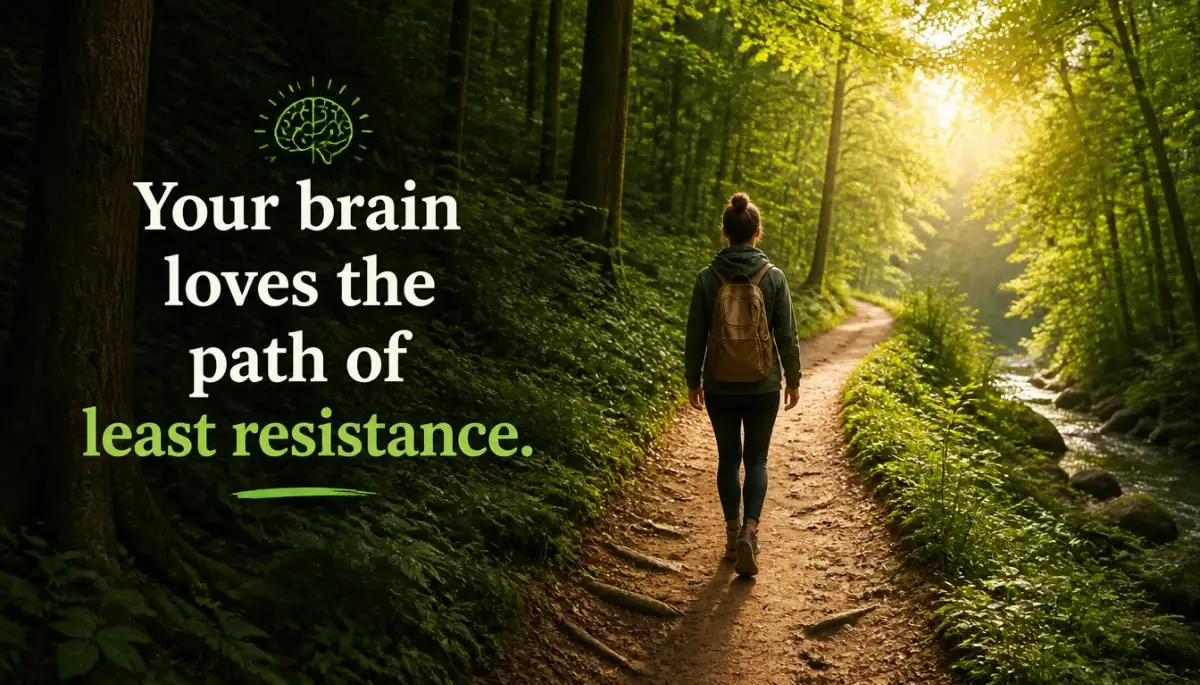
Your brain is always looking for the path of least resistance. By making the right choice the easiest one, you win the war without even fighting. I used to think this was "cheating," but I now realize it is just smart brain management.
Recent studies from Stanford Medicine show that the environment is often more powerful than willpower. If you change your room, you change your brain. This is why I spent so much time redesigning my workspace to help me stay focused.
Staying focused is not just about willpower; it is about how you communicate. You can speak less and connect more with active listening hacks for professionals to reduce social stress. When you have less social stress, your brain has more energy to focus on your personal habits.

The Dark Side of Change: Why Most People Fail
It hurts to talk about this, but most people will never see their habits become permanent. They get stuck in the "Motivation Trap." They wait until they "feel like it" to take action, but the brain doesn't work that way.
Motivation is a chemical feeling that comes and goes like the weather. If you only walk the new path when the sun is shining, the grass will grow back on the days it rains. Your brain needs consistency to build a permanent road.
When you rely on motivation, you are basically asking your "CEO" brain to do all the work. As we learned, the CEO gets tired very fast. When the CEO quits, you go right back to your old, harmful routines.
Another massive mistake is the "All or Nothing" mindset. People think that if they miss one day, they have failed and might as well quit. This is like getting a flat tire and then stabbing the other three tires because you are angry.
Neurally, missing one day does not erase the progress you have made. However, telling yourself that you are a failure causes a massive spike in stress hormones. These hormones actually block your brain's ability to learn and grow.
I have seen people try to change ten things at once. They want to wake up at 5 AM, eat only salads, and run five miles all starting on a Monday. This is a "Neural Overload" that will almost always lead to a total crash by Wednesday.
If you are worried about your long-term health while making these changes, it is a good idea to stay informed. For example, spotting the subtle signs of prediabetes can help you stay motivated to keep your healthy eating habits.
You must also protect your physical brain from strain. Many people spend hours staring at screens while trying to build new habits, which leads to mental fatigue. You can fix tired eyes fast with easy screen adjustments to keep your mind fresh and ready for change.
In our world today, we are often tempted to use technology to solve every problem. But you need to know how creatives and AI work better together without losing your own human touch. Your habits must be yours, not something an app tells you to do.
Lastly, don't ignore the physical toll of your environment. If you sit too long while working on your new goals, you might be hurting your body. Research shows that sitting for six hours affects your veins in ways that make you feel more tired and less likely to stick to your routines.
A New Chapter for Your Mind
You are now standing at the beginning of a very exciting journey. You have the map of how your brain works, and you have the tools to change your path. This is not about being perfect; it is about being a little bit better every day.
Think about where you will be in six months if you just stick to one tiny habit. Your brain will have built a strong, wide road for that behavior. It will become as easy as breathing.
I want you to be gentle with yourself as you grow. There will be days when the "Robot" wins and you go back to your old ways. That is okay—it is just a part of being a human being.
The magic happens when you get back on the path without hating yourself. Every time you choose the new habit, you are casting a vote for the person you want to become. You are literally building a new version of yourself, one neuron at a time.
I spent a long time feeling like a slave to my old habits. It wasn't until I started using these science-based steps that I felt truly free. I want that same feeling of freedom for you, starting right now.
I hope you take this information and use it to build a life that makes you happy. You have the power to rewire your mind and change your story. Take that first tiny step today, and I promise you, your future self will be so grateful that you did.
Common Questions About Brain Rewiring
How long does it actually take to form a new habit?
While people often say 21 days, research from Nature Neuroscience suggests it varies for everyone. On average, it takes about 66 days for a new behavior to become automatic. Some habits take 18 days, while others can take almost a year depending on the person and the task.
Can I really break a bad habit I have had for 20 years?
Yes, you can, thanks to neuroplasticity. Your brain can form new connections at any age. However, you don't really "erase" the old path; you just build a much stronger new path that becomes your brain's preferred choice.
Why do I always fail when I get stressed?
When you are under stress, your brain pulls energy away from the "logic" center (prefrontal cortex) and uses the "habit" center (basal ganglia). This makes you fall back into old, comfortable patterns. To prevent this, make your new habits so small that they are easy to do even when you are stressed.
Does sleep affect how my brain learns new habits?
Sleep is essential for habit formation. When you sleep, your brain "replays" the things you did during the day and strengthens the neural pathways. Without enough sleep, your brain struggles to turn new actions into permanent memories.
What is the best time of day to start a new routine?
Many people find that morning is best because the "CEO" brain is fresh and has more energy. However, the best time is whenever you can be the most consistent. Look for a time that already has a strong "cue" you can attach your new habit to.
Disclaimer: The information provided in this article is for educational and informational purposes only. It is not intended to be a substitute for professional medical advice, diagnosis, or treatment. Always seek the advice of your physician, psychologist, or other qualified health provider with any questions you may have regarding a mental health condition or behavioral change. Never disregard professional medical advice or delay in seeking it because of something you have read on this website.