The Hidden Stress of Forgetting Your Digital Keys
Staring at a 'Login Failed' screen when you’re just trying to pay a bill is a special kind of stress. We’ve all been there—guessing passwords, getting locked out, and feeling like our own digital lives are working against us. I spent years juggling a messy list of codes until I realized that the best key I ever owned wasn't a word—it was me. Let’s talk about how switching to biometric security can finally end your password nightmares and keep your data truly safe.
My mind went blank. I had so many passwords for different sites that I couldn't keep track of them anymore. I felt small, frustrated, and honestly, a bit scared. If I couldn't get into my own account, who else was trying? This was the day I realized that the old way of staying safe online was failing me.
It felt like I was carrying a heavy bag of keys, but none of them fit the locks. My digital life was a mess. I spent hours on the phone with customer support just to prove who I was. It was a huge waste of time. I knew there had to be a better way to protect my data without losing my mind.
Most people today feel this same pressure. We are told to make long, complex passwords with numbers and symbols. But who can actually remember ten different versions of those? It creates a lot of mental weight. We worry about hackers getting into our emails or social media.
Imagine never having to remember a word or a number again. Your face, your eyes, and your touch are things you can never lose. They are unique to you and only you. Transitioning to this kind of security changed my life. It took away the anxiety of the "Forgot Password" button.
Using your physical traits to lock your phone or computer isn't just cool tech. It is about getting your peace of mind back. It is about knowing that even if someone knows your name, they cannot be you. This shift is fixing the broken trust we have with our digital world.
How Your Unique Body Traits Create a Digital Shield
Your body is full of patterns that are yours alone. Tech experts call these biometric markers. Think of them as a secret code written in your skin and eyes. When we talk about biometric authentication, we are talking about using these codes to prove who we are.
Quick Summary: Why Your Body is the Ultimate Key
Before we dive into the science, here are the big reasons why biometrics are a game-changer for you:
- Goodbye Memorization: You never have to worry about the 'Forgot Password' button again.
- Unbeatable Security: Unlike a password, your face or fingerprint can’t be guessed by a computer.
- Privacy First: Your data stays on your device (in a 'Secure Enclave') and isn't sent to a cloud.
- Speed: Unlocking your life takes less than a second.
Fingerprint scanning was the first big step for most of us. You probably use it every time you wake up your phone. The scanner takes a picture of the tiny ridges on your finger. It doesn't store the actual picture, though. It turns that pattern into a mathematical string.
This is much safer than a password because a hacker cannot guess a mathematical string based on your birthday. If you use a password like "Dog123," it is easy to break. But no one can copy the exact loops and swirls on your right thumb. It is a simple way to stay safe without effort.
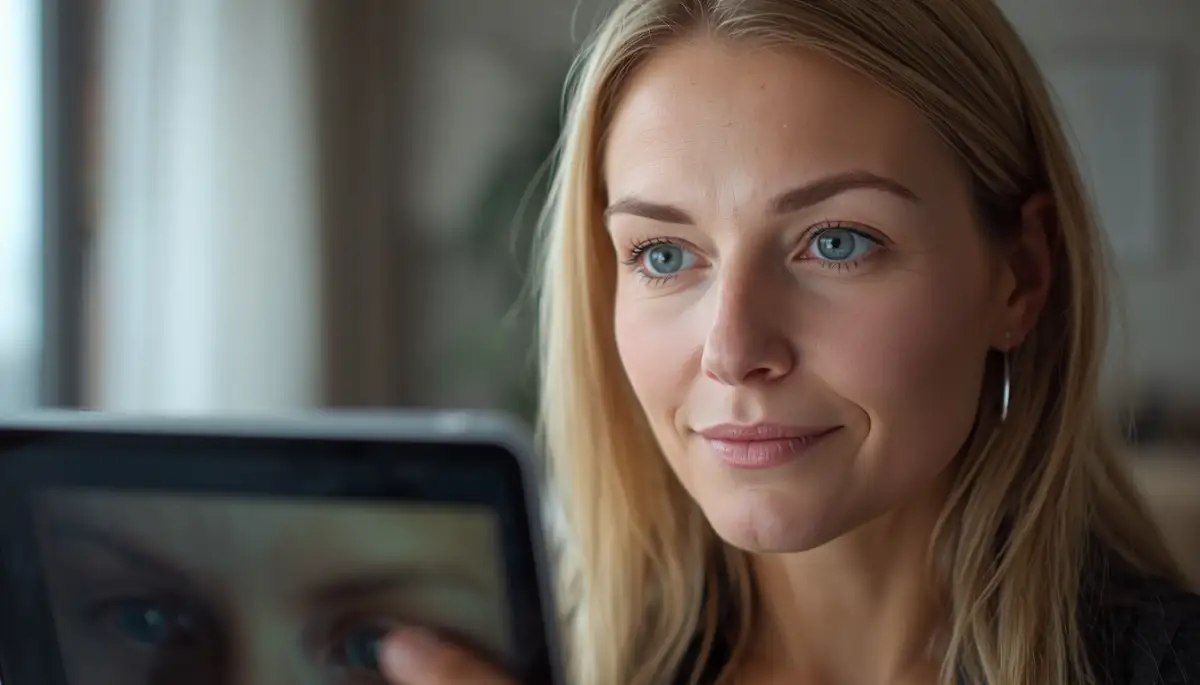
Facial recognition is the next level of this personal safety. Modern cameras look at more than just your eyes and nose. They measure the depth of your face. They look at the distance between your forehead and your chin. This makes it very hard for someone to use a photo of you to trick the system.
I used to think this was just for movies. But now, I use my face to sign into my laptop every morning. It is fast and feels very natural. I don't have to stop and think. The tech works for me, instead of me working for the tech. This is how innovation should always feel.
"If you are wondering which biometric method fits your life best, here is a quick breakdown of how they stack up:
- Fingerprint: Best for quick daily tasks like unlocking your phone or paying for coffee.
- Facial Recognition: Perfect for hands-free access, especially when using a laptop or smart home lock.
- Voice ID: Best for banking or customer service calls where you need to prove your identity while talking.
- Behavioral Tech: The 'invisible' layer that watches how you type to catch thieves in real-time."
Pro Tip:
I used to worry that if my phone broke, I would be locked out of everything forever. I learned that you should always have a "back-up" recovery key stored in a safe physical place. Relying on your body is great, but having a physical paper code in a home safe is a smart move I always recommend to my friends.
The Science of Why Biometrics Beat Traditional Passwords
To understand why this is the future, we have to look at the math. A standard password has a limited number of combinations. A computer can try millions of words in a second. This is called a brute-force attack. Most people's passwords can be cracked in minutes by a strong computer.
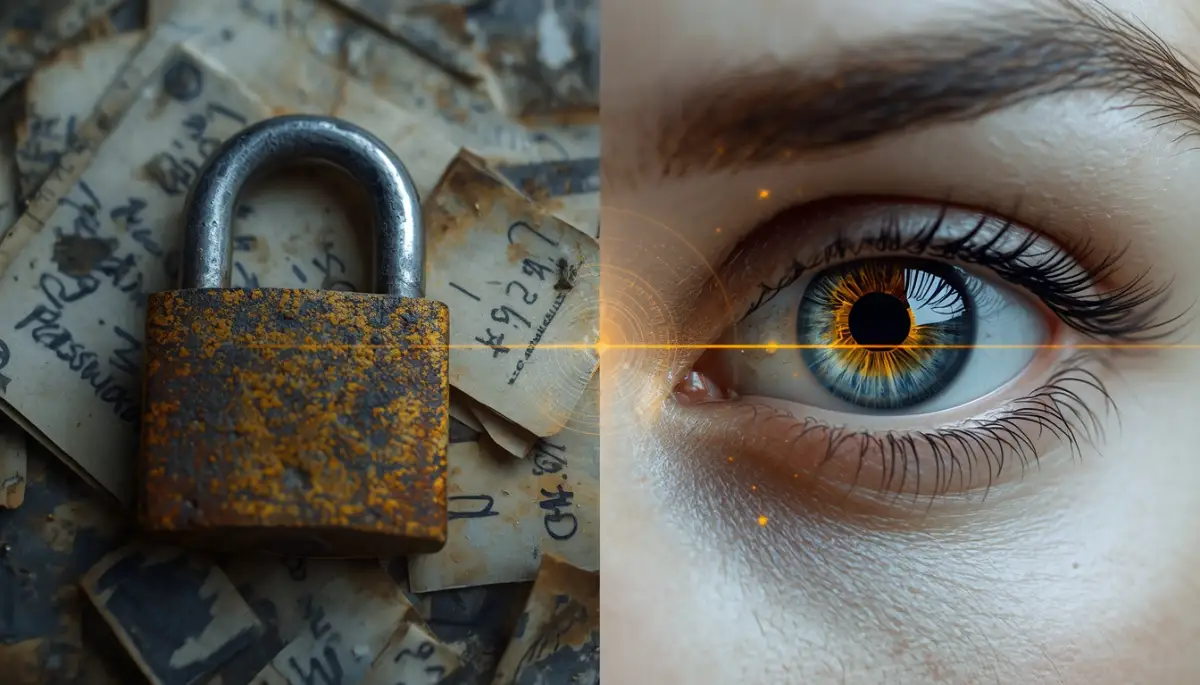
Biometrics are different because they are complex and analog. Your iris, which is the colored part of your eye, has over 250 unique points. A fingerprint has about 40. When you combine these, the odds of someone else having the same traits are billions to one. It is almost impossible to find a match.
This level of security is why big companies and banks are moving away from typing. It isn't just about being fancy. It is about stopping identity theft before it starts. When your "key" is literally a part of you, you cannot leave it at a coffee shop or lose it in a taxi.
Why you should watch this video on biometric security:
If you want to see exactly how a scanner maps your face in real-time, this short video explains the process perfectly. It shows why a simple photo cannot trick a modern 3D biometric sensor.
Moving Beyond Just Fingerprints and Faces
We are now seeing even more amazing ways to prove identity. Voice recognition is becoming a big deal for phone banking. Your voice has a unique "print" just like your finger. The way your throat and mouth move creates a sound that is hard to mimic perfectly.
I recently tried a voice-activated security system for my smart home. It was strange at first to talk to my door, but it worked every time. It even knew it was me when I had a slight cold. The tech is getting very smart at knowing the difference between a recording and a live person.
There is also something called "behavioral biometrics." This is very cool and a bit invisible. It looks at how you hold your phone. It measures the speed at which you type and the pressure you put on the screen. If someone else steals your phone and tries to use it, the phone might realize it isn't you.
This happens because the thief doesn't move like you do. They don't swipe the screen with the same rhythm. This adds an extra layer of protection that works in the background. You don't even have to do anything. The tech just watches over you like a silent guard.
Fixing the Problem of Digital Identity Theft
Identity theft is a huge problem that ruins lives. When a hacker gets your social security number and password, they can pretend to be you. They can take out loans or spend your money. This creates a mountain of stress and legal trouble for the victim.
Biometric authentication acts as a wall against this. Even if a hacker has your name and address, they don't have your physical presence. They cannot show up at a bank and provide your retina scan. This makes your personal data much less valuable to criminals.
When criminals see that a system uses high-end biometrics, they usually move on to an easier target. It is like having a very strong lock on your front door. A thief will look for a house with an open window instead. By using these tools, you are making yourself a "hard target."
The Ease of Use for Everyday People
One of the best things about this tech is that it helps everyone. My grandfather used to struggle with his tablet because he couldn't remember his Apple ID password. He would get frustrated and give up. Now, he just puts his finger on the home button.
It has opened up the world of technology for people who aren't "tech-savvy." You don't need to be a computer expert to use your face to unlock a screen. It makes the digital world more inclusive. It removes the barriers that keep people away from staying connected with family.
This ease of use also means people are more likely to actually use security. Many people turn off passwords because they are annoying. But almost no one turns off a fingerprint sensor because it is so fast. When security is easy, more people stay safe.
We are seeing this in shopping too. Paying for groceries with a thumbprint on a phone is faster than digging for a plastic card. It is also safer because the card number is never shared with the store. Everything is encrypted and handled through your biometric ID.
Privacy and the Safety of Your Biometric Data
A common question I get is, "Is my face data safe?" People worry that a company will steal their thumbprint. This is a very fair thing to worry about. However, the way modern tech handles this is actually very smart.
Your phone does not store a photo of your face or finger in a regular folder. Instead, it creates a mathematical map. This map is kept in a "Secure Enclave." This is a tiny chip inside your device that is separate from the rest of the system. Even the phone's operating system cannot see the raw data.
When you scan your finger, the sensor sends a code to the chip. The chip says "Yes" or "No." It never sends your actual fingerprint to the cloud or to a website. This means even if a company gets hacked, your physical traits are not in their database.
"Biometric Privacy: Myth vs. Fact
- Myth: Tech companies own my actual fingerprint photo.
- Fact: They only store a 'math version' of your print. A hacker can't turn that math back into your finger.
- Myth: If I’m wearing a mask or sunglasses, my face ID won't work.
- Fact: Modern AI looks at the shape of your skull and the area around your eyes, so it usually recognizes you anyway."
Understanding this made me feel much better about using the tech. I realized that my privacy was actually being protected better than with a password. A password lives on a server somewhere. Your biometric map stays in your pocket on your own device.
Preparing for a Password-Free Future
We are heading toward a world where passwords might disappear entirely. Major tech companies are working on something called "Passkeys." These use your device's biometric locks to sign you into websites. You won't even have a password to type.
This will stop "phishing" attacks. Phishing is when a fake email asks you to type your password on a fake site. Since there is no password to type, the hacker has nothing to steal. You just use your face or finger to confirm you want to log in.
It is an exciting time to be online. We are finally moving away from a system created in the 1960s. We are using our own unique biology to protect our modern lives. It is a big win for both safety and convenience.
If you haven't turned on these features yet, I highly suggest you do. Look in your phone or laptop settings under "Security" or "Biometrics." It only takes a minute to set up, but it will save you hours of stress in the long run. You deserve to feel safe in the digital space.
Why Your Personal Security Is Now Truly Personal
In the end, cybersecurity used to be about what you know (passwords). Now, it is about who you are. This is a much stronger foundation for a safe life. You are the only person in the world with your specific traits.
By embracing biometric authentication, you are taking control of your digital identity. You are saying that your data is worth protecting with the best tools available. You are choosing a life with less stress and more speed.
I no longer fear the "locked out" screen. I don't carry the weight of a hundred passwords in my head. My phone knows me, my laptop knows me, and I feel secure. This is how the future of personal cybersecurity is being shaped, one fingerprint at a time.
Leveling Up Your Digital Guard With Expert Biometric Tricks
Using your fingerprint to open your phone is a great start, but we can do so much more to stay safe. If you really want to protect your digital life, you should think about "multi-modal" security. This simply means using more than one part of your body to prove who you are. For example, some high-security apps now ask for both a face scan and a voice check. This makes it almost impossible for a hacker to get in, even if they have a very good 3D mask of your face.
I started doing this with my most sensitive accounts, like my main email and banking apps. It adds maybe two seconds to the login process, but the peace of mind is worth it. You should check if your banking app supports "Liveness Detection." This is a smart feature that makes sure a real human is there, not just a photo. It might ask you to blink or smile during the scan to prove you are actually present.
Another secret to staying safe is keeping your hardware clean. Most people don't think about the physical side of tech security. A dirty fingerprint sensor or a smudged camera lens can make the system fail. When the system fails too many times, it often falls back to asking for a password. If your password is weak, you are right back where you started—vulnerable to hackers. I make it a habit to wipe my sensors with a soft cloth every morning.
You should also look into how your different devices talk to each other. For instance, if you have a smartwatch, it can act as a "proximity lock" for your laptop. When you walk away from your desk, your laptop locks itself because it can no longer "see" your watch. This is a form of behavioral biometrics that works without you even thinking about it. It is much better than leaving your computer open for anyone to see.
If you are worried about how your data is handled at work, you should read about safe AI at work to understand how to keep your personal info out of public systems. Using biometrics at work is becoming very common, but you need to know your rights. Always ask your employer how they store your biometric maps and if they use a "Secure Enclave" chip.
Lastly, you should always have a backup plan that does not involve a simple word. I use a physical security key, like a YubiKey, as my ultimate backup. If I am wearing a mask or if my hands are wet and the sensor won't work, I just plug in my key. This keeps me away from using old, easy-to-guess passwords. Combining your body’s unique traits with a physical key creates a "digital fortress" that very few hackers can ever hope to break.
Where Things Go Wrong: Common Security Blunders
One of the biggest mistakes I see people make is trusting their tech too much without checking the settings. Just because a device has a face scanner doesn't mean it is set to the highest security level by default. Some phones allow a "faster" scan that is actually less secure. This might let a sibling who looks a bit like you open your phone. I always tell my friends to go into their settings and turn on "Require Attention." This ensures your eyes must be open and looking at the screen for it to unlock.
Another huge pitfall is sharing your biometric-enabled devices with kids or friends. When you let your child use your iPad and you add their fingerprint to the system, you are opening a door. Kids might accidentally buy things or delete important files. More importantly, every new print you add makes the system slightly less certain. I learned this the hard way when my nephew accidentally sent a bunch of "ghost" emails from my work account. Now, I use guest modes for others and keep my biometric locks strictly for myself.
We also tend to forget about our other smart devices. We secure our phones but leave our TVs wide open. Smart TVs often have cameras and mics that can be used for voice commands. If you don't secure these, they can become a hole in your home’s armor. You can find some great tips on how to block smart TV tracking to make sure your living room stays private. A smart home is only as safe as its weakest link.
A very emotional mistake is not having a "Legacy Contact" or a way for family to access your data in an emergency. If you only use your face to lock everything, what happens if you are in an accident? Your loved ones might need to get into your phone to call people or handle your bills. It is a sad thing to think about, but it is a real struggle for many families. I made sure to set up an emergency access code that my partner knows. It is kept in a physical safe, so it is not online where hackers can find it.
Ignoring software updates is another silent killer of security. Companies like Apple and Google often find small "bugs" in how their sensors work. They release updates to fix these holes. If you keep hitting "Remind Me Later," you are leaving your digital door unlocked. I once met someone who got hacked because they hadn't updated their phone in two years. The hacker didn't even need to steal their finger; they just used a software trick that the update would have blocked.
Finally, don't fall for the trap of thinking biometrics make you invincible. They are a tool, not a miracle. You still need to be careful about what links you click and what apps you download. Hackers are very creative. They might not be able to steal your face, but they can still trick you into giving away other types of access. Staying safe is about a change in how you think, not just a change in what tech you buy.
A New Era of Freedom and Safety
Looking back at how much time I used to spend resetting passwords, I feel a huge sense of relief. We are finally at a point where technology is starting to understand us as humans. We aren't just a username and a string of numbers anymore. We are unique individuals with our own patterns and traits. This shift makes the internet feel like a much more personal and friendly place.
I truly believe that the move toward using our bodies as keys is a move toward more freedom. It takes away the "digital chores" that make using a computer feel like a job. Now, I can open my laptop and start working in less than a second. It helps me stay in my creative flow. If you are a creator, you might want to see how creatives and AI work together to find more ways to stay productive and secure.
The best part of this journey is that it is only getting better. Sensors are getting smaller, faster, and more accurate every single day. We might soon see things like "heartbeat signatures" where your watch knows it’s you just by the way your heart pumps. This sounds like science fiction, but it is just around the corner. It is a wonderful time to be alive and to see how innovation is making our lives less about memory and more about being ourselves.
Don't wait for a "better time" to fix your security. The best time was yesterday, but the second best time is right now. Go through your apps tonight. Turn on the face scan. Set up the fingerprint lock. Tell your family why it matters. When we all take these small steps, the whole internet becomes a harder place for criminals to hide. We are building a safer world together, and your unique identity is the most powerful tool in that building process.
I used to be so afraid of the digital world, but now I feel like I finally have the right armor. My body is my key, and it is a key that no one else can ever hold. I want you to feel that same power every time you touch your screen. Take that first step today, and I promise you will never want to go back to the old, stressful way of typing passwords again.
Common Questions About Biometric Security
Can someone use a photo of me to unlock my phone?
Most modern smartphones use 3D depth sensing or infra-red light, which means a flat photo will not work. They look for the contours of your face and even things like skin heat or tiny movements. It is much harder to trick a new phone than you might see in old movies.
What happens if I cut my finger or hurt my face?
Biometric systems are usually smart enough to handle small changes like a tiny scratch or a new pair of glasses. However, this is why it is very important to register more than one finger or have a secondary face scan. Most devices also let you set a "Rescue PIN" as a final backup if your physical traits change temporarily.
Is biometric data stored on a company's server?
For almost all major tech brands, your biometric data never leaves your device. It is turned into a complex math code and stored in a special, locked part of your phone's hardware. Even if the company gets hacked, your actual fingerprint or face map is not there for anyone to steal.
Will my biometric locks work as I get older?
Yes, these systems are designed to adapt to slow changes in your body over time. As you age, the software updates your internal "map" of your face or finger each time you successfully log in. It grows with you, so you don't have to worry about being locked out of your memories as you get older.
Can someone unlock my phone while I am asleep?
This is a common worry, but most high-quality systems have a "Require Attention" mode. This means the phone will only unlock if your eyes are open and looking directly at the camera. If you are worried about this, you can also quickly disable biometrics by holding certain buttons on your phone before you go to sleep.
Disclaimer: This article is for informational purposes only and does not constitute legal or professional security advice. Technology and privacy laws change frequently. Always consult with a cybersecurity professional for specific security needs. We do not guarantee that using biometrics will prevent 100% of security breaches. Use these features at your own risk and always maintain a strong backup of your most important data.