The Frustrating Reality of Wanting a Garden Without Having a Yard
I still remember the day I stared at my tiny apartment balcony and felt a deep sense of sadness. My kitchen was filled with expensive, plastic-wrapped herbs from the store that always seemed to wilt within two days. I desperately wanted to grow my own food, but I had zero ground space. Every book I read talked about "acres of land" or "wide backyard rows," which felt like a slap in the face to someone living on the fourth floor. It felt like I was locked out of the world of sustainable living just because I lived in a city.
For a long time, I thought that fresh, home-grown produce was a luxury reserved only for people in the countryside. I tried putting a few pots on the floor, but they just took up all my walking space and looked like a mess. I almost gave up on the idea entirely, thinking my thumbs just weren't green enough or my home wasn't big enough. That feeling of disconnect from nature really started to affect my mood and my health.
Many people living in modern homes face this exact same mental and physical struggle every single day. We walk through aisles of grocery stores, looking at skyrocketing prices and wondering where our food actually comes from. There is a deep, quiet stress that comes from knowing you are 100% dependent on a supply chain that feels shaky at best. This lack of control over what we eat can make us feel helpless and stuck in a cycle of waste.
We see beautiful gardens on social media and feel a pang of jealousy because we think we don't have the "right" environment. This "space envy" can actually stop us from even trying to plant a single seed. We worry about dirt getting on our floors or our homes looking cluttered with half-dead plants. It is not just about the food; it is about the loss of that peaceful, grounding connection that only growing things can provide.
Without a patch of soil to call our own, we feel like we are losing a piece of our human heritage. We want to be sustainable, we want to be healthy, and we want to save money, but the walls of our homes feel like cages. This constant friction between our desire for nature and our urban reality creates a lingering sense of dissatisfaction.
Myth vs Reality: Can You Really Grow Food Vertically?
Before we get into the steps, let's clear up some things that people usually get wrong about this. Many people think that plants must grow in the ground to be healthy. Actually, plants only care about nutrients, water, and light. They don't mind if their roots are in a pot hanging on a wall or a basket hanging from the ceiling.
Another big myth is that vertical gardens are too heavy for apartment walls. In reality, modern lightweight materials make it very safe to build these structures. You don't need a heavy stone wall to have a productive garden. Most vertical setups weigh very little when you use the right soil mixes and containers.
I used to think that only "special" plants could grow upwards. That is simply not true. While you might not grow a massive pumpkin on a wall, almost every leafy green, herb, and even some small fruits thrive in vertical spaces. Once I realized this, my entire perspective changed, and I stopped looking at my floor and started looking at my walls.
Transforming Your Perspective: The Power of Verticality
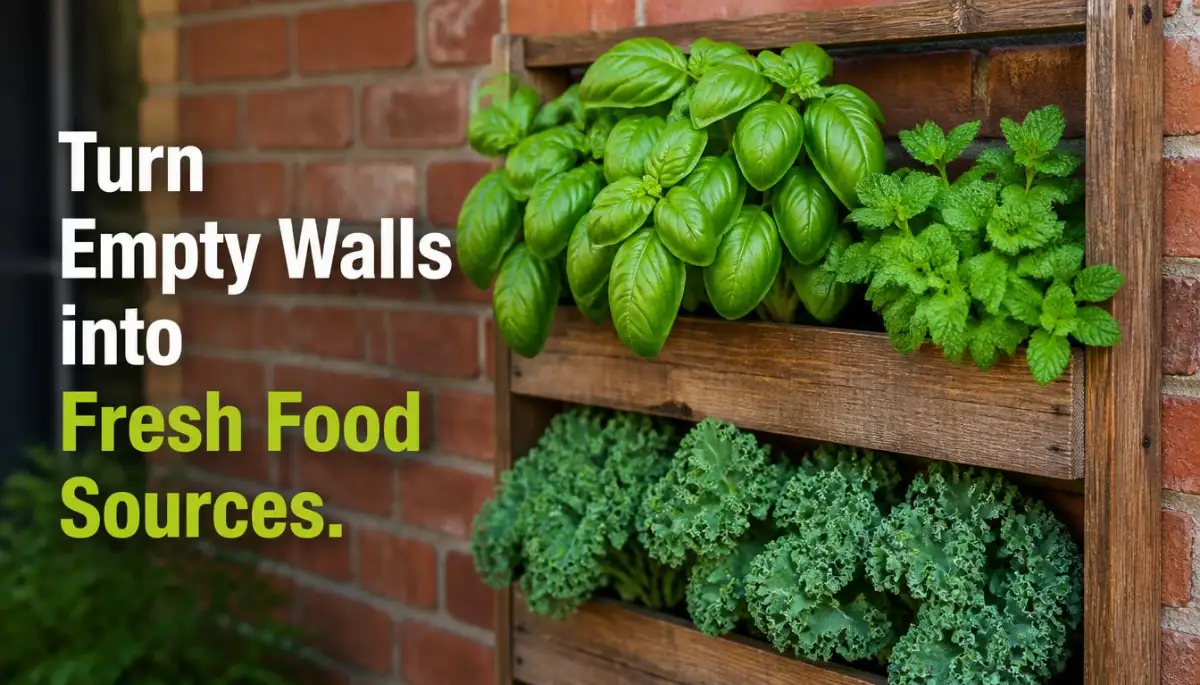
To solve the space problem, we have to stop thinking horizontally. Most of us look at our rooms and see furniture and floor space, but we ignore the hundreds of square feet available on our walls. Vertical gardening is basically about stacking your plants like books on a shelf. This simple shift in thinking opens up a world of possibilities for food production.
The first step is looking for "dead space" in your home. This could be a sunny wall in the kitchen, the side of a bookshelf, or even the back of a door. Any spot that gets a bit of natural light is a potential farm. By moving our garden up, we keep our floor clear and create a beautiful, living "green wall" that cleans the air.
Identifying the Best Foundations for Your Vertical Setup
When I first started, I made the mistake of just hanging random pots with thin string. They fell down, made a mess, and I felt like a failure. You need a solid foundation if you want your garden to last more than a week. A foundation is simply the structure that holds your plants and keeps them safe.
There are three main types of foundations you can consider. First, there are freestanding towers. These are great because you don't have to drill into any walls. They sit in a corner and go straight up. Second, there are wall-mounted pockets. These are made of felt or plastic and look like a giant shoe organizer for plants. Third, there are shelving units. You can use a simple metal or wood shelf and place pots on each level.
My Personal Pro Tip:
When I was setting up my first wall garden, I didn't think about how I would water the top plants without soaking the floor. I quickly realized that you should always place your most water-hungry plants at the bottom and use a drip tray. This small change saved my hardwood floors and kept my neighbors downstairs happy!
Choosing the Right Containers for Maximum Growth
The container you choose is the "home" for your plant's roots. In a vertical system, you want containers that are deep enough for roots but light enough to hang. Plastic and fabric pots are usually better than heavy ceramic for vertical gardening. They are easier to move and don't put too much stress on your wall or stand.
Fabric pots are especially good because they allow the roots to "breathe." This prevents the roots from going in circles and getting cramped. When roots can breathe, the plant grows much faster and produces more food. Also, make sure every container has a drainage hole. Without drainage, your plants will literally drown because the water has nowhere to go.
Light: The Energy Source for Your Vertical Farm
No matter how good your foundation is, your plants will die without enough light. Most edible plants need at least 6 hours of bright light every day. If you have a big window, that is perfect. If you don't, you might need to help your plants a little bit.
You can use simple LED lights to mimic the sun. These are very cheap to run and don't get hot, so they won't burn your leaves. I found that placing my vertical garden near a south-facing window gave me the best results for my lettuce and spinach. If your wall is in a dark corner, just add a small grow light above it, and your plants will be just as happy.
Want to see how easy it is to assemble a basic vertical shelf? This video shows a simple setup that anyone can do in under ten minutes!
Soil and Nutrition: Feeding Your High-Rise Garden
Since vertical gardens use smaller amounts of soil, that soil needs to be very high quality. You cannot just grab dirt from outside. Outdoor dirt is too heavy and often contains bugs that will take over your house. Instead, use a high-quality "potting mix" that contains peat moss or coconut coir.
These mixes are designed to hold onto water while still letting air reach the roots. Because your plants are growing in a small space, they will eat up the nutrients in the soil very quickly. I recommend adding a little bit of organic liquid fertilizer to your water every two weeks. Think of it like giving your plants a multivitamin.
Selecting the Right Crops for Beginners
Not every plant is a good fit for a vertical foundation. If you are just starting, stick to things that grow fast and stay relatively small. Leafy greens are the kings of vertical gardening. Spinach, kale, and various types of lettuce love being stacked. They don't need huge root systems, and you can harvest them leaf by leaf.
Herbs are also a fantastic choice. Imagine cooking dinner and just reaching over to your wall to grab fresh basil or cilantro. It feels amazing and tastes so much better than the dried stuff. Herbs like mint, chives, and parsley are very hardy and hard to kill. They are perfect for building your confidence as a new indoor farmer.
Water Management and Staying Organized
Watering a vertical garden is different from watering a garden in the ground. Water naturally flows down, so the bottom pots often stay wetter than the top ones. Check your plants daily by sticking your finger an inch into the soil. If it feels dry, give it a drink. If it feels wet, leave it alone.
Overwatering is the number one reason indoor plants die. People think they are helping, but they are actually suffocating the roots. I like to use a small watering can with a long neck so I can reach the top levels without spilling. Keeping a simple schedule or using a phone app can help you remember when to feed and water your growing food.
The Mental Health Bonus of Vertical Growing
Something magical happens when you bring a wall of green into your living room. The air feels fresher, and the room feels calmer. There is a scientific reason for this—plants release oxygen and absorb carbon dioxide. But beyond the science, there is a deep sense of pride in seeing a tiny seed turn into a meal.
When I started my vertical garden, my stress levels dropped. Instead of scrolling on my phone in the evening, I found myself checking on my pea shoots or trimming my mint. It became a form of meditation. You aren't just producing food; you are producing peace of mind. This is the heart of sustainable living—finding ways to thrive within the limits of our environment.
Planning for Longevity and Success
A vertical garden isn't a "set it and forget it" project. It is a living, breathing part of your home. As your plants grow, you might need to move them around to make sure they all get enough light. Don't be afraid to experiment. If a plant doesn't look happy on the top shelf, move it to the middle.
Every home has its own "micro-climate." Your kitchen might be more humid than your living room. Your hallway might be cooler. By paying attention to how your plants react, you become an expert in your own home's environment. This knowledge is the most important foundation of all.
By focusing on these foundations—structure, light, soil, and crop choice—you are setting yourself up for a lifetime of fresh food. You don't need a farm; you just need a wall and a little bit of curiosity. The journey of maximizing your small space is about more than just calories; it is about reclaiming your independence and living a more intentional, green life.
Taking Your Vertical Garden to the Next Level with Expert Secrets
Once you have your basic shelves or wall pockets up, you might wonder how to get even more food from that same small space. I found out the hard way that just "having a garden" isn't the same as having a "productive garden." To really win at this, you need to use a few tricks that professional urban farmers use to keep their harvests coming all year long.
One of my favorite advanced methods is something called Hydro-Wicking. This is a very simple way to make sure your plants always have the exact amount of water they need without you standing there with a spray bottle every hour. You basically use a thick cotton string that runs from a water bucket into the soil of your higher pots.
The string acts like a straw, pulling water up to the roots using nothing but physics. I tried this when I had to go away for a weekend, and I came back to the happiest kale I had ever seen. It takes the guesswork out of watering and prevents that scary moment when you see your plants drooping from thirst.
Another secret is Tiered Companion Planting. In a vertical setup, you have a top, middle, and bottom. I always put my sun-loving plants, like small peppers or bush tomatoes, at the very top where they get the most light. Then, I plant things that like a little shade, like lettuce or parsley, directly underneath them.
The taller plants act as a natural umbrella, protecting the delicate greens from getting too much heat. This mimics how nature works in a forest, and it lets you grow twice as much food in the same vertical footprint. It is all about working with the light you have instead of fighting against it.
If you are worried about the cost of living, growing your own food is a great way to save. You can learn more about managing personal budget to see how small home changes like this add up over time. Every bunch of basil you grow is money you don't have to give to a big grocery store.
I also started using Vertical Vermicomposting, which sounds fancy but it just means using a small tube of worms inside your garden tower. You put your vegetable scraps in a tube in the middle of your vertical garden, and the worms turn it into the best fertilizer on earth. The nutrients wash right down into your plants every time you water.
This creates a "closed loop" system where your kitchen waste directly feeds your next meal. It felt so good to stop throwing away potato peels and start seeing them turn into fresh spinach. It is the ultimate way to shrink your plastic footprint easily because you aren't buying plastic bottles of chemical plant food anymore.
Heartbreaking Realities: Mistakes That Can Kill Your Garden Fast
I want to be honest with you because I don't want you to feel the pain I felt when my first big wall garden failed. The biggest mistake people make is ignoring the weight of wet soil. When you first hang your pots, they feel light, but after a heavy watering, they can weigh three times as much.
I once woke up in the middle of the night to a loud crash because my wall hooks couldn't handle the weight of the water. It was a muddy mess all over my carpet, and half my plants were crushed beyond repair. Always use stronger hooks than you think you need and check them every few weeks to make sure they aren't pulling away from the wall.
Another silent killer is poor airflow. In a small apartment, air can get very still and "stale." Plants need moving air to breathe and to keep mold from growing on their leaves. If your vertical garden is tucked too tightly into a corner, you might start seeing white fuzzy spots on your plants.
This mold can spread like wildfire and kill a whole row of herbs in just a couple of days. I solved this by putting a tiny desk fan near my garden for just an hour a day. It keeps the air moving and makes the stems of the plants stronger, just like a light breeze would do outside in nature.
Many people also struggle with Light Starvation without even realizing it. You might think your room is bright, but your plants might be starving for actual "growing light." If your plants are growing very tall and skinny with tiny leaves, they are "reaching" for light that isn't there.
According to research from the University of Minnesota Extension, indoor plants often need much more light than we think to produce actual fruit or thick leaves. If you see this happening, don't wait. Move your garden closer to the window or buy a cheap grow bulb before your plants lose all their energy.
Don't forget about the "Top-Down Drip" problem. If you have a vertical garden, the water from the top pot will eventually drip into the bottom one. If the top plant has a disease or a bug problem, it will wash right down to all the other plants. I always keep a small gap between my layers so I can see what is happening in each pot individually.
If you are feeling overwhelmed by all these details, remember that taking care of your mental health is just as important as taking care of your plants. If you are a student or a busy worker, you might find that overcoming college burnout is easier when you have a green space to relax in. Just don't let the garden become another "chore" that stresses you out.
Finally, never use dirt from your backyard in an indoor vertical garden. Outdoor soil is full of tiny bugs, larvae, and fungi that are fine outside but become a nightmare in your house. I once brought in a bucket of "free" dirt and ended up with a house full of gnats that took weeks to get rid of. Stick to clean, bagged potting mixes that are made for indoor use.
Your Path to a Greener and More Independent Life
Starting this journey might feel like a lot of work, but the rewards are honestly life-changing. There is a special kind of peace that comes from seeing a wall of green in your living room while it's raining or cold outside. You are creating your own little ecosystem that works for you every single day.
You aren't just growing food; you are building a new set of skills that nobody can take away from you. Whether you are buying your first home or just renting a small studio, these vertical gardening foundations will follow you wherever you go. It is a portable, scalable way to live a more sustainable life.
Remember that you don't have to be perfect from day one. I killed a lot of plants before I figured out how to make them thrive. Each dead plant is just a lesson that makes you a better gardener for the next one. The goal is progress, not perfection.
Take a look at your empty walls today and imagine them filled with life. Imagine the smell of fresh mint in your kitchen and the crunch of lettuce that you grew yourself. This isn't just a hobby; it is a way to reclaim your connection to the earth and your own health.
If you spend a lot of time looking at screens while researching your garden, you might want to fix tired eyes fast so you can enjoy your green view even more. Your home should be a place of recovery and growth, and a vertical garden is the perfect way to make that happen.
I started my journey with just one small hanging pot of basil on a kitchen hook. Now, my home feels like a lush indoor farm that provides me with fresh salads every single week. My only regret is that I didn't start sooner, so I want to encourage you to grab a pot and a seed today and just see what happens.
Common Questions About Vertical Food Production
Can I grow vertical plants in a room with no windows?
Yes, you definitely can, but you will need to buy "full-spectrum" LED grow lights. These lights give the plants the energy they would normally get from the sun. Without windows or lights, your plants will not be able to make food and will eventually die.
How often should I fertilize my vertical garden?
Because vertical containers are small, the plants eat up nutrients very fast. I recommend using a weak organic liquid fertilizer once every two weeks. This keeps the soil rich and helps the plants grow big, tasty leaves without burning the roots.
Are vertical gardens messy for indoor use?
They can be if you don't plan ahead, but a good setup is very clean. Always use pots with drainage holes and place a "drip tray" or a larger bucket at the very bottom to catch any extra water. This prevents water from getting on your floors or walls.
What is the easiest plant for a beginner to start with?
I always suggest starting with Mint or Loose-leaf Lettuce. Mint is almost impossible to kill and grows very fast. Lettuce is great because you can cut off a few leaves for a sandwich and the plant will keep growing more for you.
Does vertical gardening help with indoor air quality?
It absolutely does! According to studies on air purifying plants by NASA, having greenery indoors helps remove toxins from the air. Your vertical garden is like a giant, natural air filter for your home.
Disclaimer: The information provided in this article is for educational purposes only. While vertical gardening is a great way to grow food, results can vary based on your home’s environment, light levels, and local climate. Always ensure your wall structures are secure and can handle the weight of wet soil to avoid property damage or injury. Please consult with a local nursery professional if you are unsure about specific plant safety in your area.