
The Silent Weight of a Disorganized Business
I remember sitting at my small wooden desk at two o'clock in the morning. My eyes were burning from the glow of the laptop screen, and my coffee had gone cold hours ago.
I was surrounded by sticky notes, open tabs, and a long list of tasks that never seemed to end. I thought I was working hard, but in reality, I was just spinning my wheels.
My business felt like a boat with ten small holes, and I only had two hands to plug them. I was tired, I was frustrated, and I felt like I was failing even though I was putting in eighteen hours a day.
That was my reality as a first-time entrepreneur, and maybe it is yours too right now. It is a lonely feeling to work so hard yet see so little progress in how the business actually runs.
Many people start a business because they love a craft or have a great idea. But very soon, the "business" part of the business starts to take over your life.
You find yourself answering the same emails over and over again. You forget to follow up with people because your notes are scattered in five different notebooks.
This lack of a system does more than just hurt your profits. It steals your sleep, ruins your time with family, and makes you question why you even started this journey.
The truth is that working harder is rarely the answer to these problems. If the foundation is shaky, adding more work just makes the building fall down faster.
Most new owners face this mental exhaustion where every small task feels like a giant mountain. This constant stress creates a "fog" that stops you from thinking about the big picture.
When your daily operations are messy, you are always in "reaction mode" instead of "growth mode." You are just waiting for the next fire to put out instead of building something lasting.
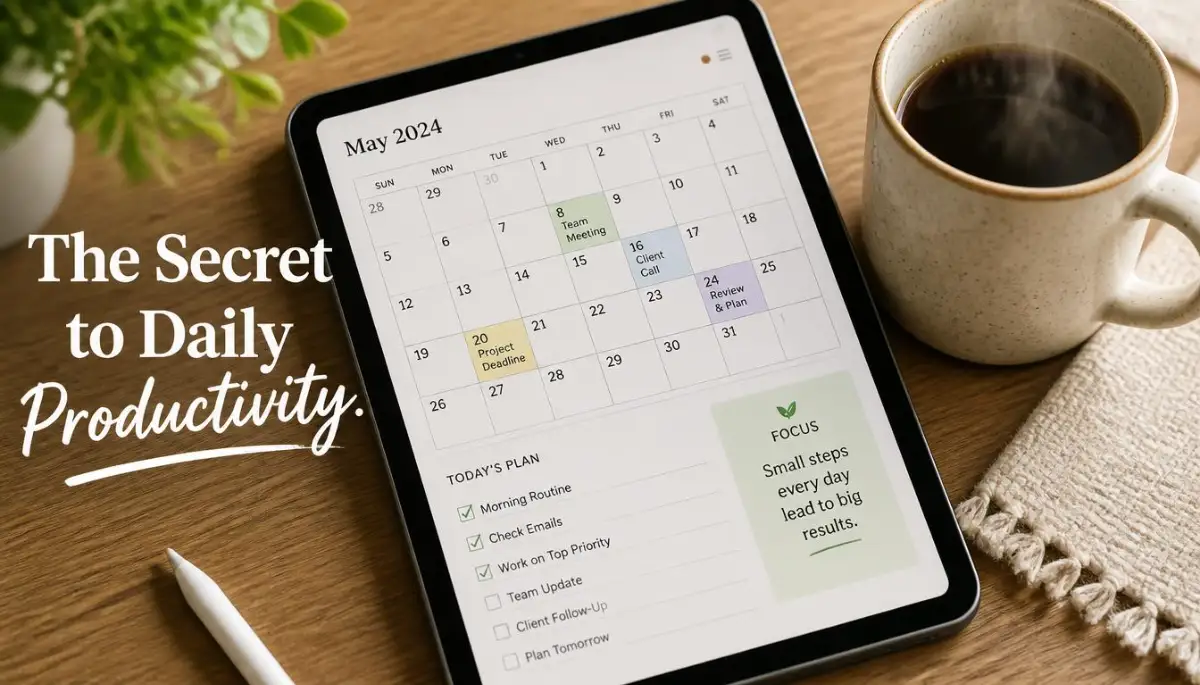
Auditing Your Time to Find the Hidden Leaks
Before you can fix the leaks in your boat, you have to find where they are. I realized that I was spending four hours a day on things that didn't actually grow my business.
The first step in making things run better is to track every single thing you do for three days. Do not skip the small things like checking social media or hunting for a lost file.
Most people are shocked when they see how much time they waste on repetitive, low-value tasks. We often mistake "being busy" for "being productive," but they are not the same thing.
Once you have your list, look for tasks that you do every single day or every single week. These are the prime candidates for a better system or a simpler approach.
Think of your business like a kitchen in a busy restaurant. If the chef has to run to the basement for salt every time they cook a steak, the kitchen will fail.
You need your "salt" and your "tools" right where you can reach them without thinking. This simple audit helps you see the physical and digital clutter that is slowing you down.
Building Simple Systems for Daily Consistency
A system is just a fancy word for a "recipe" that you follow every time you do a task. When I started writing down the steps for my weekly tasks, my stress levels dropped instantly.
Creating Your Own Business Recipes
You don't need expensive software to start building systems for your new business. You can start with a simple document or a notebook where you list the steps for your most common jobs.
For example, how do you onboard a new client? What are the exact five steps you take from the moment they say "yes" to the moment you start the work?
When you have these steps written down, you stop using your brain power to remember "what's next." This saves your mental energy for the creative work that actually makes money.
The Power of Small Automations
We live in a world where many small tasks can be handled by simple, free tools. If you are still manually typing out every single appointment reminder, you are losing valuable time.
Look for ways to let technology do the "boring" stuff for you. This could be as simple as using an email template for common questions or an app to schedule your posts.
Pro Tip: I used to think that "systems" were only for big companies with hundreds of employees. I was wrong. I realized that the smaller your team is, the more you need systems to stay sane. My biggest mistake was trying to keep everything in my head, which led to a massive burnout. Now, if I do a task more than twice, I record a quick video of myself doing it so I never have to "re-learn" it again.
Mastering Your Communication Flow
One of the biggest time-killers for a new entrepreneur is the constant ping of notifications. If you answer every email the second it arrives, you are letting other people run your day.
Batching Your Tasks
Instead of checking your inbox twenty times a day, try doing it only twice. Set a specific time in the morning and a time in the afternoon to handle all your messages at once.
This is called "batching," and it is a science-backed way to keep your brain focused. Every time you switch from a deep task to a quick email, it takes your brain several minutes to get back in the zone.
Setting Professional Boundaries
You do not have to be available 24/7 to provide great service. In fact, people respect you more when you have clear "office hours" and response times.
Clearly communicate to your clients and partners when they can expect to hear from you. This prevents the "emergency" feeling that often comes with running a new business.
Watching This in Action
To really understand how a smooth workflow looks, you should see how experts set up their daily digital environment.
This short guide explains how to organize your digital workspace to stop feeling overwhelmed and start getting things done.
The Role of Physical and Digital Organization
Your environment plays a huge role in how efficiently you can work. A cluttered desk often leads to a cluttered mind, making it harder to focus on one thing at a time.
Cleaning Your Digital Desktop
Most of us have a "downloads" folder that looks like a digital graveyard. Spend ten minutes at the end of every week putting files where they actually belong.
Use a simple folder structure that makes sense to you. When you can find a document in five seconds instead of five minutes, you win back your focus.
Designing a Focused Workspace
You don't need a fancy office to be efficient, but you do need a dedicated space. Even a specific corner of a table can signal to your brain that it is time to work.
Keep only the tools you need for the current task on your desk. This reduces the visual distractions that pull your attention away from your main goal.
Simplifying Your Decision-Making Process
As a business owner, you make hundreds of decisions every day. This leads to something called "decision fatigue," where your brain gets tired and starts making poor choices.
Using a "Daily Top Three" List
Instead of a to-do list with fifty items, pick only three things that must get done today. These should be the things that actually move your business forward.
When you finish those three, you have "won" the day. Anything else you do after that is just an extra bonus, which helps you feel successful instead of behind.
Automating Your Personal Life
Efficiency in business often starts with efficiency at home. Many successful people wear similar clothes or eat the same breakfast every day to save their "decision power" for work.
The less energy you spend on small, unimportant choices, the more you have for the big business moves. It sounds simple, but the impact on your productivity is massive.
Managing Energy Instead of Just Time
We often talk about time management, but energy management is actually more important. Not all hours in the day are created equal for your brain.
Finding Your Peak Hours
Are you a morning person or a night owl? Do your hardest, most creative work when your brain is naturally at its sharpest.
Save the easy, administrative tasks—like filing or basic data entry—for the times when you feel a bit sluggish. This ensures you are always using your best energy for your best work.
The Importance of Strategic Rest
It sounds counterintuitive, but taking breaks actually makes you faster. Your brain needs time to process information and "recharge" its creative batteries.
Try the technique where you work for twenty-five minutes and then rest for five. You will find that you can maintain a high level of quality for much longer periods.
Standardizing Your Client Experience
Every person who interacts with your business should have the same great experience. This only happens if you have a standard way of doing things.
Creating a Service Blueprint
Map out the journey a client takes from the first time they see your name to the final delivery. What happens at each stage? What do they receive?
By standardizing these touchpoints, you ensure high quality without having to "invent" a new process for every single person. This is the key to scaling a business.
Templates are Your Best Friend
Whether it is a project proposal, a contract, or a thank-you note, use templates. You can still add a personal touch to each one, but the base should stay the same.
This prevents errors and ensures that you never forget to include important information. It also makes your business look much more professional and established.
Measuring What Actually Matters
You cannot improve what you do not measure. However, as a first-time owner, it is easy to get lost in "vanity metrics" that don't really mean anything.
Focus on "Actionable" Data
Instead of just looking at how many people liked a post, look at how many people actually contacted you. Focus on the numbers that relate directly to your goals.
Check your "efficiency" numbers once a month. How long did it take to complete a project compared to last month? Are you getting faster or slower?
Adjusting Based on Facts, Not Feelings
Sometimes we feel like we are failing even when the numbers show we are growing. Other times, we feel busy but the numbers show no progress.
By looking at real data, you can make logical changes to your workflow. This takes the emotion out of business management and helps you stay on the right track.
The Power of Saying "No" to the Wrong Tasks
One of the biggest hurdles to efficiency is the "shiny object syndrome." This is when you try to do every new idea or use every new platform at the same time.
Focusing on Your Core Competency
What is the one thing you do better than anyone else? That is where most of your time should go. Everything else should be simplified or removed.
If a task doesn't help you reach your main goal, it is a distraction. Learning to say "no" to good opportunities so you can say "yes" to great ones is a superpower.
The "Do, Delegate, or Delete" Rule
Every time a new task lands on your desk, ask yourself three questions. Can I do this quickly? Can someone else do it? Or does it even need to be done at all?
You will be surprised how many things we do just out of habit that don't actually provide any value. Deleting useless tasks is the fastest way to get more time back.
Mastering the Shift from Small Tasks to Big Results
When I first started my business, I felt like a firefighter. I spent every hour of every day putting out small fires that never seemed to stop popping up.
I was doing everything myself, from answering basic questions to fixing tiny technical issues. I thought being involved in every detail was the only way to ensure things were done right.
I quickly learned that this way of thinking is the fastest path to total exhaustion. You cannot grow a business if you are the only person who knows how to do the work.
Moving from a "doer" to a "builder" requires a change in how you see your time. You have to stop thinking about what you can do today and start thinking about what you can build today.
A builder creates tools and rules that keep working even when they are asleep. This is the true secret to making your business run without you constantly pulling the strings.
I found that the most successful people I know don't work more hours than everyone else. They just spend their hours on things that have a much bigger impact on their future.
Building a Digital Brain for Your Business Operations
One of the best things I ever did was creating a central place for all my business knowledge. I call it a "Standard Operating Procedure" or SOP, but you can just think of it as a guide.
When you write down exactly how you do a task, you are taking that information out of your head. This frees up your brain to think about new ideas instead of trying to remember old steps.
I started by recording short videos of myself doing boring, repetitive tasks on my computer. I saved these videos in a shared folder so that if I ever hired help, the training was already done.
If you find yourself answering the same three questions from customers, write those answers down once. Create a simple "frequently asked questions" page or an email template that you can copy and paste.
This approach saves you hours of typing every week and keeps your tone consistent. You can even look at how creatives and AI work better together to see how new tools can help you build these systems faster.
Using technology can be a huge help, but you must be careful about how you use it. I always tell people to check their privacy settings for AI tools before they start uploading business data.
The Art of Protecting Your Deep Work Time
Your brain is not designed to jump between ten different tasks every hour. Research from the American Psychological Association shows that switching tasks can cut your productivity by 40 percent.
I used to think I was great at multitasking until I realized it was just a fancy word for doing many things poorly. I decided to change my schedule to include "Deep Work" blocks.
During these blocks, I turn off all my notifications and close my email tab. I focus on one single task that requires my full attention for at least ninety minutes.
This is when my best work happens, and it is usually when I make the biggest breakthroughs in my business. You will be amazed at how much you can get done when no one is bothering you.
To make this work, you have to be good at communicating with the people around you. I learned that active listening and clear communication can prevent many interruptions before they even start.
Setting these boundaries is not about being rude or unavailable. It is about respecting your own time so that you can provide more value to your customers in the long run.
Strategic Planning for Irregular Business Income
For many new owners, the stress of money can make it very hard to focus on being efficient. I have been through many months where the money coming in was very different from the month before.
When your income goes up and down, it is easy to panic and start working on tasks that don't matter. You might feel like you have to say "yes" to every low-paying project just to feel safe.
I found that having a specific budget for my business helped me stay calm during the slow times. Knowing exactly what my costs were allowed me to focus on efficiency instead of just fear.
If you are struggling with this, you might want to look into budgeting methods for self-employed people to keep your mind clear. A calm mind is much better at solving problems than a stressed one.
Efficiency is not just about time; it is also about making your money work harder for you. The more you can automate your finances, the less time you spend worrying about them every day.
I always suggest having a small "emergency fund" specifically for your business costs. This buffer gives you the freedom to say "no" to things that would slow down your operations.

Avoiding the Trap of "Productive Procrastination"
One of the biggest mistakes I see people make is what I call productive procrastination. This is when you do things that look like work but don't actually help your business grow.
I used to spend hours picking out the perfect colors for my website or organizing my desk. It felt like I was being efficient, but I was really just avoiding the hard tasks.
Hard tasks are things like calling a potential lead or finishing a difficult project for a client. We often hide in "busy work" because the real work feels scary or overwhelming.
If you find yourself constantly reorganizing your to-do list, you might be falling into this trap. Real efficiency is about doing the most important thing first, even if it is the thing you want to do the least.
I learned that if I do the hardest task in the first hour of my day, everything else feels easy. This simple habit changed my business and my mental health forever.
Don't let the small details distract you from the big picture goals you set for yourself. If a task doesn't directly help a customer or bring in money, ask yourself why you are doing it.
The Danger of Ignoring Your Mental Health and Burnout
Many first-time entrepreneurs think that working until they collapse is a badge of honor. I used to brag about how little sleep I was getting and how many meals I skipped.
This is a terrible mistake that will eventually destroy your efficiency and your business. Your brain needs rest to function properly, just like your body needs food to stay strong.
I have seen many talented people quit their businesses because they reached a point of total burnout. They lost their passion and their energy because they forgot to take care of themselves.
I realized that taking a day off was actually a great business decision. When I came back to work after a break, I was faster, sharper, and much more creative.
If you are feeling overwhelmed, it might be helpful to look at strategies for recovering from burnout even if you aren't a student anymore. The symptoms and the solutions are often very similar for business owners.
Remember that you are the most important asset in your business. If you "break," the whole system stops working, no matter how many tools you have in place.
The High Cost of Using the Wrong Financial Tools
I once thought that any loan or credit card was fine as long as it gave me the cash I needed. I didn't realize that some types of debt can actually slow down your business growth.
Using high-interest options can create a cycle where you are just working to pay off the interest. This takes away the money you could have used to make your operations more efficient.
I learned the hard way that personal loans can fail for first-time buyers if they don't understand the terms. It is always better to wait and save than to rush into a bad financial deal.
Check out resources like SCORE for free business mentoring and financial templates. Having an expert look at your plans can save you from making a very expensive mistake.
Efficiency also means being smart about how you protect what you have already built. I spent a lot of time making sure my legal and financial foundations were strong before I tried to grow.
If you ever find yourself in a difficult legal spot, you need to have a plan. Knowing what to do if you are served with a lawsuit can save you a lot of time and money later on.
Taking Control of Your Business Journey Today
Creating a smooth and efficient business is a journey that never truly ends. You will always find new ways to improve and new tools to help you work smarter.
The most important thing is to start where you are and keep moving forward every single day. Small changes in your habits can lead to massive results over a few months or years.
I want you to know that you are capable of building a business that gives you freedom and joy. It might feel messy right now, but every system you build is a step toward a better life.
I spent years trying to do everything the hard way before I realized that efficiency is a choice. My life changed when I stopped trying to be the hero and started trying to be the architect.
I hope you take at least one idea from this guide and apply it to your work this week. You deserve to have a business that supports your life rather than one that takes it over.
Common Questions About Business Efficiency
What is the first thing I should automate in my business?
I always suggest starting with your appointment scheduling or your most common email replies. These are tasks that take up a lot of time but don't require your specific creative genius to finish.
Do I need expensive software to be efficient?
No, you absolutely do not need to spend a lot of money to be organized. You can use free tools like simple spreadsheets or basic document apps to build your systems and track your tasks.
How do I find time to build systems when I am already so busy?
The best way is to "build as you go" by recording your steps while you are actually doing the task. This way, you aren't adding extra work to your day, but you are creating a guide for the future.
What should I do if my systems aren't working as I expected?
Don't be afraid to change them because no system is perfect on the first try. Look at where the process is breaking down and ask yourself if you can make that specific step simpler or clearer.
Is it possible to be too efficient and lose the personal touch?
Efficiency should help you spend more time on the personal touch by removing the boring stuff. Use automation for the repetitive tasks so you have the energy to truly connect with your clients.
How often should I review my business operations for improvements?
I like to do a quick review once every three months to see what is working and what is not. This keeps your business from becoming slow or outdated as you grow and change over time.
Disclaimer: This article is for informational and educational purposes only. The financial and business advice provided here is based on general principles and personal experiences. It does not constitute professional legal, financial, or tax advice. Every business situation is unique, and you should consult with a qualified professional before making major financial or legal decisions. We do not guarantee specific results from following the suggestions in this post.