
My Journey Through the Scary World of Baby Food Spoilage
Let’s be real: making your own baby food feels like a massive parenting win until you stare at those jars and wonder, 'Is this actually safe to eat tomorrow?' I’ve been in that exact spot—anxious, confused, and scrolling through endless forums at 2 AM. You don't need a science degree to keep your little one safe, just a few simple, honest rules that fit into your busy life. Let’s cut through the noise and get your kitchen safety on point.
I had no idea how long they could stay there. Was the fridge cold enough? Could I freeze these glass jars without them cracking?
I spent the next few hours down a rabbit hole of conflicting advice online. My biggest fear was making my baby sick because of a simple storage mistake. I realized that making the food is only half the battle; keeping it safe is where the real challenge lies.
That night, I stayed up late researching food safety standards because I wanted to be 100% sure. I don't want any other parent to feel that same knot of anxiety in their stomach.
We worry about invisible germs growing in that tiny jar of peas. We wonder if the nutrients are disappearing every hour the food sits in the fridge. This constant worrying takes away the joy of feeding our children.
It’s not just about the food; it’s about the peace of mind we lose when we aren’t sure if what we are doing is right. I’ve been there, staring at a jar of pear sauce, wondering if it’s been three days or four.
That feeling of "is this safe?" is exhausting. It can make you want to give up on homemade food altogether and just buy pre-packaged jars. But you don't have to do that.
I’ve learned the hard way that a few simple habits can change everything. Once I understood the actual science of how bacteria grows, the fear went away.
Creating a Safe Zone: The Science of Bacteria Prevention
To keep your baby's food safe, you first need to understand the "Danger Zone." This is a temperature range where bacteria love to grow and multiply very fast.
Safety First: Your 10-Second Cheat Sheet
- The 2-Hour Rule: Never leave fresh food on the counter for more than 2 hours.
- Small Batches: Only thaw what your baby will eat in one sitting.
- Label Everything: Use tape and a marker to write the date and type of food.
- No Double-Dipping: Once the spoon touches your baby's mouth, the leftovers in that bowl are trash.
- Cool Fast: Use an ice bath or shallow dish to cool food quickly before putting it in the fridge.
Bacteria are like tiny uninvited guests that ruin a party. They thrive when food is left out at room temperature for too long.
The most important rule I follow is the two-hour limit. Never let freshly cooked baby food sit on the counter for more than two hours.
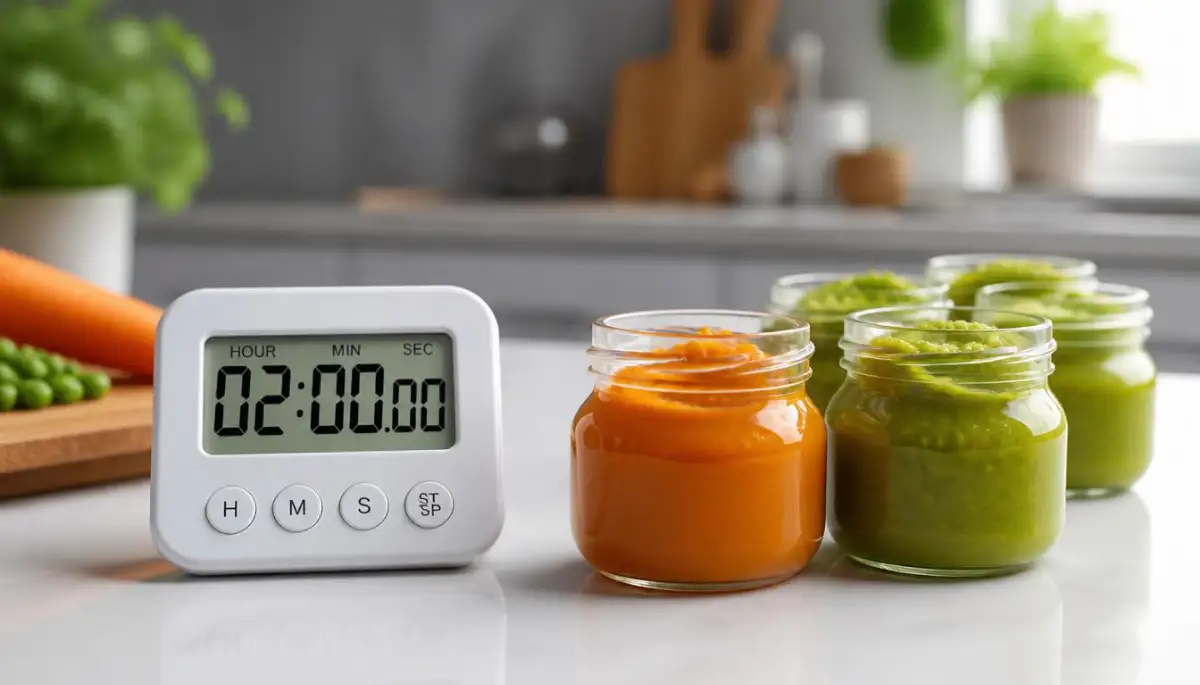
If your kitchen is very warm, that time drops to just one hour. I always set a timer on my phone as soon as I finish blending.
It sounds simple, but this one habit prevents almost all common food-borne illnesses. You want to get that food cooled down and into the fridge as quickly as possible.
Why the Cooling Process is Your First Line of Defense
You might think putting hot food directly into the fridge is a good idea. Actually, that can be a big mistake.
A large container of hot puree can raise the temperature inside your whole refrigerator. This puts your milk and other food at risk.
I like to use a "shallow dish" method to cool things down. I spread the puree in a thin layer so it loses heat faster.
Another trick I use is an ice bath. I place the bowl of food inside a larger bowl filled with ice and water.
This brings the temperature down in minutes instead of hours. Once it's cool to the touch, it’s ready for its long-term home.
Pro Tip: I once made the mistake of leaving a huge pot of carrot soup to cool overnight on the stove. I thought the lid would keep it safe, but I was wrong. I woke up to a pot full of bacteria-friendly warmth and had to throw the whole batch away. Now, I always prioritize cooling over everything else.
Choosing Containers That Actually Protect Your Baby
Not all jars are created equal when it comes to food safety. You want materials that won't leak chemicals into the food.
Glass is my personal favorite because it doesn't stain or hold onto smells. It’s also very easy to clean and sanitize.
If you use plastic, make sure it is 100% BPA-free. BPA is a chemical that can interfere with a baby’s growth and hormones.
Look for containers that have an airtight seal. If air can get in, so can bacteria and moisture.
Moisture is what causes freezer burn, which makes the food taste bad. An airtight lid keeps the food tasting just as fresh as the day you made it.
The Art of Portioning for Zero Waste and High Safety
When I first started, I put everything into big jars. Then I realized I had to throw away half of it every time.
Once your baby’s spoon touches the food, bacteria from their mouth enters the jar. You can’t save the leftovers from that specific jar for later.
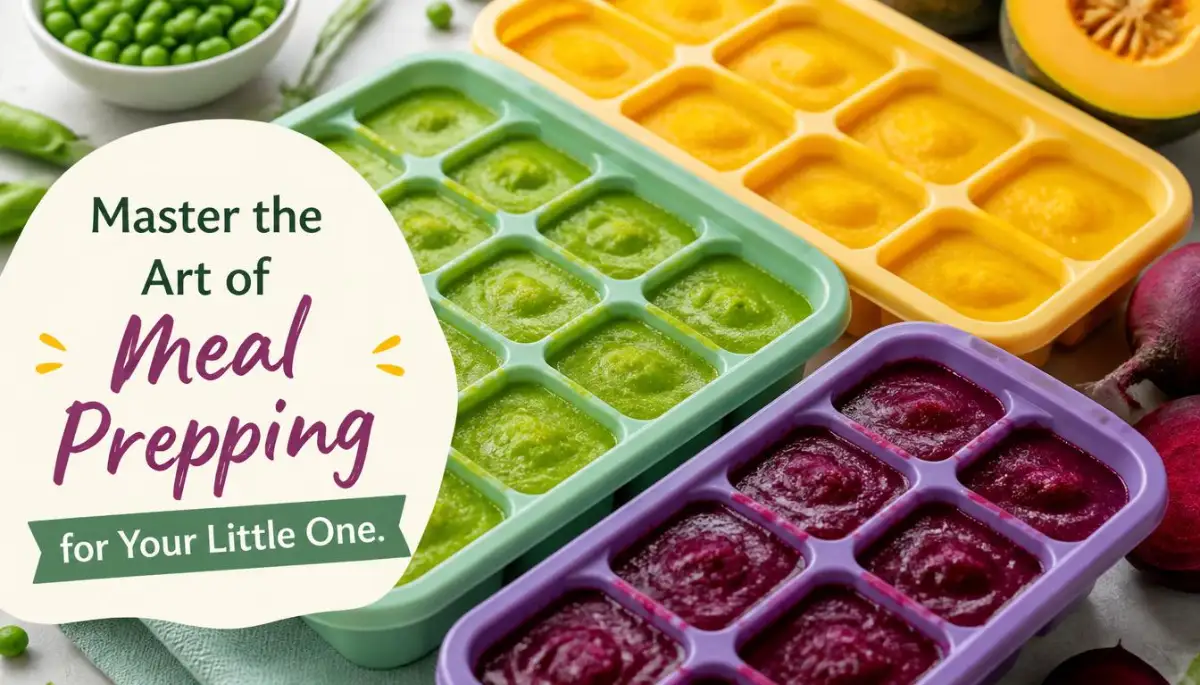
This is why small portions are a game-changer. I love using silicone ice cube trays for this.
Each cube is about one ounce, which is perfect for a starting baby. You only defrost exactly what you need for that one meal.
This keeps the rest of the batch perfectly safe in the freezer. It also saves you a lot of money in the long run.
Mastering the Fridge and Freezer Timelines
Your refrigerator is great for short-term storage, but it isn't a time machine. Most vegetable and fruit purees stay fresh for about 48 to 72 hours.
My "Better Safe Than Sorry" Storage Guide
- Vegetable Purees: 48–72 hours in the fridge.
- Fruit Purees: 48–72 hours in the fridge.
- Meat/Poultry/Fish: 24 hours (No exceptions here!).
- Combination Meals: 24–48 hours depending on the ingredients.
- All Purees in Freezer: 1 to 3 months for best quality.
If you have meat, poultry, or fish in the mix, that time drops to 24 hours. I always play it safe and aim to use things within two days.
The freezer is your best friend for bulk cooking. Most baby food stays high-quality in the freezer for one to three months.
While it might be safe to eat after that, the nutrients and taste start to fade. I try to rotate my stock so nothing stays in there too long.
Watch this helpful guide to see exactly how to organize your baby food storage for maximum efficiency.
The Golden Rule of Labeling Everything
If you think you will remember when you made those mashed peas, you are fooling yourself. Sleep deprivation and parenting go hand in hand.
I always keep a roll of masking tape and a permanent marker in my kitchen drawer. Every jar gets a label with two things: the name of the food and the date it was made.
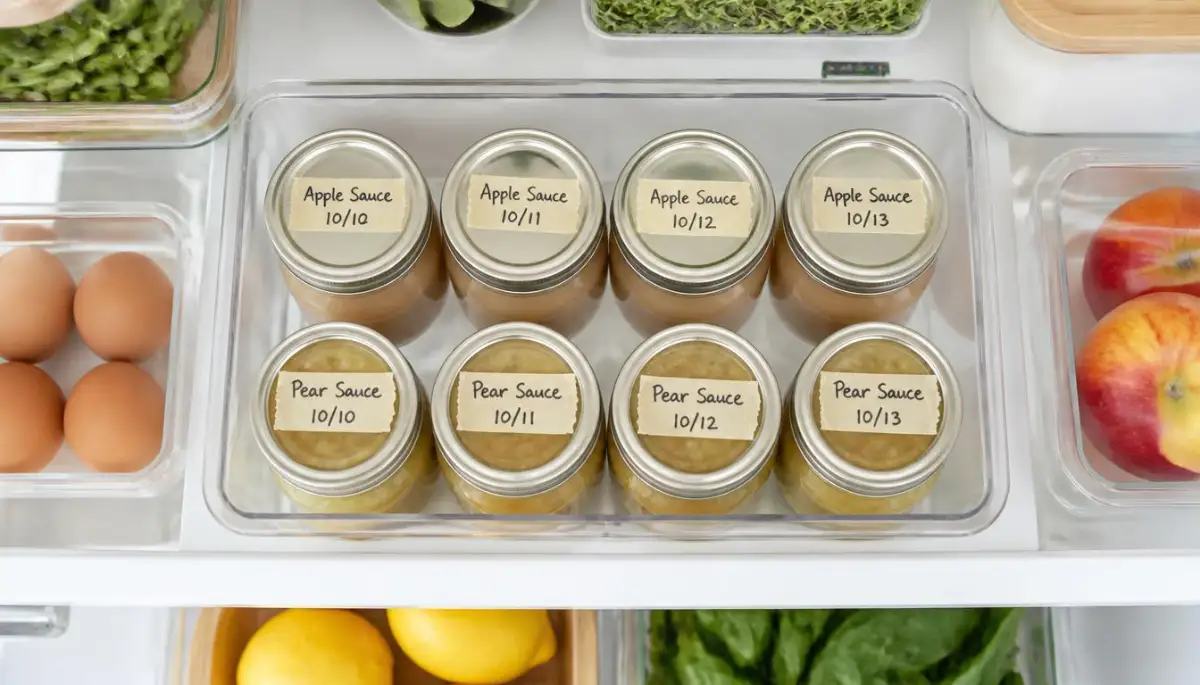
Without a label, a jar of frozen food becomes a "mystery meal." If I can't tell how old it is, I have to throw it out to be safe.
Labeling takes about five seconds but saves so much stress. It allows anyone in the family to help with feeding without asking a million questions.
It also helps you keep track of which foods your baby has already tried. This is very helpful when checking for potential food allergies.
Hygiene Habits During the Preparation Phase
Safety starts way before the food goes into the jar. Your kitchen environment needs to be as clean as possible.
I always wash my hands with soap for at least 20 seconds before touching any ingredients. I also make sure my cutting boards are sanitized.
I recommend having a separate cutting board just for the baby’s fruits and veggies. This prevents cross-contamination from raw meat or fish.
Every spoon, blender blade, and bowl should be washed in hot, soapy water. Some parents prefer to use a sterilizer, but a good dishwasher cycle usually does the trick.
Clean habits lead to clean food. It’s the easiest way to prevent germs from entering the jars in the first place.
Defrosting Without the Danger
How you take food out of the freezer is just as important as how you put it in. You should never defrost baby food on the kitchen counter.
The outside of the food can get warm and grow bacteria while the inside is still frozen. The safest way is to move the food to the fridge the night before. If you are in a rush, you can place the sealed container in a bowl of warm water. Change the water every few minutes to keep it moving.
You can also use a microwave, but you must be very careful. Microwaves create "hot spots" that can burn your baby’s mouth.
Always stir the food thoroughly and test the temperature on your wrist before serving. A quick stir ensures the heat is spread out evenly.
Recognizing the Signs of Spoiled Baby Food
Even with the best protocols, sometimes things go wrong. You need to know when to say "no" to a jar of food.
If a lid is bulging or doesn't pop when you open it, throw it away. This could be a sign of dangerous bacterial growth inside.
Check for any weird smells or changes in color. If the puree looks grayish or has a sour scent, it’s not worth the risk.
Trust your instincts as a parent. If something feels "off" about the texture or smell, listen to that inner voice.
Quick Truth: Baby Food Safety Myths
It is always better to waste a few cents of food than to risk a trip to the doctor. Safety always comes first.
Keeping Your Storage Areas Organized
An organized fridge is a safe fridge. I keep my baby's food on the middle shelf where the temperature is most stable.
Avoid storing baby jars in the fridge door. The temperature there changes every time you open the door.
In the freezer, I keep my baby food trays away from the door as well. Constant temperature is the key to maintaining freshness.
I like to use clear bins to keep all the baby food jars together. This makes it easy to see what I have at a glance.
When you can see your stock, you are less likely to let things go past their expiration date. It makes the whole process feel much more manageable.
Moving Toward a Stress-Free Feeding Routine
Setting up these protocols might seem like a lot of work at first. But once they become habits, they actually save you time.
You will spend less time worrying and more time enjoying those messy, cute feeding moments. You’ll know that every bite you give your baby is packed with nutrients and zero bad germs.
Homemade baby food is a wonderful gift for your child’s health. By following these storage steps, you are making sure that gift stays safe.
Remember, you are doing a great job. Taking the time to learn these safety rules shows how much you care about your little one's well-being.
Keep your kitchen clean, label your jars, and respect the danger zone. These three things are the foundation of a healthy start for your baby.
I'm so glad I stuck with it despite my early fears. Seeing my baby grow strong and healthy makes every minute of prep work totally worth it.
You've got this, and your baby will thank you for it with every happy, healthy spoonful.
Expert Secrets for Long-Term Food Safety and Freshness
Once you get the basics down, you might want to level up your baby food game. I found that staying organized is the only way to keep my sanity. One secret I learned is the "Flash Freezing" method. This is how professional chefs keep food from sticking together.
Instead of putting all your puree into one big container, use a tray. I fill silicone ice cube trays with different veggies and fruits. I put them in the freezer for about four hours until they are hard. Then, I pop them out and put them into a freezer-safe bag with a label.
This trick is amazing because it prevents the food from becoming one big frozen block. It also makes it so easy to grab just two cubes of spinach and one cube of sweet potato. You can mix and match flavors in seconds. This variety helps your baby develop a better palate for different tastes.
Another pro-level secret is understanding the science of "thawing cycles." I used to think I could just leave a jar on the counter to defrost. But that is where bacteria love to throw a party. I learned from the CDC Food Safety Guidelines that the fridge is the only truly safe place for slow thawing.
I always move my frozen cubes to the fridge the night before I need them. This slow change in temperature keeps the nutrients locked inside. It also stops the outer layer of the food from getting too warm while the center is still ice. You want the whole portion to stay at a safe temperature until you are ready to heat it.
If you are worried about the cost of all this fresh produce, you are not alone. Many parents feel the pinch when buying organic ingredients every week. I found that smart budgeting methods can actually help you manage your kitchen expenses better. Buying in bulk when fruits are in season and freezing them immediately saves a lot of money.
Maintaining a clean freezer is also a secret many people ignore. If your freezer smells like old onions, your baby’s peach puree will eventually taste like it too. I keep a small box of baking soda in the back of my freezer to soak up any odors. I also make sure I don't overfill the freezer so air can move around freely.
Airflow is what keeps the temperature even throughout the whole unit. If you pack it too tight, some spots might not stay cold enough. This can lead to small pockets of spoilage that you might not even see. Keeping things tidy isn't just about looks; it is about actual food health.
I also suggest doing a "safety check" on your fridge seals once a month. You can do this by closing the door on a piece of paper. If the paper pulls out easily, your fridge is losing cold air. This means your baby food might not be as safe as you think it is.
Just like you would check for silent brake wear warning signs on a car, you must check your kitchen tools. A broken thermometer or a leaky fridge seal can cause big problems down the road. Being proactive saves you from a lot of stress and potential doctor visits.
I started keeping a "Feeding Journal" on my fridge door. It's just a simple piece of paper where I write what I made and when it expires. This helps me see exactly what needs to be used first. It takes away the guesswork when I am tired and busy in the morning.

Dangerous Pitfalls That Can Put Your Baby at Risk
We all want to be perfect parents, but mistakes happen. Some of these mistakes are small, but others can be quite dangerous. One of the biggest errors I see is "double-dipping" the spoon. It is so tempting to feed your baby directly from the storage jar.
I used to do this until I realized how many germs are in a baby's mouth. When that spit-covered spoon goes back into the jar, it introduces bacteria. Those bacteria then sit in the fridge and grow until the next meal. This can lead to stomach bugs or even worse infections for your little one.
Always take a small amount of food out and put it in a separate bowl. Whatever is left in that bowl at the end of the meal must be thrown away. Never put it back into the main storage jar. It might feel like you are wasting food, but you are actually protecting your child.
Another common mistake is reheating the same portion of food more than once. Every time you heat food and let it cool down, the risk of bacteria goes up. I only heat what I know my baby will eat in one sitting. If they are still hungry, I can always warm up another small cube.
I also want to talk about the "sniff test" because it can be very misleading. Many parents think if the food smells okay, it is safe to eat. But some of the most dangerous types of bacteria don't have a smell or a taste. You cannot rely on your nose to tell you if baby food is spoiled.
Following a strict timeline is much safer than trusting your senses. If it has been in the fridge for more than three days, throw it out. It is not worth the risk of your baby getting sick. Just like spotting the subtle signs of prediabetes, early prevention is much better than dealing with a crisis later.
Using the wrong containers in the freezer is another trap. I once used thin glass jars that weren't meant for freezing. They cracked into tiny pieces because the food expanded as it froze. I spent hours cleaning my freezer and had to throw away all my hard work.
Always use jars specifically labeled as "freezer-safe" or use silicone trays. This prevents glass shards or plastic chemicals from getting into the food. It also saves you from the heartbreak of seeing your prep work go to waste. Safety isn't just about germs; it is also about the physical safety of the food.
I also noticed that some parents forget to wash the outside of fruits and veggies before peeling them. You might think the skin protects the inside, but the knife can carry germs from the skin into the flesh. I always give everything a good scrub under cold water first. This is a simple step that cuts down on a lot of hidden risks.
If you ever experience a power outage, be very careful with your stored baby food. If the freezer has been off for more than a few hours, the safety of the food is gone. I had this happen once during a storm, and I cried as I emptied my freezer. But I knew that keeping that food would be like taking a gamble with my baby's health.
It's similar to how you would react if you suffered from medical errors and needed to fix the situation. You have to take immediate action to prevent things from getting worse. In the case of food safety, that action is often just being brave enough to throw things away.
Lastly, don't forget to check the temperature of your fridge regularly. It should be at or below 40 degrees Fahrenheit. If it's even a few degrees higher, bacteria can grow twice as fast. I keep a small, cheap thermometer inside my fridge just to be sure. It gives me a lot of peace of mind every time I look at it.
Your Roadmap to a Safe and Healthy Kitchen
Feeding your baby should be a time of connection, not a time of fear. When you have a solid plan for storage, you can focus on the fun parts. You can watch their faces as they try a new fruit for the first time. You can feel proud knowing you are giving them the best start in life.
The habits we talked about today will become second nature to you very quickly. Soon, you won't even have to think about labeling jars or checking temperatures. It will just be part of your daily routine. And that routine is what builds a safe environment for your growing child.
I know it feels like a lot of information right now. But remember, you don't have to be perfect from day one. Just start with one or two changes today. Maybe buy some masking tape for labels or clear out a shelf in your fridge. Each small step makes your kitchen a safer place.
Taking care of these details is a true act of love for your baby. You are protecting their tiny immune systems while they are still developing. That is something to be really proud of as a parent. Your effort today is building the foundation for their health tomorrow.
I am so happy I stayed committed to making homemade food even when it got hard. It taught me so much about nutrition and safety that I still use today. I want you to feel that same sense of success every time you open your fridge and see those healthy jars.
You are doing amazing work, and your baby is so lucky to have a parent who cares this much. Take a deep breath and keep going. You have all the tools you need to keep your baby's food fresh, safe, and delicious.
My biggest realization was that I didn't need to be a scientist to keep my baby safe. I just needed to be consistent and follow a few simple rules every day. I feel so much more confident now, and I know you will feel that same confidence very soon too.
Common Questions About Baby Food Storage
How long can I keep fruit puree in the fridge?
Most fruit purees stay fresh and safe for about 48 to 72 hours in a cold refrigerator. I always try to use them within two days to make sure the taste is still sweet and the nutrients are high. If you can't use it by then, it is best to move it to the freezer.
Is it safe to use a microwave to thaw baby food?
You can use a microwave, but you must be very careful about "hot spots" that can burn your baby. I always stir the food really well and let it sit for a minute after heating. Then, I test a small drop on the inside of my wrist to make sure it is just warm, not hot.
Can I freeze baby food in plastic bags?
Yes, you can use plastic freezer bags, but make sure they are BPA-free and meant for the freezer. I find it helpful to squeeze out as much air as possible before sealing them. This helps prevent freezer burn and keeps the food tasting fresh for up to three months.
What should I do if my baby didn't finish their bowl?
If your baby’s spoon has touched the food, you must throw away the leftovers. Bacteria from their mouth can grow in the bowl quite quickly. To save food, I only put a small amount in the bowl at first and add more if they are still hungry.
Can I mix different frozen cubes together?
Absolutely, and this is actually a great way to introduce new flavors. I love mixing a cube of sweet potato with a cube of apple or peas with carrots. Just make sure you are heating them together so the whole meal reaches a safe and even temperature.
Disclaimer: The information provided in this article is for educational purposes only and does not replace professional medical advice. Always consult with a pediatrician before introducing new foods or if you have concerns about your baby's digestive health or food allergies. We aim to follow health guidelines from sources like the