The Quiet Risk of Stopping: My Sudden Close Call with Silent Brake Failure
I still remember the cold autumn morning when my family and I headed out for a weekend mountain trip. My sedan had been running beautifully, and I felt completely relaxed behind the wheel. There were absolutely no strange noises or loud squeals coming from my wheels.
As we started descending a steep, winding road, I pressed the brake pedal to slow down before a sharp turn. Instead of a firm, reassuring response, my foot sank much lower toward the floorboard than usual. My heart skipped a beat as the car failed to slow down as quickly as it should have.
I pumped the pedal quickly, finally managing to bring the car to a safe stop on the shoulder of the road. My hands were shaking on the steering wheel, and my wife looked at me with pure panic in her eyes. I had always believed that bad brakes would scream or squeak before failing completely.
That terrifying moment taught me a lesson that I will never forget about vehicle maintenance. Brake pads can wear down to dangerous levels without ever making a single sound. Waiting for a noise to tell you there is a problem is one of the biggest mistakes you can make.
This hidden danger is something many everyday drivers struggle with without even realizing it. We trust our cars to keep us and our loved ones safe every single day. When a quiet failure like this happens, it completely breaks that sense of safety and peace of mind.
The constant worry of not knowing if your vehicle is truly safe can make every daily commute stressful. You might find yourself constantly testing the pedal or worrying about sudden stops in heavy traffic. No one deserves to live with that kind of anxiety every time they start their engine.
Many drivers feel overwhelmed because they think they need to be professional mechanics to spot these issues. The truth is, you do not need expensive tools or years of training to check your brakes. You just need to know what subtle physical clues to look and feel for while driving.
Understanding these quiet warning signs will save you money and keep your family safe on the road. Let's break down the actual mechanics of silent brake wear so you can regain control of your car's safety.
How Brakes Wear Down in Silence: The Physics of Stopping
Your car uses a simple hydraulic friction system to bring thousands of pounds of metal to a complete stop. When you press the brake pedal, fluid pushes the brake pads tightly against a spinning metal disc called the rotor. This friction slows down the wheels and creates a massive amount of heat.
Most modern brake pads come with a tiny metal clip called a wear indicator. This clip is designed to scrape against the rotor and make a loud squealing noise when the pad gets thin. However, these clips can rust, break off, or sometimes they are simply not installed correctly during a quick brake job.
When this happens, your brake pads will continue to wear down without making any noise at all. The friction material slowly disappears until you are left with bare metal pressing against metal. This silent wear can quickly destroy your rotors and leave you with very little stopping power.
Why Some Brake Pads Fail to Squeak
High-quality ceramic or organic brake pads are designed to be extremely quiet. While this is great for a peaceful ride, it also means they might not make much noise even when they are almost gone. The materials simply do not produce the classic high-pitched squeal that drivers usually listen for.
Additionally, highway driving can wear pads down differently than stop-and-go city driving. If you spend most of your time on the open road, your brakes might wear down so slowly and smoothly that the wear indicators never catch properly. This is why active inspection is always better than relying on your ears.
Subtle Physical Signs of Brake Wear You Can Feel
Even when your brakes are perfectly quiet, your car will always try to tell you when something is wrong. You just have to pay attention to how the vehicle behaves under normal driving conditions. These physical changes are often the first true indicators of a hidden problem.
A Soft or Spongy Brake Pedal
When you press your foot down on the brake pedal, it should feel firm and offer steady resistance. If the pedal feels soft, spongy, or sinks easily all the way to the floor, you have a serious issue. This often points to air in your brake lines or a major drop in hydraulic pressure.
Thin brake pads require the pistons in your calipers to travel much farther to make contact with the rotor. This extra travel distance can make the pedal feel much looser than it used to. If you notice this change, you should have your braking system inspected immediately.
The Car Pulls to One Side During Braking
Your vehicle should always continue in a straight line when you apply the brakes. If the car pulls sharply to the left or right when slowing down, your brakes are wearing unevenly. This symptom usually suggests that one of your brake calipers is stuck or seized up.
When a caliper sticks, it applies constant pressure to the brake pad on one side of the vehicle. This causes that specific pad to wear out incredibly fast while the other side remains relatively untouched. It also reduces your steering control during emergency stops, which is highly dangerous.
Deep Vibrations and Shudders in the Steering Wheel
If you feel a shaking or shuddering sensation in your steering wheel when you apply the brakes, do not ignore it. This vibration is usually caused by warped brake rotors rather than the pads themselves. Rotors become warped when they are subjected to extreme heat over a long period.
When the thin brake pads cannot absorb or distribute the heat properly, the metal rotors begin to distort. As the pads press against an uneven rotor surface, the pulsation travels up through the steering column. Replacing your pads early is the easiest way to prevent your expensive rotors from warping.
Visual Checks You Can Do at Home Without Tools
You do not have to be an expert to visually inspect your vehicle's braking components. A simple flashlight is often the only tool you need to get a clear picture of your system's health. Taking ten minutes to look closely can save you from a major breakdown later on.
Looking Through the Wheel Spokes
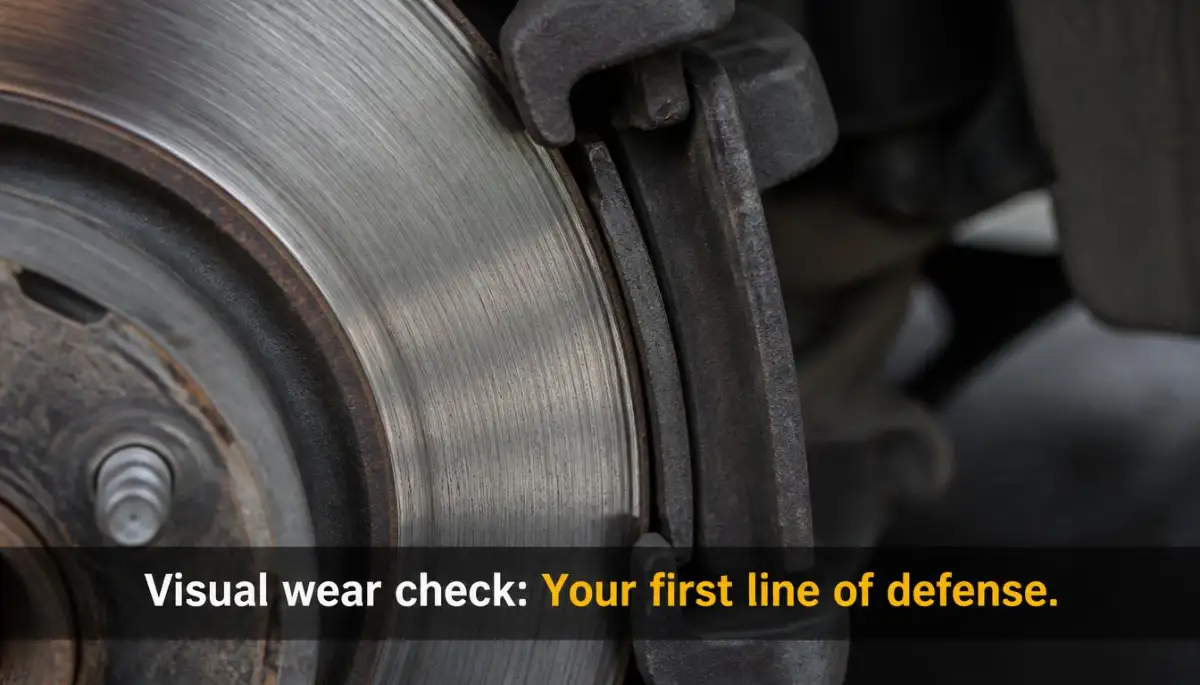
Many modern cars have open alloy wheels that allow you to see the brake assembly without removing the tire. Peer through the spokes of your wheel and locate the circular metal rotor. You will see the brake caliper clamped around it, holding the brake pads in place.
Look closely at the thickness of the pad pressed against the metal disc. As a general rule of thumb, your brake pads should be at least one-quarter of an inch thick. If the pad looks thinner than a couple of stacked coins, it is time to schedule a replacement.
Checking the Brake Fluid Reservoir
Pop your car's hood and locate the semi-transparent plastic brake fluid reservoir near the back of the engine bay. The fluid level should always sit safely between the minimum and maximum markings on the side. A sudden drop in fluid is a major warning sign that you cannot afford to ignore.
As your brake pads wear down, more fluid is pushed into the caliper lines to bridge the growing gap. This naturally causes the fluid level in the reservoir under your hood to drop. If your fluid is near the minimum line, it is a clear sign that your pads are getting dangerously thin.
[For the Middle - The Pro Tip]: I once made the mistake of ignoring a slightly soft brake pedal for a whole month, thinking it was just cold weather. It turned out my brake fluid was slowly leaking, which almost caused a complete brake failure on the highway. Now, I always check my fluid levels at the start of every season.
[For YouTube Video Embed Placement]: If you want to see exactly how to perform a quick visual inspection of your brake pads without removing your wheels, check out this highly helpful step-by-step video.
Quiet Brake Failures: Myth vs. Reality
There are many misconceptions surrounding car maintenance that can lead to dangerous driving habits. Let's clear up some of the most common myths about brake wear so you can stay safe. Understanding these facts will help you make better decisions for your vehicle's upkeep.
As you can see, relying solely on your ears to detect brake problems is a dangerous gamble. Regular visual checks and paying attention to how your car feels are far more reliable methods. Let's look at how you can measure your stopping distance to test your brakes safely.
Testing Your Stopping Distance Safely
Another simple way to evaluate your brakes is by paying attention to how long it takes to stop. Find a safe, empty parking lot or a quiet, flat stretch of road with no traffic around. Accelerate to a moderate speed of about twenty miles per hour and then apply the brakes firmly.
Pay close attention to how much distance your car covers before coming to a complete stop. If the vehicle glides forward longer than expected, your braking efficiency has definitely dropped. This gradual loss of stopping power often goes unnoticed because we adapt to it over time.
It is easy to ignore a slow decline in braking performance because it happens so gradually. However, in an emergency situation, those extra few feet of stopping distance can make a massive difference. Regularly testing your car in a safe environment helps you recognize these slow changes before they become hazardous.
The Lifespan of Modern Brake Pads
A common question among drivers is how long a standard set of brake pads should actually last. The honest answer is that it varies wildly depending on your driving habits and environment. Stop-and-go city driving wears out pads much faster than steady highway cruising.
On average, most high-quality brake pads will last between thirty thousand and seventy thousand miles. If you drive aggressively, carry heavy loads, or live in a hilly area, your pads will wear out much quicker. Keeping track of your mileage is a great way to anticipate when you might need a replacement.
The Financial Benefit of Early Replacement
Replacing your brake pads before they wear down completely is also a smart financial decision. Brake pads are relatively inexpensive and easy to replace for any standard repair shop. However, if you wait too long, the metal backing plate will scrape against your rotors.
Once your rotors are gouged and damaged by bare metal, they cannot be resurfaced and must be replaced. This turns a simple, low-cost maintenance job into a much more expensive repair bill. Taking action early keeps money in your wallet and keeps your vehicle running smoothly.
Choosing the Right Friction Material for Your Vehicle
When it does come time to replace your worn-out pads, you will have to choose between different materials. The three main options available are organic, semi-metallic, and ceramic brake pads. Each type has its own unique characteristics, advantages, and quiet wear patterns.
Organic pads are quiet and soft, but they tend to wear out much faster than other options. Semi-metallic pads offer excellent stopping power and heat dispersion, but they can be noisier and produce more black dust. Ceramic pads are incredibly quiet and long-lasting, making them a popular choice for daily drivers.
Why Ceramic Pads Require Extra Attention
Ceramic pads are wonderful for keeping your wheels clean and your ride quiet, but they demand more vigilance. Because they rarely squeal or make noise when worn, you must perform regular visual inspections. Knowing the characteristics of your specific pads helps you monitor them effectively.
Simple Maintenance Habits to Extend Brake Life
You can easily extend the lifespan of your braking system by making a few small adjustments to your driving style. One of the simplest habits is to avoid riding the brakes when descending long hills. Instead, try downshifting your engine to let the transmission control your speed safely.
Another helpful tip is to avoid tailgating other vehicles on the road. Following too closely forces you to make sudden, aggressive stops that generate intense heat and wear out your pads quickly. Leaving a safe following distance allows you to coast to a stop naturally, preserving your brakes.
Finally, try to clear out any unnecessary heavy items from your trunk or backseat. The heavier your vehicle is, the more kinetic energy your brakes must convert into heat to stop the car. Keeping your car light reduces the daily strain on your pads and improves your fuel economy at the same time.
Recognizing Symptoms of Hydraulic Issues
Sometimes the problem is not with the pads themselves, but within the hydraulic system that powers them. If you notice a dark puddle of fluid under your car near the wheels, you likely have a brake line leak. This is a severe safety hazard that requires immediate professional repair.
Brake fluid is highly corrosive and plays a key role in transferring force from your foot to the wheels. A leak means your system will lose pressure, eventually leading to complete stopping failure. If you suspect a leak, do not attempt to drive the vehicle; have it towed to a garage instead.
When to Consult a Professional Mechanic
While DIY visual checks are incredibly useful, there are times when you must seek professional help. If you experience any persistent soft pedal feel, severe pulling, or heavy steering wheel vibrations, take your car to a trusted technician. They have the advanced diagnostic tools to pinpoint hidden issues quickly.
A certified mechanic can also measure your rotor thickness with specialized micrometers to ensure they are still safe. They can check your caliper slide pins to make sure they are properly lubricated and moving freely. Investing in a professional inspection gives you absolute certainty about your car's roadworthiness.
Your Roadmap to Safe and Quiet Stopping
Keeping your vehicle safe does not have to be a stressful or complicated process. By learning to pay attention to physical sensations, checking fluid levels, and performing quick visual inspections, you can stay ahead of brake wear. You no longer have to rely on loud noises to warn you of danger.
Make it a habit to look at your brake pads every time you rotate your tires or change your oil. This simple routine will ensure that your car is always ready to stop safely when you need it most. Protect your investment, protect your passengers, and enjoy the peace of mind that comes with a well-maintained vehicle.
Proactive Diagnostic Strategies for Master Car Owners
Many drivers assume that checking vehicle safety requires advanced tools and a fully equipped garage. However, catching silent wear before it becomes a hazard is actually about consistency and paying attention to subtle feedback. By using a few simple diagnostic strategies, you can easily monitor your braking system without spending any money.
The Thermal Heat Test Using a Basic Sensor
One of the most reliable ways to find a sticking brake caliper before it ruins your pad is by measuring heat. After a standard drive, you can use a cheap, non-contact infrared thermometer to check the temperature of each wheel hub. A caliper that is stuck will constantly press the pad against the rotor, generating extreme heat.
If one wheel hub is significantly hotter than the others, it is a clear sign of a sticking caliper. This issue causes the inner brake pad to wear down in complete silence while the outer pad looks perfectly fine. Identifying this uneven heat early allows you to fix the caliper before the pad wears down to bare metal.
Paying close attention to your car's physical feedback is a lot like using active listening hacks for professionals to catch subtle details before they turn into major problems. Your vehicle is constantly sending you physical messages through heat and vibration. Learning to read these messages is an essential skill for any car owner who wants to stay safe.
Detecting Glazed Brake Pads
Brake pad glazing is a common issue that causes silent stopping failures. Glazing happens when your brakes are subjected to rapid, extreme heat, causing the friction material to crystallize into a smooth, shiny surface. This shiny layer has almost no grip, which greatly increases your stopping distance.
You can spot glazed pads by looking through your wheel spokes with a bright flashlight. If the surface of the pad or the rotor looks highly reflective, like a mirror, glazing has occurred. To fix this, a mechanic must lightly sand the pad surface or replace the set entirely to restore proper friction.
The Bedding-In Process for Smooth Stops
When you install new brake pads, you must perform a process called bedding-in to ensure they work quietly and efficiently. This process involves transferring a thin, even layer of friction material from the new pads onto the metal rotors. Doing this correctly prevents uneven wear and keeps your braking system silent for thousands of miles.
To bed in your new brakes, find a safe, empty road where you can accelerate to forty miles per hour. Apply the brakes firmly but smoothly to slow down to about ten miles per hour, then accelerate again. Repeat this process several times without coming to a complete stop, allowing the pads to heat up and seat perfectly against the rotor surface.
Just as you would not ignore sudden changes when you plan a job change during mortgage to keep your finances stable, you should never skip this step when installing new pads. Skipping the bedding process can lead to uneven pad deposits, which cause heavy vibrations later. Taking those extra ten minutes to break in your pads correctly is a smart way to protect your investment.
Testing the Brake Pedal Reserve Distance
You can easily check the health of your hydraulic system by measuring your pedal reserve distance at home. Park your vehicle safely, turn off the engine, and pump the brake pedal a few times to bleed off any remaining vacuum. Then, press and hold the pedal down firmly with your foot.
The pedal should stop well above the floorboards, leaving a solid gap of at least two inches. If the pedal slowly sinks toward the floor while you maintain constant pressure, you likely have an internal hydraulic leak. This is a severe safety issue that requires immediate attention from a certified professional.
Maintaining your car on a budget is highly similar to managing smart budgeting methods for self-employed pros, where planning ahead saves you from sudden, massive bills. Catching a small hydraulic leak early is far cheaper than replacing a failed master cylinder later. Regular inspections help you avoid unexpected financial strain while keeping your car roadworthy.
Managing Brake Dust Output
Many modern drivers hate the black dust that accumulates on their beautiful alloy wheels. However, this dust is actually a highly helpful indicator of how your brake pads are wearing down. If you suddenly notice a major drop in the amount of dust on one wheel, that brake might not be doing its share of the work.
A clean wheel in a dusty set often suggests that the caliper piston is seized and failing to press the pad against the rotor. This uneven distribution of braking force puts a massive load on your other wheels, leading to rapid wear and unsafe stopping distances. Keep an eye on your wheel dust to ensure all four corners are braking equally.
The Dangerous Missteps Drivers Make When Handling Silent Brake Wear
Waiting for your brakes to make noise before checking them is a gamble that can lead to high repair bills and dangerous situations. Unfortunately, many well-meaning car owners fall into simple traps that ruin their vehicle's stopping system. Understanding these common mistakes will help you protect your car and keep your passengers safe.
Rushing to Top Off the Brake Fluid
When drivers see that their brake fluid is near the minimum line, their first instinct is to open the reservoir and add more fluid. However, this common action actually masks a much larger issue. As your brake pads wear down, the caliper pistons push further out, which naturally draws fluid out of the reservoir.
If you top off the fluid without checking your pads, you are hiding the physical sign of silent pad wear. When you eventually replace the worn pads, the mechanic will push the caliper pistons back in, causing the extra fluid to overflow. This highly acidic fluid can spill onto your engine components and cause severe damage.
Securing your physical safety on the road is just as empowering as taking back your digital privacy when you block smart tv tracking to stop companies from collecting your private data. In both cases, taking proactive control of your settings and systems keeps you safe from hidden dangers. Always check your pad thickness before assuming your vehicle is simply low on fluid.
Neglecting the Caliper Slide Pins
A very common mistake during a DIY brake job is replacing the pads while completely ignoring the caliper slide pins. These pins allow the caliper to slide back and forth smoothly, ensuring equal pressure is applied to both sides of the rotor. Over time, the protective grease on these pins dries out, causing them to rust and lock up.
When the pins seize, the caliper cannot slide, leaving one pad pressed permanently against the spinning rotor. This causes that single pad to wear down to the bare metal in a matter of weeks, while the other pad remains completely untouched. Always clean and lubricate these pins with high-quality silicone grease during every pad change.
Changing Pads on Warped Rotors
Many car owners try to save a few dollars by putting brand-new brake pads onto old, warped metal rotors. This mistake actually ruins the new pads almost immediately. A warped rotor has an uneven, wavy surface that will constantly kick the new pads back as you drive.
This continuous pulsation creates extreme hot spots on the new pad material, leading to rapid glazing and uneven wear. In a very short time, you will find yourself paying for another set of pads and a new set of rotors anyway. Always have your rotors measured and resurfaced or replaced whenever you install new pads.
Choosing clean, high-quality ceramic pads is a small, conscious upgrade for your vehicle, similar to making simple household swaps to shrink your plastic footprint to protect the environment. It is a simple decision that pays massive dividends in the long run. Good pads deserve a smooth, flat rotor surface to perform their best.
Replacing Only One Side of an Axle
Sometimes, a driver will discover that the front-left brake pad is completely worn out, while the front-right pad still has plenty of life left. In an effort to save money, they might choose to replace only the single worn-out pad. This is a highly dangerous practice that upsets the balance of your vehicle's braking system.
Different brands and age groups of brake pads have varying levels of friction and heat tolerance. Having different pads on the same axle will cause your car to pull violently to one side during an emergency stop, potentially causing you to lose steering control. Always replace brake pads in complete axle sets to maintain balanced, predictable stopping power.
Ignoring the Quality of New Hardware
Many cheap brake pad kits come with low-quality metal clips and shims, or sometimes no new hardware at all. Reusing old, bent metal clips is a major mistake that leads to uneven pad movement and premature wear. Old clips lose their tension, allowing the pads to wobble or bind up inside the caliper bracket.
This binding causes the pads to stay in constant contact with the rotor, accelerating silent wear and lowering your fuel economy. Always spend the extra few dollars to buy high-quality kits that include fresh, stainless-steel hardware. Installing new clips ensures your pads slide smoothly and retract fully after every single stop.
The speed at which your braking system responds to your foot pressure is a direct performance factor, much like how hosting server location determines how fast a page loads. High-quality hardware keeps the entire mechanical assembly responsive and fast. Do not let cheap clips compromise your safety on the road.
Taking Control of Your Vehicle's Stopping Power Today
You now have the knowledge and tools to identify silent brake wear before it turns into an expensive or dangerous emergency. By paying close attention to physical feedback, performing simple visual checks, and avoiding common maintenance mistakes, you can drive with complete confidence. Your safety is entirely in your hands, and it does not require a degree in engineering to maintain.
Make it a simple habit to check your brake fluid levels and pad thickness once a month. This small investment of time will protect your wallet from costly rotor damage and keep your loved ones safe on every journey. A well-maintained vehicle is a reliable vehicle, and your brakes are the most important safety feature your car has to offer.
My own scare on that steep mountain road taught me that proactive vehicle care is the only way to avoid sudden disasters. I now take ten minutes every month to visually check my brake pads through the wheel spokes, and it has saved me from several costly repairs. I highly encourage you to walk out to your car today, grab a flashlight, and take a quick look at your brakes to secure your own peace of mind.
Quick Answers on Silent Brake Problems
Can brake pads wear out without making any squeaking or grinding noise?
Yes, brake pads can wear out in complete silence if the metal wear indicator clip is broken, rusted off, or was never installed. High-quality ceramic pads also wear down very quietly and rarely produce the classic warning noises that drivers listen for.
How can I check my brake pad thickness without removing my wheels?
You can use a bright flashlight to peer through the open spokes of your alloy wheels and locate the brake caliper clamped around the metal rotor. Look closely at the thickness of the pad material pressed against the rotor, ensuring it is thicker than one-quarter of an inch.
Why does my brake pedal feel soft and spongy even though there is no noise?
A soft or spongy pedal usually indicates air in your hydraulic lines, a brake fluid leak, or extremely thin brake pads that require the caliper pistons to travel too far. This is a serious issue that reduces your stopping power and requires immediate professional inspection.
Is it safe to replace my worn brake pads but reuse my old, worn rotors?
No, putting new pads on worn or uneven rotors will quickly ruin the new pads by creating extreme hot spots and glazing. It is always best to resurface or replace your rotors during a pad change to ensure safe, smooth, and balanced stopping performance.
How does a low brake fluid level relate to silent brake pad wear?
As your brake pads wear thinner, the caliper pistons must stay pushed out further, which draws more brake fluid down into the lines. This naturally causes the fluid level in your reservoir under the hood to drop, serving as a clear visual warning of worn pads.
Disclaimer: This article is for informational purposes only and does not constitute professional mechanical advice. Your vehicle's braking system is a critical safety component, and any maintenance or diagnostic work should be performed with extreme care. If you suspect your brakes are failing or feel unsafe while driving, please consult a certified professional mechanic immediately.