The Midnight Panic: My Struggle with Baby Temperature
If you’ve ever stood over a crib at 3 AM, obsessively touching your baby’s toes and wondering if they’re too cold, I’ve been exactly where you are. It’s a quiet kind of panic that every parent knows. We want them cozy, but we’re terrified of them getting too hot. This guide is here to take that guesswork away and help you finally get some sleep, knowing your baby is perfectly comfortable.
I spent the next three hours layering clothes on him until he looked like a little marshmallow. But then, I noticed something even more scarier. His cheeks turned bright red, and he started breathing a bit faster. I realized I had gone too far the other way. I was stuck in a loop of fear and confusion.
It felt like I was playing a dangerous guessing game with my own child’s safety. I didn't sleep at all that night. I just sat there, oscillating between thinking he was too cold and worrying he was too hot. This is a reality for so many of us. That deep, heavy weight of responsibility can make even the simplest task feel like a mountain.
Most new parents live in this state of constant "temperature anxiety." We worry about SIDS (Sudden Infant Death Syndrome) if they get too hot. We worry about them catching a chill if they are too cold. It feels like there is no middle ground, and the lack of clear information only makes the mental stress worse. You just want your baby to be safe, but your own instincts feel muddled by exhaustion and fear.
Why Babies Struggle to Stay "Just Right"
### Cheat Sheet: Keep Your Baby Safe & Cozy
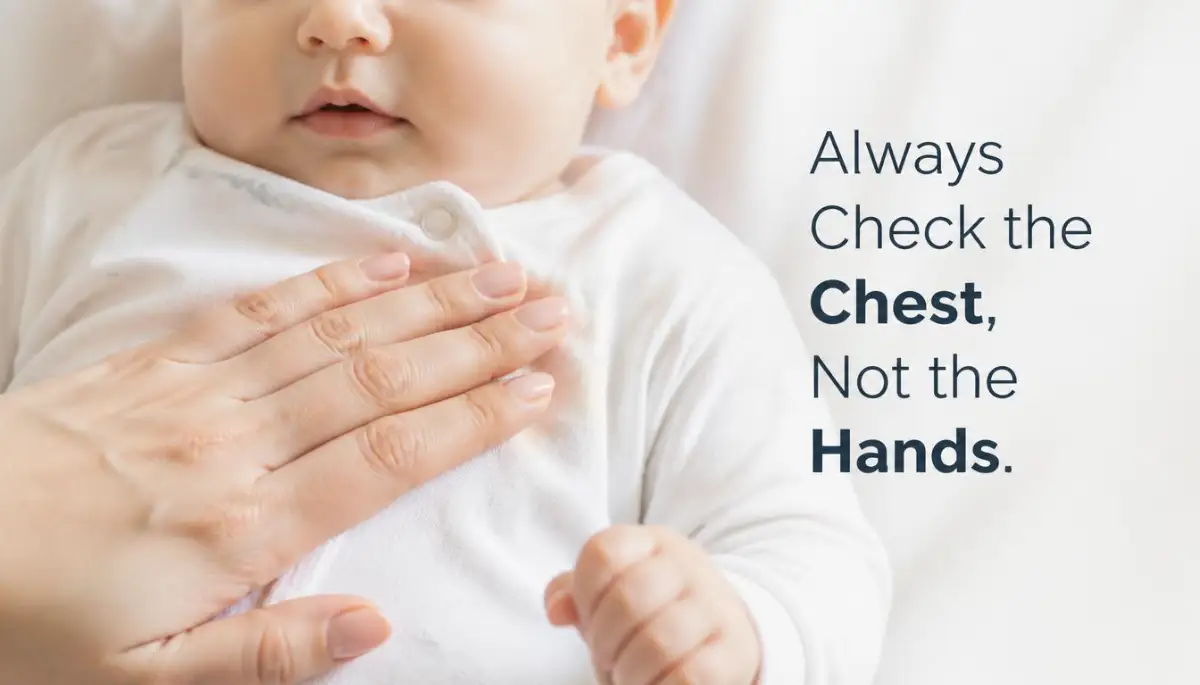
- The Core Rule: Always check the chest or back of the neck. Hands and feet are meant to feel cool—don't let them trick you!
- Safety First: Overheating is a much bigger risk than being slightly chilly. When in doubt, take a layer off.
- The 70-Degree Sweet Spot: Aim to keep the nursery between 68°F and 72°F (20-22°C).
- No Hats Indoors: Babies release heat through their heads. Covering them while they sleep can lead to dangerous overheating.
You might wonder why we have to worry about this so much. After all, adults don't usually need someone to tell them if they are hot or cold. But newborns are different. Their bodies are still learning how to manage heat. They have a very high surface area compared to their weight, which means they lose heat much faster than we do.
The Gold Standard: The Chest and Back Check
One of the biggest mistakes I made early on was checking my baby’s hands and feet. Never rely on hands and feet to judge a baby's temperature. It is completely normal for an infant's extremities to feel cool to the touch. This is because their circulatory system is still developing, and blood is prioritized for their vital organs.
Instead, you should always check their chest or the back of their neck. This is your baby's "core" temperature. Reach your hand under their clothes and feel their skin. If the chest feels warm and dry, your baby is likely perfect. If it feels hot or sweaty, they are definitely too warm. If it feels cool, they might need an extra layer.
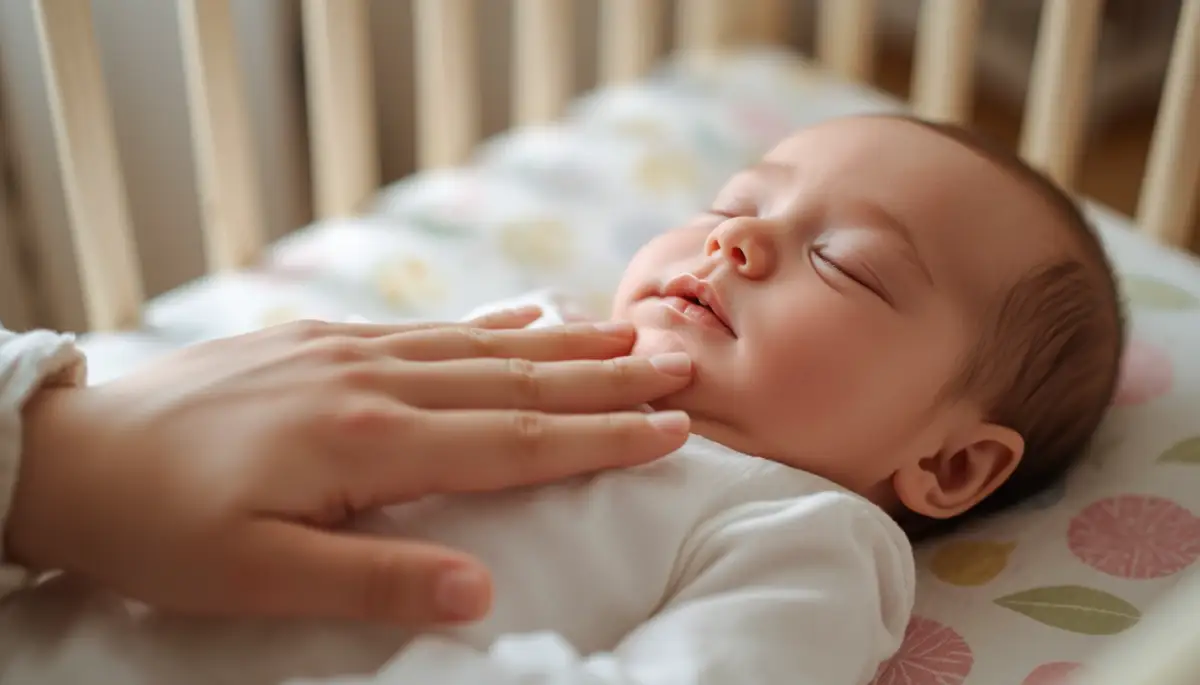
A Personal Realization: I used to think a crying baby meant a cold baby. But one day, I realized my son was crying because he was sweaty and itchy from too many wool layers. Once I stripped him down to a simple cotton onesie, he calmed down instantly. Trust the core, not the extremities.
Recognizing the Red Flags of Overheating
Overheating is actually a bigger risk for babies than being slightly cool. It is linked to a higher risk of sleep accidents. You need to be a bit of a detective here. Look for these specific signs:
- Damp Hair or Sweaty Neck: If your baby's hair looks wet or their neck feels sticky, they are too hot.
- Flushed or Red Cheeks: This is a clear sign their body is trying to dump heat.
- Rapid Breathing: If they are panting like a little puppy, it's time to cool the room or remove a layer.
- Heat Rash: Small red bumps on the neck or chest often mean their skin is getting too warm and irritated.
- Lethargy: If your baby is unusually sleepy and hard to wake up, they might be overheated.
Master the "Core Check" in seconds by watching this expert demonstration below.
Spotting the Signs of a Cold Baby
While overheating is common, we can't ignore the chill. A baby who is too cold will use up too much energy trying to stay warm, which can affect their weight gain. Look for these subtle hints:
- The Chest is Cool: As mentioned, if the core feels cool, they are losing heat.
- Fussiness and Restlessness: Sometimes a baby won't stop crying simply because they can't get comfortable.
- Pale Skin: If they look unusually pale, they might need more warmth.
- Quietness: Ironically, a very cold baby might become very quiet because they are trying to save every bit of energy they have.
The Ideal Nursery Environment
Setting the stage is half the battle. You don't want the room to feel like a sauna, but you also don't want it to be a fridge. Most experts suggest keeping the nursery between 68 and 72 degrees Fahrenheit (20 to 22 degrees Celsius).
I highly recommend getting a simple room thermometer. Don't guess. Having a digital number to look at can take away 90% of your stress. Also, make sure the crib is away from direct drafts, like air conditioning vents or drafty windows.
The "One Layer More" Rule
A great rule of thumb for dressing your baby is to give them one extra layer than what you are wearing comfortably. If you are happy in a t-shirt, your baby probably needs a t-shirt and a light swaddle or sleep sack.
Stick to natural fibers like cotton. Avoid synthetic fabrics that trap heat and moisture. Cotton allows the skin to breathe, which helps the body regulate its own temperature naturally.
Understanding "Brown Fat" in Newborns
Did you know babies have a special kind of fat called "brown fat"? This is their secret weapon. When they get cold, this fat breaks down to create heat without needing to shiver. It’s an amazing survival tool!
However, this doesn't mean they are invincible. It just means their bodies are working very hard behind the scenes. Our job is to help them so they can use that energy for growing and brain development instead of just staying warm.
The Danger of Blankets and Pillows
In our quest to keep them warm, we often reach for thick blankets. Stop right there. Loose blankets are a major safety hazard in a crib. They can cover a baby’s face and lead to overheating or suffocation.
Instead, use wearable blankets or sleep sacks. These stay in place and keep the baby warm without the risks of loose bedding. It also prevents the baby from kicking the covers off and getting cold in the middle of the night.
Seasonal Adjustments: Summer vs. Winter
Temperature regulation changes with the seasons. In the summer, a single layer of cotton is often enough. You might even just leave them in a diaper if it's exceptionally hot.
In the winter, the air is dry. Dry air can make a baby feel colder. Using a humidifier can actually help the air feel "warmer" and more comfortable for their tiny lungs. Always layer up starting with a base layer (like a short-sleeve onesie) and adding a sleep sack on top.
When to Seek Medical Advice
Sometimes, a temperature issue isn't about the room. It could be a fever. If you check your baby's core and they feel very hot, use a digital thermometer to check their actual temperature.
If a newborn under three months has a temperature of 100.4°F (38°C) or higher, you should call your doctor immediately. At this age, their immune systems are still very new, and it's always better to be safe than sorry.
Trusting Your Intuition
I spent so many weeks looking at charts and reading books. But eventually, I started to "know" my baby. I learned how his skin felt when he was happy. I learned the specific sound of his "I'm too hot" cry.
You will get there too. Don't let the fear of being "wrong" stop you from being present. You are the expert on your baby. These tips are here to guide you, but your hands and your heart will do the most important work.
Keeping It Simple
At the end of the day, baby care is about the basics. Keep the room comfortable. Use breathable clothes. Check the chest, not the hands. If you follow these simple steps, you are doing a great job.
Your baby is resilient, and as long as you are paying attention to these small signs, they will be just fine. Take a deep breath. You’ve got this.
Next-Level Secrets for a Perfectly Cozy Baby
Many parents think they should keep the nursery air still and warm to avoid a "chill." But actually, a gentle breeze from a fan can be a lifesaver. Not only does it help prevent the air from becoming stagnant and hot, but studies from organizations like the National Institute of Child Health and Human Development (NICHD) show that room fans can actually reduce the risk of SIDS by keeping the baby's environment fresh.
Another advanced tip is to look at the TOG rating of your baby’s sleep sack. This is a professional measurement of how much warmth a fabric provides. Most parents buy sleep sacks based on the cute patterns. Instead, you should check the label.
A TOG of 0.5 is perfect for hot summer nights, while a 2.5 TOG is designed for a chilly winter bedroom. By matching the TOG rating to your room thermometer, you take the guessing game out of the equation. It makes your life so much easier because the fabric does the work for you.
Quick Guide: What Should My Baby Wear?
You also need to think about humidity levels. When the air is too dry, it can make the room feel colder than it actually is. It can also dry out your baby’s sensitive nose and skin. Using a cool-mist humidifier helps the air hold onto a comfortable level of warmth.
This is particularly useful if you are trying to stay on a budget while setting up your nursery. You don't need a fancy heater; you just need to balance the moisture in the air. For those managing their finances, smart budgeting methods for self-employed pros can offer great ideas on how to afford high-quality nursery essentials without overspending.
I also learned that sunlight is a hidden factor. A room that feels perfect at 2 PM might become freezing at 3 AM. Or, a sunny window can turn a crib into an oven during a nap. I always suggest using blackout curtains with thermal lining.
These curtains block the sun in the summer to keep the room cool and trap the heat inside during the winter. It creates a stable "micro-climate" for your baby. This long-term strategy saves you from having to check on them every hour. You can rest knowing the room stays at a steady temperature.
Finally, don't forget the power of skin-to-skin contact. If you ever feel your baby is getting a bit too cool, the best heater in the world is your own body. Holding your baby against your bare chest helps regulate their heart rate and temperature almost instantly. It is a natural, science-backed way to keep them safe and connected to you.
The 3-Second "Panic Check" List
If you're worried right now, ask yourself these three things:
- Is their chest warm? (If yes, they are okay).
- Are they sweating? (If yes, remove a layer immediately).
- Are they acting normal? (If they are fussy but warm to the touch, it might be something else, not the cold).
Being a parent means you have to listen to more than just cries. Much like how active listening hacks for professionals help you understand people better, "listening" to your baby’s skin cues helps you connect with their physical needs.

Heartbreaking Mistakes Even the Best Parents Make
One of the most common mistakes I see is the indoor hat trap. We see pictures of newborns in cute little beanies and think they should wear them all the time. But a baby’s head is their primary way of releasing heat.
If you put a hat on a baby while they are sleeping indoors, you are essentially plugging their "exhaust pipe." They can overheat very quickly because the heat has nowhere to go. Unless you are outside in the cold or the room is exceptionally freezing, keep the head uncovered during sleep.
Another big error is over-bundling when the baby is sick. It is a natural instinct to wrap a sick child in blankets. We think we are helping them "sweat out" a fever. But this is very dangerous for a newborn.
A baby with a fever is already fighting to keep their temperature down. Adding layers can push their internal heat to a level that is hard to manage. When my son had his first fever, I wanted to wrap him up, but my doctor told me to do the opposite. I kept him in just a light onesie, and it made a world of difference.
Ignoring the car seat danger is another pitfall. Thick winter coats or snowsuits should never be worn under a car seat harness. Not only is it a safety risk for the straps, but the car will warm up once you start driving.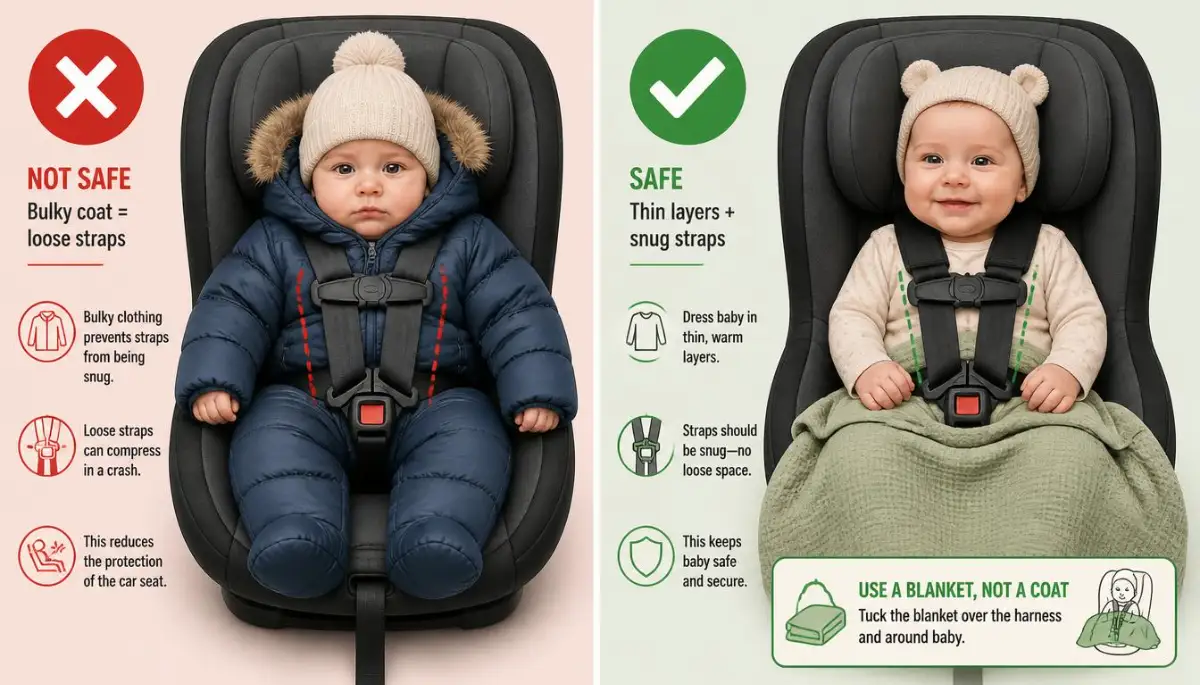
The baby can become trapped in a very hot bubble inside that coat with no way to cool down. It is much safer to dress them in thin layers and tuck a blanket over the harness once they are buckled in. Then, you can easily remove the blanket once the car is warm.
Many parents also rely too much on smart baby monitors. While technology is great, it can sometimes give false readings if it is placed too close to a lamp or a drafty window. Much like how we need to be careful with safe AI at work to protect our privacy, we must use nursery tech as a tool, not a replacement for our own touch.
Always double-check the temperature with your own hand on their chest. Don't let a screen tell you your baby is fine if your gut tells you something is wrong. Your touch is much more accurate than a cheap sensor in a plastic monitor.
Lastly, some parents try to use space heaters in the nursery. This is a major fire hazard and can lead to uneven heating. One part of the room might be 80 degrees while the crib is still 65. It is better to dress the baby for the room they are in rather than trying to force the room to be a certain temperature with risky appliances.
Just like spotting the subtle signs of prediabetes requires paying attention to small health changes, keeping a baby safe requires noticing these small environmental mistakes before they become big problems.
Your Path to Worry-Free Parenting
I want you to take a second and just breathe. You are already a wonderful parent because you are here, learning and searching for the best way to care for your child. The anxiety you feel is just proof of how much you love them.
Keeping a baby at the right temperature isn't about being perfect. It is about being observant. Once you get into a rhythm, you won't even have to think about it. You will just know that "one extra layer" is exactly what they need for a peaceful night.
Focus on the core. Ignore the cold hands. Use breathable cotton. Trust your instincts. These simple habits will protect your baby and give you the sleep you deserve.
I went through many sleepless nights of worrying just like you are now. But I promise, within a few weeks, you will become a master of your baby’s comfort. My best advice is to stop overthinking and start trusting that simple "chest check"—it has never failed me, and it won't fail you.
Common Questions About Baby Temperature
Can a baby sleep in just a diaper if the house is hot?
Yes, if your home is very warm or you don't have air conditioning, a diaper is perfectly safe. Just make sure there are no cold drafts hitting the baby directly. If the chest feels warm and they are not sweating, they are likely comfortable.
What should I do if my baby’s hands look slightly blue or purple?
This is often called acrocyanosis and is very common in the first few weeks of life. It usually just means their circulation is still maturing. As long as their chest and lips are a healthy pink color, you don't need to worry.
Is it okay to use a fan in the nursery during the winter?
Actually, yes. A fan on a very low setting helps move the warm air that gets trapped at the ceiling back down to where the baby is. Just make sure the fan isn't blowing directly onto the crib.
How do I know if the room is too cold for a bath?
A good rule is to make the bathroom feel a little bit "steamy" and warm before you undress the baby. If you feel comfortable in a t-shirt in that room, it is likely okay for a quick bath. Always have a warm towel ready immediately after.
Can using a smart TV or baby monitor tracking affect my nursery safety?
While it doesn't affect temperature, you should be aware of privacy. Just as you might block smart tv tracking to keep your data safe, ensure your baby monitor is on a secure, private Wi-Fi network.
Disclaimer: The information provided in this article is for educational purposes only and does not substitute for professional medical advice. Always consult with a pediatrician if you have specific concerns about your baby's health or body temperature. Safety guidelines may change, and it is important to stay updated with the latest recommendations from health authorities.