
Stop Forgetting Everything You Read
Ever feel like your brain has a "delete" button that hits itself every night? I used to spend hours highlighting books until they turned bright yellow, only to forget everything by morning. It’s not that you have a bad memory; it’s just that you’re fighting your brain’s natural design. I’ve found a way to stop the "leaking bucket" feeling, and it’s simpler than you think. Let’s get your memory actually working for you.
I read the same pages over and over again. I highlighted every line until the whole book looked yellow.
But when I woke up the next morning, it was all gone. My mind felt like a bucket with a massive hole in the bottom.
I felt so stupid and frustrated because I was putting in the work. I spent my weekends studying while my friends were out having fun.
Yet, I still couldn't recall basic facts when I needed them most. It felt like I was wasting my life on things that just wouldn't stick.
That was the reality of my life for a long time. I thought I just had a "bad memory" and there was nothing I could do about it.
Many of you probably feel the same way right now. You spend hours reading a book or watching an educational video.
You feel like you understand it in the moment. But a few days later, you can't even remember the main points.
This is a huge problem that makes many people give up on learning new things. It creates a lot of stress and makes you feel like you aren't smart enough.
The truth is, your brain is actually designed to forget things. If we remembered every single thing we saw, our heads would explode.
The real secret isn't about working harder. It is about working with the way your brain actually functions.
| Feature | Cramming (The Wrong Way) | Spaced Repetition (The Right Way) |
| :--- | :--- | :--- |
| Study Time | 5-10 hours in one night | 20 minutes daily |
| Brain Stress | Extremely High (Burnout) | Low and Relaxed |
| Long-term Memory| Almost Zero | Permanent Storage |
| Best For | Passing tomorrow's test | Master a life-long skill |
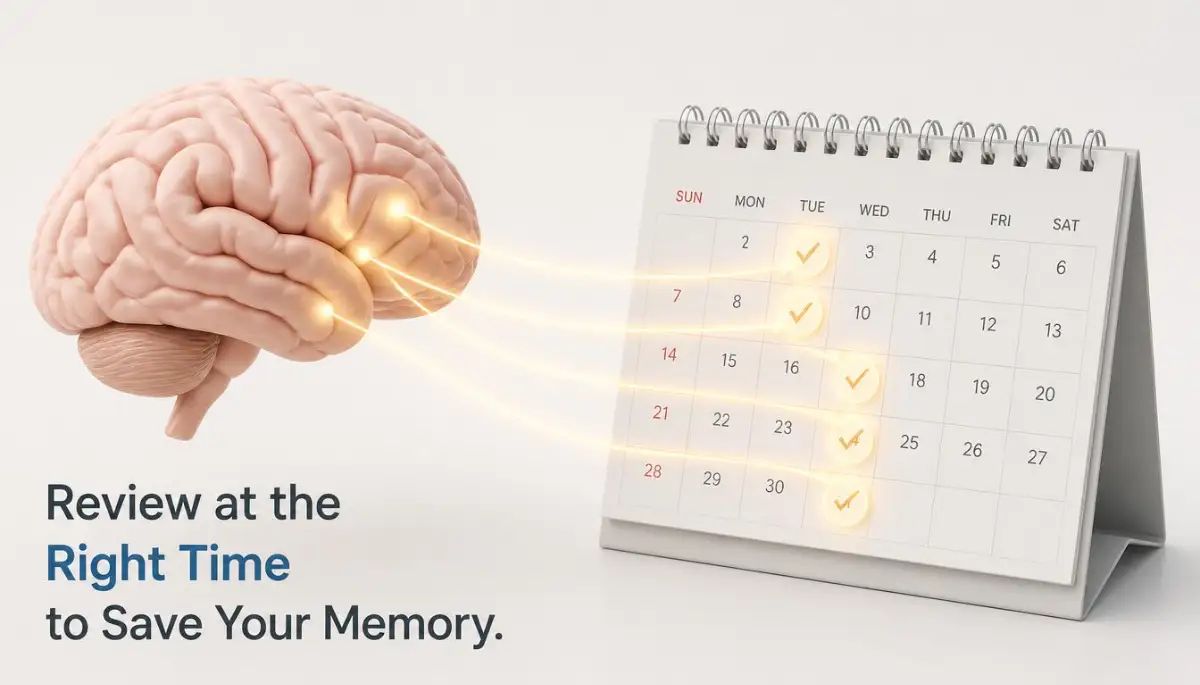
The Science of Why We Forget and How to Fight Back
Most of us were taught to study by "cramming." We try to push as much info as possible into our heads in one night.
How to Master Your Memory (Quick Summary)
- The 24-Hour Rule: If you don't review new info within 24 hours, you lose 70% of it.
- Small Bites: Break big topics into tiny flashcards. One card = One idea.
- Schedule Your Reviews: Review on Day 1, Day 3, Day 7, and Day 14 for the best results.
- Sleep is Mandatory: Your brain won't "save" your progress if you pull an all-nighter.
The "Memory Master" Cheat Sheet
- The 70% Rule: You forget 70% of new info in 24 hours unless you review it.
- Catch the Edge: Review stuff right when you’re about to forget it to "lock" it in.
- Small Wins: Studying for 15 minutes every day beats a 10-hour weekend session every time.
- Sleep is a Tool: Your brain only saves "memory files" while you are in deep sleep.
Science shows that this is the worst way to learn. There is something called the "Forgetting Curve" that explains why this happens.
When you learn something new, your memory of it is very strong at first. But within just twenty-four hours, you lose about seventy percent of that info.
If you don't review it, that information eventually disappears forever. Your brain thinks it is just "trash" that you don't need anymore.
Spaced repetition is the tool that tells your brain, "Hey, this is important! Keep it!"
Instead of studying for five hours in one day, you study for thirty minutes over several days. You review the material just as you are about to forget it.
This small act makes the memory "reset" and become even stronger than before. Each time you review, the time between reviews gets longer.
Eventually, that information moves from your short-term memory to your long-term memory. It becomes a part of you, like your own name or your phone number.
How to Start Your Spaced Repetition Journey Today
You don't need a PhD to start using this method. You just need a simple system and a bit of discipline.
The first step is to break down your information into very small pieces. If you try to remember a whole chapter at once, you will fail.
You have to lay one brick at a time and let the glue dry. In learning, that "glue" is time and repetition.
I suggest using flashcards for this process. On one side, write a simple question. On the other side, write the short answer.
Keep it simple so your brain doesn't get overwhelmed. The goal is to make the review process quick and easy.
I used to try to make my flashcards too complex. I would write whole paragraphs on one card. My realization was that this made me hate studying. Now, I keep my cards down to one single idea each.
My Quick "Flashcard Rules" for You:
- The 7-Word Rule: Try to keep your answers under 7 words. If it’s longer, your brain will struggle to "snap" it into memory.
- One Question, One Answer: Never put two facts on one card. It confuses your recall.
- Use Your Own Words: Never copy-paste from a book. If you write it in your own "slang," you'll remember it 10x faster.
Creating Your Perfect Review Schedule
Timing is everything when it comes to spaced repetition. You want to catch your brain right at the "edge" of forgetting.
If you review too soon, it’s too easy and your brain gets lazy. If you wait too long, you’ve already forgotten it and have to relearn it from scratch.
A basic schedule might look like this:
- First review: 1 day after learning.
- Second review: 3 days after the first review.
- Third review: 7 days after the second review.
- Fourth review: 2 weeks after that.
By the time you get to the fourth review, that info is likely stuck in your head for a long time. You will be amazed at how much you can remember with very little effort.
The best part is that you actually spend less time studying overall. You are just spreading that time out in a way that makes sense to your biology.
Want to see how this looks in real life? This video explains the rhythm of memory perfectly.
Digital Tools vs. Old-School Paper Cards
You might be wondering if you should use an app or real paper cards. Both have their own magic, to be honest.
I personally love the feeling of paper. There is something about writing by hand that helps my brain focus.
However, paper cards can get messy if you have hundreds of them. It becomes hard to keep track of when you need to review each one.
Digital apps are great because they have a built-in "algorithm." They do the math for you and tell you exactly which cards to study today.
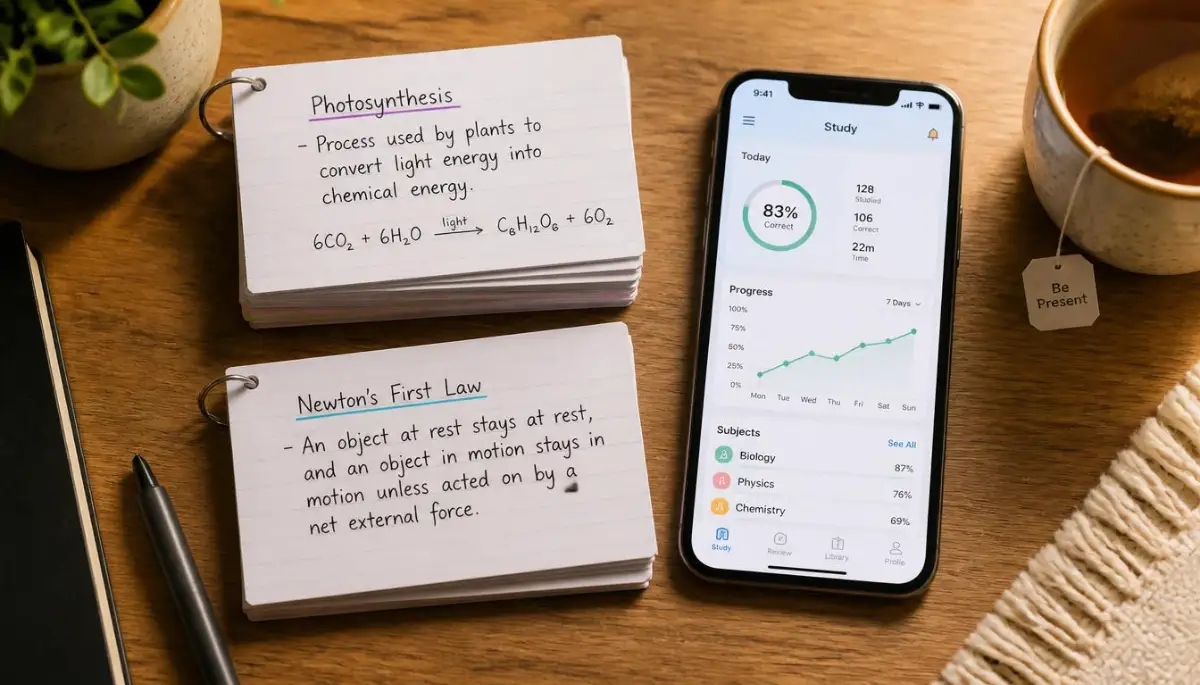
Apps like Anki or Quizlet are very popular for this. They take the stress out of planning and let you focus on the actual learning.
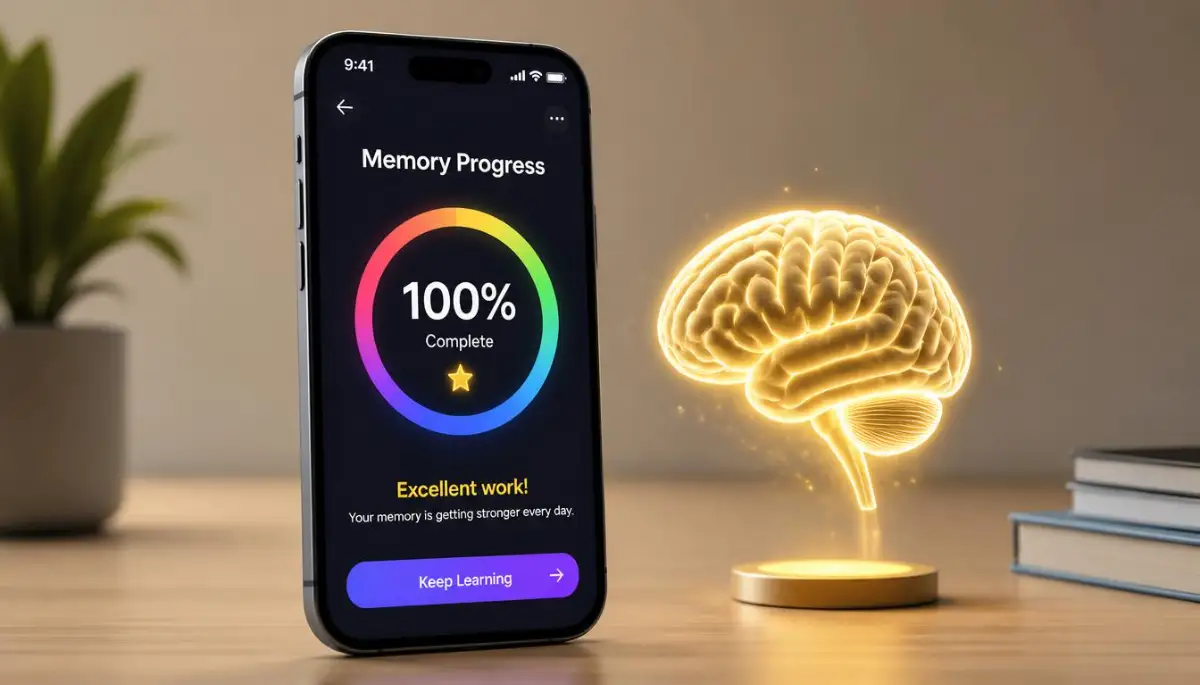
If you are a student with a lot of subjects, I highly recommend going digital. It saves a lot of time and keeps everything organized in your pocket.
But if you are just trying to learn a few new words or a simple concept, paper cards are fine. The most important thing is that you actually do the reviews.
Why Consistency Beats Intensity Every Single Time
I used to be the "all or nothing" type of student. I would study for ten hours one day and then do nothing for a week.
This was my biggest mistake. Spaced repetition only works if you do it every single day.
Even if you only have ten minutes, use that time to review your cards. It keeps the "memory chain" alive and strong.
If you skip a few days, the forgetting curve starts to win again. You will feel like you are starting over, which is very discouraging.
Think of it like brushing your teeth. You don't brush your teeth for five hours on Sunday and expect them to stay clean all week.
You do it for two minutes, twice a day, every single day. Learning works the exact same way.
Make it a habit that you don't even think about anymore. Put your flashcards by your bed or keep the app on your phone's home screen.
Breaking Down Complex Topics for Better Retention
Sometimes, you have to learn things that are very complicated. A simple flashcard might not feel like enough for a big science concept.
In these cases, you should use "Active Recall" alongside your repetition. Don't just read the card and say "I know this."
Actually close your eyes and try to explain the concept out loud. Imagine you are teaching it to a five-year-old child.
If you can't explain it simply, you don't truly understand it yet. This extra step forces your brain to build deeper connections.
It makes the spaced repetition even more powerful. You aren't just memorizing words; you are building real knowledge.
I like to draw little pictures on my cards too. Visuals help the brain find the information faster when you are under pressure.
Combining words, pictures, and speaking is the "triple threat" of learning. Your brain will have multiple ways to find that information later.
Handling the Boredom of Reviewing Old Material
Let's be honest, reviewing things you already know can be a bit boring. You might feel like you are wasting time on "easy" stuff.
But this is where most people fail. They stop reviewing the easy things, and then they forget them.
The beauty of a good system is that it shows you the easy stuff less often. But it never stops showing it to you completely.
To keep it interesting, I like to gamify my study sessions. I set a timer for five minutes and see how many cards I can get through.
Or I treat myself to a small snack after I finish my daily reviews. Find a way to make it fun so you don't dread it.
Remember, the goal is long-term retention. Those "boring" reviews are the reason you will still remember this info years from now.
It is a small price to pay for a powerful and reliable memory. You are literally building a library inside your head.
The Role of Sleep in Hardening Your Memories
You can do all the spaced repetition in the world, but it won't work if you don't sleep. Sleep is when your brain "saves" the files you worked on during the day.
During the night, your brain moves information from the hippocampus to the neocortex. This is the physical process of long-term retention.
If you pull an all-nighter, you are basically hitting "cancel" on your memory save. All that hard work goes to waste.
I learned this the hard way during my college years. I stayed up all night studying, but my brain felt like mush during the exam.
Now, I prioritize eight hours of sleep as much as I prioritize my study time. They go hand in hand like a lock and key.
Try to do a quick review right before you go to sleep. This gives your brain something fresh to work on while you are dreaming.
It is like giving your brain a "to-do" list for the night. You will be surprised at how clear things feel when you wake up.
Dealing with "Leeches" in Your Study Deck
In the world of spaced repetition, a "leech" is a card that you keep forgetting. No matter how many times you see it, it just won't stick.
These cards are dangerous because they frustrate you and take up too much time. When I find a leech, I don't just keep trying to memorize it.
I stop and look at the card. Usually, the problem is that the information is too confusing or poorly written.
I try to rephrase the question or break it into two smaller cards. Sometimes, I need to go back and actually understand the "why" behind the fact.
Memorizing something you don't understand is almost impossible. Once you understand the logic, the memory becomes easy.
Don't be afraid to delete or change cards that aren't working for you. Your study deck should be a living thing that changes as you grow.
Be kind to your brain and give it information in a way that it likes to receive it.
Why You Should Start Small and Slow
The biggest mistake I see people make is trying to learn 100 new things on the first day. They get excited and create a massive deck of cards.
By the third day, they have 300 reviews waiting for them and they feel overwhelmed. They quit because it feels like too much work.
Start with just five or ten new cards a day. It might feel too slow at first, but remember that reviews add up over time.
Slow and steady progress is what wins in the long run. You want to build a habit that lasts for years, not a sprint that ends in a week.
As you get comfortable, you can slowly increase the number of new cards. But always keep an eye on your daily review count.
If it starts to feel like a chore, slow down. The most important thing is that you keep showing up every day.
Your future self will thank you for the effort you put in today. Imagine knowing that you will never forget the things you are learning right now.
That is the power of spaced repetition. It turns your brain into a vault that stays locked for life.
Taking Your Memory to the Next Level with Expert Secrets
Now that you have the basics down, it is time to look at what the pros do. Most people think they just need to see a flashcard and they will remember it.
But there is a much deeper way to make things stick in your mind forever. I call this the "Deep Connection" method.
It is not just about seeing the word; it is about building a bridge in your brain. If you want to remember something for years, you have to link it to something you already know.
I once tried to learn a new language by just repeating words over and over. I failed miserably and felt like I was hitting a wall.
Then I started connecting the new words to funny stories or people I knew. Suddenly, my brain didn't want to let those words go.
If you are feeling stressed while trying to learn, it might be a sign of overcoming college burnout which can really slow down your progress.
You have to keep your mind fresh if you want these advanced tricks to work. One secret I learned is called "Interleaving."
Instead of studying one subject for three hours, you mix three different subjects together. You do twenty minutes of math, then twenty minutes of history, then twenty minutes of science.
This forces your brain to "reset" every time you switch. It feels harder at first, but the results are much better in the long run.
Science backs this up, showing that mixing topics helps the brain tell the difference between similar ideas. You can read more about how our brains handle complex patterns at Psychology Today.
Another expert tip is to use the "Feynman Technique" alongside your review schedule. Try to explain what you are learning to a friend or even a pet.
If you can't explain it in simple words, you don't really know it yet. This simple check ensures you aren't just memorizing sounds, but actual meaning.
I used to think I was a genius until I tried to explain a concept to my younger brother. I realized I had huge gaps in my knowledge that I needed to fix.
For those of you who are juggling work and study, checking out the ultimate survival guide for working college students can give you more ideas on how to fit these sessions into a busy day.
You should also pay attention to how you are reading. If you are staring at a screen all day, your eyes might get tired and your focus will drop.
Simple things like screen adjustments for tired eyes can make your study sessions much more comfortable.
When your eyes are relaxed, your brain can stay in the "learning zone" for a much longer time. It is all about creating the right environment for your memory to grow.
Lastly, try to add "Emotional Hooks" to your cards. If you are learning a boring history date, imagine something crazy happening on that day.
Our brains are wired to remember things that make us feel something. Laughter, surprise, or even a little bit of fear can act like super-glue for a memory.
I always tell my friends that a boring brain is a forgetful brain. Make your study time a bit more colorful and you will see the difference within a week.

The Hidden Traps That Can Ruin Your Progress
Even with the best plan, it is very easy to fall into traps that stop your memory from growing. I have made almost every mistake in the book.
The biggest mistake is "Passive Reviewing." This is when you look at a card, see the answer, and say "Oh yeah, I knew that."
This is a lie your brain tells you to save energy. You didn't actually remember it; you just recognized it.
There is a huge difference between recognizing something and recalling it from scratch. If you don't force your brain to do the hard work of thinking, the memory won't stay.
I used to spend hours just flipping through cards without really thinking. My grades didn't improve, and I felt like a total failure.
Now, I hide the answer and don't let myself look until I have said the answer out loud. It is much harder, but it actually works.
Another trap is making your flashcards way too long. If a card has five sentences on it, your brain will get overwhelmed and just shut down.
Keep every card focused on one single fact or one single idea. If you have a big topic, break it down into ten small cards instead of one giant one.
Many people also make the mistake of using AI tools without being careful. While technology is great, you should know about how to prevent AI chatbot privacy risks if you use them for study help.
Privacy matters even when you are just trying to learn something new. You don't want your personal notes being used in ways you didn't agree to.
Another common pitfall is "The Wall of Frustration." This happens when you miss a few days and your review deck grows to 500 cards.
Most people see that big number and just quit. They feel like they can never catch up, so they stop trying altogether.
I have been there many times, feeling like the weight of my own notes was crushing me. My advice is to just do ten cards.
Don't worry about the 500. Just do ten, then take a break. Usually, once you start, you will find the energy to keep going.
Also, don't forget that learning isn't just about reading. You can learn a lot by listening to others and practicing active listening hacks for professionals.
Sometimes, hearing someone else explain a topic helps it click in a way that reading never could. It adds a new layer to your memory that makes it much stronger.
According to research published in Nature, our brains need multiple types of input to build solid long-term connections.
If you only use one method, you are only using a small part of your brain's power. Diversifying your learning is the key to staying ahead.
Finally, don't ignore your physical health. If you are sitting for six hours without moving, your blood flow slows down.
Understanding how sitting affects your body is important because a healthy body leads to a healthy mind.
If your body feels good, your brain will have the energy it needs to process all that new information. Take small breaks, walk around, and let your mind breathe.
Building a Future Where You Never Forget
It isn't a dream; it is just a matter of following a system. You don't need to be a "genius" or have a special gift.
You just need to be consistent and patient with yourself. Some days will be hard, and some days your brain will feel slow.
That is perfectly normal and happens to everyone, even the smartest people in the world. The difference between success and failure is simply not giving up.
I used to think that smart people just "got it" on the first try. Now I know that they just have better habits and they don't stop when things get tough.
Every time you review a card, you are making a tiny physical change in your brain. You are building a path that will make your life easier in the future.
Whether you are studying for a degree or just trying to learn a new skill, this method will save you thousands of hours.
You will spend less time "re-learning" things you forgot and more time moving forward. It is the best investment you can ever make in yourself.
I am so excited for you to start this journey. It changed my life, and I know it will change yours too.
Start small, stay steady, and watch as your mind becomes a powerful library of knowledge. You have everything you need inside you right now.
Just take that first step and see where it leads. You might be surprised at just how much you are capable of.
Common Questions About Memory and Learning
Can I use spaced repetition for every subject?
Yes, you can use it for almost anything, from learning to play an instrument to mastering complex law cases. The key is to break the information down into small, bite-sized pieces that your brain can easily digest.
What if I miss a few days of my study schedule?
Don't panic and don't try to do everything in one day. Just start with a small number of reviews to get back into the habit, and your schedule will naturally balance itself out over the next few days.
Is it better to study in the morning or at night?
It depends on your personal energy levels, but many people find that a quick review before bed is very effective. This gives your brain the chance to process the information while you are sleeping.
How many flashcards should I create each day?
It is best to start with 5 to 10 new cards per day. This ensures that your daily review count stays manageable and prevents you from feeling overwhelmed after a week.
Can I do spaced repetition without an app?
Absolutely! You can use a physical box with dividers (often called the Leitner System) to keep track of your cards. However, apps make it much easier to stay organized if you have a lot of material.
Will this work for older adults?
Yes, our brains stay "plastic" and capable of learning at any age. While it might take a little more effort than when you were a child, the same science-backed methods still apply and show great results.
Final Thoughts on Your Learning Success
I truly believe that everyone has a great memory hidden inside them. We just aren't taught the right way to use our brains in school.
Now that you have these tools, the world is wide open for you. I want you to take one small piece of information today and put it into your new system.
See how it feels to remember it tomorrow without any struggle. That feeling of success is what will keep you going through the harder days.
My own journey from a frustrated student to a confident learner was all about these small wins. I know you can do the same thing, starting right now.
Go out there and show the world what your brain can really do. You've got this!
Disclaimer: The information provided in this article is for educational and informational purposes only. While spaced repetition is a scientifically proven technique, individual results may vary based on personal effort and other factors. Always consult with a professional if you have specific learning disabilities or health concerns that affect your cognitive function.