
The Shock of the Surprise Paper Bill: My Own Desk Confrontation
You’ve spent weeks planning the perfect trip, but then you see it: a $40 'resort fee' on your hotel bill that nobody told you about. It feels like a punch in the gut, doesn't it? I’ve been there, and I’m tired of hotels hiding these costs. In this guide, I’m going to show you exactly how to spot these sneaky charges and, more importantly, how to get them off your bill before you check out.
My quiet weekend of peace instantly turned into a frustrating battle at the front desk. It felt like a trap, and I left the hotel feeling completely cheated. This kind of surprise bill is something thousands of innocent travelers face every single day at checkout desks around the world.
It is incredibly frustrating to plan your vacation budget carefully, only to have your hard-earned money stolen by hidden hotel charges.
Understanding how these sneaky charges work is the first step to protecting your wallet and reclaiming your peace of mind. Let us look at how hotels hide these costs and how we can stop them.
Hidden Hotel Fees: Myth vs. Reality
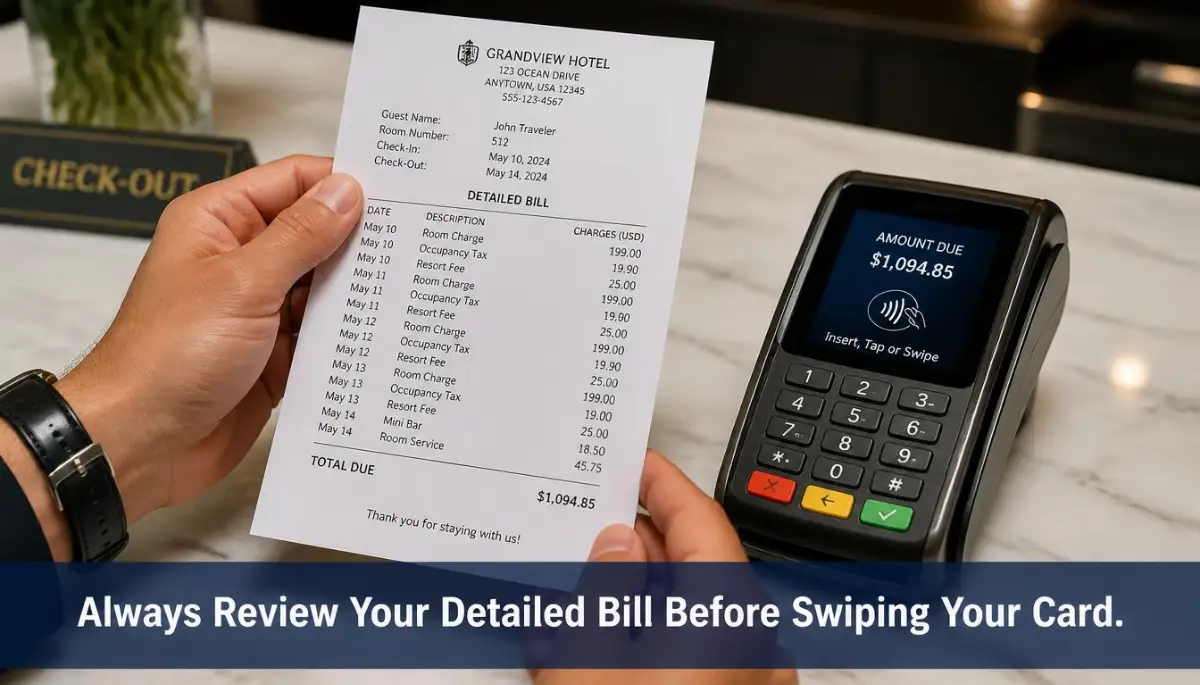
Unmasking the Sneaky Tactics Hotels Use to Hide Extra Charges
To successfully fight back against surprise hotel bills, we need to understand exactly how these charges are hidden. Most lodging companies do not advertise these extra costs upfront because they want their room rates to look as low as possible on search engines.
Quick Wins: How to Beat Resort Fees
- The 7-Day Rule: Always check your email confirmation as soon as you book. Look for "destination fees" in tiny print.
- The Power of 'No': Politely tell the front desk at check-in that you won't be using the pool or gym and ask for a waiver.
- Use Your Points: Most loyalty programs (like Hilton or Hyatt) don't charge resort fees when you book with points.
- Screenshots are King: Take a picture of the checkout page when you book online. If the fee wasn't there, the hotel can't legally charge it later.
Instead, they add these costs during the booking flow or, even worse, wait until you are ready to leave the property. Let us examine the most common types of hidden charges and how they appear on your final invoice.
The Rise of Mandatory Daily Facility and Destination Fees
In the travel industry, these sneaky charges go by many different names depending on where you are staying. You might see them listed as resort fees, facility fees, urban destination charges, or even cleaning surcharges.
Regardless of the name, the goal is always the same: to collect more money without raising the advertised room rate. These fees are usually charged on a per-night basis, which means they can quickly add hundreds of dollars to your total bill over a long stay.
Hotels claim these charges cover the cost of basic amenities like high-speed Wi-Fi, pool towels, fitness center access, and in-room bottled water. However, these are basic services that travelers naturally expect to be included in the standard room price.
Why Online Travel Booking Sites Often Hide the True Cost
When you search for hotel rooms on popular comparison search engines, the initial prices you see almost never include local resort fees. The booking platforms often hide these charges in small, gray text or display them only on the final payment confirmation screen.
This practice is known as drip pricing, where the hotel slowly reveals the true cost of your stay as you click through the booking steps. By the time you reach the final page, you have already spent thirty minutes entering your credit card details.
Many travelers simply click "confirm" because they are too tired to start their search over from scratch. This is exactly what the hotels are hoping you will do.
A Step-by-Step Defense Guide to Fight Surprise Fees Before You Book
The easiest way to avoid hidden resort fees is to identify and address them before you ever check into your hotel room. By taking a few preventative steps during your planning phase, you can protect yourself from stressful checkout arguments.
Inspecting Your Digital Booking Confirmation Like an Auditor
As soon as you receive your initial booking confirmation email, open the attached PDF receipt and review every single line. Do not just look at the large total number at the bottom of the page.
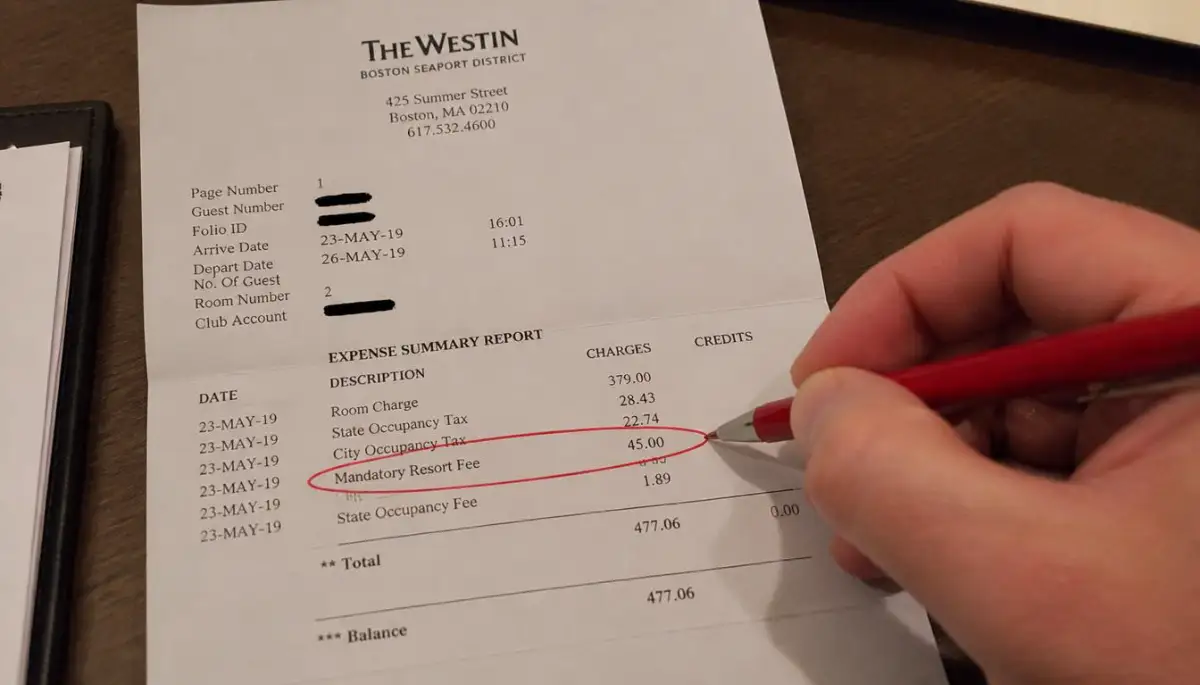
Look for vague terms like service charges, mandatory club fees, or local destination surcharges. If you see any charge that you do not understand, call the hotel directly and ask them to explain it immediately.
If the hotel staff tells you that the fee is mandatory but it was not clearly disclosed during your online booking process, take a screenshot of your original checkout screen. This screenshot will serve as your primary evidence if you need to dispute the charges later.
Declining Resort Amenities to Ask for a Fee Waiver
When you arrive at the front desk to check in, politely tell the receptionist that you do not plan to use any of the resort amenities. Explain that you do not need the pool, the fitness center, the in-room newspaper, or the local shuttle service.
Ask the clerk to remove the daily resort fee from your room account right then and there. While some corporate hotel policies are highly strict, many front desk agents have the administrative power to waive these fees for polite guests.
If they refuse, ask them to note on your file that you formally declined the resort amenities. This note can be highly useful when you speak to the manager at checkout.
Your "No-Fee" Negotiation Script
If the hotel tries to stick you with a mandatory fee, try saying this at the front desk:
"I noticed a $35 daily resort fee on my bill. Since I’m here for work and haven’t used the gym, pool, or Wi-Fi, I’d like to have this removed. I wasn't made aware of this as a mandatory charge when I booked. Can you help me out with that?"
Note: Being calm and smiling usually gets you a "Yes" much faster than getting angry!
My Personal Realization: On my last trip, I made sure to tell the front desk clerk immediately that I was only in town for business and would not touch the pool or gym. By being incredibly polite and explaining my situation clearly, the clerk waived the forty-dollar daily fee without any hesitation. I realized that a friendly, calm conversation is often much more effective than getting angry after the bill has already been printed.
Using State Consumer Protection Laws to Protect Your Wallet
In many regions, consumer protection bureaus have strict laws against misleading pricing practices. For example, some local attorney general offices require hotels to include all mandatory fees in their initially advertised room rates.
If you are staying in a state with strong consumer protection laws, you can politely remind the hotel manager of these rules. Mentioning that you are aware of your consumer rights often encourages the hotel to waive the disputed charges quickly.
Are you ready to see exactly how these consumer defense strategies look in action at a hotel counter? Watch this helpful guide to see how real travelers successfully negotiate and remove surprise fees without causing a scene.

Booking with Hotel Loyalty Points to Bypass Surcharges
Many major hotel loyalty programs have highly generous rules regarding resort fees for their active members. In many cases, if you book your room using your accumulated loyalty points instead of cash, the hotel will automatically waive all daily resort fees.
This is a fantastic way to get the absolute maximum value out of your travel reward points. Even if you do not have a high elite status, simply being a basic member of the hotel's free loyalty program can sometimes give you leverage.
Always check the specific terms of your hotel loyalty program before you make a reservation. It is an easy way to guarantee a truly stress-free check-out experience.
Leveraging Travel Credit Cards with Purchase Protection
If the hotel refuses to remove the hidden charges and you are forced to pay them to leave, do not panic. Make sure you pay the final bill using a premium travel credit card that offers robust consumer purchase protection.
After you leave the property, call your credit card company and open a formal billing dispute for the unauthorized charges. Provide your credit card representative with your original booking screenshot showing that the fees were not clearly disclosed.
Many major banks will quickly side with the consumer and charge the disputed fee back to the hotel. This keeps your hard-earned money safe in your bank account where it belongs.
Documenting Everything in Writing During Your Hotel Stay
If you decide to dispute a resort fee, keep a detailed written record of every conversation you have with the hotel staff. Write down the names of the employees you spoke with, the times of your discussions, and exactly what they told you.
If the room phone or the in-room Wi-Fi does not work during your stay, take a quick photo of the broken equipment as proof. If the gym or pool is closed for maintenance, document this as well.
It is highly difficult for a hotel to justify charging you a mandatory "amenity fee" when you can prove that the amenities themselves were physically unavailable. This documentation is your strongest weapon when fighting surprise charges.
Proactive Tactics Savvy Travelers Use to Beat Hidden Surcharges
Staying ahead of the hospitality industry requires more than just luck. Experienced travelers have developed highly reliable routines to protect themselves from unexpected hotel bills. By adopting these expert habits, you can take control of your travel budget and enjoy your holiday without any financial worry.
Confirming Direct Rates Over the Phone Before Check-in
One of the most effective ways to avoid billing surprises is to call the hotel's physical front desk directly before you pack your bags. Do not call the central reservation number listed on international travel websites.
Instead, search for the local phone number of the specific building you are staying in. Ask to speak with the on-site general manager or front office supervisor to confirm your room rate.
Ask them directly if your booking includes any mandatory daily destination fees, parking costs, or local taxes. Having this short conversation before you arrive shows the hotel staff that you are an organized guest who values transparency.
Leveraging Independent Travel Associations and Government Portals
Many countries are actively trying to make pricing practices more honest in the travel sector. For example, consumer advocacy groups frequently lobby for stricter consumer protection rules on hidden pricing to ensure businesses display their actual costs clearly.
If you are traveling internationally, research the local trade commission or consumer watchdog website of your destination. These public platforms often provide free, helpful templates for disputing illegal surcharges.
Knowing that you have the backing of local consumer laws gives you incredible leverage when negotiating at the front desk. It also keeps greedy hospitality companies from exploiting unsuspecting tourists.
Booking Alternative Accommodations Outside Corporate Networks
If you are tired of dealing with massive hotel chains and their confusing billing schemes, consider changing your travel style. Look for small, family-run guest houses, boutique bed and breakfasts, or local home stays.
These alternative properties rarely charge destination fees, and they often provide a much more authentic local experience. Choosing small, independent properties is also a wonderful way to support eco-friendly guest houses and local home stays while minimizing your environmental footprint.
You will get to enjoy local home-cooked meals and personalized advice from friendly hosts. Best of all, you will receive a clean, straightforward bill at checkout with no sneaky fees.
Checking Your Credit Card Statements Post-Checkout
Your defense against surprise charges does not stop when you walk out of the hotel lobby. Some properties have a bad habit of charging extra cleaning or minibar fees to your card days after you depart.
Set up instant transaction alerts on your mobile banking app so you can see whenever a business bills your card. Check your credit statement carefully three to five days after your trip ends.
If you notice any charge that does not match your signed paper checkout bill, call your bank immediately to stop the payment. This active monitoring habit keeps your travel funds safe from greedy billing departments.

Costly Errors That Leave You Vulnerable to Hidden Hotel Charges
Even the most organized travelers can easily fall into costly traps if they are not paying close attention. Simple oversights during the booking and checkout process can make it incredibly easy for hotels to overcharge you. Let us explore these common errors so you can keep your money safe on your next trip.
Assuming Online Booking Prices are Always Final
A highly frequent mistake is believing that the price you see on an online booking app is the absolute final cost. Many digital booking sites use small, hard-to-read text at the bottom of the page to disclose extra fees.
They might show a cheap room rate of eighty dollars, but hide a forty-dollar daily facility fee in the fine print. If you do not read the terms carefully, you will face an unexpected bill at checkout.
Always check your email receipt for phrases like "not included in the total price." This simple reading habit keeps you from getting caught off guard when it is time to pay.
Failing to Keep Digital Receipts and Chat Logs
When you negotiate a fee waiver with a hotel worker, never rely on a verbal promise. Staff shifts change frequently, and a promise made by a morning clerk might not be written down for the evening shift.
If a front desk agent agrees to remove a resort fee, ask them to send you an updated digital receipt immediately. If you are communicating through the hotel's mobile chat app, take screenshots of the entire conversation.
Having this written proof makes it incredibly easy to resolve any billing disputes later. It is your ultimate shield if the hotel tries to add the charges back to your account.
Engaging in Loud Confrontations at the Front Desk
It is completely natural to feel angry when you discover a surprise charge on your checkout bill. However, raising your voice or getting aggressive with the front desk staff will almost always work against you.
Reception workers are much less likely to help you if they feel threatened or insulted. Instead, practice staying calm and using active listening techniques during tough conversations to keep the interaction respectful.
State your case politely and ask the employee to help you find a reasonable solution. A calm, respectful traveler is always much more successful in getting fees removed.
Ignoring Billing Discrepancies During Hurried Departures
Many travelers make the mistake of rushing through their checkout process because they are running late for a flight. They simply hand over their room keys, tell the desk clerk to charge their card, and walk away.
This hurried departure makes you a very easy target for billing departments that want to slide extra charges onto your invoice. Always give yourself at least fifteen minutes to check your detailed bill before you leave the hotel.
Managing your time carefully is just as important as managing your vacation finances properly during your trip. Never agree to pay for a service or amenity you did not actually use.
Believing that Third-Party Booking Sites Protect Your Wallet
Many tourists think that booking through a massive international travel agency guarantees them the cheapest and most secure rates. While these platforms are great for finding different accommodation options, they rarely take responsibility for local hotel fees.
In their terms of service, they clearly state that local resort and destination fees must be paid directly to the property. If you try to complain to the booking site after your trip, they will simply point to this policy.
Always treat these third-party platforms as research tools, but make your final purchase directly on the hotel's official website. This keeps your booking simple and gives you direct customer service access.
Your Action Plan to Enjoy Honest, Transparent Travel Accommodations
Reclaiming your peace of mind while traveling starts with being an active, informed consumer. By knowing your rights and refusing to accept sneaky surcharges, you help make the travel industry fairer for everyone. Here is your quick, step-by-step checklist to ensure an honest billing experience on your next getaway:
- Review the fine print: Read every single line of your digital receipt before you enter your credit card number.
- Ask questions early: Call the local property directly to ask about mandatory destination surcharges before you check in.
- Get it in writing: Always ask for a printed, detailed invoice showing a zero balance before you walk out of the lobby.
- Maintain your mental health: Staying organized and keeping your budget clear is a great way to avoid recovering from deep stress and exhaustion during your hard-earned vacation.
My Personal Realization: Through my years of traveling to different hotels, I have learned that the key to a stress-free trip is speaking up politely but firmly. When I stand my ground at checkout with clear written proof, hotels almost always remove those sneaky facility charges. I encourage you to use these simple strategies on your next trip and enjoy the honest, transparent travel experience you deserve.
Common Questions About Getting Hotel Resort Fees Removed
Can a hotel legally charge me a resort fee if I did not use the pool or gym?
In many regions, hotels are legally allowed to charge mandatory fees as long as they disclose them somewhere in their booking policies. However, many properties will willingly remove these charges if you explain politely that you did not use the amenities. You can check the latest hotel industry standards to see how major travel brands manage their facility billing rules.
What should I do if the hotel refuses to let me check out without paying the resort fee?
If the front desk manager absolutely refuses to remove the fee and you need to leave to catch a flight, pay the bill with your travel credit card. Make sure the clerk prints out a detailed paper invoice showing the disputed resort fee charge. This printed receipt will serve as your primary evidence when you call your credit card company to dispute the payment and focus on protecting your emergency travel cash from unauthorized charges.
How do I handle resort fees if I need to cancel my booking late?
If you have to cancel your hotel stay at the last minute, you should only be responsible for the standard room cancellation penalty. Hotels are not allowed to charge mandatory daily resort fees for nights you did not actually spend on the property. Knowing these rules is highly helpful when canceling accommodation due to missed connections or delayed flights.
Do boutique bed and breakfasts also charge mandatory facility fees?
Small, independent bed and breakfasts and local guest houses almost never charge mandatory daily resort fees. These properties value clear, honest pricing to build trust with their guests and encourage repeat visits. Choosing these unique local accommodations is an easy way to avoid sneaky corporate surcharges entirely.
Can I avoid resort fees by booking through my corporate employer's account?
Yes, many corporate travel contracts specifically state that employees are exempt from daily resort and destination fees during business trips. If you are traveling for work, make sure your corporate booking code is clearly attached to your reservation profile. Always show your corporate ID to the front desk clerk at check-in to ensure these fees are removed from your final bill.
Transparent Lodging Billing Disclaimer: The billing tips, consumer protection advice, and hotel policy guidelines shared in this article are meant for general educational purposes only. Hotel pricing rules, state consumer protection laws, and credit card dispute policies can change over time depending on your local region and bank. While we make every effort to keep our budget advice accurate, we highly recommend checking the official terms of your booking platform and local laws before checking in.