
My Long Journey from Confusion to a Clear Path
Stop wasting your time on 40-page business plans that end up in the trash. Most people fail because they confuse 'complexity' with 'quality.' I learned the hard way that a single sheet of paper is more powerful than a thick binder. If you want to stop feeling overwhelmed and actually start making money, you need to strip everything back to the basics. Here is how to build a business plan that fits on one page and actually works in the real world.
That long document sat in a folder on my computer. I never opened it again. It was too heavy, too boring, and too hard to follow. I spent weeks making it, and it did nothing for me. My goals were blurry. My daily tasks didn't match my vision. I was tired, stressed, and felt like I was failing before I even really began.
Many people feel this same weight. You might be struggling to start because you think you need a giant book of rules for your business. Maybe you feel stuck because your ideas are all over the place. This confusion kills your focus. It makes you feel like you are running in circles without ever moving forward.
But things changed when I threw that big plan away. I took a single sheet of paper and wrote down only what mattered. Suddenly, I could breathe. I knew exactly what to do next. That is the power of a one-page plan. It's not about being lazy. It's about being sharp.
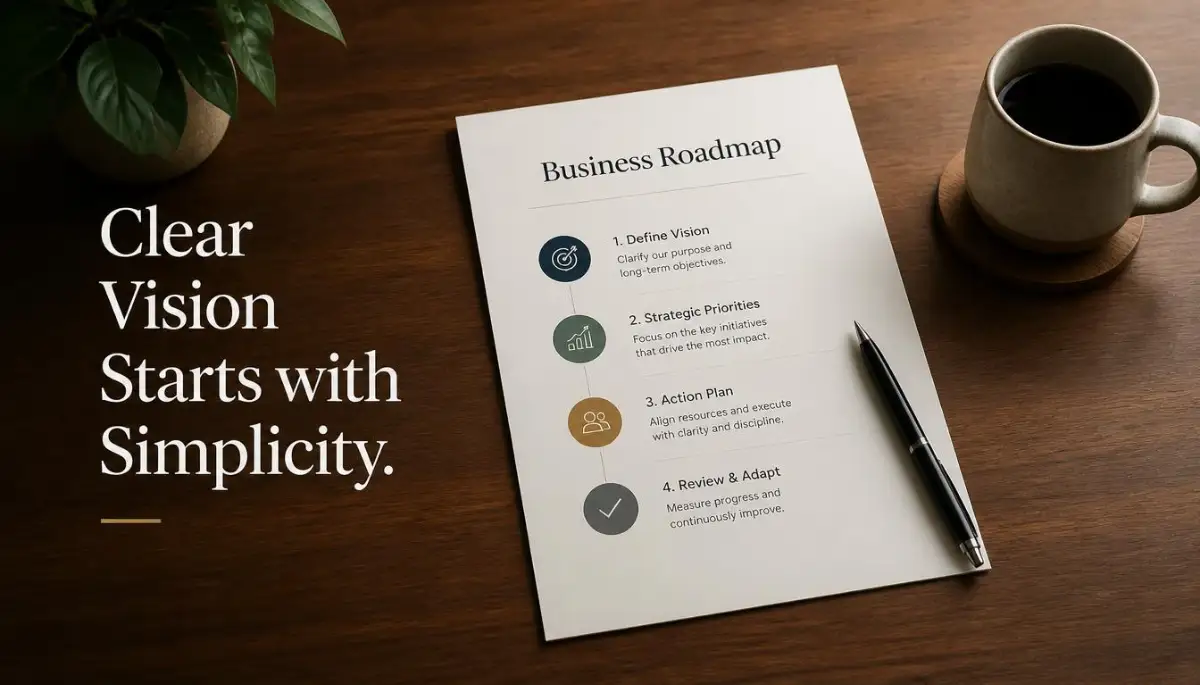
Building Your Foundation with a Simple Vision
To fix the mess in your head, you need to start with the "why." Why are you doing this? If you can't say it in two sentences, it’s too complex. Think of your business like a house. You don't need a thousand blueprints to know where the front door is. You just need to know the basic shape.
### ⚡ Quick Summary: The 1-Page Fast Track
If you are in a hurry, here are the big wins from this guide:
- Kill the Fluff: Real business happens in action, not in 40-page documents.
- The Power of One: Focus on ONE mission, ONE customer type, and TWO marketing channels.
- The 90-Day Rule: Set goals you can hit in 3 months, not 3 years.
- Stay Human: Use simple language. If a kid doesn't get it, your plan is too hard.
Start by writing down your core mission. This is the heart of your plan. Use simple words. Instead of saying "I want to provide high-end digital solutions," say "I want to help small shops sell things online." See the difference? One is fancy but empty. The other is clear and tells a story.
Once your mission is clear, you will feel a weight lift off your shoulders. You won't have to guess what your business is about anymore. You will have a "North Star" to follow. This clarity is the best medicine for the stress of starting something new. It gives you back your time and your peace of mind.
To help you see the difference, look at how a simple plan stacks up against a traditional one:

Knowing Who You Are Actually Helping
The next step is to pick your people. You cannot help everyone. If you try to sell to everyone, you end up selling to no one. This was a big mistake I made early on. I thought everyone was my customer. I spent money on ads that went nowhere. It was like throwing water into the ocean.
In your one-page plan, describe your perfect customer. Give them a name. Imagine what they do for a living. What is their biggest problem? When you know exactly who they are, your work becomes much easier. You stop guessing and start talking directly to them.
For example, if you are a freelance designer, don't just say your customers are "businesses." Say they are "local bakery owners who need a better website." This focus makes your plan strong. It allows you to spend your energy in the right place. You will feel more confident because you know who you are looking for.
Defining Your Unique Solution
Now, look at the problem you are solving. Every great business is just a solution to a problem. Your one-page plan must show this clearly. What is the one thing you do better than anyone else? This is often called your "value proposition," but let's just call it your "special secret."
Your special secret doesn't have to be a new invention. It could just be that you are faster, or kinder, or easier to work with. Write this down in one short paragraph. Make it bold. When someone asks what you do, this is what you tell them.
I realized after months of struggle that I was trying to be too many things to too many people. My realization was that I only needed to be the best at one thing for a small group of people. This changed everything for me. It took the pressure off and let me focus on what I actually liked doing.
This video shows how a simple strategy can change your business growth overnight. Watch it to see the visual steps of making your plan.
Setting Goals That You Can Actually Reach
A plan without goals is just a dream. But huge, scary goals can make you feel paralyzed. In your one-page plan, focus on small wins. Instead of saying "I want to make a million dollars," try saying "I want to get my first five customers this month."
Small goals are like steps on a ladder. Each time you hit one, you feel a boost of energy. This keeps you moving. If the ladder is too tall and has no rungs, you will never get to the top. Break your big vision down into three simple goals for the next ninety days.
Write these goals in a way that you can measure them. Use numbers. Numbers don't lie. They tell you exactly how you are doing. If you hit your number, celebrate! If you don't, you know exactly what to change. This is how you stay in control of your business instead of letting it control you.
Planning Your Money Without the Headache
Many people skip the money part because it feels hard. But you don't need a math degree to plan your business finances. On your one-page plan, you just need two things: how you spend money and how you make money.
List your biggest costs. Maybe it's software, or materials, or advertising. Then, list your price. How many sales do you need to cover those costs? This is your "break-even" point. Knowing this number is very calming. It removes the fear of the unknown.
When you see the numbers on one page, you might realize you need to charge more. Or maybe you see a cost you can cut. This is where you become a real business owner. You are no longer just hoping things work out. You are making them work out.
The Marketing Strategy for Busy People
How will people find you? You don't need a ten-page marketing book. You just need a couple of ways to reach your customers. Pick two places where your customers hang out. It might be Instagram and local networking events. Or maybe it's Google and Pinterest.
Focus only on those two places. Don't try to be everywhere. If you try to be on five social media sites at once, you will get burned out. Your one-page plan should list these two channels and what you will do there every week.
Consistency is more important than being fancy. If you post one helpful thing every day, you will grow. It is better to do a little bit for a long time than to do a lot for just one week. This simple approach keeps your marketing easy and effective.
The 'Napkin Test' for Your Marketing
If you can’t fill these three blanks, your marketing is too complex:
- Who I help: (e.g., Local pet owners)
- Where they hang out: (e.g., Facebook groups)
- What I tell them: (e.g., I offer 24-hour emergency grooming)
- Write these down and ignore everything else for the first 30 days. Don't worry about TikTok trends or expensive ads yet."
Your Daily Action Roadmap
The last part of your one-page plan is the "how." What are the three things you must do every single day to move forward? These are your non-negotiables. Even if the day is crazy, you do these three things.
This part of the plan turns your vision into reality. It stops the "analysis paralysis" that many of us feel. When you wake up, you don't have to think about what to do. You just look at your plan and start. This builds a habit of success.
I found that by picking just three tasks, my productivity went way up. I stopped feeling like I was drowning in a sea of to-do lists. My mind felt clearer, and I finally felt like I was the boss of my own time. This is the ultimate goal of a one-page plan.
The Power of Keeping It Simple
We often think that business has to be hard to be successful. We think we need complex systems and long documents. But the most successful people usually have the simplest plans. They know that clarity is power.
A one-page plan is a living document. You can change it as you grow. If something isn't working, just cross it out and write something new. It’s your plan, and it should work for you, not against you.
When you have everything on one sheet of paper, you can see the big picture. You can see how your marketing connects to your goals. You can see how your daily tasks help your mission. Everything fits together like a puzzle. This gives you a sense of confidence that no forty-page document ever could.
Real-Life Example: The Local Baker
Imagine a woman named Sarah who wants to start a bakery. Instead of a huge plan, she writes a one-page plan.
- Mission: Bake the best sourdough bread in town.
- Customer: Busy parents who care about healthy food.
- Solution: Fresh bread delivered to their door on Saturday mornings.
- Goal: Get 10 weekly subscribers in the first month.
- Marketing: Posting pictures on a local Facebook group.
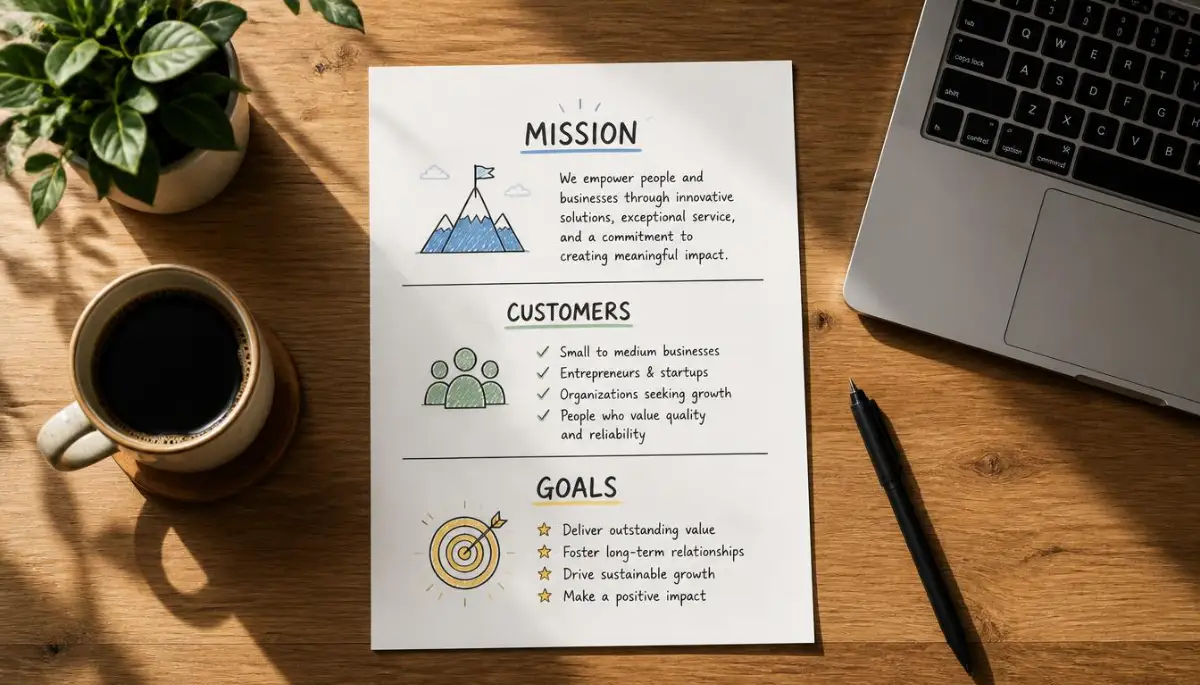
Sarah doesn't need to worry about national shipping or opening a huge cafe yet. Her plan is simple and reachable. She can start today. Because her plan is clear, she doesn't feel overwhelmed. She just bakes, posts, and grows. That is the magic of simplicity.
Avoiding the Trap of Over-Thinking
Over-thinking is the enemy of progress. We spend so much time planning for things that might never happen. We worry about taxes we haven't made enough money to pay yet. We worry about employees we haven't hired.
Your one-page plan keeps you in the present. It forces you to focus on what matters now. This reduces anxiety. It lets you enjoy the process of building your business. Remember, you started this because you had a dream. Don't let a complicated plan turn that dream into a nightmare.
Keep your language simple. Don't use big words to sound smart. Use words that make sense to you and your customers. If a ten-year-old can't understand your plan, it might still be too complex. Aim for total clarity.
How to Use Your One-Page Plan Daily
Once you have your plan, don't hide it. Tape it to your wall. Put it next to your computer. Look at it every morning before you check your email. This keeps your vision fresh in your mind.
When someone asks you for a favor or a new project, check it against your plan. Does it help your mission? Does it reach your target customer? If not, say no. Your plan gives you the permission to say no to things that waste your time.
This focus is how businesses grow fast. They don't do everything. They do a few things very, very well. Your one-page plan is the tool that helps you stay on that narrow path to success.
Why You Should Start Your Draft Today
Don't wait for the "perfect" time to start. There is no perfect time. Grab a piece of paper right now. Draw a few boxes for Mission, Customers, Goals, and Actions. Start writing. It doesn't have to be pretty. It just has to be real.
The act of writing it down changes your brain. It makes the idea feel more real. It moves the project from your head to the physical world. This is the first real step of your journey. You are no longer just thinking about a business. You are drafting one.
You will feel a surge of motivation as soon as you finish. You will see that your dream is actually possible. It’s not a giant mountain. It’s just a series of small steps. And you have the map right there on one page.
The Mental Shift Towards Success
Success starts with how you think. If you think things are hard, they will be. If you believe you can make a simple plan and follow it, you will. A one-page plan is a tool for a positive mindset. It proves that you are in control.
I used to think I needed to be a genius to run a business. I thought I needed to know everything. But I learned that I just needed to be clear. Clarity beats genius every single day. A clear plan allows you to take action, and action is what creates results.
Stop looking at what everyone else is doing. Their journey is not yours. Their big plans don't mean they are more successful. Focus on your one page. Focus on your goals. This is your path, and it is a good one.
Wrapping Up the First Steps
Drafting your one-page plan is the best gift you can give your business. It saves you time. It saves you money. Most importantly, it saves your sanity. You deserve to work on your dream without feeling like you are drowning.
Take these steps seriously. Put your heart into that one page. It will become your most valuable tool. As you move forward, you will look back at this moment as the time when everything finally started to make sense.
Keep it simple. Keep it clear. Keep it moving. Your vision is worth the effort, and a one-page plan is the fastest way to get there. Now, let’s look at how to refine this plan as you get more data from the real world. Success is waiting for those who are brave enough to keep things simple.
Taking Your Simple Plan to the Next Level
Once you have your basic one-page plan ready, you might wonder what comes next. It is one thing to write a plan, but it is another thing to make it work in the real world. I found that the best way to keep my plan alive was to treat it like a living thing. It should grow and change as you learn more about your business.
One pro tip I always share is to focus on "Feedback Loops." This means you should talk to your customers as often as possible. Ask them what they like about your service and what they hate. Use this information to tweak your one-page plan every month. If you listen well, your customers will tell you exactly how to succeed. For those who want to get better at this, practicing active listening hacks can help you understand your clients much more deeply.
Another expert secret is to use your plan as a filter for new ideas. Entrepreneurs always have "shiny object syndrome." We see a new social media trend or a new tool and want to try it right away. When this happens, look at your one-page plan. Does this new idea help you reach your specific ninety-day goals? If it doesn't, put it in a "later" folder. This keeps you from wasting time on things that don't matter.
You also need to be very smart about how you handle your money during this stage. Many self-employed people struggle because their income goes up and down like a roller coaster. I learned that having a clear financial section on my one-pager saved me from many sleepless nights. If you are struggling with this, looking into smart budgeting methods can provide a solid safety net for your business journey.
Building Long-Term Success with Data
To stay ahead, you need to look at the numbers. But don't look at fifty different numbers. Pick three "Key Results" that tell you if you are winning. For a small shop, this might be the number of new visitors, the average sale price, and how many people come back a second time.
Write these three numbers at the bottom of your plan. Check them every Friday. I used to be afraid of my own numbers because I thought they would show I was failing. But the truth is, numbers are just information. They are not a grade on your worth as a person. They just show you where to turn the steering wheel.
A great way to stay organized is to use simple tools that don't clutter your space. You don't need expensive software. A simple spreadsheet or even a physical notebook works great. The goal is to keep everything as light as possible so you can move fast. According to research from the U.S. Small Business Administration, businesses that track their progress are much more likely to survive the first five years.
The Art of Scaling Without the Stress
When your business starts to grow, you might feel the urge to make your plan longer again. Resist that urge! Even if you hire five people, everyone should still be able to understand the business on one page. This is how you keep your team aligned.
If your team knows exactly who the customer is and what the main goal is, they won't have to ask you questions every five minutes. They can make decisions on their own. This gives you your freedom back. I realized that my business only truly started to grow when I stepped back and let my simple plan lead the way.
As you grow, you might also find that you need to change your website or move to a better platform. This can be scary, but if you have a clear roadmap, it becomes much easier. For example, if you need to move WordPress to a new host, having a simple step-by-step guide makes the process stress-free. Your one-page plan helps you keep your eyes on the goal while you handle these technical changes.

Dangerous Traps That Can Sink Your Business
Even with a one-page plan, it is very easy to fall into certain traps. The biggest mistake I see people make is the "Perfection Trap." They spend months trying to make their one-page plan look perfect. They change the font, they move the boxes around, and they worry about every single word.
This is just another form of hiding. While you are making your plan "perfect," you are not selling. You are not helping people. A messy plan that is actually being used is a thousand times better than a perfect plan sitting in a drawer. Don't let the fear of being wrong stop you from starting.
Another huge mistake is ignoring your health while building your dream. I have seen so many bright entrepreneurs burn out because they thought they had to work twenty hours a day. They forget to eat, they stop moving, and they sit at a desk for way too long. This has real physical costs. You should learn about how sitting for long hours affects your body to make sure you stay healthy enough to enjoy your success.
The Danger of Plan Rigidity
If you notice that your customers aren't buying what you thought they would, change the plan! I once spent six months trying to sell a service that nobody wanted. I was so attached to my original plan that I refused to see the truth. When I finally changed that one line on my paper, my sales tripled in a week.
Also, be careful about who you listen to. Everyone will have an opinion on your business. Your uncle, your friends, and even strangers on the internet will tell you what to do. If their advice doesn't fit your core mission on your one-page plan, thank them and move on. Keeping your vision clear is your most important job.
Avoiding the Complexity Creep
Complexity is like a weed. It starts small and then takes over your whole garden. One day you have a simple plan, and the next day you have five different products, ten social media channels, and a massive to-do list. This complexity will kill your joy and your profit.
Every time you want to add something new, ask yourself: "Can I fit this on my one page without making the text smaller?" If the answer is no, you probably shouldn't do it. Or, you need to remove something else to make room. This keeps your business lean and mean.
I learned this the hard way when I tried to launch three different projects at once. I ended up doing a bad job on all of them. I felt like a failure and almost quit. It was only when I went back to one single focus that things started to work again. If you feel this way, you might be dealing with college burnout or professional exhaustion. Taking a step back is often the best way to move forward.
How to Maintain Your Focus Over Time
The real secret to success is not a genius idea. It is showing up and doing the work every day. But doing the work is hard when you are tired or bored. Your one-page plan is there to remind you why you started.
Whenever I feel like giving up, I read my mission statement. I look at the names of the people I am trying to help. This gives me a fresh burst of energy. It turns the "work" back into a "mission." This mental shift is what separates people who finish from people who just start.
You can also use your plan to celebrate how far you have come. Once a year, look at your very first one-page plan. You will probably laugh at how much you didn't know back then. Seeing your growth is a great way to stay motivated. It proves that you are capable of learning and winning.
Creating a Support System Around Your Plan
You don't have to do this alone. Show your one-page plan to a mentor or a business friend. Ask them to poke holes in it. A fresh set of eyes can often see things you missed. This is how you make your plan even stronger.
Make sure the people close to you understand your plan too. If your family knows your ninety-day goals, they can support you when you have to work late or when you are stressed. Clear communication at home is just as important as clear communication in the office.
If you ever find yourself in a tough spot, like needing an emergency loan, having a clear plan will help you make better financial choices. You won't act out of panic because you have a roadmap to follow. This level of clarity protects you in every area of your life.
Final Checklist for Your One-Page Journey
Before you put your pen down, let’s go through a quick checklist. This will ensure your plan is ready for the real world.
- Is your mission written in simple, plain English?
- Do you have a specific name for your perfect customer?
- Are your three ninety-day goals measurable with numbers?
- Can you explain your plan to a friend in less than two minutes?
If you can say yes to all of these, you are ahead of 90% of business owners. You have done the hard work of thinking so that the work of doing becomes easy. This is the foundation of a successful life.
Remember that this plan is for you. It’s not for a bank or a teacher. It’s your personal guide to the life you want to build. Treat it with respect, but don't be afraid to get it messy. The best plans are the ones that have coffee stains and pencil marks all over them.
Taking the Leap Toward Your Future
Building a business is one of the most exciting things you can do. It is a chance to solve problems, help people, and create freedom for yourself. By choosing a one-page plan, you are choosing a path of clarity and action. You are saying no to confusion and yes to your dreams.
I know it can feel scary to put your ideas on paper. It makes the dream feel real, and real things can fail. But real things can also succeed beyond your wildest imagination. You have the tools, you have the steps, and now you have the plan.
There is a great sense of peace that comes from knowing exactly where you are going. You won't wake up wondering what to do anymore. You will wake up with a purpose. That feeling is worth more than any fancy office or expensive car. It is the feeling of being the master of your own destiny.
Answers to Common Questions About Simple Business Plans
How often should I update my one-page plan?
I recommend doing a quick check every month and a deep update every three months. Your ninety-day goals will likely change, and your plan should reflect that. However, your core mission should stay mostly the same.
Can a one-page plan really help me get a loan?
While banks often want a longer document, your one-page plan is the best way to prepare for that meeting. It helps you answer their questions quickly and confidently. You can always use it as an executive summary for a larger file.
What if I have two different business ideas?
Write two different one-page plans! This will help you see which idea is more solid and which one you are more excited about. Usually, once you see them on paper, one will clearly stand out as the winner.
Is a one-page plan enough for a big company?
Many million-dollar companies use a version of a one-page plan called an "EOS" or a "V/TO." It keeps everyone focused on the same big goals. Even if you grow huge, keeping the core simple is the key to staying fast.
Your New Beginning Starts Right Now
I truly believe that simplicity is the ultimate form of sophistication. By cutting away the noise and focusing on what matters, you are setting yourself up for a win. I have used this method for years, and it has never let me down. It turned my scattered thoughts into a real, profitable business that I love.
I want you to feel that same sense of power and clarity. Don't let another day go by just dreaming. Grab that sheet of paper and start drafting your vision today. I know you can do this, and I can't wait to see what you build with your clear and focused plan.
Disclaimer: This article is for informational purposes only. It does not constitute professional legal, financial, or business advice. Always consult with a qualified professional before making major business or financial decisions.