
My Late-Night Accounting Nightmare with Gift Cards
Selling gift cards feels like hitting a jackpot until you realize that money isn't actually yours yet. If you've been looking at your bank balance and calling it "profit," you might be heading for a tax disaster. I’ve seen way too many restaurant owners get buried under messy books just because they didn't know how to track reloads. Let's fix that right now and get your accounting back on track.
I had just started my restaurant’s gift card program. People loved it, and the cash was coming in fast.
But then, my accountant asked me a simple question. "How much of this money is actually yours to spend today?"
I froze because I didn't have a clear answer. I thought all the money in my bank account was profit.
I was wrong, and that mistake almost cost me a lot of money in taxes. It was a scary and lonely feeling to realize my books were a total mess.
The Hidden Stress of Managing Food Card Money
Many restaurant owners feel this same weight on their shoulders every day. You see the money from gift card sales hitting your account, and it feels great.
But in the back of your mind, you know something is off. You worry about what happens when people actually come in to eat.
Before We Start: The Golden Rules of Gift Cards
If you only have a minute, here is what you need to know about your card money:
- It’s a Loan: Treat every gift card sale as a short-term loan from your customer.
- Track the Swipes: Profit only happens when the card is swiped, not when it’s sold.
- Watch the Laws: Unspent money (breakage) might legally belong to the state, not you.
- Use Tools: Don't use a pen and paper; a good POS system is your best defense against an audit.
You wonder how to report this to the tax office without getting in trouble. It feels like you are holding onto money that isn't yours yet.
You just want a simple way to know your true numbers. You want to feel confident when you look at your financial reports.

Why We Can't Call Gift Card Sales "Income" Right Away
When someone buys a reloadable gift card, they are giving you a loan. You haven't served them food yet, so you haven't earned that money.
This is the biggest hurdle for most food card businesses. We want to celebrate the sale, but the work hasn't started.
Think of it like a promise. The customer gives you $50, and you promise to give them a meal later.
Until they show up and hand you that card, that $50 is a liability. It is a debt you owe to the customer.
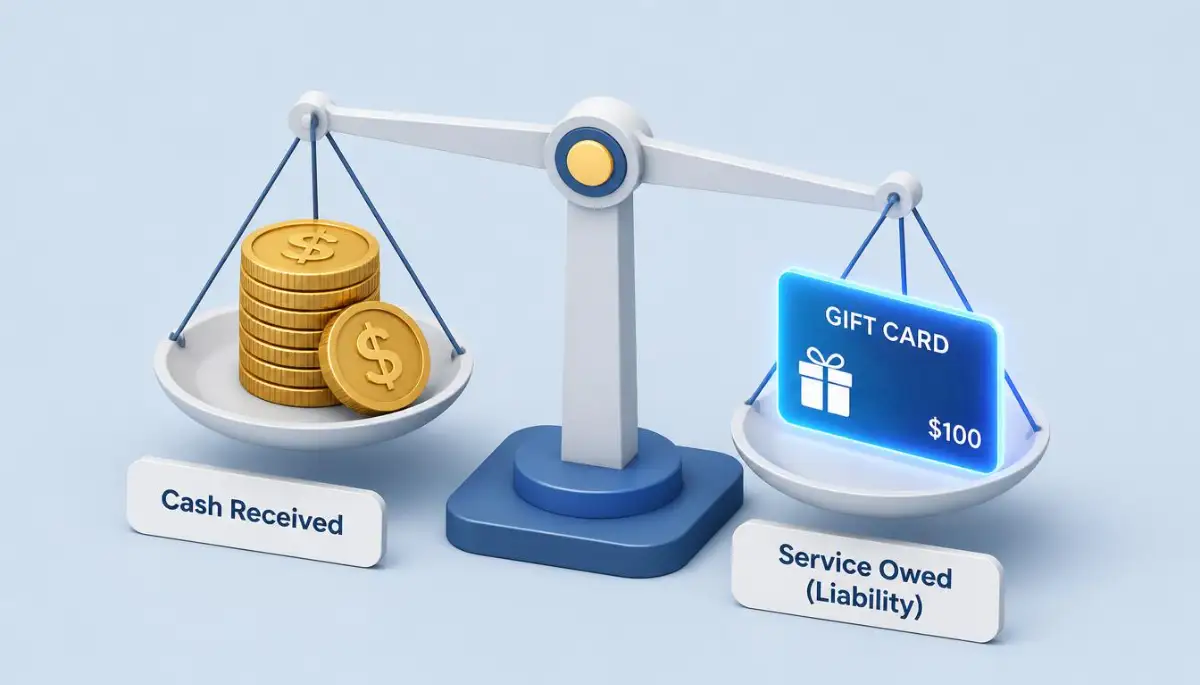
Recording this correctly is what we call deferred revenue. It means you are putting the "earning" part on hold.
Understanding the Core Rule of Revenue Recognition
There is a big rule in the accounting world often called ASC 606. It sounds boring, but it is actually your best friend.
This rule says you only recognize revenue when you "satisfy a performance obligation." In simple terms, this means when you give the customer their food.
For reloadable cards, this happens in small chunks. Every time they buy a coffee or a sandwich, a little bit of that debt goes away.
That is the moment that specific portion of money becomes real revenue. It moves from your "debt" list to your "income" list.
Quick Look: Is it Revenue or Liability?
Doing this keeps your books clean and honest. It shows the true health of your restaurant.
The Five Simple Steps to Tracking Your Card Sales
Let’s break this down into a path you can follow. It doesn't have to be hard if you take it one step at a time.
Step 1: Identify the Agreement with Your Customer
Every time a customer gets a reloadable card, you have a contract. They agree to pay, and you agree to provide food or drinks.
You need to be clear about the terms. Does the card expire? Can it be used at all locations?
Step 2: Note the Transaction Price
This part is easy. It is the amount of money the customer puts on the card.
If they load $100, that is your price. You must track every single dollar that goes onto that card.
Step 3: Separate the Obligations
Sometimes, you might give a "bonus" for a reload. For example, "Load $50, get $5 free."
Now you have two obligations. One is for the $50 they paid, and one is for the $5 bonus.
Step 4: Allocate the Price
You have to decide how much each part of the deal is worth. This helps you track things when they start spending.
Step 5: Recognize Revenue as They Eat
This is the final goal. As the customer swipes their card, you record that exact amount as income.
Pro Tip: I used to try and track all of this on a piece of paper. It was a disaster. I realized that using a smart POS system is the only way to stay sane. It does the heavy lifting for you so you can focus on cooking.
How to Handle the Money People Never Spend
What happens to the money on cards that are lost or forgotten? This is called breakage.
Believe it or not, millions of dollars stay on gift cards every year. You can't just keep this money and hide it.
There are rules about when you can claim this as income. Usually, you look at your past data.
If you know that 5% of cards are never used, you can slowly recognize that 5% over time.
But you must be careful. You need to prove that it is "highly probable" the money won't be spent.
Watch this helpful video to see how modern systems track this automatically!
If you want to see a real-life example of how this looks on a screen, check out this great breakdown.
Dealing with State Laws and Unclaimed Property
One thing that surprised me was "escheatment" laws. This is a fancy word for giving money to the government.
In some places, if a card isn't used for years, you have to send that money to the state. They hold it in case the customer ever shows up.
Each state has different rules for food card businesses. You need to check the laws where you live.
My Personal "Red Flag" Checklist
Before you close your books this month, ask yourself these three things:
- Did I separate my "cash in hand" from my "earned income"?
- Does my POS report match what the bank says for gift card reloads?
- Am I holding onto old card money that legally belongs to the state?
- If you can't answer "Yes" to all three, it’s time to double-check your tracking system.
This is why having a clear record of every reloadable card is so important. You don't want the government knocking on your door asking for old gift card money.
Staying organized now saves you from a massive headache later. It keeps your business safe and legal.
The Power of Using a Digital Tracking System
Trying to do this manually is like trying to empty the ocean with a spoon. You need the right tools.
A good system will track every reload and every swipe. It will tell you exactly how much "unearned revenue" you have.
This makes tax season so much easier. You can just print a report and give it to your accountant.
It also helps you see how much cash you really have to grow. You won't accidentally spend money that you still "owe" in food.
When you have clear data, you feel in control. That control is what allows you to scale your restaurant.
Why Reloadable Cards Are Different from One-Time Cards
Reloadable cards are a bit trickier than regular gift cards. People keep adding money to them over months or years.
This means the "performance obligation" never really ends. It is a continuous relationship.
You have to track the "old" money and the "new" money together. It’s like a revolving door of revenue.
But this is also a huge opportunity. People with reloadable cards usually visit 30% more often.
By mastering the accounting, you can embrace this growth without any fear. You get the benefit of loyal customers and clean books.
Keeping Your Records Audit-Ready at All Times
An audit sounds like a scary word, but it doesn't have to be. If you follow these principles, you are always ready.
Keep a log of every card issued and every reload made. Keep your receipts organized.
Make sure your POS system matches your bank statements. Small gaps can turn into big problems later.
When you show that you understand revenue recognition, people trust your business more. It shows you are a professional.
It gives you the peace of mind to focus on what you love—serving great food to your community.
Final Thoughts on Staying Consistent
Accounting isn't something you do once a year. It is a small habit you practice every day.
Every time a card is swiped, a small piece of your business moves forward. Understanding these rules makes that movement smooth.
Don't let the big words scare you. At the end of the day, it's just about being honest with your numbers.
You've worked hard to build your restaurant. Protecting it with good accounting is the best gift you can give yourself.
Take it one step at a time, and soon, you'll be an expert in your own right.
Maximizing Your Gift Card Strategy with Professional Insight
Once you have the basics down, it is time to look at the bigger picture. Managing a reloadable card program is not just about keeping the tax man happy. It is about understanding the pulse of your business. When I first started, I thought the numbers were just for the end of the year. I quickly learned that checking my unearned revenue weekly gave me a massive advantage. It allowed me to see how much "future work" I had already been paid for.
One of the best moves you can make is to link your gift card data with your inventory management. If you see a huge spike in card reloads, you can expect a busy month ahead. This helps you order the right amount of supplies and schedule the right amount of staff. You are no longer guessing what next week will look like. You are using real financial data to drive your decisions. This is the difference between a small shop and a growing brand.
You should also think about the "velocity" of your gift cards. This is how fast people spend the money after they load it. In my experience, reloadable cards have a much higher velocity than one-time cards. People treat them like a digital wallet for their favorite food. If you notice the velocity slowing down, it might be time to run a small "visit-based" promotion. Tracking this simple number helps you keep your cash flow moving in the right direction.
The Hidden Power of Using Data for Growth
When you have a solid handle on your revenue recognition, you can start doing some smart budgeting for self-employed pros within your own business. You will know exactly how much of that cash in the bank is actually yours to reinvest. I used to feel guilty spending money on new kitchen equipment. I wasn't sure if that money was technically "owed" to customers who hadn't eaten yet. Once my accounting was clear, that guilt disappeared.
I realized I could set aside a specific percentage of "recognized revenue" for repairs and upgrades. This keeps the business fresh without dipping into the liability pool. It also makes your business much more attractive if you ever decide to sell it. A buyer wants to see that you know your numbers inside and out. They want to see a clean trail from the moment a card is swiped to the moment the meal is served.
Another expert secret is to look at the "Reload Frequency" per customer. If a customer reloads their card three times in a month, they are a VIP. You can use your revenue data to identify these people and offer them a small "thank you." Maybe it is a free dessert or a reserved table. This doesn't cost much, but it makes that customer feel like a million bucks. And because your accounting is tight, you know exactly what that "freebie" does to your bottom line.
A Quick Reality Check: The $100 Rule
Let's keep it simple. If a customer loads $100 onto a card:
- Day 1: You have
100incash,but∗∗
100incash,but∗∗
- 0** in profit. You owe $100 worth of food.
- Day 15: They spend
40onlunch.Now,youcanfinallymove∗∗
40onlunch.Now,youcanfinallymove∗∗
- 40** into your "Income" folder.
- Result: Your books show you still owe $60 in service. Keeping this clear prevents you from overspending your actual earnings.
Building a Long-Term Financial Fortress
To stay successful for years, you need a system that grows with you. I recommend doing a deep dive into your "breakage" patterns every six months. Breakage is that unspent money we talked about earlier. By looking at historical data, you can start to predict how much of your liability will never be claimed. This allows you to safely recognize a small portion of that money as pure profit.
According to financial experts at the AICPA, having a consistent method for this is better than just guessing. It builds a "fortress" around your finances. You won't be caught off guard by a sudden change in state laws or tax rules. You are building a business that is built on facts, not hope. This level of detail is what separates the pros from the amateurs in the food card industry.
I also suggest keeping a "buffer fund" that is separate from your gift card liability. This fund is for those unexpected moments, like when you need to move your website to a new host or fix a broken oven. By separating your "operating cash" from your "gift card cash," you protect yourself from spending money you don't truly own yet. It is a simple habit that provides a massive amount of security.

The Costly Errors That Can Sink Your Business
Let’s talk about the things that can go wrong if you aren't careful. I’ve seen owners treat their gift card account like a personal piggy bank. This is a recipe for disaster. When you spend that money before the food is served, you are essentially stealing from your future self. When those customers finally come in to eat, you will have to pay for the food and labor out of pocket. If too many people come in at once, you might run out of cash to keep the lights on.
It is a terrifying feeling to realize you owe thousands of dollars in meals but have zero dollars in the bank to buy the ingredients. This is why proper revenue recognition is about survival, not just math. Another mistake is ignoring the "small print" in your state's laws. Some states are very strict about how long you can hold onto unspent card balances. If you don't report this correctly, the penalties can be huge. You might end up in a legal battle that drains your savings and your spirit.
I also see many owners failing to train their staff on how to handle reloads. If a staff member makes a mistake on the POS system, your entire revenue report will be wrong. One small typo can lead to hours of searching through records later. It can be incredibly frustrating to spend your weekend fixing a clerical error instead of relaxing. These small mistakes pile up over time until they become a mountain of stress that you can't ignore.
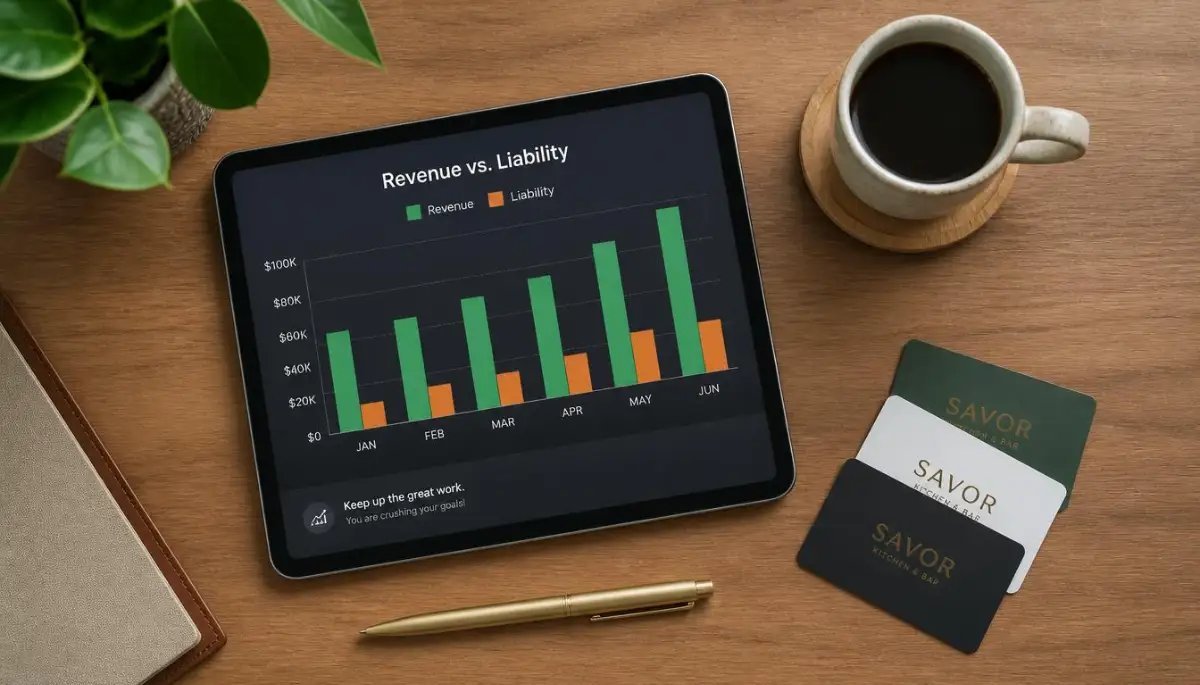
The Emotional Toll of Messy Books
The real damage of poor accounting isn't just financial; it's emotional. I remember feeling a constant sense of dread whenever I looked at my bank balance. I knew the number looked high, but I didn't feel rich. I felt like I was hiding a secret from myself. That kind of stress bleeds into your personal life. It makes you short-tempered with your family and exhausted at work.
You might even start to resent your customers when they use their gift cards. Instead of seeing a happy diner, you see a "cost" because you already spent their money months ago. That is a toxic way to run a restaurant. You want to welcome every guest with a smile, regardless of how they pay. When your books are clean, you can do that because you know the money was handled the right way.
Avoid the trap of thinking "I'll fix it next month." Next month never comes, and the pile of cards only gets bigger. Start today by looking at your current gift card liability. If you don't know what that number is, that is your first red flag. Facing the truth might be scary at first, but it is the only way to find true peace of mind. It is better to deal with a small problem today than a giant crisis tomorrow.
Your Path to a Successful and Stress-Free Future
Taking control of your reloadable gift card program is a journey. It starts with a simple change in how you view the money coming in. Every dollar on a card is a promise you intend to keep. When you treat those promises with respect, your business thrives. You build a reputation for being honest and reliable. This attracts more customers and better employees.
You will find that as your accounting gets better, your stress levels go down. You will have the confidence to make big moves. Maybe you want to open a second location or hire a famous chef. Those dreams are much easier to reach when your financial foundation is solid. You won't be held back by the fear of "missing money" or tax audits. You will be free to lead and innovate.
I want you to remember that you aren't alone in this. Every successful restaurant owner has had to learn these rules at some point. It is a badge of honor to master the "boring" side of the business. It shows that you are a true professional who cares about longevity. Your gift card program can be your greatest tool for growth if you manage it with care and precision.
I really believe that once you get this right, you will feel like a weight has been lifted off your chest. I’ve been there, and I know how much better it feels to have clear numbers. Don't wait for things to get complicated before you act. Take that first step today, check your system, and start tracking your revenue the right way. You’ve worked too hard for your success to let a few gift cards get in the way of your peace!
Common Questions About Gift Card Revenue
Can I recognize revenue as soon as I sell a gift card?
No, you generally cannot do this because the "performance obligation" hasn't been met yet. The money must be recorded as deferred revenue (a liability) until the customer actually redeems the card for a meal. This follows the standard accounting rules like those found in the FASB guidelines.
What happens to the money if a reloadable card is never used?
This is known as "breakage." You can eventually recognize this as revenue, but only when it becomes highly likely that the card will not be used. You must also check your local state laws regarding "unclaimed property" to see if you are required to hand that money over to the government after a certain period of time.
Is a reloadable card different from a standard gift card for taxes?
The core principles are the same, but the tracking is more complex. Because money can be added multiple times, you need a system that can track the age of each "reload" to properly manage breakage and state law compliance. It is similar to understanding home equity in that it’s about tracking value over a long period of time.
Do I need special software to track these cards?
While you could use a spreadsheet, it is highly discouraged for reloadable cards. A modern Point of Sale (POS) system will automate the tracking of liabilities and redemptions. This is much safer and saves you from the hidden costs of manual errors.
How does this affect my cash flow versus my profit?
Selling a gift card improves your cash flow immediately because you have the cash in hand. However, it does not increase your profit until the card is spent. If you spend the cash without recognizing the future cost of the food, you could face a major cash shortage later on.
Disclaimer: This article is for informational purposes only and does not constitute professional accounting, legal, or financial advice. Revenue recognition rules can vary significantly based on your specific location and business structure. Always consult with a certified public accountant (CPA) or a qualified tax professional before making changes to your financial reporting or gift card policies. The author and publisher are not responsible for any financial losses or legal issues arising from the use of this information.