
My Quiet Battle With the Weight of the World
I remember sitting in my car for twenty minutes before walking into my office. My hands were shaking slightly as I gripped the steering wheel. It wasn't because I had a big presentation or a scary meeting. I was just tired—a kind of tired that sleep couldn't fix.
My brain felt like it was stuck in thick mud. I used to love my work, but suddenly, every email felt like a personal attack. I was snapping at my friends and ignoring my family’s phone calls. I thought I was just having a "bad week," but that week turned into months.
I didn't realize that my body was screaming for help. I was hitting a wall, and I was hitting it hard. My morning coffee didn't give me energy anymore; it just made my heart race. I felt like a shell of the person I used to be.
If you feel this way right now, please know that you are not alone. I have been exactly where you are, staring at a computer screen and wishing I could disappear. It is a heavy, dark place to be. But I also want you to know that there is a way back to the light.
The Hidden Weight We Carry Every Day
Many people think burnout is just about working too many hours. But it is much deeper than that. It is the feeling that no matter how much you do, it is never enough. It is the weight of expectations that stay on your shoulders even when you go to bed.
When we ignore our mental health, our whole life starts to crumble. You might find yourself getting angry over small things, like a slow internet connection or a loud neighbor. Your patience disappears, and your joy goes right along with it.
This constant stress ruins your sleep, your digestion, and even your heart health. It is like driving a car with the "engine check" light on for a thousand miles. Eventually, the car is going to stop moving. Your mind and body work the same way.
We live in a culture that rewards being "busy" all the time. We wear our exhaustion like a badge of honor. But there is no trophy for being the most stressed person in the room. Real success is having the energy to enjoy your life after the work is done.
What Does Burnout Actually Feel Like?
Is it just being tired, or is it something more? Burnout often starts very slowly. It is like a tiny leak in a boat. At first, you don't notice it, but eventually, you are standing in deep water.
One of the first signs I noticed was "mental fog." I would read the same sentence four times and still not understand it. My brain simply refused to process any more information. I felt like I was running out of "mental battery" by 10 AM.
Another sign is feeling disconnected from the people around you. You might stop caring about your work results. You do the bare minimum just to get through the day. This "numbness" is a defense mechanism your brain uses to protect itself from more stress.
You might also feel physical pain that has no clear cause. Frequent headaches, back pain, or a tight chest are very common. Your body is trying to tell you what your mind is trying to ignore. It is saying, "I can't keep doing this anymore."
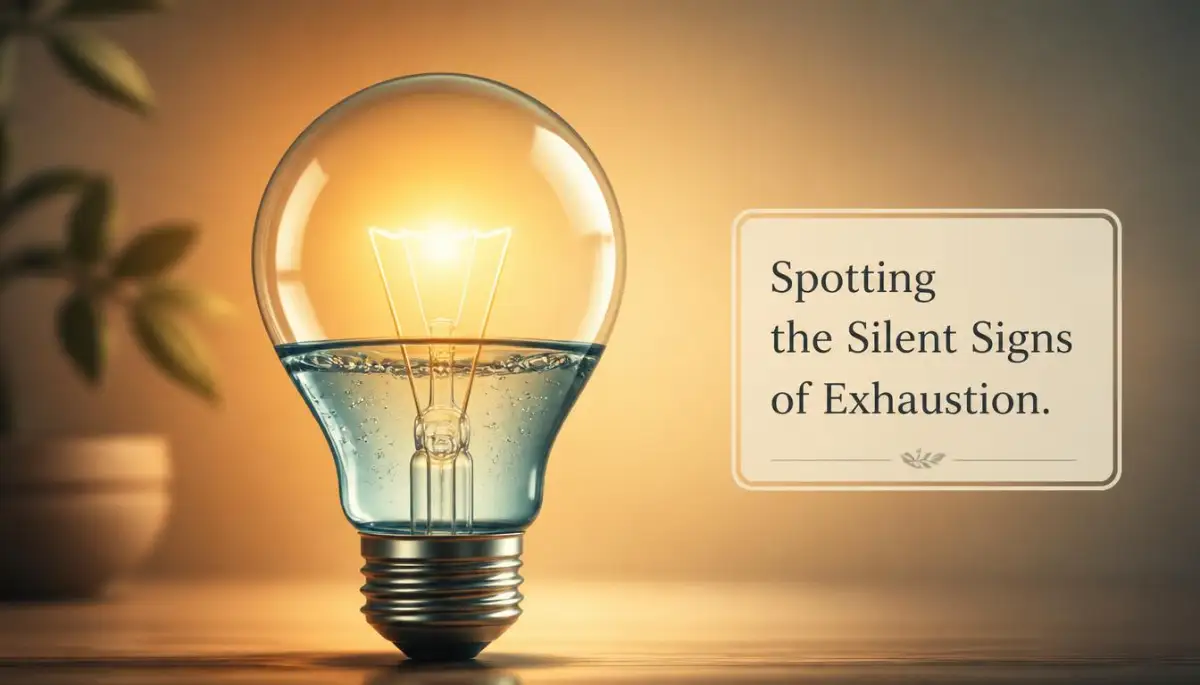
Recognizing the Red Flags Before the Crash
We need to talk about the specific signs that mean you are near the edge. Most people wait until they have a total breakdown to make a change. But you can catch it much earlier if you know what to look for.
Physical Exhaustion That Won't Go Away
Do you wake up feeling like you haven't slept at all? Even after a full weekend of resting, you still feel heavy and slow. This is a major sign that your nervous system is overworked. Your body has forgotten how to truly relax.
A Growing Sense of Cynicism
Do you find yourself making sarcastic comments about your boss or your clients more often? When we are burned out, we lose our empathy. We start to see people as "tasks" instead of humans. This is a very lonely way to live.
A Drop in Your Work Quality
Tasks that used to take ten minutes now take an hour. You find it hard to focus on one thing at a time. You might start making small, silly mistakes that you never made before. This isn't because you are bad at your job; it is because your brain is exhausted.
Changes in Your Eating or Sleeping Habits
Some people start eating way too much comfort food to cope. Others lose their appetite completely. You might find it easy to fall asleep but wake up at 3 AM with your mind racing. These are all signs that your stress hormones are out of balance.
I once thought that if I just worked harder, the stress would go away. I was so wrong. My big realization was that you cannot pour from an empty cup. I had to learn to put my own health first, or I wouldn't have a career left to worry about.
Creating a Science-Backed Plan for Recovery
To fix this, we have to do more than just take a vacation. A one-week holiday won't fix a one-year problem. We need to change how we interact with our work and our own minds.
Setting Hard Boundaries for Your Digital Life
Your brain needs a "cooling off" period every single day. If you check work emails right before bed, your brain stays in "work mode" all night. Pick a time, like 7 PM, when you turn off all work-related notifications. This gives your mind a chance to reset.
The Power of Small, Daily "Micro-Breaks"
You don't need an hour of meditation to see results. Taking five minutes to just breathe and look out a window can lower your heart rate. Try the "5-4-3-2-1" grounding technique. Name 5 things you see, 4 things you can touch, and so on. It pulls you out of your head and into the present.
Watch this helpful video to understand how stress affects your brain and how to stop it.
Rebuilding Your Mental Energy Through Movement
Many people think exercise is just for your muscles. But movement is one of the best ways to clear stress hormones from your blood. You don't need to run a marathon or lift heavy weights to feel better.
A simple twenty-minute walk in fresh air can change your whole mood. It helps your brain produce "feel-good" chemicals that fight off the feelings of burnout. I started taking a walk during my lunch break, and it saved my sanity.
Focus on "low-impact" movement if you are already very tired. Things like yoga or stretching are perfect. They help your body release tension without making you feel more exhausted. The goal is to feel energized, not drained.
Why Saying "No" is a Health Requirement
One of the biggest reasons we get burned out is because we say "yes" to everything. We want to be helpful, and we want people to like us. But every "yes" to someone else is often a "no" to your own peace.
Learning to say, "I would love to help, but I don't have the capacity for that right now," is a superpower. It feels scary at first, but people will actually respect you more for it. It shows that you value your time and your health.
Practice saying no to small things first. You don't have to explain yourself or give a long list of excuses. A simple, polite refusal is enough. Protecting your schedule is the only way to protect your mind.
The Importance of Professional Support
Sometimes, burnout is too heavy to handle on your own. There is no shame in talking to a therapist or a doctor. They can give you tools and strategies that you might not find on your own.
A professional can help you see patterns in your life that lead to stress. They can teach you how to manage your thoughts so they don't spiral out of control. It is an investment in your future self.
If you feel like you are drowning, please reach out for help. You don't have to suffer in silence. Talking about your struggle is the first step toward making things better. It takes a lot of strength to admit you need a hand.
Feeding Your Mind the Right Way
What we put into our bodies affects how we handle stress. When we are burned out, we often reach for sugar and caffeine. These give us a quick boost, but then we crash even harder later.
Try to eat foods that keep your blood sugar steady. Things like nuts, eggs, and green vegetables are great for brain health. Staying hydrated is also very important. Even mild dehydration can make you feel tired and grumpy.
Think of your food as "fuel" for your recovery. When you eat well, you give your body the building blocks it needs to repair the damage from stress. It is a simple but powerful way to take control of your health.
Sleep: The Non-Negotiable Foundation
You cannot recover from burnout without good sleep. It is the time when your brain literally "washes" away toxins. If you are skipping sleep to get more work done, you are making the problem worse every single day.
Create a "sleep sanctuary" in your bedroom. Keep it cool, dark, and quiet. Avoid looking at screens for at least an hour before you want to sleep. The blue light from phones tells your brain it is daytime, which stops you from feeling sleepy.
Try to go to bed and wake up at the same time every day, even on weekends. This helps your body find a natural rhythm. When your sleep is consistent, your energy levels will naturally start to improve.
Finding Joy Outside of Your Productivity
Who are you when you aren't working? Many of us have forgotten the answer to that question. We define ourselves by our job titles and our "to-do" lists. But you are so much more than what you produce.
Reconnect with a hobby that has nothing to do with your career. Whether it is painting, playing a sport, or just reading a book, do it purely for fun. It reminds your brain that life is meant to be enjoyed, not just "managed."
Spend time with people who don't talk about work. Surround yourself with friends who make you laugh and feel safe. These social connections are like a safety net for your mental health. They remind you of what really matters in life.
Moving Forward With a New Perspective
Recovering from burnout isn't about going back to how things were. It is about building a new way of living that is sustainable. It means listening to your body when it tells you to slow down.
Be patient with yourself during this process. You didn't get burned out in one day, and you won't recover in one day. Small steps every day add up to big changes over time. Celebrate every little victory along the way.
You deserve to feel happy and energized. You deserve to have a life that doesn't leave you feeling empty. Start by taking one small action today to protect your mental balance. Your future self will thank you for it.
Elevating Your Defense: Advanced Strategies for Long-Term Mental Resilience
Once you recognize the early warning signs of exhaustion, the real work begins. It is not enough to just stop the fire; you must build a structure that does not burn so easily next time. This requires moving beyond basic self-care into what I call "Cognitive Load Management."
Think of your brain like a high-end computer. If you keep fifty tabs open, even the best machine will start to lag and eventually crash. Most of us are living our lives with way too many "mental tabs" open at once.
To fix this, I recommend performing a weekly "Energy Audit." Instead of looking at how you spend your time, look at how you spend your energy. Some tasks take one hour but leave you feeling drained for five.
Other tasks might take two hours but actually give you energy back. I started doing this, and it changed how I planned my Mondays. I stopped doing deep analytical work right after heavy meetings because my "battery" was already too low.
If you are a student trying to balance heavy coursework and life, you might find overcoming college burnout real recovery strategies for high achievers helpful for your specific journey. It explains how high pressure can specifically target younger minds.
Another pro-level secret is the "Digital Sunset" routine. This is more than just putting your phone away. It is about signaling to your nervous system that the "hunt" is over for the day.
When we stare at bright screens, we trick our brains into thinking the sun is still up. This keeps our cortisol levels high when they should be dropping. You can actually fix tired eyes fast by making simple screen adjustments that reduce strain and help your brain relax.
I also learned that physical movement isn't just for weight loss. It is a biological necessity for clearing stress. Research from the American Psychological Association shows that exercise helps the brain handle stress better by improving how we process emotions.
When you are at work, the way you interact with others also matters. Social friction is a massive energy drain. By using active listening hacks for professionals, you can reduce misunderstandings and keep your social energy high.
Finally, consider your physical workspace. Many people ignore how their body position affects their mood. For example, sitting for six hours affects your veins and blood flow, which in turn makes you feel more fatigued and sluggish.
The Invisible Trap of "Productive Procrastination"
A very common mistake people make is trying to "fix" their burnout by doing more work on themselves. I call this the "Self-Help Trap." You feel stressed, so you buy ten books on stress and try to follow a 15-step morning routine.
This actually adds more weight to your already tired mind. You start feeling guilty because you didn't meditate for twenty minutes or drink your green juice. This guilt then turns into more stress, and the cycle continues.
The goal is to simplify, not to add more tasks to your day. True recovery often looks like doing absolutely nothing for a while. It means sitting on a porch and watching the rain without checking your watch.
Another dangerous mistake is the "Weekend Warrior" approach. You work like a robot for five days and then try to "recover" by sleeping all day Saturday and Sunday. This ruins your natural sleep rhythm and leaves you feeling "socially jet-lagged" on Monday morning.
I used to think that a two-day break could fix a five-day burnout. I was wrong. Recovery must happen in small cycles every single day. If you don't find peace on Tuesday, you won't find it by sleeping in on Sunday.
Many people also try to hide their struggle from their bosses or families. They think that showing a "crack" in their armor makes them weak. In reality, hiding the problem makes the internal pressure build up until it explodes.
If you are a student working a job, you are under double the pressure. You might need the ultimate survival guide for working college students to help you navigate these specific challenges without losing your mind.
Lastly, don't fall for the "Hero Complex." This is the belief that you are the only one who can do the job correctly. When you think this way, you refuse to delegate tasks. This leads to a massive pile of work that eventually crushes you.

Avoiding the Pitfalls: Why Your Current Recovery Might Be Failing
One of the most emotional parts of this journey is realizing how much time we lose to simple mistakes. I spent years thinking I was lazy when I was actually just empty. I would beat myself up for not being "on," which only made the burnout worse.
A major pitfall is "Revenge Bedtime Procrastination." This is when you stay up late scrolling through your phone because you didn't feel in control of your daytime. You steal time from your sleep just to feel like you have a life.
This is a losing battle. Your brain needs that sleep to repair the damage of the day. Without it, you wake up even more frustrated and out of control than before. It is a very sad cycle that millions of people are stuck in right now.
Another mistake is using "False Relaxants" like alcohol or heavy comfort foods to numbing the stress. While these feel good for an hour, they actually increase inflammation in your body. This makes your brain fog even thicker the next morning.
I also see people making the mistake of isolating themselves completely. While you need quiet time, humans are social creatures. Total isolation can lead to depression, which looks a lot like burnout but requires different help.
If you are feeling overwhelmed by your surroundings, sometimes a small change in your habits helps. For example, simple household swaps to shrink your plastic footprint can give you a sense of control over your environment that feels very satisfying.
Don't ignore the physical symptoms. If your chest feels tight or your stomach is always in knots, don't just "push through it." These are life-saving signals from your body. Ignoring them can lead to long-term health issues that are much harder to fix than a busy schedule.
Your Action Plan for a Balanced Life
Starting tomorrow, I want you to try something different. Don't look at your phone for the first thirty minutes of the day. Instead of letting the world’s problems into your head, stay in your own space.
Break your work day into small "sprints." Work for fifty minutes, then get up and move for five. This keeps your blood flowing and stops the mental "clogging" that happens when we sit too long.
Remember to drink water consistently. Your brain is mostly water, and even a small drop in hydration can lead to a big drop in focus. It sounds simple, but most people are walking around dehydrated and wondering why they have a headache.
Talk to someone you trust about how you feel. Just saying the words "I am really struggling right now" can take a huge weight off your chest. It breaks the power that stress has over you.
If you are worried about your career or job changes, especially during big life moments like buying a home, knowing how to keep your home loan approved during a job change can take away a lot of that financial anxiety.
The most important thing is to be kind to yourself. You are a human being, not a machine. You are allowed to have bad days. You are allowed to be tired. Taking care of your mind is the most productive thing you can ever do.
I truly believe that you have the power to change your story. I had to hit a very low point before I started taking my mental health seriously. My biggest lesson was that life is much more beautiful when you are actually "present" to see it.
I hope you choose to put yourself first today. It might feel strange or even selfish at first, but it is the only way to stay healthy for the long run. You deserve a life that feels good on the inside, not just one that looks good on the outside.
Your Top Concerns About Sustaining Mental Health
Can I really recover from burnout without quitting my job?
Yes, in many cases, you can recover by changing your boundaries and daily habits. It is about how you manage your energy during work hours and how you protect your peace after you clock out. Small changes in your routine can make a huge difference over time.
How do I know if it is burnout or just a few bad days?
Bad days usually pass after a good night's sleep or a fun weekend. Burnout is a deep, heavy feeling that stays with you for weeks or months. If you feel numb, cynical, and constantly exhausted even after resting, it is likely burnout.
What is the fastest way to lower my daily stress?
The fastest way is to control your breathing and limit your digital input. Taking deep, slow breaths tells your brain that you are safe. Combining this with turning off phone notifications can lower your heart rate almost instantly.
Why do I feel guilty when I am not being productive?
This is a common result of our modern culture that values "doing" over "being." We have been taught that our worth comes from our work. Healing from burnout requires unlearning this and realizing that rest is a basic human need, not a reward.
Does my physical environment really affect my mental state?
Absolutely. A cluttered, dark, or loud environment keeps your brain on high alert. Simple things like adding a plant, letting in natural light, or clearing your desk can help your mind feel more calm and focused.
Disclaimer: The information provided in this article is for educational and informational purposes only. It is not intended to be a substitute for professional medical advice, diagnosis, or treatment. Always seek the advice of your physician, therapist, or other qualified health provider with any questions you may have regarding a medical or mental health condition. Never disregard professional medical advice or delay in seeking it because of something you have read on this website.