
The Morning My Traffic Vanished into Thin Air
I still remember that Tuesday morning like it was yesterday. I woke up, grabbed my phone, and opened my analytics app while the coffee was still brewing. My heart skipped a beat when I saw the chart. The line that used to stay high and steady had fallen off a cliff. My traffic was down 75 percent in just six hours.
I felt a cold shiver run down my back. This website was my full-time job and my family's main source of money. I had spent two years building it, and in one single update, Google had made me invisible. I felt like I had done something wrong, but I didn't know what. I spent the next three days staring at my screen, feeling totally lost and defeated.
That feeling of helplessness is something many online creators face. You work so hard to follow every rule, and then the rules change without a warning. It is not just about the numbers on a screen; it is about your rent, your groceries, and your peace of mind. When your income depends on a machine that changes its mind every month, it feels like building a house on shifting sand.
People often tell you that making money online is easy, but they don't talk about the stress of "The Update." You start checking your rankings every ten minutes. You lose sleep wondering if you will have to go back to a boring office job. This mental weight is heavy, and it can really hurt your health and your happiness.
The reality is that search engines don't owe us anything. They want to give the best answer to the user, and sometimes they decide your site isn't the best anymore. This realization was painful for me, but it was also a big wake-up call. I knew I couldn't keep living in fear of the next big update.
I had to find a way to make my business stronger than any single algorithm. I needed a shield that would protect my hard work even when the "big tech" companies changed their minds. This journey led me to discover how real risk management works in the digital world. It changed how I view my business forever.
Building a Fortress: Beyond the Search Engine Box
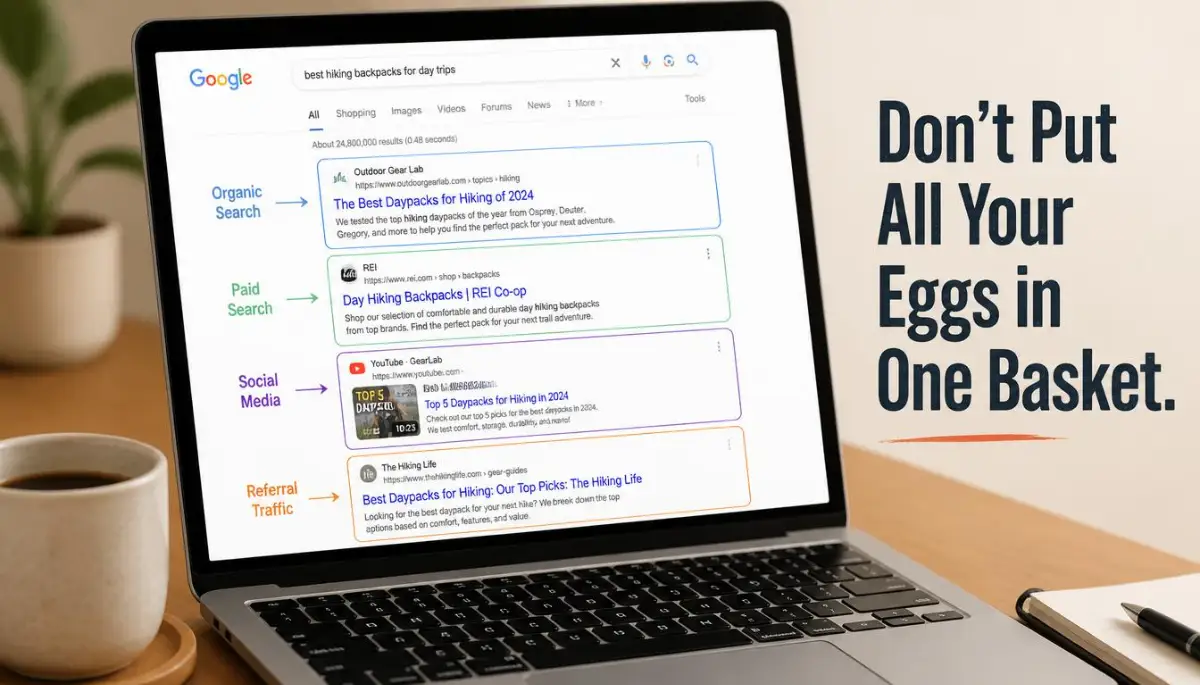
To protect your business, you have to stop thinking like a "blogger" and start thinking like a "CEO." A CEO knows that depending on only one customer or one supplier is dangerous. In our world, Google or Facebook is the supplier of our traffic. If they stop supplying, your business dies. The first step to safety is making sure you have other ways for people to find you.
I used to spend 100 percent of my time on SEO. That was a big mistake. Now, I tell everyone to spread their energy across different platforms. Think about where your audience hangs out when they are not searching for something. Maybe they are on Pinterest looking for ideas, or on Facebook talking to friends.
When you have traffic coming from three or four different places, an algorithm hit on one platform won't kill you. It might hurt, but you will still have enough money to keep going. This is the core of staying safe in the digital space. You want to be everywhere so that no single company has the power to shut you down.
The Safety Net of an Owned Audience
The most important thing I ever learned is the difference between "rented" traffic and "owned" traffic. Search engines and social media are rented land. You don't own your followers there. If the platform changes, you lose them. An email list, however, is land you own.
When you have a list of people who want to hear from you, you have a direct line to them. You don't need a search engine to tell them you have a new post. I started focusing on my email list after my first big crash. It felt slow at first, but now it is my biggest safety net. Even if my search traffic drops tomorrow, I can still send one email and get thousands of visitors.
Pro Tip:
I once made the mistake of waiting until I had "enough" traffic to start an email list. I was wrong. Start your list on day one. Even if you only have five people, those are five people you can reach without permission from an algorithm. It is the best insurance policy you will ever have for your online income.
Focusing on the Human Behind the Screen
Algorithms are just math, but they are trying to act like humans. They want to know if a real person would find your content helpful. Instead of trying to trick a machine, I started writing for the person reading my words. I asked myself, "Does this actually help someone solve a problem?"
When you focus on quality over quantity, you become "update-proof." Search engines might make mistakes, but they eventually reward sites that people love. If people come to your site and stay for a long time, the algorithm sees that. It tells the machine that your site is a "good place" to send more people.
Why quality matters for safety:
- It builds a brand that people search for by name.
- It encourages other sites to link to you naturally.
- It makes people share your work on social media.
Technical Health: The Invisible Foundation
A lot of people ignore the technical side of their website because it feels hard. But if your site is slow or broken on a phone, you are inviting an algorithm hit. I learned this the hard way when I realized my site was taking five seconds to load. Google hates slow sites because users hate slow sites.
Keeping your site healthy is like keeping your car serviced. You need to check for broken links, make sure your images aren't too big, and use a good hosting plan. I found that why hosting server location can make or break your website speed is a huge factor. If your server is slow, your rankings will eventually drop, no matter how good your writing is.
Checking these experts talk about the future of search can help you understand why user experience is now the biggest ranking factor.
The Power of Direct Brand Searches
One of the best risk management strategies is to become a brand, not just a website. Think about big sites like Wikipedia or WebMD. People don't just find them by accident; they look for them. When people type your website name directly into their browser, you are 100 percent safe from algorithm changes.
You can do this by being very consistent. If you always give great advice on a specific topic, people will remember you. They will start to think of you as the "go-to" person. This takes time, but it is the ultimate goal. A strong brand is like a shield that no machine can break.
Diversifying Your Content Types
Don't just write long articles. Some people like to watch videos, while others like to listen to podcasts or look at infographics. By creating different types of content, you reach more people. It also helps you rank in different parts of the search results, like the "Video" tab or "Images" tab.
This helps with risk because if the "Web" results change, you might still show up in the "Image" search. I started making simple graphics for my posts and found that Pinterest began sending me a lot of traffic. This was a huge relief during a time when my Google traffic was a bit shaky. It showed me that there is always another way to win.
Monitoring Without Obsessing
You need to keep an eye on your data, but don't let it ruin your life. I check my main stats once a week now instead of every hour. If I see a small drop, I don't panic. Small changes are normal. You only need to worry if the drop is huge and lasts for more than a few days.
Using tools like Google Search Console is very important. It tells you exactly what the search engine sees. If there is a problem, it will often give you a warning. By fixing these small issues early, you can avoid a big crash later. It is much easier to fix a small leak than to save a sinking ship.
The Role of Social Trust and Authority
Search engines look for signs that you are a real expert. They look at who else is talking about you. If other respected websites link to your work, it builds your "Authority." This is a big part of staying safe. A site with high authority is much less likely to be hit by a small update.
You can build this by being helpful in your community. Guest posting on other sites or being a guest on a podcast are great ways to show you are a real person. I found that speak less connect more active listening hacks for professionals really helped me when I was networking with other site owners. Building real relationships is a great way to grow your authority.
Avoiding the "Shortcut" Temptation
When you are scared of losing traffic, you might be tempted to use "black hat" tricks. These are shortcuts that promise fast rankings. Please, stay away from them. They might work for a week, but they will eventually get your site banned forever. Real risk management is about playing the long game.
I have seen many friends lose their entire business because they bought cheap backlinks or used software to write low-quality posts. It is not worth it. If you want a business that lasts for years, you have to build it the right way. There are no magic buttons in the digital world. Hard work and honesty are the only things that truly pay off.
Preparing for the "Quiet Times"
Every business has slow months. It is important to save money during the good times so you don't panic during the bad times. This is a big part of risk management. If you have six months of living expenses saved up, a traffic drop is just a problem to solve, not a disaster that ruins your life.
I started following smart budgeting methods for self-employed pros to manage my money better. It gave me the "breathing room" I needed to think clearly. When you aren't worried about how to pay for dinner, you can make better decisions for your business. Financial safety and business safety go hand in hand.
The Importance of Content Updates
An old post can become "stale" and lose its rankings. A key strategy is to go back and update your old content once or twice a year. Add new information, fix broken links, and make the writing better. This tells the algorithm that your site is fresh and still relevant.
I noticed that when I updated five of my old posts, my overall traffic started to go up again. It is often easier to improve what you already have than to create something brand new. This keeps your "foundation" strong and protects your old work from fading away. It is a simple task that has a very big impact.
Diversifying Your Income Streams
Finally, don't just rely on one way to make money. If you only use ads, you are at the mercy of your traffic numbers. If you also have a digital product, a service, or a membership, you have more stability. A small drop in traffic might not hurt your product sales as much as your ad revenue.
By having multiple ways to earn, you create a very stable business. I started offering consulting once my traffic became steady, and it was a great choice. It made me feel much more secure. You want to build a business that is like a table with many legs. If one leg breaks, the table stays standing while you fix it.
Taking Your Safety Strategy to a Master Level
Once you have the basics of traffic diversification down, you need to look at the "hidden gears" of your business. Most people focus only on the surface, like keywords and backlinks. But if you want to be truly safe from algorithm shocks, you have to think about how search engines identify your brand. This is what experts often call building an "Entity."
In simple terms, an entity means being a real, recognized person or business in the eyes of the digital world. If you are just a faceless website, a search engine can easily ignore you during an update. But if you are a recognized expert with social profiles and mentions on other big sites, you become much harder to demote. I started focusing on my personal brand by sharing my story on different platforms, and it made my main site much more stable.
You should also look at how you use modern tools. Many people are scared that artificial intelligence will replace them, but the secret is to use it as an assistant, not a replacement. I found that beyond automation how creatives and ai work better together is the right mindset. You use the tools to find data, but you keep the human heart in your writing. This human touch is what keeps your readers coming back even when the "math" of the algorithm changes.
The Power of Topic Authority
Another advanced secret is to stop chasing random high-traffic keywords. Instead, try to "own" a specific topic. If you write ten deep articles about one small subject, you show that you are an expert in that area. This creates a "shield of authority" around your site. When an update happens, the search engine is less likely to drop you because it knows you are a trusted source for that specific topic.
I learned this after seeing my rankings drop for general topics but stay steady for the things I knew best. I stopped trying to cover everything and focused on being the best in one area. This strategy not only kept my traffic safe but also made my audience more loyal. They knew exactly why they should visit my site instead of a big, generic corporate blog.
Protecting Your Revenue with Diverse Systems
Safety isn't just about traffic; it's about the money that traffic brings in. If all your income comes from one ad network, you are in danger. I always suggest having at least three different ways to earn. This could be a mix of ads, digital products, and services. This way, if your traffic drops by 20 percent, your total income might only drop by 5 percent.
While you grow, you also need to manage the money you have. I found that using smart tax deductions for home-based solopreneurs helped me save thousands of dollars. This extra cash acted as a "survival fund" during months when the algorithm was shaky. Being a professional means looking at your bank account just as closely as you look at your traffic charts.
Technical Resilience: The Fast-Loading Fortress
We talked about speed before, but let's go deeper. A truly resilient site is one that works perfectly on every device, every time. If your site has technical errors, an algorithm update will find them and punish you. I make it a habit to check my site for broken links and "heavy" code every month. It feels like a chore, but it is necessary work.
One thing people often miss is the quality of their hosting. If your host goes down for even an hour during an update, it can hurt your rankings. This is why why hosting server location can make or break your website speed is such an important topic. You want your site to be fast and always online, no matter where your readers are in the world.
According to a study by the HTTP Archive, the performance gap between top sites and average ones is growing. If you stay on the "top" side by keeping your site light and fast, you have a much higher chance of surviving an algorithm hit. It shows the search engines that you care about the user experience as much as they do.

The Panic Trap: Mistakes That Destroy Progress
When an update hits and the traffic line turns red, most people panic. This "Panic Mode" is the most dangerous time for your business. I have seen people delete half their content or change their entire site design in a single day because they were scared. Usually, this just makes things worse. You need to stay calm and look at the data before making big moves.
Another common mistake is trying to "trick" the system back into liking you. People start buying "instant fix" SEO packages or spamming social media with links. This is like trying to fix a broken car by painting it a new color. It doesn't solve the real problem, and it often gets you banned. If you feel like your business is failing, take a breath and look at your budget first. Why first time personal loans fail and how to fix it is a good lesson in why rushing for a quick financial fix isn't always the answer.
The Danger of Over-Optimization
Sometimes, you can try too hard. If every single sentence on your page is perfectly "optimized" for a keyword, it stops sounding like a human wrote it. Search engines are getting very good at spotting this. They want content that sounds natural and helpful. If your site looks like it was built only for a robot, it will eventually be treated like a robot.
I used to spend hours worrying about "keyword density," but then I realized it was killing my creativity. Once I started writing like I was talking to a friend, my rankings actually went up. Don't let the tools tell you how to speak. Your voice is your best asset. If you lose that, you lose your audience's trust.
Ignoring the Data Trends
A big mistake is ignoring the small warning signs. Algorithm changes usually don't happen all at once; there are often small shifts before the big one. If you aren't checking your "search intent" regularly, you might be providing the wrong answers. For example, if people are looking for a video but you only give them a long text guide, you will lose your spot.
You have to be willing to change with the times. If you stay stuck in your old ways, you will be left behind. This is true for all parts of life, even in finance. For instance, understanding why your cryptocurrency transactions are pending and how to fix it shows that keeping up with technology is key to avoiding frustration. The same applies to your website; stay curious and keep learning.
The "Single Source" Addiction
I cannot say this enough: relying on only one platform is a huge risk. I once knew a guy who made $10,000 a month from one specific Facebook group. One day, the group was deleted, and his income went to zero. He didn't have a blog or an email list to fall back on. He had to start over from nothing.
This is why I always preach about having "layers" in your business. You should have a home base (your website), a direct connection (your email list), and several "feeder" channels (Pinterest, YouTube, etc.). This structure is much harder to break. It protects your mental peace because you know that even if one door closes, three others are still open.
Your Long-Term Action Plan for Stability
Surviving in the digital world is not about being lucky; it is about being prepared. You have to build your business with the "storm" in mind. When times are good, don't just spend the money. Reinvest it into your site's health and your own education. This is how you move from being a "hobbyist" to being a "professional."
I want you to look at your business as a living thing. It needs regular care and attention. If you ignore it, it will grow weak. But if you feed it good content and keep the technical parts running smoothly, it will grow strong enough to withstand any update. You have the power to create something that lasts, but you have to be patient and consistent.
As you build your assets, you might also consider long-term investments like real estate or home ownership. If you are a freelancer, knowing the first-time buyer guide understanding home equity and how to build it faster can help you turn your online success into physical security. A digital business is great, but a real-world foundation makes you even more "unshakeable."
Creating a Monthly Safety Audit
Every month, spend two hours looking at your business from the outside. Check your traffic sources. Are you still too dependent on one place? Check your site speed. Has it slowed down lately? Check your most important pages. Do they still give the best answer to the reader's question?
By doing this "check-up," you can catch problems while they are still small. This proactive approach is the best way to manage risk. It gives you a sense of control over your destiny. You are no longer just waiting for an algorithm to decide your fate; you are actively steering your ship.
Summary of Your Next Steps
- Diversify your traffic so you aren't at the mercy of one company.
- Focus on high-quality, helpful content that builds real trust.
- Keep your site technically clean and fast-loading.
- Build an email list to own your audience connection.
- Stay calm during updates and look for long-term trends instead of quick fixes.
I have been through many updates, and I know how scary they feel. But I also know that every update is a chance to get better. Use these changes as a reason to improve your work and serve your readers even more. When you focus on helping people, the algorithms will eventually find a way to reward you. I believe in your ability to build a business that is both profitable and safe.
I hope you take action on these steps today. Don't wait for the next update to start protecting yourself. I started small, just like you, and I found that consistency is the only magic trick that actually works. You have everything you need to succeed, so go out there and build something you are proud of!
Common Questions About Managing Algorithm Risk
How long does it take to recover from an algorithm hit?
It usually takes three to six months to see a real recovery. You have to show the search engine that you have made real improvements to your content and technical health. Be patient and stay consistent with your updates.
Should I delete low-traffic posts during an update?
Not necessarily. If a post is still helpful but just doesn't get much traffic, it's better to update it or merge it with another post. Deleting content should be your last choice, as it can sometimes cause more instability.
Is it better to focus on social media or SEO?
The best answer is both! SEO gives you steady, long-term traffic, but social media can give you quick wins and diversify your risk. Try to find a balance that works for your schedule without burning out.
How do I know if an algorithm update is happening?
You can check sites like MozCast or Semrush Sensor. These tools track how much the search results are changing. If the "weather" is high, a big update is likely happening.
Disclaimer: The information provided in this article is for educational purposes only. Risk management for digital businesses involves many factors, and results can vary based on your niche, content quality, and market changes. I am not a certified financial or legal advisor. Please perform your own research and consult with professionals before making significant changes to your business or financial strategy.