
The 2 AM Struggle: When Your Baby Just Won't Stop Crying
If you are reading this at 2:00 AM while holding a crying baby, take a deep breath. You aren't doing anything wrong. Sometimes, babies just need to feel the same snug safety they had in the womb to finally drift off. I’ve been in your shoes—tired, stressed, and searching for answers. Let’s talk about how a simple swaddle can help you and your baby finally get some real sleep tonight.
In that moment of total desperation, I remembered a tip from an old nurse at the hospital. I grabbed a soft muslin blanket and tried my best to wrap her snugly, just like they did in the nursery. Within minutes—not hours, but minutes—her sharp cries turned into soft whimpers, and then, silence. She was finally asleep. That was the night I truly understood that swaddling isn't just a tradition; it is a lifesaver for our sanity.
Most new parents go through this exact same "pain zone." You spend your days worrying if your baby is getting enough rest. You spend your nights pacing the hallway, praying for just one hour of uninterrupted sleep. When your baby doesn't sleep, you don't sleep. This leads to brain fog, extreme stress, and even feelings of sadness or resentment. It feels like a never-ending cycle of tired baby and tired parents.
Swaddling is that tool. It mimics the tight, warm environment of the womb. It tells your baby's nervous system that they are safe and secure. When you master this skill, you aren't just wrapping a baby; you are reclaiming your peace of mind and ensuring your baby gets the deep sleep their growing brain needs.
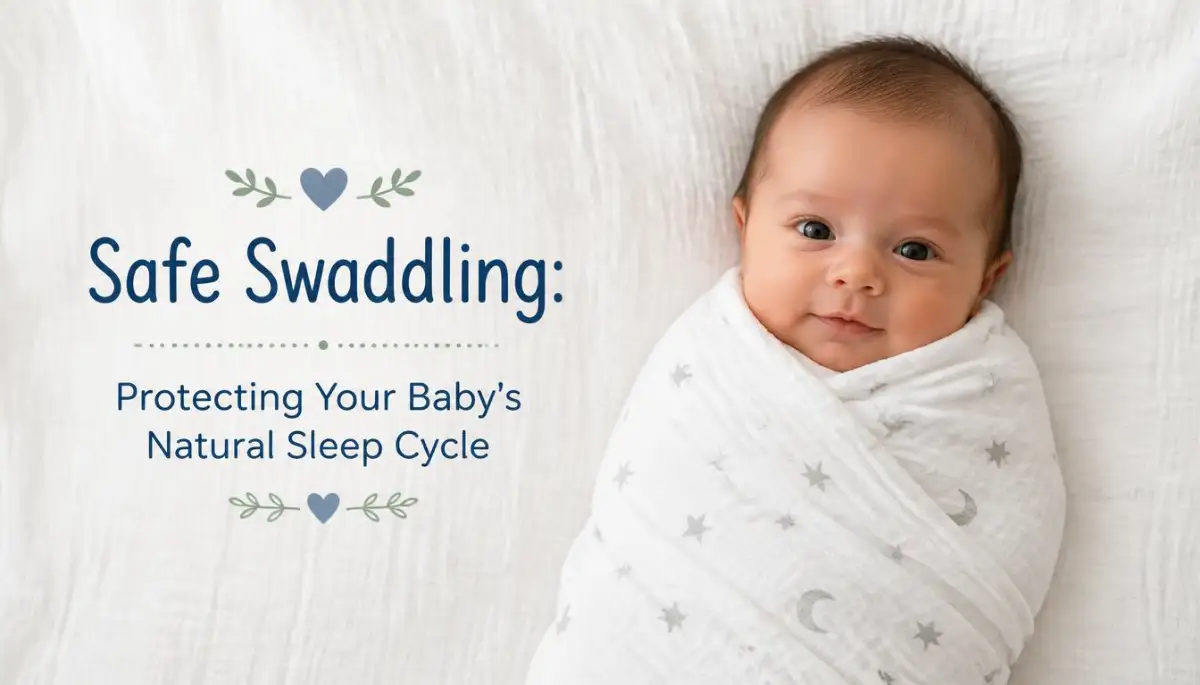
Understanding the Magic Behind a Secure Wrap
Quick Guide: Swaddling at a Glance
- The Main Goal: Mimic the womb to stop the "startle reflex" (Moro reflex) from waking the baby.
- Fabric Choice: Use thin, breathable muslin or cotton to avoid overheating.
- The "Two-Finger" Rule: Ensure the wrap is snug but allows two fingers to fit at the chest.
- Hip Safety: Always leave plenty of room for legs to bend and move freely.
- When to Stop: Stop swaddling immediately as soon as your baby shows signs of rolling over (usually 2–4 months).
Before we get into the "how-to," we need to talk about why this actually works. Your baby spent nine months in a very tight space. They were warm, tucked in, and felt constant pressure against their skin. Suddenly, they are out in the big, wide world with lots of space to move. This can be very scary for a tiny human.
One of the biggest reasons babies wake up is something called the Moro reflex. You might have seen it—your baby suddenly jolts their arms out as if they are falling. This reflex is totally natural, but it often wakes them up from a deep sleep. By swaddling them, you gently keep their arms tucked against their body so they don't startle themselves awake.
I have tried many different blankets over the months. My biggest realization was that the fabric matters just as much as the fold. I once used a blanket that was too thick, and my baby woke up sweaty and upset. Switching to a breathable, thin cotton or muslin cloth changed everything. It kept her snug without making her too hot.
| Fabric Type | Best For | Why Choose It? |
| :--- | :--- | :--- |
| Muslin Cotton | Warm weather / Summer | Very breathable; prevents overheating. |
| Jersey Knit | Year-round use | Stretchy and soft; stays snug easily. |
| Bamboo Blend | Sensitive skin | Silky feel and naturally stays cool. |
| Flannel | Cold winter nights | Keeps heat in, but watch for sweating. |
The Science of a Calm Baby
Research shows that babies who are swaddled tend to sleep longer and stay in a "quiet sleep" state more easily. This is because the gentle pressure releases calming hormones in their body. It is very similar to how a weighted blanket helps adults feel less anxious.
When your baby is calm, their heart rate stabilizes. They can focus on growing and developing instead of fighting the feeling of being "lost" in their crib. This is a very big deal for their physical health and your mental health.
Check out this helpful video to see the perfect swaddle fold in real-time:
Seeing the movements can make a huge difference in your confidence! Watch how the expert handles the fabric to get that perfect snug fit.
The Step-by-Step Guide to a Perfect Swaddle
If you are feeling nervous about wrapping your baby, don't worry. It takes a bit of practice, but you will get the hang of it quickly. Follow these steps to ensure a snug and safe wrap every time.

Prepare the Foundation
Start by laying your blanket down on a flat, safe surface like a changing table or a firm bed. Fold the top corner down about six inches. This is where your baby’s head will go.
Place your baby on the blanket so that their neck is right at the edge of the fold. Make sure their shoulders are below the fold line. You want their head to be completely free of any fabric to keep their airway clear.
The First Fold: Securing the Side
Take your baby's right arm and gently place it down by their side. You don't need to force it straight, just a natural position is fine. Pull the side of the blanket over their arm and across their chest.
Pro Tip: When I first started, I didn't pull the blanket tight enough because I was afraid of hurting my son. I quickly learned that if it’s too loose, the fabric can ride up over their face, which is dangerous. Make sure it is snug, but you should still be able to fit two fingers between the blanket and your baby's chest.
Tuck the edge of the blanket under their left side. Now, one arm is secure, and the baby is already starting to feel that "womb-like" pressure.
The Bottom Fold: Room to Kick
This is a very important part that many people get wrong. You must never pull the bottom of the blanket tight around the legs. Your baby's hips need to stay loose and flexible to prevent a condition called hip dysplasia.
Fold the bottom of the blanket up over your baby’s feet. Make sure there is plenty of room for their legs to bend up and out. Their legs should look like "frog legs." If the blanket is too tight around the bottom, it can cause problems with their hip joints as they grow.
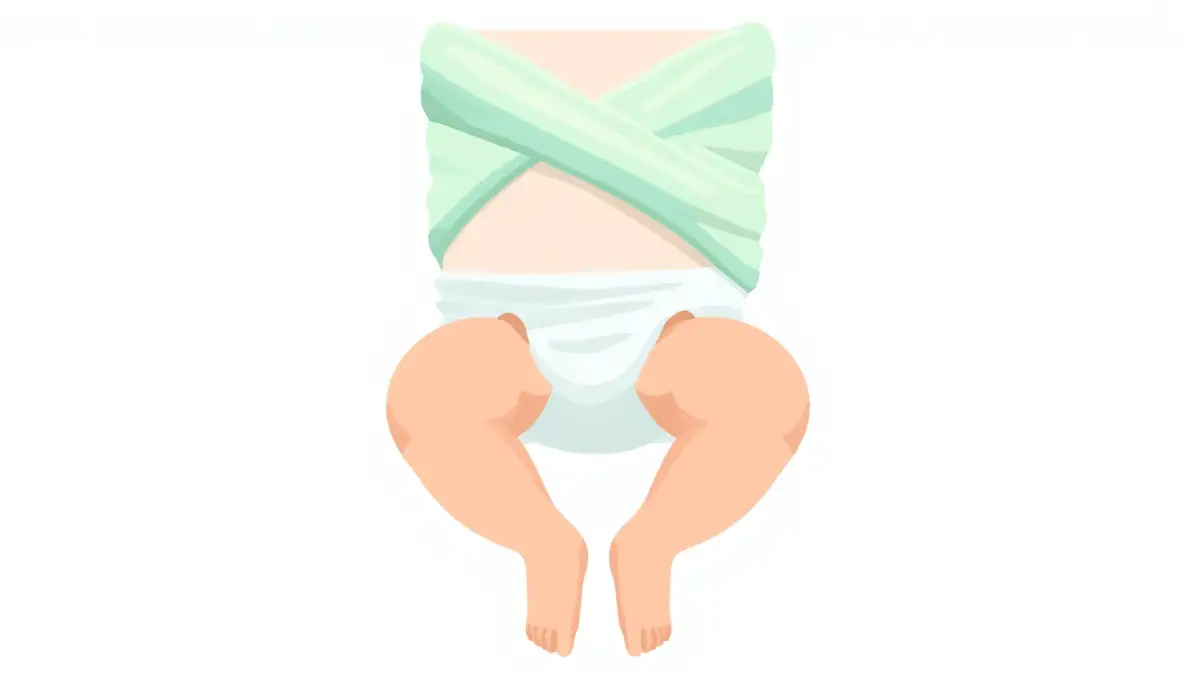
The Final Wrap: The Finishing Touch
Now, take the left arm and place it down by their side. Pull the remaining side of the blanket across their chest and wrap it all the way around their body. Tuck the end of the fabric into the fold you just made.
At this point, your baby should look like a cute little burrito. Give them a gentle pat. They should feel secure, but their chest should have enough room to expand when they take a breath.
Essential Safety Precautions Every Parent Must Know
While swaddling is a wonderful tool, it must be done correctly to keep your baby safe. Sleep safety is the most important thing we can talk about today.
My Quick "Two-Finger" Safety Check:
After you finish the wrap, try to slide two fingers between the blanket and your baby’s chest. If your fingers fit snugly, it's perfect. If it's loose, it might ride up. If you can't fit your fingers, it’s too tight. Also, always give the bottom of the swaddle a little squeeze—their legs should be able to move like a little frog!
Always Place Baby on Their Back
This is a non-negotiable rule. A swaddled baby must always be placed on their back to sleep. If a baby is wrapped and ends up on their stomach, they may not be able to move their head to breathe properly. This significantly increases the risk of SIDS (Sudden Infant Death Syndrome).
If you see your baby starting to roll over, it is time to stop swaddling. This usually happens around 2 to 4 months of age. Once they can roll, they need their arms free to push themselves up or move their head if they flip onto their tummy.
Watch the Temperature
Babies can overheat easily, and a swaddle adds an extra layer of warmth. Signs that your baby is too hot include damp hair, red cheeks, or a heat rash.
I always suggest using a single layer of breathable fabric. If the room is warm, your baby might only need a diaper under the swaddle. If the room is cool, a thin onesie is usually enough. Always feel the back of your baby's neck to check their temperature; their hands and feet will naturally feel a bit cooler than the rest of their body.
Avoid Loose Blankets
The whole point of a swaddle is to keep the fabric away from the baby’s face. If the wrap is too loose, it can come undone during the night. A loose blanket in a crib is a major choking and suffocation hazard.
If you find that your baby is a "Houdini" and keeps breaking out of their wrap, you might want to try a velcro swaddle or a zip-up swaddle sack. These are often easier to use and stay secure throughout the night.
Choosing the Right Swaddle Blanket
Not all blankets are created equal. When you are shopping for your baby, look for specific features that make the art of the swaddle easier and safer.
Material is Everything
Look for 100% cotton or bamboo muslin. These fabrics are lightweight and have a bit of "give" to them. This stretch helps you get a snug fit without it being too stiff. Avoid heavy fleece blankets for swaddling, as these can cause the baby to overheat very quickly.
Size Matters
A blanket that is too small will be hard to tuck in properly. A blanket that is too large will have too much extra fabric, which can be bulky and uncomfortable. A standard size for a swaddle blanket is usually around 47 x 47 inches. This provides enough fabric to wrap around the baby twice for a secure hold.
When to Say Goodbye to the Swaddle
Every good thing must come to an end. As your baby grows and develops new skills, the swaddle will eventually become more of a risk than a benefit.
The Rolling Milestone
The most important sign to stop is when your baby shows signs of rolling over. Even if they haven't made it all the way over yet, if they are rocking back and forth or getting onto their side, you need to transition them out of the swaddle immediately.
Transitioning Slowly
If your baby is used to being wrapped, they might struggle to sleep with their arms free at first. You can try a "one-arm-out" approach for a few nights. This allows them to get used to having some movement while still feeling the comfort of the wrap around their middle.
Eventually, you will move to a sleep sack, which is like a wearable blanket that keeps their arms free but their body warm. This is the safest way for older babies to sleep.
My Personal Realization About Baby Sleep
Looking back, I realize that my stress was coming from a place of love, but it was also because I didn't have the right information. Once I understood the science of the Moro reflex and the safety rules of hip-healthy wrapping, my confidence soared.
I used to think that a crying baby meant I was doing something wrong. But babies cry because they are overwhelmed. Swaddling is a way of saying, "I've got you. You're safe. You can rest now." It’s a gift you give to your baby and yourself.
Common Myths About Swaddling
There is a lot of advice out there, and some of it can be confusing. Let’s clear up a few common myths.
Myth: Swaddling makes babies walk later.
Reality: There is no evidence that safe, hip-healthy swaddling during sleep affects when a baby starts to walk. As long as they get plenty of "tummy time" during the day to move their muscles, they will develop just fine.
Myth: You should wrap them as tight as possible.
Reality: No! As we discussed, it should be snug around the chest but loose around the hips. A "tight as a drum" wrap can actually make it hard for the baby to breathe.
Myth: All babies love being swaddled.
Reality: Most babies do, but some really don't! If your baby consistently fights the swaddle and sleeps better without it, don't force it. Every baby is a unique individual.
Final Thoughts on Mastery
The art of the swaddle is a journey. Your first few attempts might look a bit messy, and that is okay. With each night, you will get faster and more precise. You will learn your baby's cues and know exactly how they like to be held.
Remember, the goal isn't perfection; the goal is a safe and sleeping baby. Take a deep breath, grab your favorite blanket, and practice. You are doing a great job, and better sleep is just a few folds away.
Moving Beyond the Basics: Expert Secrets for Better Baby Sleep
Now that you know the foundation of a good wrap, let’s look at how to really perfect this skill. Many parents think that once they know the basic fold, they are done. But babies grow fast, and their needs change almost every week. To keep your little one sleeping soundly, you need to understand a few expert secrets that I learned the hard way.
One of the most helpful tips I ever received was about using swaddling to fix day-night confusion. New babies often have their days and nights mixed up. They sleep all day and want to party all night. I started using a very specific routine where I only used the swaddle for nighttime sleep or very long naps. This sent a clear signal to my baby’s brain that it was time for the "big sleep."
You might also find that your baby is a bit of a "wiggler." Some babies have a very strong kick and can break out of even the tightest wrap. If this happens to you, don't give up. Instead of a standard square fold, try the "diamond start" method where you place the baby diagonally. This gives you more fabric to tuck under their weight, making it much harder for them to kick their way out.
The Power of the "Drowsy but Awake" Technique
This is a game-changer for long-term sleep habits. Instead of swaddling your baby after they are already deep in sleep, try doing it when they are just starting to get sleepy. You want them to feel the comfort of the wrap while they are still somewhat aware of their surroundings. This helps them associate the snug feeling with the act of falling asleep on their own.
I used to rock my son until he was totally out before I even touched the blanket. The moment his back hit the crib, his eyes would pop open. Once I started swaddling him while he was still slightly awake, he learned to settle himself down much faster. It takes away the "startle" that happens when you put a limp baby into a cold bed.
Temperature Checks and Room Environment
Another pro-level secret is the "two-finger" rule for temperature. While we talked about the back of the neck in the first part, you should also check the chest. If your baby's chest feels hot or sweaty, they are wearing too many layers under that swaddle. A baby who is too hot will be restless and won't sleep deeply.
The room environment also plays a huge role in how well the swaddle works. I found that combining a secure wrap with a low-frequency white noise machine created a "sleep cocoon." It mimics the sounds of the blood rushing through the placenta that the baby heard in the womb. When you combine the physical touch of the blanket with the familiar sound, the results are almost like magic.
Managing the "Hands-to-Face" Preference
Some babies really love having their hands near their face. It’s how they soothe themselves. If you notice your baby is constantly fighting to get their hands out, you might think they hate being swaddled. This isn't always true. They might just want their hands up high.
There are special swaddle sacks designed for this exact reason. They allow the baby to have their arms up by their ears while still keeping them tucked in so they don't startle. I tried this with my second child, and it was a total breakthrough. She stopped fighting the wrap and started sleeping four-hour stretches almost immediately.
Learning these small details is part of being a prepared parent. Just like suffering from medical errors can be avoided by staying informed, sleep issues can often be solved by adjusting your technique to fit your baby’s specific personality.

Fatal Errors: The Mistakes That Can Put Your Baby at Risk
I want to be very honest with you here because I care about your baby's safety. There are some mistakes that seem small but can lead to very scary situations. When I was a new mom, I almost let my baby sleep on his side while swaddled because he seemed more comfortable that way. I am so glad I checked the safety guidelines before I left the room.
The Danger of Side and Tummy Sleeping
The biggest mistake you can ever make is letting a swaddled baby sleep on their side or stomach. When a baby's arms are pinned to their sides, they have no way to push their face away from the mattress if they roll. This can lead to suffocation in a matter of seconds. It doesn't matter if your baby "seems" to like it; the risk is far too high.
Always, always place your baby flat on their back. If you find your baby is rolling onto their side during the night, the swaddling days are officially over for that child. It’s better to have a baby who wakes up more often than a baby who is in a dangerous sleeping position. For more on keeping your family safe in different areas of life, you might find it useful to learn about block smart TV tracking to protect your privacy at home.
Hip Health and the "Straight Jacket" Error
I see many parents wrapping their babies like a straight jacket from head to toe. They think that the tighter the legs are, the better the baby will sleep. This is a very big mistake. Forcing a baby's legs into a straight position can actually pull the hip joints out of their sockets.
The International Hip Dysplasia Institute warns that improper swaddling can lead to permanent joint damage. You must ensure that the bottom of the swaddle is loose enough for the baby to bend their legs up and out at the hips. If they can’t move their knees, it’s too tight.
Ignoring the Signs of Rolling Over
Another major pitfall is waiting too long to stop swaddling. Many parents are so afraid of losing their sleep that they keep swaddling even when the baby is showing signs of being able to roll. This is a gamble you should never take. Most experts at the American Academy of Pediatrics suggest transitioning away from the swaddle as soon as the baby tries to roll, which can be as early as two months.
I know the fear of "the great sleep regression" is real. You worry that if you stop swaddling, you will be back to 1 AM wake-up calls. But your baby’s safety is worth the few nights of adjustment. You can move to a sleep sack that keeps them warm without restricting their arms.
Using the Wrong Blanket for the Season
I once made the mistake of using a thick, beautiful fleece blanket for a swaddle during the summer because it was a gift. My baby woke up with a heat rash and was extremely dehydrated. It was a scary lesson for me.
You must match the fabric to the room temperature. In most cases, a thin muslin cloth is all you need. If you are worried about the cold, it is better to dress the baby in a warmer onesie underneath a thin swaddle than to use a heavy blanket on top. Overheating is a major risk factor for SIDS, so keep it cool and breathable. Just like understanding how sitting for six hours affects your veins teaches us about the risks of restricted blood flow, we must remember that a baby's body needs to breathe and stay cool to function correctly.
Practical Steps for a Smooth Transition
Eventually, the day will come when you have to put the swaddle blankets away. This can be a stressful time for any parent. I remember feeling a sense of dread when my daughter first rolled from her back to her tummy. I knew our "perfect sleep" era was changing.
The One-Arm-Out Method
To make this easier, don't just stop cold turkey. Try swaddling your baby with one arm out for three or four nights. This allows them to get used to having some freedom while still feeling that snug pressure around their chest. It also gives them a "safety hand" to help them reposition their head if they do happen to roll.
After they are comfortable with one arm, move to two arms out. At this point, the blanket is basically just a wrap around their belly. This is a great middle-ground before you move to a standard sleep sack. It helps the baby feel secure without the danger of restricted limbs.
Staying Consistent with the Routine
Even though the wrap is gone, the rest of your routine should stay the same. Keep the white noise, keep the dim lights, and keep the same bedtime. Your baby relies on these patterns to know when it is time to rest. When you change one thing (like the swaddle), keeping everything else the same helps them feel safe.
Think of it like moving WordPress to a new host. It’s a big change, but if you follow a plan and keep the core structure the same, it can be a stress-free process. The same applies to your baby's sleep habits.
Encouraging Daytime Movement
To help your baby adjust to sleeping without a swaddle, make sure they get plenty of movement during the day. Tummy time is your best friend here. It helps them build the neck and shoulder muscles they will need to safely move themselves during the night.
A baby who is physically tired from a day of play is much more likely to sleep deeply, even without being wrapped up. I noticed that on days we spent more time on the floor playing, my kids slept much better regardless of what they were wearing.
Your New Path to Peaceful Nights
You have all the information you need to become a swaddling expert. From the basic folds to the advanced safety tips, you are now equipped to help your baby get the best rest possible. It won't always be easy, and there will still be nights when nothing seems to work. That is just a part of the beautiful, messy journey of parenting.
The most important thing is that you are trying. You are reading, learning, and doing your best to keep your little one safe and happy. That alone makes you an amazing parent. Don't let the hard nights make you forget how much progress you have made.
I truly believe that once you master the art of the swaddle, your entire household will feel the difference. You will have more energy to enjoy the sweet moments, like the first time your baby smiles at you or the way they grab your finger. These are the moments that matter, and being well-rested helps you treasure them even more.
I want you to know that you can do this. Every parent starts out feeling a bit lost, but you are taking the right steps to build a peaceful home. Start tonight with a fresh perspective and a soft blanket, and watch how much better you and your baby feel tomorrow morning. My own experience taught me that a little bit of knowledge and a lot of love can solve almost any sleep struggle.
Common Questions About Swaddling and Safety
When is the best time to stop swaddling my baby?
The most important time to stop is the very first time your baby shows signs of rolling over. This usually happens between two and four months of age. Once they can move onto their side or tummy, a swaddle becomes a safety risk because they can't use their arms to help themselves breathe.
My baby cries every time I wrap them. Does this mean they hate it?
Not necessarily. Many babies cry during the actual process of being swaddled because they are already tired and frustrated. However, once the wrap is secure and you add some rocking or white noise, most babies calm down very quickly. Give it a few minutes before deciding they don't like it.
Can I swaddle my baby if we are practicing skin-to-skin contact?
No, swaddling is for sleep and independent rest. When you are doing skin-to-skin, you want the baby's bare chest against yours. This helps regulate their heart rate and temperature through your own body heat. Save the swaddle for when you are ready to put them in their bassinet or crib.
What should my baby wear under the swaddle blanket?
In a normal room temperature (around 68-72°F), a simple cotton onesie or even just a diaper is usually enough. You want to avoid heavy layers that could cause the baby to overheat. Always check the back of their neck to make sure they aren't sweaty or too hot.
Is it okay to leave their arms out if they prefer it?
Yes! Some babies sleep much better with their arms out from day one. You can still wrap the blanket snugly around their chest and torso to give them that feeling of security while leaving their arms free to move. This is a perfectly safe and effective way to swaddle.
Disclaimer: This article provides general information for educational purposes only. It is not a substitute for professional medical advice, diagnosis, or treatment. Always seek the advice of your pediatrician or other qualified health provider with any questions you may have regarding a medical condition or your infant's sleep safety. Never disregard professional medical advice because of something you have read on this website.