Defending Your Home Investment Against the Worst Weather of the Year
I still remember sitting in my dark living room on a warm Tuesday afternoon when the sky turned an eerie shade of green. The wind was howling outside, and then I heard a terrifying sound like throwing small rocks at my roof. My heart stopped because I knew exactly what that sound meant: heavy hail was falling.
Just three months earlier, I had spent thousands of dollars installing our brand-new solar energy system. I stood by the window, completely helpless, praying that the ice balls falling from the sky wouldn't shatter my clean energy dream. That storm passed in less than twenty minutes, but those twenty minutes felt like twenty years.
When the sun finally came back out, I walked outside to inspect the damage with trembling hands. To my absolute horror, two of my central panels had deep, spider-web cracks running across their glassy surfaces. That single storm cost me thousands in repairs and weeks of stress dealing with insurance adjusters.
It was a painful wake-up call that made me realize how unprotected my expensive setup really was. I had focused so much on saving money on my power bills that I forgot to protect the equipment that actually makes the power. That terrible afternoon started my journey into learning how to shield solar setups from nature's worst tantrums.
The mental stress of watching a dark storm cloud roll in is something many solar owners know all too well. Every time the wind picks up, you find yourself staring at the ceiling, wondering if your roof is about to turn into an expensive pile of broken glass. It is not just about the money; it is about the constant worry that eats away at your peace of mind.
You start checking weather apps every hour, hoping and praying that the hail forecast is wrong. The reality of storm damage is that it can disrupt your life for weeks, leaving you back on the standard electric grid with high unexpected bills. Your home is supposed to be your safe space, but a vulnerable solar setup makes you feel exposed to the elements.
Dealing with broken panels also means waiting on hold with customer service, scheduling technicians, and hoping the replacement parts are in stock. This entire process is exhausting, and it drains your energy as much as it drains your wallet. Most people assume that solar panels are completely indestructible, but nature always finds a way to test that theory.
Standard home insurance policies often have high deductibles for storm damage, or they might not cover solar equipment at all. This leaves everyday families in a tough spot where they have to pay out of pocket for sudden repairs. That is why taking action before the storm season starts is the only way to keep your home running and your mind calm.
Shielding Your Panels From Heavy Hail Impacts
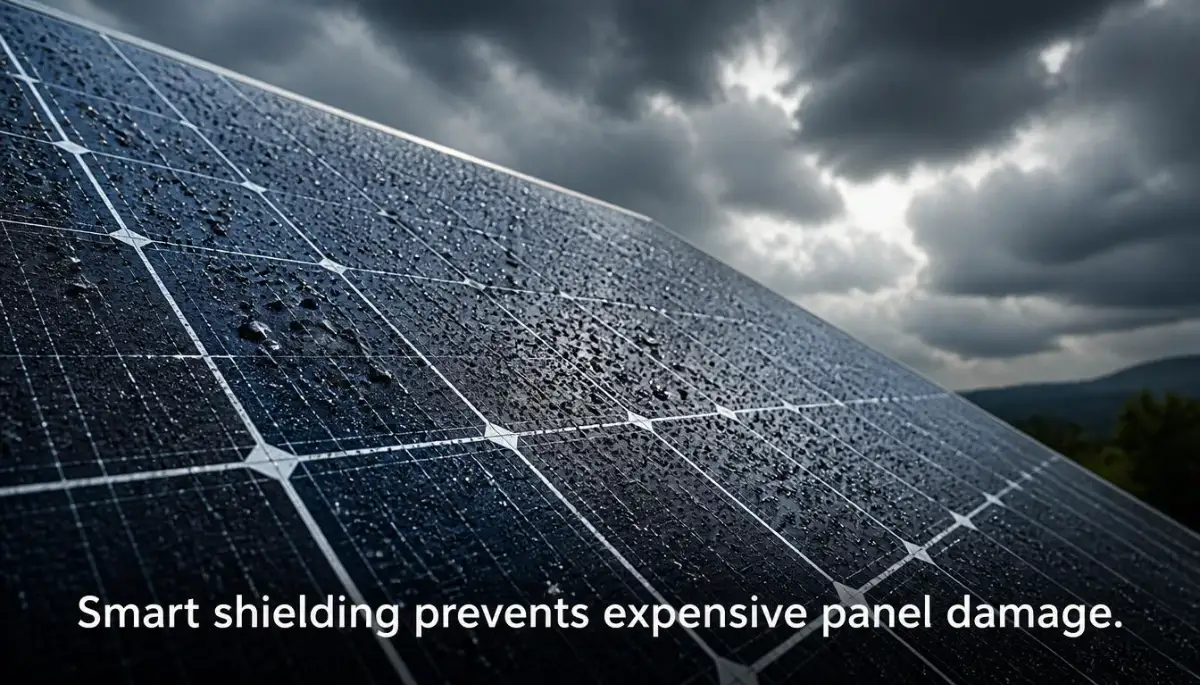
The first step in defending your system is understanding how hail damages solar panels. Most high-quality panels are made with tempered glass designed to withstand moderate impacts. However, when hail reaches the size of golf balls, even the strongest glass can fail if the angle of impact is direct.
One of the smartest adjustments you can make before a storm hits is optimizing the tilt angle of your solar panels. If your panels are mounted on adjustable racks, increasing the angle makes them more vertical. This simple change causes falling hail to strike a glancing blow instead of hitting the glass at a direct, ninety-degree angle.
Glancing blows transfer far less kinetic energy to the glass, which drastically reduces the chances of cracking. It is a completely free method that anyone with an adjustable mounting system can use. You just need to monitor your local weather alerts and make the adjustment a day before the storm arrives.
Another option for extreme climates is investing in temporary protective covers. These are heavy-duty, padded covers made from durable materials like polyethylene. You can easily strap them over your panels when a severe weather warning is active.
While these covers block sunlight and temporarily stop power generation, they offer physical protection against large hail. Think of it as putting a protective helmet on your solar investment during the worst part of the storm. Once the storm passes, you simply remove the covers and enjoy clean energy again.
My Personal realization: Early in my solar journey, I thought putting heavy blankets over my panels during a storm was a clever idea. I quickly learned that wet, heavy blankets can sag and place uneven stress on the glass frames. Always use properly designed, lightweight, and rigid protective covers rather than heavy household fabrics.
Creating a Shield Against Lightning and Electrical Surges
Lightning is one of the most destructive natural forces, and solar systems are prime targets because they are often the highest points on a house. A direct lightning strike can vaporize wiring, melt inverter components, and ruin your home batteries instantly. Even a nearby strike can send a massive electrical surge through the air and into your system.
To prevent this, you must install a dedicated solar grounding system. Grounding provides a safe, low-resistance path for the electrical current to travel directly into the earth. Without proper grounding, that massive electrical charge will search for a path through your household appliances.
Here is a quick video explaining how electrical grounding keeps your entire home safe during severe lightning storms:
Along with grounding, you should install high-quality surge protection devices (SPDs) on both the DC and AC sides of your solar inverter. These smart devices constantly monitor the voltage flowing through your system. If they detect a sudden spike, they instantly redirect the excess energy safely into the ground.
Using surge protectors is like having a digital security guard standing watch over your electrical wires. They react in microseconds, saving your expensive inverter from frying during a lightning storm. It is a small up-front cost that can save you thousands of dollars in equipment replacement.
The Physics of High Winds and Mounting Integrity
Many people do not realize that severe storms also bring incredibly strong wind gusts that can rip panels right off a roof. When high winds blow over your roof, they create a vacuum effect underneath the solar panels. This upward force is known as wind uplift, and it places immense strain on your mounting brackets.
To defend against wind damage, you need to ensure your mounting system is rated for your local wind zone. Professional installers use heavy-duty aluminum or steel racks that are bolted directly into your roof rafters. Regularly checking these bolts for tightness is a simple task that prevents major disasters.
Over time, daily temperature changes can cause the metal racks to expand and contract. This subtle movement can slowly loosen the bolts and clamps holding your panels in place. A loose panel is highly vulnerable to being caught by a strong gust of wind and flipped over.
I highly recommend doing a quick physical check of your mounting hardware once every year before the storm season begins. If you feel uncomfortable climbing onto your roof, you can hire a professional technician to perform a quick safety inspection. It takes less than an hour but gives you complete confidence when the winds start to howl.
Post-Storm Inspections and Safe Action Plans
Once the storm has passed and the sky clears, your job is not quite finished yet. It is vital to perform a safe, thorough post-storm inspection of your entire system. Start by doing a visual inspection from the ground using a pair of binoculars.
Never climb onto a wet roof immediately after a storm, as the surface will be incredibly slippery. Look closely for any signs of shattered glass, loose wiring, or shifted panels. If you notice any cracked glass, do not touch the panels with your bare hands.
Cracked panels can still generate high-voltage electricity, and rainwater can create dangerous electrical shorts. If you suspect any damage, turn off the system using your main rapid shutdown switch. Then, call a certified solar technician to inspect the system safely.
Taking photos of your system immediately after a storm is also helpful for insurance purposes. Documenting the state of your panels right away makes the claims process much smoother if you need to replace damaged parts. It provides clear, undeniable proof of when and how the damage occurred.
Taking Your Storm Defense to the Next Level: Pro-Grade Shielding Secrets
When you want to protect your solar setup, basic preparation is only the beginning. Truly securing your investment requires advanced strategies that seasoned off-grid experts use to keep their systems running during extreme weather events. These methods require a bit more effort up front, but they offer incredible security when a severe storm hits your neighborhood.
One of the most effective advanced upgrades you can install is a high-speed automatic transfer switch combined with a smart monitoring system. Modern solar setups can connect directly to real-time weather tracking software that warns you of incoming hail or lightning. These smart systems can automatically isolate your home batteries from the main solar array the moment a severe storm enters your local area.
By disconnecting the electrical flow before the storm arrives, you protect your delicate home electronics from sudden voltage spikes caused by nearby lightning strikes. This is an incredible step forward in home automation that keeps your valuable gear safe even if you are not at home to flip the switches yourself. If you are working on your personal finances, setting up these safeguards is just as important as implementing smart budgeting methods for self-employed pros with unstable income to protect your hard-earned cash.
Another pro-level secret is applying a specialized hydrophobic protective coating to your solar panel glass. These coatings are incredibly thin, invisible layers that repel water, dust, and heavy ice accumulation. During cold winter storms, heavy snow and freezing sleet can build up on your panels, creating an immense physical load that can crack the underlying frames.
A quality hydrophobic coating forces rain and melting ice to slide off the slick surface immediately, preventing heavy buildup from ever forming. Many top research institutions, including the National Renewable Energy Laboratory, have studied how these advanced coatings help maintain maximum power output by keeping the glass face completely clear. It is a simple, long-term solution that keeps your system clean and light throughout the entire storm season.
For those who run a business from home, protecting your home utility infrastructure is a major priority to keep your operations running. Making sure your power stays active during a natural disaster is just as important as knowing the smart tax deductions for home-based solopreneurs to keep your business profitable. By securing your physical energy source, you ensure that a sudden storm will not cause a painful business shutdown or a loss of valuable client data.
Finally, you should consider installing physical wind deflectors around the perimeter of your rooftop solar array. Wind deflectors are simple metal or plastic barriers that are mounted on the outer edges of your panel frames to redirect the flow of air. Instead of letting high winds get underneath your panels and create a dangerous lifting force, these deflectors guide the wind smoothly over the top of the array.
This simple aerodynamic upgrade drastically reduces the mechanical stress on your roof mounts during hurricane-force winds. The U.S. Department of Energy regularly shares resources showing how simple wind deflectors can prevent entire solar racking systems from failing during high-wind events. It is a highly effective way to make sure your panels stay firmly attached to your roof where they belong.

Critical Errors That Can Silently Destroy Your Solar Setup
When homeowners try to protect their solar panels, they often make simple but devastating mistakes out of a lack of proper information. One of the most common errors is leaving solar panels at a completely flat angle throughout the entire storm season. People often assume that a flat panel is safer because it presents a smaller target to the wind, but the exact opposite is true.
A flat solar panel allows large hail to strike the glass at a direct, ninety-degree angle, which transfers the maximum amount of destructive force into the panel. Additionally, flat panels allow rainwater to pool on the surface, which leads to dirt buildup and potential water damage along the seals. You might think solar panels are completely self-cleaning, but keeping them running smoothly requires a tiny bit of active care, similar to making simple household swaps to shrink your plastic footprint easily.
Another emotional and painful mistake is assuming that your standard home insurance policy automatically covers every type of storm damage to your solar setup. Many homeowners only discover the painful truth after a massive hailstorm has already shattered their rooftop array. They call their insurance company only to find out that solar panels require a special separate rider, or that their deductible for storm damage is incredibly high.
This realization can cause immense mental stress and financial worry, leaving you feeling completely overwhelmed. When we experience this level of unexpected financial strain, it can drain our mental energy, much like overcoming college burnout when you are struggling to keep up with a massive workload. Always call your insurance provider today to verify your exact coverage before the storm season begins.
A third major mistake is trying to design and install your own lightning rods and grounding wires without professional guidance. Lightning carries millions of volts of electricity, and a poorly designed grounding system can actually attract lightning directly into your home. If your grounding wires are too thin or not buried deep enough, the electrical current will jump into your home's main wiring, destroying every appliance you own.
This is one area of home maintenance where you should never take shortcuts to save a few dollars. Always hire a certified master electrician who has specific experience working with high-voltage solar energy systems. When you are speaking with a professional about your setup, make sure you use active listening hacks for professionals to clearly understand their safety recommendations and technical plans.
Lastly, many people make the mistake of ignoring tiny micro-cracks in their solar panel glass after a mild hailstorm. They look up at their roof, see that the panels are still producing power, and assume that everything is completely fine. However, these microscopic cracks allow moisture to seep slowly into the solar cells over the next few months.
Once moisture gets inside, it causes internal corrosion that will slowly destroy the panel from the inside out. By the time the system finally stops working, the warranty may no longer cover the damage because you waited too long to report the issue. Always perform a detailed inspection after every major storm to catch these hidden problems before they turn into complete system failures.
Your Simple Checklist for Total Peace of Mind
Preparing your home solar setup for storm season does not have to be an overwhelming or complicated chore. By breaking the process down into simple, manageable steps, you can secure your clean energy system and protect your family's daily comfort. Taking a proactive approach today ensures that your home will stay bright and powered even when the neighborhood grid goes completely dark.
In our modern world, we use smart technology to secure many areas of our daily lives, and our home energy should be no different. For example, just as you might take steps to block smart tv tracking to protect your family's personal privacy, you should also take steps to secure your smart solar inverter settings. Ensuring your system's digital controls are updated and secure is a great way to guarantee your power system remains completely under your control during an emergency.
Remember that a successful storm defense plan is all about acting before the dark clouds actually show up in the sky. Make it a habit to check your roof mounts once a year, clean your panels safely, and keep your emergency covers close at hand. These small, simple habits will save you thousands of dollars in repairs and give you absolute confidence when the weather turns rough.
My own journey through storm damage was a painful and expensive lesson, but it taught me the true value of being prepared. I now feel a deep sense of relief every time a storm rolls in, knowing my system is fully protected against the elements. I highly encourage you to take action this weekend to check your solar setup, secure your mounts, and protect your green energy investment for the years to come.
Common Questions About Safeguarding Solar Equipment
Can standard solar panels survive golf-ball-sized hail?
Most high-quality solar panels are manufactured using heavy-duty tempered glass that can easily survive hail up to one inch in diameter traveling at normal speeds. However, when hail reaches the size of a golf ball or larger, it can shatter the glass if it strikes the panel directly. Increasing the tilt angle of your panels before a storm helps redirect the impact and protects the glass from shattering.
How does a lightning strike affect my home solar inverter?
A direct or nearby lightning strike can send a massive high-voltage electrical surge through your solar wiring and directly into your inverter. This sudden surge can melt delicate internal circuit boards and destroy your entire power system instantly. Installing proper grounding rods and heavy-duty surge protectors is the only way to redirect this dangerous electrical current safely into the earth.
Will my home insurance cover the cost of storm-damaged solar panels?
In many cases, standard home insurance policies will cover solar panels, but they often treat them as a separate structure or require a special policy rider. Additionally, some insurance companies have incredibly high deductibles for wind and hail damage that might leave you paying out of pocket for repairs. It is highly recommended to call your insurance agent today to verify your exact coverage and limits.
Is it safe to clean my solar panels immediately after a severe storm?
You should never climb onto your roof to clean or inspect your panels immediately after a storm because the wet surface will be extremely slippery. Furthermore, if any of your panels have sustained hidden cracks, rainwater can create dangerous electrical shorts that pose a serious shock hazard. Always wait for the roof to dry completely, and perform your initial inspection from the ground using binoculars.
Do temporary solar covers block all electricity generation?
Yes, temporary padded protective covers are designed to block physical impacts, which means they will also block sunlight and temporarily stop your system from generating power. However, these covers are only meant to be used for a few hours during the absolute worst part of a severe storm. Protecting your physical equipment from total destruction is well worth a temporary break in your daily power generation.
Disclaimer : This article is for informational and educational purposes only. Solar energy systems involve high-voltage electricity and structural roof mounting, which can pose serious safety hazards. Always consult with a certified professional solar technician or a licensed master electrician before performing any electrical work, structural modifications, or climbing onto your roof for maintenance.