The Moment I Almost Gave Up on Future Tech
Quantum computing sounds like something straight out of a Marvel movie, right? I used to feel a pit in my stomach every time I saw a headline about 'superposition' or 'qubits.' It felt like the world was moving into a high-tech room where I wasn't invited. But here’s the secret: you don’t need to be a physics genius to get how this will change your life. Let's strip away the math and talk about what's actually happening in plain English.
I started to think that maybe I wasn't smart enough for the next generation of tech. My background isn't in advanced physics. I didn't spend years in a lab. I'm just a guy who likes computers and wants to know where the world is going.
The more I tried to read academic papers, the more confused I became. It was frustrating and honestly, it felt a bit lonely. I saw all these experts talking about "changing the world," but I couldn't even explain what a qubit was to my friends.
Eventually, I stopped looking at the math and started looking at the concepts. I began to find patterns that made sense to me. I realized that you don't need to be a scientist to get the big picture.
Now, I want to share that clarity with you. If you have ever felt left behind by tech news, this is for you. We are going to break this down together. I promise it won't be scary.
"I've figured it out, and I'm going to explain it to you exactly how I see it."
Why We Get Scared of New Tech (And Why You Shouldn't Be
Many of us feel a strange kind of "tech anxiety" these days. The world is moving so fast that it feels like we are constantly falling behind. When something like quantum computing comes up, it feels like the ultimate test.
"### Quick Look: What You’ll Learn Today
- The 'Bothness' Rule: Why quantum computers don't have to choose between 0 and 1.
- The Ghost Connection: How two particles can stay linked even if they are miles apart.
- The Cooling Secret: Why these machines need to be colder than outer space to function.
- Your Privacy: Why your current passwords might need an upgrade soon and how to stay safe."
We worry that if we don't understand these things, we will become obsolete. This fear isn't just about jobs. It's about feeling connected to the world we live in. We see headlines about "unbreakable codes" and "magic medicine," but it sounds like science fiction.
This lack of understanding creates a gap. On one side, you have the scientists. On the other side, you have everyone else. This gap makes us feel less empowered and more like passive observers of history.
But here is the truth: you don't need to know how to build a car to know how to drive one. You don't need to be a physicist to understand what quantum computers will do for our lives. My goal is to help you tear down that mental wall of fear today.
We are going to look at these concepts as simple ideas. Think of it as a friendly chat over coffee. No pressure, no exams, and definitely no complicated formulas. Let’s look at how we can actually wrap our heads around this.
The Secret of the Spinning Coin
To understand the first big idea, we need to forget about "bits" for a second. Think about a regular coin sitting on your table. It is either heads or it is tails. This is how your current phone and laptop work. They use "bits" which are like light switches—either on or off.
Now, imagine you spin that coin on the table. While it is spinning, is it heads? Or is it tails? In a way, it is both. It is a blur of both states at the same time. This is the heart of what scientists call "superposition."
In quantum computing, we use "qubits." A qubit is like that spinning coin. It doesn't have to choose to be a 0 or a 1 right away. It can exist in a state of "bothness." This allows a quantum computer to look at millions of possibilities at the same time.
To make it easier, here is a quick breakdown of the difference:
I used to think this was impossible. My brain kept saying, "But it has to be one or the other!" But once I started thinking about the spinning coin, it clicked. The power comes from that "spin."
Because the computer can stay in that "spinning" state, it can solve problems that would take a normal computer thousands of years. It’s not just a faster computer. It’s a completely different way of thinking about math.
Imagine you are trying to find a way out of a maze. A normal computer tries one path, hits a wall, turns back, and tries another. A quantum computer? It's like a mist that flows through every single path of the maze at once. It finds the exit instantly.

The Mystery of the Magic Shoes
The next big idea sounds like a ghost story, but it’s real. It’s called "entanglement." I like to think of it as "The Magic Shoe Mystery."
Imagine I have a pair of magic shoes. I keep one shoe and I give the other shoe to you. You fly to the other side of the world. Now, here is the magic part: the moment I put my shoe on my left foot, your shoe instantly becomes a right-foot shoe.
It doesn't matter how far apart we are. The connection is instant. There is no signal being sent; they are just "linked." In the quantum world, we can link two qubits together like this.
When we change one, the other changes too. This is huge because it allows different parts of the computer to work together in a way we never thought possible. It’s like having a team of people who can read each other's minds.
I used to get stuck on "how" this happens. I spent hours searching for the "wires" between them. But there are no wires. It’s just a fundamental part of how our world works at a very tiny level.
Accepting that things can be linked without wires was a big turning point for me. It’s not magic, even though it feels like it. It’s just nature. When we use this link, we can process data with incredible coordination.
Pro Tip: When I first started learning this, I tried to visualize the particles as tiny balls. Don't do that! It's much easier to think of them as "waves" or "states of being." My biggest mistake was trying to make it look like "normal" physics in my head. Let it be weird; that's where the power is.
Seeing the Big Picture of Computing Power
If you're wondering why this is a big deal, think about a library. A classical computer is like a person who reads one book at a time. They are very fast, but they still have to go page by page, book by book.
A quantum computer is like being able to read every book in the library at the same time. It’s a massive jump in how much work we can do. It’s not about doing things "faster." It's about doing things that were previously impossible.
We are talking about discovering new medicines. Right now, simulating a single new drug molecule is too hard for even the best supercomputers. They just can't handle all the different ways atoms can interact.
A quantum computer loves that kind of mess. It can "be" the molecule. It can simulate how it works in the human body with perfect accuracy. This could lead to cures for diseases we thought were permanent.
It also changes how we keep secrets. Our current passwords rely on hard math problems that take years for a computer to solve. A quantum computer could solve them in seconds. That sounds scary, but it also means we can build new, "quantum-safe" locks.
I found that focusing on these "use cases" helped me stay motivated. When you see the real-world impact, the weird science starts to matter more. It’s about more than just bits and atoms; it's about the future of humanity.
The following video explains these concepts with great visuals that help make the "spinning coin" idea even clearer. Check it out to see the magic in action!
Breaking Down the "Cold" Requirement
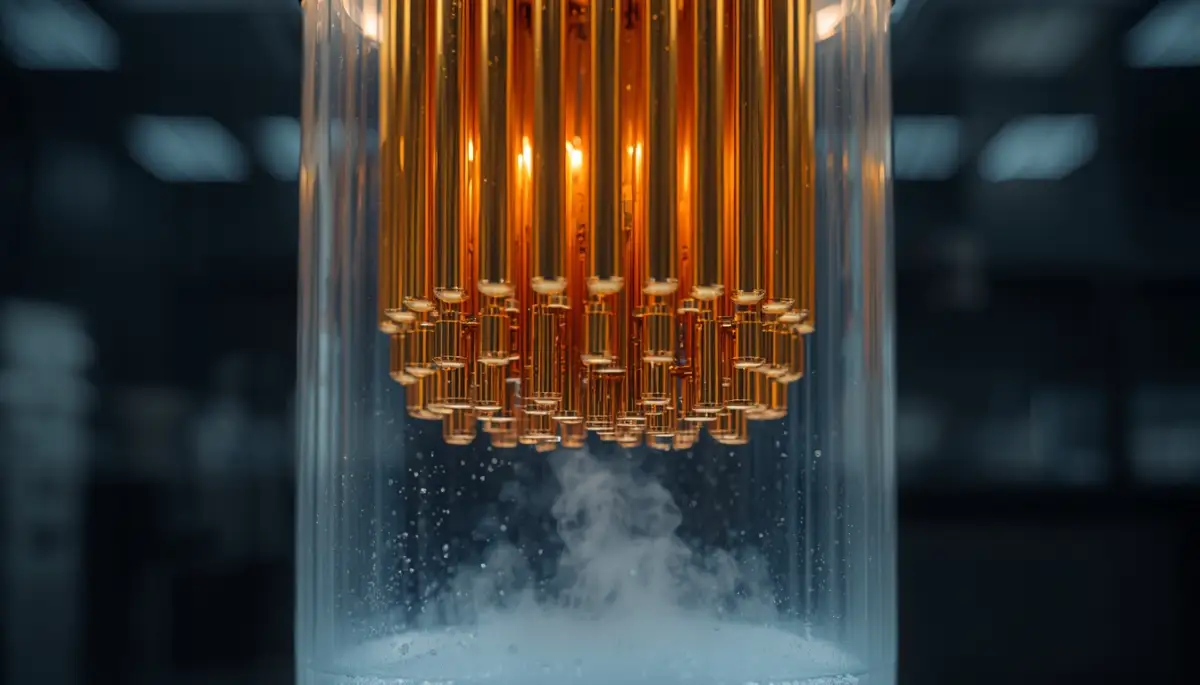
One thing that always confused me was why these computers look like gold chandeliers. And why do they have to be kept so cold? I’m talking colder than outer space.
The reason is that qubits are very sensitive. Imagine trying to balance a needle on its tip while people are dancing in the room. The vibration would knock it over. In the quantum world, "heat" is like that dancing.
Heat makes the particles move and shake. If they shake too much, they lose their "quantum-ness." They stop being that spinning coin and just fall over. This is called "decoherence."
To keep the computer working, we have to freeze everything. We have to stop the dancing. This is why you can't have a quantum computer in your pocket... yet. They need massive cooling systems to stay stable.
I used to think this was a failure of the tech. I thought, "Well, if it has to be that cold, it's not very practical." But then I remembered early computers used to fill entire rooms and used vacuum tubes that always broke.
This is just the "early days" phase. We are learning how to make these systems more stable every day. Some scientists are even finding ways to make "warm" quantum computers using diamonds or light.
Why You Should Care Right Now
You might think, "Okay, this is cool, but I'll worry about it when it's on my desk." That might be a mistake. We are at a turning point in history.
Those who understand the basic principles now will be the ones who lead the next wave of innovation. You don't need to write the code. You just need to understand the "logic" of this new world.
Think about the internet in the early days. The people who understood that "connected computers = new business" became the leaders of the last two decades. Quantum is that same kind of shift.
It will change how we design batteries for electric cars. It will change how we manage traffic in giant cities. It will even change how we predict the weather, making it 100% accurate.
How this touches your world (The 'So What?' Factor):
- Cheaper Energy: Quantum tech can help design better batteries for your car or phone that last for weeks, not hours.
- Food Security: It could find a way to create fertilizers without using massive amounts of energy, making food cheaper for everyone.
- Traffic Jams: Imagine your GPS finding the perfect route for every car in the city at once so nobody gets stuck."
I feel a sense of excitement now when I see quantum news. I don't feel that "pain" of confusion anymore. I see the potential. I see a tool that can help us solve the biggest problems on Earth, like climate change.
By reading this far, you are already ahead of 95% of the population. You have moved past the fear and into the curiosity phase. That is exactly where you need to be.
The Power of Quantum Logic in Daily Life
Even though we don't have these chips in our phones, the "logic" of quantum can change how we think. Classical logic is "either/or." Quantum logic is "both/and."
In my own life, I started applying this. Instead of thinking a project is either a "success" or a "failure," I look at it as a mix of both. I look for the multiple paths that exist at the same time.
This sounds a bit deep, but it’s a great way to stay flexible. The world isn't as black and white as our old computers think it is. Nature is "fuzzy" and "connected."
Quantum computing is finally catching up to how nature actually works. For the first time, our computers will speak the same language as the atoms they are made of. That is a very powerful realization.
I find it beautiful that we are moving away from rigid switches and toward something more fluid. It feels more "human" in a strange way. We don't always have one answer; we have many possibilities.
Moving Toward a Quantum-Ready Mindset
To really get this, we have to be okay with not knowing everything. Even the top scientists admit that quantum physics is "weird." As the famous physicist Richard Feynman once said, "If you think you understand quantum mechanics, you don't understand quantum mechanics."
That made me feel so much better! If the genius who helped discover it thinks it's confusing, it's okay for me to find it a bit strange too. The key is to be comfortable with the "weirdness."
Instead of fighting the ideas, let them sit in your mind. Think about the spinning coin. Think about the magic shoes. Let those images replace the boring textbooks.
When you see a headline about "Quantum Advantage," you now know what it means. It means the computer did something a normal computer could never do. It means the "mist" found the exit of the maze.
You are now part of the conversation. You have the basic building blocks to understand the news, talk to tech-savvy colleagues, and prepare for the future. You did it without a single math formula.
What to Look for Next
As we move forward, watch for news about "error correction." This is the next big step. It’s basically teaching the computer how to stay "spinning" even if there is a little bit of vibration.
Once we solve that, the floodgates will open. We will see the first real applications in chemistry and finance. It won't happen overnight, but it will happen faster than most people expect.
I am personally keeping an eye on how quantum will help clean our oceans. There are ideas about using quantum simulations to find new materials that can soak up plastic or carbon. That is the kind of future I want to see.
Keep asking "Why?" and "How does this help people?" That is the best way to stay grounded in tech. Technology is only useful if it makes our lives better or solves a problem.
You have taken the first step in a very long and exciting journey. The wall is down. The room is open. Welcome to the world of quantum computing.
What do you think?
Does quantum computing excite you or does it still feel a bit like science fiction? I’d love to hear which part of this tech sounds the coolest (or scariest) to you. Drop a comment or send me a message—let's talk about it!"
A Simple Summary of Our Journey
Let's look back at what we learned today. We started with the "pain" of feeling left behind and realized it's a common feeling. We broke through that by using simple stories.
We learned that:
- Superposition is like a spinning coin—it's both heads and tails until it stops.
- Entanglement is like magic shoes—two things can be linked across any distance.
- Qubits allow us to explore all paths at once, not just one at a time.
- Cooling is needed because these particles are very "shy" and hate heat.
This isn't just about "faster" math. It's about a new way to see the world. It’s a tool for the curious, the dreamers, and the problem solvers.
I hope you feel more confident now. I hope the next time you see a tech article, you smile instead of closing the tab. You have the "quantum logic" now, and it’s yours to keep.
Master Hacks for Staying Ahead in the New Tech Age
Now that you have the basic ideas down, you might wonder how you can actually use this knowledge. You don't need to be a developer to get a head start. One of my favorite secrets is to stop looking at the math and start looking at the logic of "probability."
In our normal world, we think things are either 100% true or 100% false. In the quantum world, everything is a percentage until you check it. I started applying this "probabilistic thinking" to my own career and projects. It helps me stay open to multiple outcomes instead of getting stuck on just one path.
If you want to keep up with these changes, I suggest following specific research labs. Places like the NASA Quantum Artificial Intelligence Laboratory often share updates that are more about goals than math. Reading their mission statements can give you a clear view of where the money and time are going.
I also found that understanding how this tech connects with other areas is helpful. For example, knowing how creatives and AI work better together helps you see the bridge between today's tools and tomorrow's machines. Quantum will likely be the "engine" that makes AI much smarter and faster.
Another trick I use is to look for "industry-specific" news. Don't just search for "quantum computing." Instead, search for "quantum computing in medicine" or "quantum computing in logistics." This makes the big, scary topic feel much more grounded and real for you.
You should also pay attention to how we keep our data safe. With quantum power, old ways of locking files might break. Learning about safe AI at work and privacy risks is a great way to start thinking about data safety in a high-tech world.
To keep your edge long-term, try to explain these concepts to someone else. I found that when I tried to explain "superposition" to my nephew, I realized where my own gaps were. If you can explain it simply, you truly own the knowledge.
Think of yourself as a pioneer. You are learning the language of the future before it becomes common. This gives you a massive advantage in meetings, interviews, and even just general conversations. It's about building a "future-proof" mind.
I also recommend setting up news alerts for "Quantum Error Correction." This sounds technical, but it’s the most important thing to watch. It’s the bridge between a science experiment and a machine that actually works in an office. When you see breakthroughs there, you know the revolution is getting closer.
Finally, stay curious about the hardware too. Even though it's complex, the physical parts are fascinating. Sometimes, learning why hosting server location matters helps you understand that even "invisible" tech needs a physical home. Quantum computers are the same; they need very special homes to do their work.

The Hidden Traps That Can Leave You Behind
One of the biggest mistakes I see people make is thinking that quantum computers will just be "faster laptops." This is a dangerous way to look at it. If you wait for a "Quantum iPhone" to appear before you start learning, you will already be years behind the curve.
Another trap is getting scared off by the "physics" label. I used to see a bunch of Greek letters in a paper and immediately close the tab. I felt like I wasn't "smart enough" to be in that space. This is a purely emotional barrier that stops so many talented people from growing.
When you think it's too hard, you give up your power to understand the future. You let a few experts hold all the keys to the kingdom. This can lead to a feeling of helplessness as the world changes around you. It's much better to stay curious and accept that you don't need to know the math to get the meaning.
I also see people worrying about "Quantum Supremacy" as if it’s a bad thing. They hear the word "supremacy" and think about robots taking over. In reality, it just means a quantum computer did one specific task better than a normal one. It’s a milestone, not a movie plot about the end of the world.
Don't fall into the trap of thinking this won't affect you. Even if you work in a non-tech job, your bank, your doctor, and your government will use these tools. Ignoring it is like ignoring the internet back when it was just "for scientists." You don't want to be the person who missed the biggest shift of the century.
I remember talking to a friend who said, "I'll wait until it's finished." Tech is never "finished." It is always moving and growing. If you don't jump in now, the gap between what you know and what the world knows will only get wider.
This can be stressful, especially if you are already feeling pushed. I’ve seen people experience real college burnout or career fatigue because they feel they can't keep up. But the answer isn't to run away; it's to find a simple way in.
Another common pitfall is trusting every "hype" headline you see. Some companies say "quantum" just to sound cool. Without a basic understanding, you might invest time or money into things that aren't real. Learning the basics helps you spot the "fakes" and focus on the real progress.
Lastly, don't forget the human side of tech. We often get so caught up in the "bits" and "qubits" that we forget about the ethics. We need regular people involved in these conversations to make sure the tech is used for good. If we leave it all to the "geniuses," we might not like the world they build.
Your Path to a Smarter Future
Learning about this topic is a journey that never truly ends. You have already done the hardest part by starting. Most people are too afraid to even try to understand what a qubit is. You chose to look closer and learn.
I want you to feel a sense of pride in that. You are building a mental toolkit that will serve you for decades. This isn't just about computers; it's about how you approach new and difficult things. You are proving to yourself that you can master complex ideas through simple steps.
As you move forward, keep looking for the "human" stories in tech. Read about the scientists who are trying to solve climate change with quantum models. Look for the stories of how this tech might help us understand the human brain. These stories make the science feel like a teammate rather than a stranger.
I suggest keeping a small notebook or a digital file of "cool tech things" you find. When you see a simple explanation of a complex topic, save it. Over time, you will build your own library of knowledge that makes you feel unstoppable.
The future isn't something that just happens to us. It's something we can participate in. By understanding the principles of quantum computing, you are taking your seat at the table. You are ready to see the world as a place of endless possibility.
If you ever feel overwhelmed, just take a break. Go for a walk, or even look at some tips to fix tired eyes from screens. Taking care of yourself is just as important as learning. A fresh mind is much better at grasping big ideas than a tired one.
I really believe that we are entering a "golden age" of discovery. You have the chance to watch it happen with open eyes. Don't let the technical words scare you away from the magic of what's coming. You have the foundation now; all you have to do is keep building.
I remember how lost I felt when I first heard these terms. I felt like the world was moving too fast for me to catch up. But once I started breaking it down, I realized that the core ideas are actually quite beautiful. I want you to feel that same excitement every time you see a "quantum" headline from now on.
Understanding the "Why" Behind the Science
Why does the world even need these computers? It’s because our current computers are actually quite limited. They are amazing for watching videos and writing emails, but they struggle with "complexity."
Think of a caffeine molecule. To fully simulate how every electron in that tiny molecule moves, a normal computer would need to be the size of the earth. That is a lot of power for a tiny bit of energy! Quantum computers can do this because they work on the same level as those electrons.
This means we can finally understand how things really work at a "micro" level. We can build better batteries that don't die in a day. We can create materials that are stronger than steel but light as air. This is the practical side of the "weird" physics.
I find it helpful to think of quantum as a "microscope for the future." It allows us to see and solve problems that have been invisible to us until now. It’s like we’ve been trying to draw a 3D world on a flat piece of paper, and quantum gives us the 3D printer.
If you are interested in the deeper science, you can look at journals like Nature. They often have summaries that explain the "impact" of a study. This helps you see how a lab experiment might turn into a product you can actually buy.
Even things like your car's engine can be improved. Some researchers use quantum logic to understand things like broken oxygen sensors and fuel efficiency at a level we can't reach yet. It’s all about making things work better and last longer.
The world is made of quantum particles, so it only makes sense that our best tools should be too. It’s a return to the natural way of doing things. We are finally building machines that "speak the language" of the universe.
The Connection Between Quantum and Your Privacy
Privacy is a big topic these days. Many people are learning how to block smart TV tracking to keep their data safe. But quantum computing changes the game for privacy in a big way.
Most of our current encryption is like a very hard math puzzle. A normal computer would take trillions of years to guess the answer. A quantum computer can use its "spinning coin" state to see the answer almost instantly.
This sounds like a nightmare for security, but there is a silver lining. Scientists are already building "quantum-resistant" codes. These are new puzzles that even a quantum computer can't easily solve. It’s a race between the lock-pickers and the lock-makers.

I tell people not to panic about their bank accounts. Banks and governments are already moving to these new systems. It’s just part of the "tech evolution." We've updated our security before, and we will do it again.
Understanding this helps you stay calm when you see "scary" news about hacking. You will know that for every new way to break a lock, someone is building a better lock. It’s the way tech has always worked, just on a much faster level.
If you are curious about how to protect yourself right now, focusing on safe AI and privacy risks is your best bet. Most of our risks today are still very "human," like clicking on bad links. Quantum won't change that, so keep your basic security habits strong.
How to Talk About Quantum to Your Friends and Family
If you want to be the "tech expert" in your circle, start by using the analogies we talked about. Don't start with "qubits" and "Hilbert space." Start with the maze or the spinning coin.
When you see a friend confused by a news report, explain it as a "new way of thinking." Tell them it’s like going from a bicycle to a jet engine. Both get you there, but one opens up the whole world.
I’ve found that people love the "magic shoes" story about entanglement. It makes a complex idea feel like a fun riddle. When people stop being afraid, they start getting interested.
You can also talk about the "cures" and "solutions." People care about health and the environment. Mentioning that quantum could help us find a way to eat carbon out of the air is a great way to show why this tech matters.
Being an "educator" in your own life helps you stay sharp. It also helps those around you feel less anxious about the future. We all need someone to translate the "tech-speak" into plain English.
By sharing what you’ve learned, you are helping to bridge that gap I mentioned earlier. You are making the "smart room" a little bit bigger for everyone. That is a very rewarding feeling.
Common Questions About Quantum Tech
Can I buy a quantum computer for my home?
Not yet, and probably not for a long time. These machines need to be kept colder than outer space to work properly. Right now, we use them through the "cloud," where you can send a problem to a big lab and get the answer back on your normal laptop.
Is quantum computing the same as Artificial Intelligence?
No, but they are great partners. AI is a way of "teaching" a computer to learn patterns. Quantum computing is a new kind of "engine" that can process those patterns much faster and with more detail. Together, they will make machines that can solve the world's hardest problems.
Will quantum computing make my current computer obsolete?
Probably not for your daily tasks. For things like writing a document or watching a movie, your current computer is already perfect. Quantum computers are for "heavy lifting" like weather prediction and drug discovery. Think of your laptop as a car and a quantum computer as a space shuttle—you wouldn't use a shuttle to go to the grocery store!
Do I need to be good at math to understand this?
You don't need math to understand the concepts. Just like you can understand how a car engine works without being able to build one, you can get the "logic" of quantum. Focus on the ideas of superposition and entanglement rather than the formulas.
Is it true that quantum computers can teleport things?
Not like in Star Trek! "Quantum teleportation" is actually about moving information from one place to another instantly through entanglement. We can't move physical objects yet, but we can move the "state" of a particle across a room or even into space.
Final Thoughts for Your Journey
The world of technology can feel like a vast ocean, but you don't have to swim across it all at once. You just need to keep your head above water and keep moving in the right direction. You have shown that you are willing to look past the "hype" and find the truth.
I am so excited for you to see what happens next in this field. Every day, someone, somewhere, is making a breakthrough that will change our lives. You now have the eyes to see those breakthroughs for what they really are.
Don't let the "bigness" of the topic stop you. Every expert was once a beginner who was confused by a spinning coin. The only difference is that they kept asking questions, and now you are doing the same.
I really hope this guide has made the world of quantum computing feel a little more like home to you. I want you to feel empowered and ready for whatever the future brings. You have the tools, the mindset, and the curiosity to thrive in this new era.
I remember how much my own life changed when I stopped being afraid of "smart" tech and started embracing it. It gave me a new sense of confidence in my work and my daily life. I want that same feeling of "I can do this" to stay with you as you close this page and go back to your world.
Disclaimer: This article is for informational purposes only. Technology is always changing, and while I aim for accuracy, new discoveries may change how we understand these concepts. Always keep learning and check multiple sources for the latest updates.
My Final Advice for You: If you really want to stay ahead, don't try to learn everything at once. Pick one industry—like healthcare or gaming—and see how they are planning to use quantum computers. It makes the whole thing feel way more grounded. Tech is a tool, not a monster under your bed. Keep asking 'why' and you’ll be just fine!"