
Why a Piece of Paper Feels So Scaring
I remember sitting at my kitchen table for three hours, staring at a blank spreadsheet. My heart was racing, and I felt a strange sense of shame wash over me.
I knew I had the money to pay my bills, but I was terrified to see exactly where my cash was going every month. I would open the bank app, look at the balance for two seconds, and then close it immediately.
It felt like I was hiding a secret from myself, even though I was the one spending the money. I realized then that my problem wasn't the math; it was my mind playing tricks on me.
Maybe you feel this way too when you think about your bank account. You want to save, you want to be smart, but something inside you pushes the "stop" button every time. This feeling of dread is not because you are bad with money or lazy. It is a natural reaction your brain has to facing the truth about your habits.
When we avoid our budget, we think we are avoiding stress. In reality, we are just trading a small amount of temporary stress for a lifetime of financial worry.
This constant "hiding" from our own reality eats away at our mental peace every single day. You might feel a heavy weight in your chest whenever you tap your card at a store.
That weight is the knowledge that you are flying blind without a map. This cycle of guilt and avoidance can keep you stuck for years if you don't face it head-on.
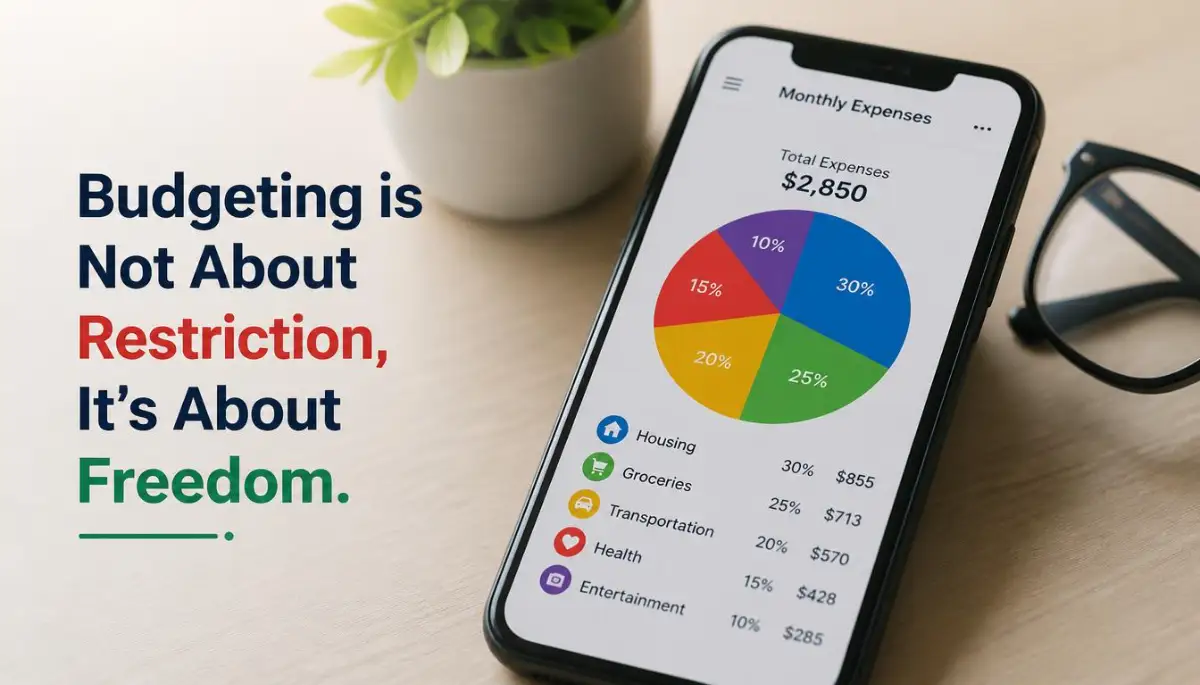
The Fear of Being "Wrong" with Your Money
One of the biggest walls we build is the fear of seeing our mistakes in black and white. If I don't look at the budget, then the five takeout meals I bought last week didn't really "happen."
We use avoidance as a shield to protect our ego. We don't want to admit that we made a silly choice or that we overspent on something we didn't need.
This is called the "Ostrich Effect," where we bury our heads in the sand to avoid bad news. But the news stays bad whether we look at it or not.
By looking at your spending, you aren't judging yourself. You are simply gathering data so you can make a better choice tomorrow.
Think of it like a doctor looking at an X-ray. The doctor doesn't get mad at the broken bone; they just look at it so they can fix it.
You need to become the doctor of your own bank account. Once you stop seeing a budget as a "report card" of your failures, it becomes a tool for your future success.
Fighting the "All-or-Nothing" Mindset
Another mental trap is thinking that a budget has to be perfect to count. I used to think that if I spent five dollars more than I planned, the whole month was a waste.
I would give up and spend even more because I felt like I had already "failed." This is like getting a flat tire and then popping the other three tires because you are frustrated.
We have to realize that a budget is a living thing that changes every single day. It is okay to mess up, and it is okay to adjust the numbers as you go.
The goal is not perfection; the goal is awareness. If you track 80 percent of your spending, you are doing 80 percent better than someone who tracks nothing.
Be kind to yourself as you build this new habit. You wouldn't expect to run a marathon on your first day of jogging, so don't expect a perfect budget on your first try.
Consistency is much more important than being exactly right every single time. Small wins lead to big changes over time.
Why We Prefer Now Over Later
Our brains are hardwired to want things right this second. This is known as "Present Bias," and it makes budgeting feel like a punishment for our current selves.
When you see a cool gadget or a nice pair of shoes, your brain gets a hit of dopamine. The "future you" who wants a house or a retirement fund feels very far away and unreal.
We have to find ways to make our future goals feel more exciting than the things we want right now. Instead of saying "I can't buy this," say "I am choosing to buy my freedom later."
This simple shift in language takes the power back. You aren't being restricted by a budget; you are being empowered by your own choices.
Try to visualize your long-term goals every day. If you want to travel, put a picture of that place on your fridge or your phone wallpaper.
When you can see what you are working for, saying "no" to a small purchase becomes much easier. You aren't losing anything; you are gaining something much bigger.
Pro Tip: I used to struggle with impulse buys every time I went to the store. I realized that my mistake was shopping when I was hungry or tired. Now, I have a rule where I must wait 24 hours before buying anything that isn't on my list. This simple pause gives my "logical brain" time to catch up with my "emotional brain," and I usually realize I don't even want the item the next day.
The Myth of the "Money Expert"
Many people think they can't budget because they aren't "math people" or don't understand economics. This is a lie that keeps people from taking control of their lives.
Budgeting is not about complex math or fancy spreadsheets. It is simply about subtraction: Income minus Expenses.
If you can use a calculator on your phone, you have all the technical skills you need. The rest is just about building the habit and staying honest with yourself.
Don't let the "finance jargon" you hear online scare you away. You don't need to know about stocks or bonds to decide how much to spend on groceries.
Start with the basics and let your knowledge grow as you get more comfortable. You will find that understanding your personal loan options or other tools becomes easier once you have a handle on your daily cash.
The experts you see on TV didn't start that way. They started by tracking their first dollar, just like you are doing right now.
Seeing the Change in Real Time
To really grasp how your mindset affects your money, it helps to see it in action.
This video explains the psychological tricks retailers use to make you spend and how to fight back using a simple mental framework.
Breaking the Cycle of Scarcity Thinking
If you grew up without much money, you might have a "scarcity mindset." This means you always feel like the money will disappear, so you feel the urge to spend it as soon as you get it.
It feels safer to have the item in your hand than to have the numbers in a bank account. This is a survival instinct, but it can keep you in a cycle of being broke.
You have to teach your brain that it is safe to keep money in the bank. Start by saving a very small amount, like ten dollars a week, and just watch it sit there.
As that small pile of money grows, your brain will start to feel a new kind of safety. This is the safety of having a "buffer" against the world.
When you have a small emergency fund, you stop living in fear. You start to see money as a tool that works for you, rather than a ghost you are chasing.
It takes time to heal your relationship with money, so don't rush the process. Every day that you stick to your plan is a victory over your old fears.
The Power of Naming Your Dollars
One of the best ways to stop feeling guilty about spending is to give every dollar a job. This is often called "Zero-Based Budgeting," but it’s really just about giving yourself permission.
When you set aside money for fun or hobbies, you can spend it without feeling like you are doing something wrong. You know the rent is paid, the food is bought, and this money is for fun.
This removes the "guessing game" that causes so much anxiety. You no longer have to wonder if you can afford a coffee; you already checked your "coffee category" and you know the answer.
This clarity is the ultimate cure for money stress. You are in total control of the ship, and you know exactly where you are going.
You might even find that you have more money than you thought once you stop the "leaks." If you need to stay organized during big life changes, like moving your digital business or website, you can apply this same organized thinking.
Organization in one area of life often leads to organization in another. When your money is clear, your mind becomes clear too.
Facing the Social Pressure to Spend
We live in a world that constantly tells us we aren't enough unless we buy something new. Social media is a non-stop parade of people showing off things they often can't afford.
This creates a psychological barrier called "Relative Deprivation." We feel poor not because we lack what we need, but because we have less than the person on our screen.
You have to remember that you are seeing a "highlight reel," not the reality of their bank accounts. Many people who look rich are actually drowning in debt.
If you find yourself spending to "keep up," it might be time to take a break from certain apps. Focus on your own journey and your own goals.
Your friends who truly care about you won't mind if you suggest a cheaper way to hang out. In fact, they are probably stressed about money too and will be happy you spoke up.
True wealth is not about what people see on the outside. It is about the peace of mind you have on the inside when your head hits the pillow at night.
Redefining Your Identity as a Saver
Most people say things like, "I'm just not good with money." This becomes a self-fulfilling prophecy because you act like the person you think you are.
If you believe you are a "spender," you will find ways to spend money. To change your budget, you have to change the way you talk about yourself.
Start saying, "I am a person who is learning to manage my wealth." Or, "I am someone who values my future freedom."
These small shifts in your internal dialogue are incredibly powerful. They change your behavior from the inside out, making budgeting feel natural instead of forced.
You are the author of your own story. If the old chapters were about debt and stress, the new chapters can be about growth and stability.
It doesn't matter where you started; it only matters which direction you are walking in today. Every small step is a move toward a life where you run the money, and the money doesn't run you.
Using Technology as a Helpful Partner
While budgeting is mostly mental, the right tools can make the process much easier for your brain. You don't need anything fancy, but you do need something consistent.
Find an app or a simple notebook that you actually enjoy using. If the tool is too hard to use, your brain will find another excuse to quit.
Some people love the "envelope system" where they use actual cash for different things. Others like apps that connect to their bank and do the sorting for them.
Experiment with different ways until you find the one that clicks. The best system is the one that you will actually use every single day.
Just like changing settings on your Smart TV to protect your privacy, you need to set up your financial "settings" to work for you. Once the system is in place, it takes very little effort to keep it going.
Moving Beyond Basics to Master Your Money Mindset
Now that we understand why our brains resist a budget, we can start to use advanced mental tricks to make it easier. I discovered that the most successful savers don't have more willpower than you.
They just set up their lives so they don't have to use willpower as often. One pro-level secret is called "Values-Based Spending," and it changed everything for me.
Instead of looking at your money as a list of things you can't do, look at it as a tool for what you want to do. I spent a long time feeling guilty about every coffee or movie ticket I bought.
When I sat down and realized my true values were travel and family time, I stopped spending on things that didn't match those goals. I stopped buying random gadgets and used that money for a weekend trip instead.
This mental shift makes budgeting feel like a win every single day. You are not losing out on a purchase; you are gaining a step toward a dream that actually matters to you.
According to a study on financial stress and mental health, having a clear plan can significantly lower anxiety levels. When you know where your money goes, your brain stops screaming at you to be on high alert.
I also learned that "implementation intentions" are a great way to stay on track. This just means making a plan for a specific situation before it happens.
For example, I told myself, "If my friends ask me to go to an expensive dinner, I will suggest a park picnic instead." Having the answer ready saved me from making an impulsive, expensive choice just to fit in.
You can apply this to your career and savings goals as well. If you are a freelancer, smart budgeting for self-employed pros is a great way to keep your mind steady when work is slow.
The long-term goal is to make these choices automatic so you don't even think about them. The more you practice, the more your brain accepts this new, healthy reality.
Using Psychological Rewards to Stay Motivated
Most people treat a budget like a diet where you only eat broccoli and never have cake. This is a recipe for a massive blow-up where you eventually spend way too much money out of frustration.
I found that "gamifying" my savings made the process much more fun. I set up a small reward system where I could buy something small after reaching a savings milestone.
This gives your brain the dopamine hit it wants without breaking the bank. It teaches your mind that following the budget leads to good feelings, not just restriction.
I also stopped looking at my budget every single day because that made me feel obsessive and stressed. I moved to a weekly check-in, which gave me enough data to stay safe but enough space to breathe.
If you are working toward a big goal, like buying a house, it helps to understand the math. Learning about home equity and building it faster can give you the motivation to keep saving every month.
When you see how an extra fifty dollars a month can save you thousands in interest, your logical brain takes over. Suddenly, that random online purchase doesn't seem nearly as attractive as owning your home sooner.

The Dark Side of Mental Shortcuts and Money Errors
Even with the best plan, our brains are very good at leading us into traps. I have made almost every mistake in the book, and most of them started with an emotional thought.
The most dangerous error is the "Sunk Cost Fallacy," where we keep spending money on something just because we already spent money on it. I once spent hundreds of dollars fixing an old car that was clearly dying.
I didn't want to admit that the first three hundred dollars I spent was gone forever. My brain told me that if I just spent a little more, I could "save" my previous investment.
I see people do this with gym memberships they don't use or hobbies they no longer enjoy. We keep paying the monthly fee because "quitting" feels like failing, but keeping it is the real mistake.
Another trap is "Social Comparison," which is when we judge our success based on what our neighbors have. I remember feeling so jealous of a friend who got a brand-new SUV.
I almost went to a dealership to get a loan I couldn't afford just to feel equal to him. I didn't know that he was actually struggling with debt and was looking for safe emergency cash options behind the scenes.
Comparing your bank account to someone else's lifestyle is a losing game. You see their "wins," but you never see their bills, their stress, or their late-night worries.
If you are constantly trying to match other people, you will never feel like you have enough. This leads to a life of "quiet desperation" where you are working just to pay for things you don't even like that much.
Why Starving Your Joy Always Backfires
I have seen people try to cut every single cent from their budget to save as fast as possible. They stop seeing friends, they eat the same bland food every day, and they never buy anything new.
This "extreme frugality" usually ends in a total crash where they spend thousands of dollars in a single weekend. Your mind can only handle so much pressure before it breaks.
You must include "joy" as a line item in your budget, or your budget will fail. It sounds weird to plan for spending, but it is the only way to make saving sustainable.
Think of it like a safety valve on a steam engine. If you let a little bit of steam out every day, the machine keeps running perfectly.
If you plug all the holes, the whole thing will eventually explode. I allow myself a "fun money" pile every month that I can spend on whatever I want with zero guilt.
Sometimes I spend it on a nice dinner, and sometimes I save it up for a bigger treat. Because I know I have that money coming, I don't feel the urge to "cheat" on the rest of my budget.
The Problem with "Later" as a Financial Strategy
Our brains love to think that "Future Me" will be much better at saving than "Current Me." We tell ourselves that we will start the budget after we get a raise or after the holidays are over.
This is a form of procrastination that keeps you in a cycle of being broke. Data from the U.S. Bureau of Labor Statistics shows that as people earn more, they often just spend more.
If you don't fix the habit now, a higher income will not fix your problems. You will just have more expensive bills and the same amount of stress.
I had to realize that there is never a "perfect" time to start being smart with money. Life will always have an emergency, a birthday, or a reason to celebrate.
If you wait for the world to stop moving, you will be waiting forever. You have to learn to budget in the middle of the mess, not after it's gone.
This applies to everything, from your health to your house. If you are worried about a job change during a mortgage, you need a plan before the change happens, not after.
Stop Blaming Your Past for Your Current Habits
It is easy to say, "I'm bad with money because my parents never taught me." While your childhood definitely shapes your view of cash, it does not have to control your future.
I spent years blaming my family's history for my own overspending. It felt like I was just following a script that I couldn't change.
I finally realized that I am an adult with a phone and access to more information than any generation in history. I can learn how to overcome burnout and I can learn how to track my expenses.
Blaming the past feels good because it takes the responsibility off your shoulders. But it also takes away your power to change the outcome.
Once you accept that you are the one in charge of the keyboard and the bank card, things start to move. You might make mistakes, but they will be your mistakes that you can learn from.
Every dollar you save today is a vote for the person you want to become tomorrow. You are not stuck in the old version of yourself unless you choose to stay there.
The New Freedom Found in Simple Planning
In the end, a budget is not a cage; it is a map to your freedom. It takes the "mystery" out of your life and replaces it with clear, actionable facts.
I no longer feel a pit in my stomach when I look at my bank balance. I don't wonder if I can afford my bills because I already know the answer.
This clarity has given me more mental energy to focus on my relationships and my health. I have more time for active listening with my family because I'm not mentally calculating my debt.
Financial peace is not about being rich; it is about being in control. It is about knowing that whatever happens, you have a plan to handle it.
I want you to experience the same sense of relief that I felt when I finally faced my fears. You have the strength and the tools to fix your money habits starting right now.
I believe in your ability to rewrite your financial story and build a life that feels as good as it looks. Take that first small step today, even if it feels a little scary, because the view from the other side is worth it.
I spent so much of my life running away from numbers because I was afraid of what they would say about me. I finally realized that the numbers were just a mirror, and I had the power to change the person standing in front of it.
Disclaimer: This article is for informational and educational purposes only. The financial and psychological advice provided here is based on general principles and personal experiences. It does not constitute professional financial, legal, or medical advice. Every person's financial situation is different, and you should consult with a certified financial planner or a licensed counselor before making major life decisions. We do not guarantee specific financial outcomes from following the suggestions in this post.
Common Questions About Fixing Your Budget Habits
Why do I feel so much guilt when I spend money on myself?
This often comes from a "scarcity mindset" or past experiences where money was a source of conflict. You can fix this by setting a specific "fun money" category in your budget so you know that spending that money is allowed and planned.
How can I stop my spouse from ruining our monthly budget?
The best way is to have an honest conversation about your shared goals rather than focusing on the spending. Try to find a common dream, like a vacation or a new home, to make the budget feel like a team effort instead of a fight.
What is the fastest way to see progress in my savings?
Focus on cutting one or two large, recurring expenses rather than trying to save pennies on everything. This gives you a big "win" early on and keeps you motivated to look for more ways to improve your cash flow.
Is it normal to fail at budgeting for the first few months?
Yes, it is completely normal to mess up as you learn a new habit. Most people take about three to four months to get a handle on their true spending patterns, so don't give up if the first month is a mess.
How do I handle unexpected expenses that aren't in my budget?
This is why an emergency fund is so important for your mental health. By setting aside a small amount each month for "surprises," you can handle a car repair or a medical bill without feeling like your whole budget is ruined.
Can a budget really help with my overall anxiety levels?
Absolutely, because a large part of anxiety comes from the "unknown." By making your finances "known," you remove a major source of background stress that can affect your sleep, your mood, and your health.