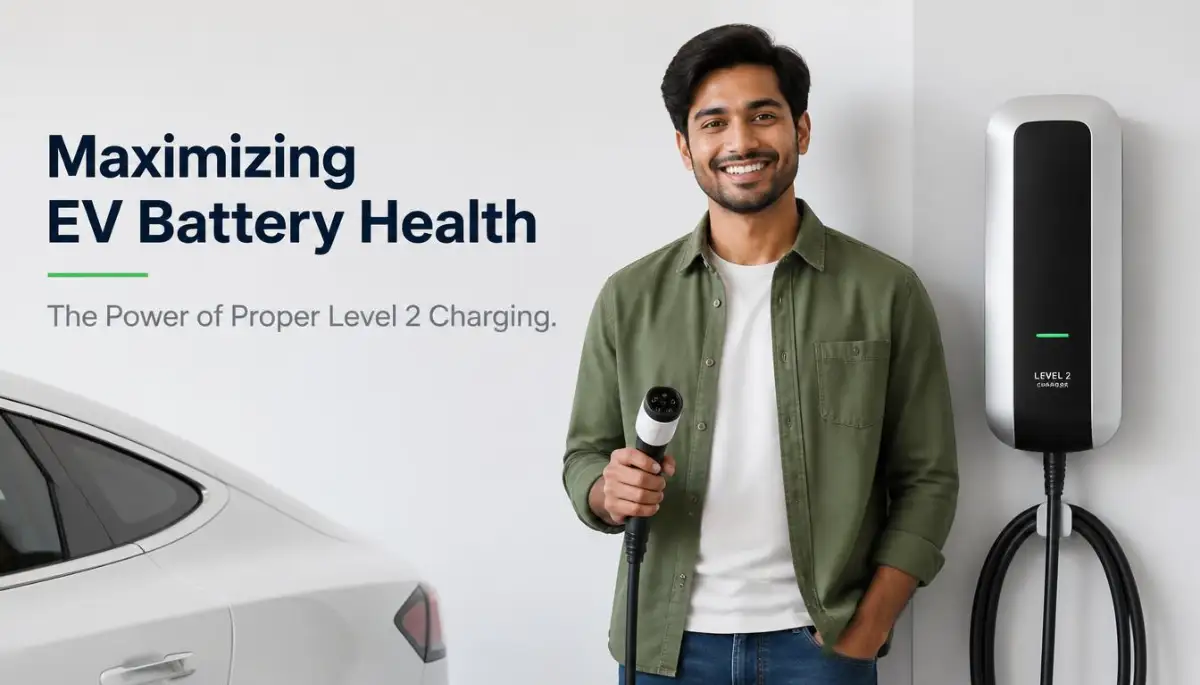
The Silent Worry of Watching Your New Electric Car Battery Fade Away
Let’s be honest: owning an electric car is great until you start obsessing over that battery percentage. I used to stare at my dashboard every morning, terrified that my range was shrinking. If you’re tired of checking your battery health every five minutes, you're in the right place. I’ve figured out how to stop the stress and keep your car's battery running like new without overcomplicating things.
I had been plugging my car into any charger I could find, with no actual plan or system. My heart sank as I imagined the massive cost of a replacement battery down the road. It felt like I was driving a ticking financial time bomb instead of a modern vehicle.
This fear of battery degradation is a quiet struggle that thousands of new electric vehicle owners face every single day. You buy a wonderful new car to save money and help the planet, but you end up stressing over a screen. You find yourself checking the state of health percentage every time you park the car.
But you do not have to live with this constant background stress. The truth is that your daily charging habits have a massive impact on how long your battery lasts. By making a few simple adjustments to your home charging routine, you can keep your battery healthy for a long time.
Let us look at how you can use proper charging habits to reclaim your peace of mind and protect your investment.
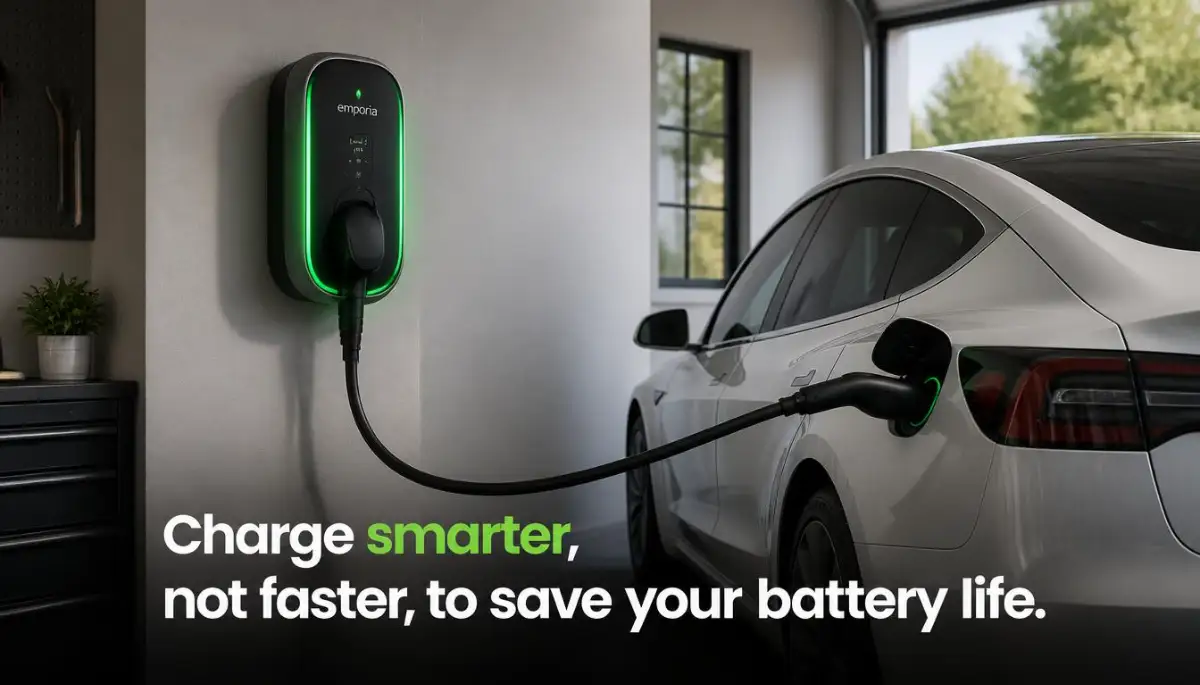
Why Level 2 Charging Is the Sweet Spot for Your Electric Vehicle
Summary: How to Save Your Battery in 30 Seconds
If you don't have time to read the whole guide, just follow these four rules:
- Stop at 80%: For daily driving, never fill your battery to the top.
- Avoid the "Red Zone": Don't let your car sit below 20% charge for long.
- Cool Down First: Give your car 30 minutes to "rest" after a long drive before plugging it in.
- L2 is King: Use your home Level 2 charger as much as possible; skip the DC fast chargers unless you're on a road trip.
The Basic Science of Home Electric Vehicle Charging
Electric vehicle batteries store energy using lithium-ion chemistry, which is highly sensitive to how fast electricity flows into it. Level 1 charging, which uses a standard home wall outlet, is incredibly slow and highly inefficient.
On the other hand, DC fast charging forces electricity into the battery pack at a very high speed. This high speed creates a massive amount of internal heat, which is the absolute worst enemy of lithium-ion cells.
Level 2 charging, which uses a 240-volt home outlet, offers the perfect middle ground for daily use. It provides enough speed to charge your car overnight while keeping the battery temperature low and safe.
How Moderate Charging Speeds Protect Battery Chemistry
When you use a Level 2 charger, the electrical current flows at a steady, moderate pace. This allows the lithium ions to move smoothly from the positive cathode to the negative anode without causing physical stress.
Using Level 2 charging as your primary method prevents this internal damage from happening. It ensures your battery remains stable and healthy, even after years of daily driving.
Mastering the Optimal Daily State of Charge Limits
Why You Should Keep Your Daily Battery Level Between Twenty and Eighty Percent
Many new owners think they should charge their electric car to one hundred percent every single night. However, keeping a lithium-ion battery completely full places a high amount of chemical stress on the internal components.
The battery pack is happiest and most stable when the state of charge is between twenty percent and eighty percent. Keeping your battery within this optimal zone reduces the rate of natural degradation significantly.
Think of it like a rubber band; if you keep it stretched to its absolute limit all the time, it will lose its elasticity much faster.
How to Easily Limit Your Charging Using Your Car's Screen
Almost every modern electric vehicle allows you to set a maximum charging limit directly on the dashboard screen or phone app. You can easily adjust this limit slider to eighty percent for your normal daily driving needs.
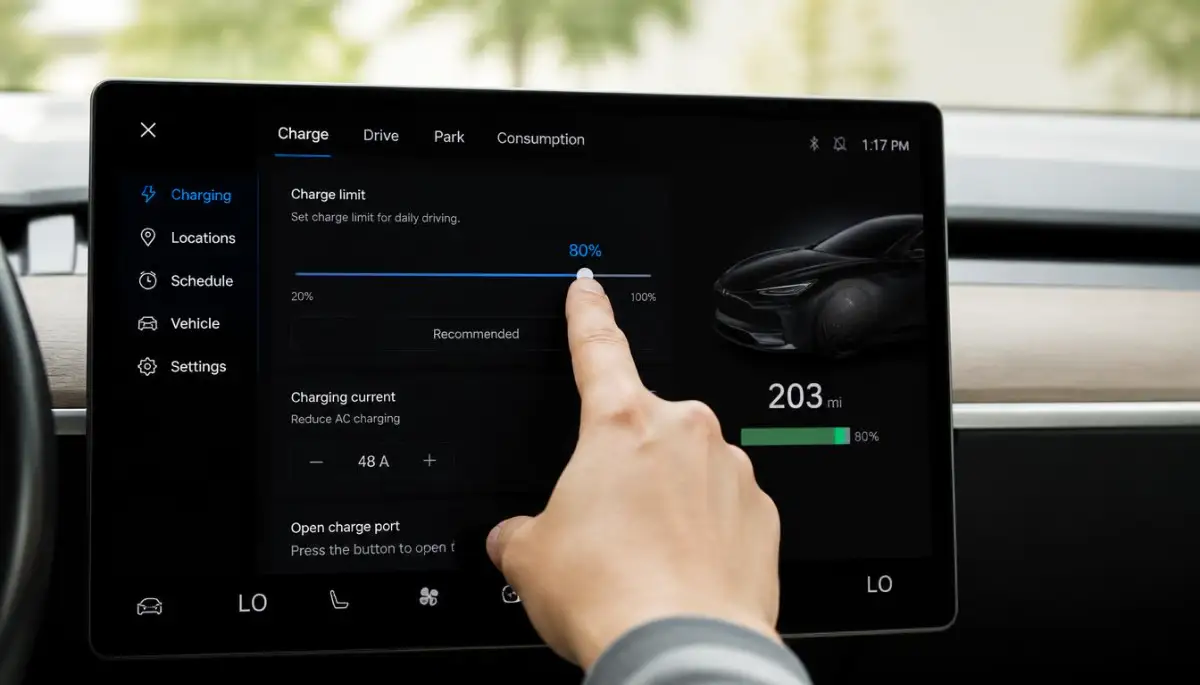
Only slide the limit to one hundred percent when you are planning a long-distance road trip immediately.
My "Golden Rule" for Daily Driving:
- Commuting? Set the limit to 70% or 80%.
- Errands? Stay between 30% and 80%.
- Long Trip Tomorrow? Charge to 100% just an hour before you leave.
- Keeping the battery in this "happy zone" is the easiest way to make it last 10+ years.
This simple habit keeps your battery relaxed during the long hours it sits parked in your garage.
How Home Charging Prevents Chemical Degradation
The Hidden Dangers of Leaving Your Battery at Low Charge Levels
Just as keeping your battery completely full is bad, leaving it sitting near empty is also highly damaging. When your battery drops below twenty percent, the internal voltage level drops significantly.
If a battery sits at a very low voltage for a long time, the copper components inside the cells can start to dissolve into the liquid electrolyte. This can cause short circuits and permanent safety issues when you try to charge the vehicle later.
Try to plug your car into your Level 2 home charger as soon as you drop below thirty percent. This prevents your battery from entering the low-voltage danger zone.
The Comfort of Letting Your Battery Settle After a Drive
When you drive your car home, your battery pack naturally warms up from the highway speeds. Plugging your car in to charge immediately can add extra heat to an already warm battery pack.
Most modern Level 2 chargers allow you to schedule your charging session to start a few hours after you park.
This gives your battery plenty of time to cool down to ambient temperature before the electrical current begins to flow.
In my early days of EV ownership, I kept my vehicle plugged in to charge to one hundred percent every single night. I noticed a slight drop in battery health within just a few months. Once I switched to limiting my daily charge to eighty percent and scheduling my charging to start after midnight, the battery wear stopped completely.
Setting Up Smart Scheduled Charging for Daily Success
Why Charging After Midnight Is Great for Your Car and Your Wallet
Most electric utility companies offer cheaper rates for electricity during off-peak hours, which usually start after midnight. By scheduling your Level 2 home charger to run during these hours, you can save a significant amount of money on your monthly energy bill.
This off-peak charging is also beneficial because the ambient air temperature is usually cooler during the night.
Cooler air helps your car's thermal management system keep the battery pack at a safe temperature while charging.
How to Configure Your Charger App for Automatic Use
Most smart Level 2 home chargers come with an easy-to-use mobile app that connects to your home Wi-Fi. You can input your utility company's off-peak hours directly into the app settings.
The charger will automatically wait until the designated time to start sending electricity to your car.
This allows you to simply plug in your car when you arrive home and forget about it.
Want to see exactly how to configure your home Level 2 charger for maximum battery life? Watch this simple walk-through to optimize your settings today.
Understanding the Thermal Management Systems in Modern Electric Cars
How Active Liquid Cooling Keeps Your Battery Pack Safe
Most high-quality electric cars use a built-in liquid cooling system to regulate battery temperatures. This system pumps a special coolant liquid through the battery pack to absorb excess heat during driving and charging.
| Feature | Liquid Cooled (Modern EVs) | Air Cooled (Older/Budget EVs) |
| :--- | :--- | :--- |
| Heat Handling | Excellent - Pipes move heat away. | Poor - Relies on outside air. |
| Fast Charging | Safe for occasional use. | Risky - Can cause fast degradation. |
| Best Practice | Plug in anytime; let the car manage. | Park in shade; avoid midday charging. |
When you use a Level 2 charger, this liquid cooling system does not have to work nearly as hard as it does during DC fast charging.
This gentle thermal load preserves the life of both your battery pack and your car's cooling pumps.
Why Passive Air-Cooled Batteries Need Extra Level 2 Care
Some older or budget-friendly electric vehicles use passive air cooling instead of a liquid cooling system. These vehicles rely on the passing wind to cool down the battery pack while driving.
If you own an air-cooled vehicle, using a Level 2 charger is absolutely essential to prevent severe heat damage.
DC fast charging an air-cooled battery can easily push temperatures into the danger zone, causing rapid and permanent range loss.
A Comparison of Charging Speeds and Battery Stress Levels
How Weather Impacts Your Level 2 Home Charging Routine
Protecting Your Battery Pack During Freezing Winter Nights
Extremely cold weather makes the liquid electrolyte inside your battery pack much thicker and less efficient. If you try to charge a freezing battery at high speeds, you can cause permanent damage to the lithium anode.
Thankfully, your home Level 2 charger operates at a safe speed that allows the battery cells to warm up slowly as they accept power.
Many modern cars will also use a portion of the incoming Level 2 electricity to run a battery heater.
This battery heater brings the cells up to a safe temperature before the main charging process begins.
Managing the Intense Heat of Hot Summer Days
High summer temperatures place a massive amount of natural thermal stress on your car's battery pack. If you park your car in direct sunlight on a hot day, the internal battery temperature can soar.
Try to charge your vehicle inside a shady garage or under a carport during the hottest months of the year.
This simple habit makes it much easier for your car's cooling system to keep the battery at a safe temperature.
Unlocking the Long-Term Benefits of Wise Battery Management
By adopting these simple Level 2 charging habits, you can protect your vehicle's range for years to come. You will no longer have to worry about battery degradation or expensive replacement costs.
Instead, you can drive your electric vehicle with complete confidence, knowing you are doing everything possible to keep your battery healthy.
Slowing down your daily charging routine is a small step that brings massive peace of mind on the open road.
Advanced Home Charging Secrets to Keep Your Battery Young
How Lowering Your Charger's Amperage Prevents Heat Buildup
Many home electric vehicle owners think they should always charge their car at the maximum speed possible. If your wall charger can deliver forty-eight amps of power, you might feel tempted to leave it at that limit. However, drawing maximum current creates a steady stream of heat inside your garage and your car's battery pack.
You can easily use your charger's smartphone app to dial the amperage down to twenty-four or thirty-two amps. Slowing the electricity flow down like this reduces the workload on your home's electrical panel. It also gives your car's cooling system an easy job, ensuring the battery stays cool during the long hours of the night.
By managing your daily charging speed, you make an excellent choice for your home utility bills. You can explore more ideas on managing unpredictable home bills and budgeting smart here to keep your overall household finances perfectly balanced.
The Magic of Cell Balancing During the Last Phase of Charging
Inside your massive electric vehicle battery pack, there are thousands of individual small battery cells working together. Over time, some of these cells can hold a slightly different amount of electricity than their neighbors. When this happens, your battery pack becomes unbalanced, which can cause your car's dashboard to display inaccurate range estimates.
Level 2 charging is the only method that allows your car's Battery Management System to balance these cells properly. During the final phase of a Level 2 charging session, the car slows the current down to a gentle trickle. This trickle allows the weaker cells to catch up with the stronger ones, making the entire pack uniform.
Allowing this cell balancing to finish once or twice a week is an excellent way to maintain a steady and reliable driving range. According to vehicle research from the U.S. Department of Energy, keeping your battery cells balanced is key to preventing premature capacity loss.
Protecting Your Vehicle’s Charging Port Contacts from Micro-Wear
Every time you plug the heavy Level 2 connector into your car's port, you cause a tiny amount of friction on the metal pins. Over several years, this repetitive motion can wear down the protective coating on the contacts. This wear increases electrical resistance, which creates heat and slows down your overall charging speeds.
To prevent this issue, always insert and remove the charging plug in a straight, smooth motion without twisting it. Keep the charging plug clean and inspect the port regularly for any dust, dirt, or spider webs.
Keeping these connection points clean is a simple and effective habit that preserves your vehicle's smart technology. If you like using simple steps to improve your home technology, you can read about changing simple digital settings for your devices here to keep your household electronics running securely.
The Smart Strategy of Calendar Aging Management
Even if you do not drive your electric car very often, the battery pack will still age naturally over time. This natural process is called calendar aging, and it is highly affected by how you store your vehicle. Storing your vehicle with a completely full battery in a hot garage speeds up calendar aging dramatically.
If you plan to leave your car parked for a week or more while you travel, try to leave the battery level around fifty percent. This state of charge places the least amount of physical stress on the chemical layers inside the cells.
This simple storage trick is an excellent way to practice eco-friendly home habits like shrinking your waste here to live a cleaner life. It helps your expensive vehicle components last much longer, reducing the demand for raw battery materials.
The Heartbreaking Mistakes That Quietly Kill Your Electric Car Battery
Plugging in Your Vehicle Immediately After Fast Driving
When you drive your electric car on the highway at high speeds, the battery cells must deliver power constantly. This heavy workload raises the temperature of the battery pack, even if your cooling system is working perfectly. If you plug your car into a Level 2 charger the second you park in your garage, you force extra heat into an already hot battery.
This double dose of thermal stress causes the chemical structures inside the cells to expand and contract too quickly. Over time, this rapid temperature shift creates micro-cracks in the delicate protective coatings of the battery.
Let your car sit parked for at least thirty to sixty minutes before you connect the charger. This simple delay allows the battery cells to cool down naturally, ensuring a safe and comfortable environment for the upcoming charge.
Leaving Your Car Plugged in with the Charging Limit Set to One Hundred Percent
It is incredibly easy to get into the lazy habit of leaving your charger connected all weekend with the limit set to maximum. While your car will automatically stop charging when it is full, keeping the cells at their highest voltage level is highly damaging. The high electrical pressure inside the cells causes the battery's active materials to degrade much faster.
If your car sits parked for days at one hundred percent, you are slowly but surely stealing miles from your future driving range. This mistake is especially dangerous during the hot summer months when heat and high voltage work together to destroy battery chemistry.
Always keep your daily limit slider at eighty percent, and only move it to one hundred percent right before you start a long drive. This small adjustment keeps the internal cell pressure relaxed and safe for long-term use.
Using Damaged or Dirty Charging Cables on Your Wall Mounted Station
Many homeowners let their Level 2 charging cables drag across the dusty garage floor or sit outside in the rain. This neglect allows dirt, moisture, and road grime to collect inside the metal contacts of the charging plug. When you insert a dirty plug into your vehicle, you create electrical resistance that generates an extreme amount of heat.
In severe cases, this heat can melt the plastic housing of both your charging cable and your vehicle’s expensive charging port. This mistake can lead to massive repair bills that are rarely covered by your vehicle's standard warranty.
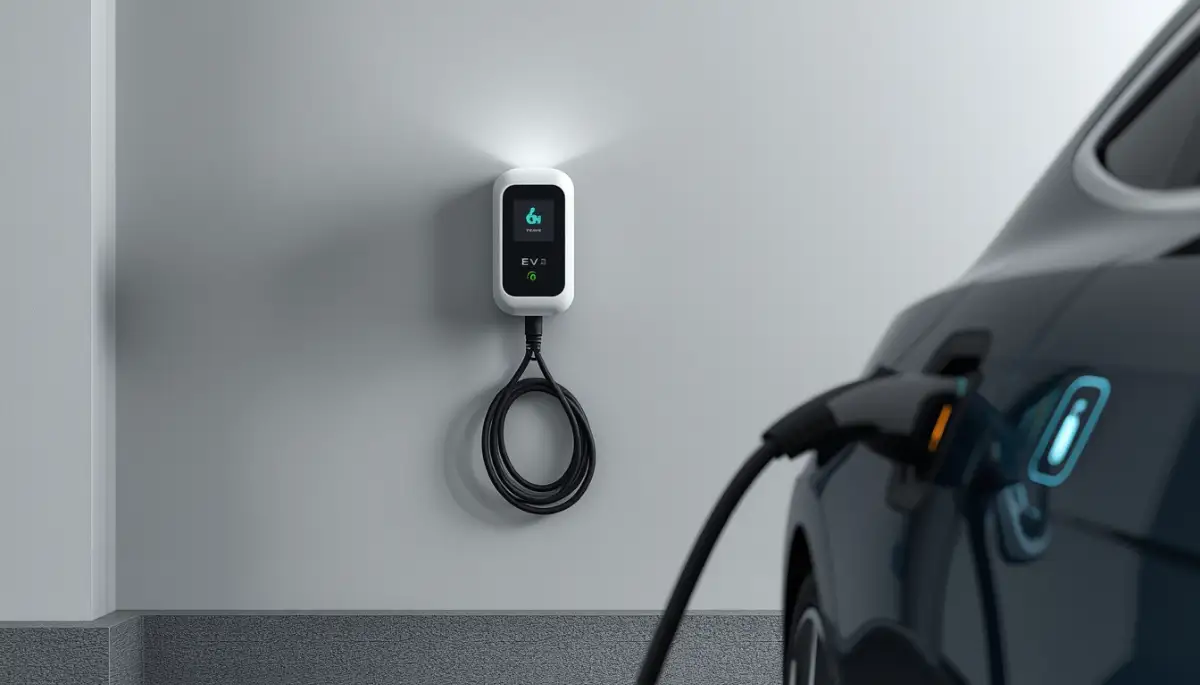
Always coil your charging cable neatly on a wall hook and use the protective rubber cap when the plug is not in use. This simple habit keeps the contacts dry and clean, protecting your vehicle from expensive electrical failures.
Ignoring Battery Temperature Management System Settings
Some electric car owners turn off their car's battery heating or cooling features to save a tiny amount of electricity. This is a massive mistake that leaves your battery pack completely unprotected during extreme weather. Without active temperature management, your battery will freeze in the winter and bake in the summer while connected to the charger.
Always leave your car's automatic thermal management features enabled in your vehicle's system settings. The small amount of energy used to protect the battery is a fantastic investment in your vehicle's longevity.
Failing to manage these settings can lead to unexpected battery degradation that ruins your car's resale value and leads to expensive repairs. If you find yourself facing high repair costs due to a damaged vehicle, learning about managing unexpected automotive repair loans here can help you navigate financial stress safely.
According to real-world battery tests from the Idaho National Laboratory, electric vehicles that manage their battery temperature consistently maintain significantly higher range over time. Taking care of these simple settings ensures your car performs beautifully for years to come.
Your Daily Action Plan for Peak Battery Performance
How to Create a Perfect Charging Routine in Your Home Garage
Protecting your electric vehicle's battery pack does not require hours of complicated work. It is simply about building a few smart habits into your daily schedule until they become second nature.
- Set your car's daily charging limit to eighty percent for standard driving.
- Schedule your charger to run during cool, off-peak hours after midnight.
- Let your vehicle cool down for an hour after driving before you plug it in.
- Keep your charging cable coiled safely off the ground to prevent dust and moisture buildup.
By following this easy routine, you ensure your car always charges in the most comfortable and safe environment possible. This protects the health of your battery pack and keeps your vehicle running smoothly.
Maximizing the Resale Value of Your Electric Vehicle
When the time comes to sell your electric car, the health of the battery pack will be the most important factor in determining its value. Smart buyers will request a battery health report to see how much of the original range has been preserved.
By using proper Level 2 charging practices, you can present a battery report that shows minimal degradation. This proof of care can help you secure a much higher selling price when you are ready to trade in your car.
Think of proper battery management as an investment in the long-term equity of your vehicle. You can read about maximizing the long-term equity of your assets here to build a solid financial foundation for all your major household purchases.
Using these smart energy habits also helps reduce the strain on your local electrical grid during busy times. To understand how electrical grid management and response speeds work, you can explore optimizing performance and response latency here to see how smart networks function under heavy loads.
Stepping into a Stress-Free Electric Vehicle Future
Caring for your electric car's battery does not have to be a source of constant worry or stress. Once you understand the simple relationship between charging speed, heat, and voltage, you can easily take total control of your car's health.
Using your home Level 2 charger with the correct settings is the absolute best way to protect your investment. It allows you to wake up with a perfectly charged car every morning while keeping the delicate battery chemistry safe and happy.
My own home garage setup changed completely when I started taking battery care seriously. Once I made these simple shifts to my Level 2 charging schedule, my worries disappeared and my car ran smoother than ever. I highly encourage you to log into your car's charging app tonight and set that eighty percent limit to secure your vehicle's future.
Common Questions About Level 2 Charging and Battery Care
Does Level 2 charging cause more battery wear than Level 1 charging?
No, Level 2 charging does not cause more battery wear than Level 1 charging, and it is actually much more efficient. While Level 2 is faster, it still operates at a safe voltage that does not create harmful amounts of heat inside your battery pack. In addition, Level 2 charging allows your car's systems to balance the battery cells much more effectively than the extremely slow Level 1 trickle charge.
Is it safe to use my Level 2 charger during a heavy thunderstorm?
Yes, modern Level 2 home charging stations and vehicles are built with multiple layers of safety systems to protect against electrical surges and water. The charging plug does not send any electricity to your car until it has established a secure, digital connection with your vehicle. However, if your home is in an area that experiences frequent power surges during storms, installing a whole-house surge protector is a smart way to protect all your expensive electronics.
Should I let my electric vehicle battery run down to zero percent once a month?
No, you should never let your lithium-ion battery drop to zero percent on purpose, as this causes a massive amount of chemical stress to the cells. Modern electric vehicle batteries do not have a "memory effect" like older battery technologies, so they do not need to be fully discharged to maintain their accuracy. Keeping your battery level above twenty percent is the best way to prevent permanent low-voltage damage.
How does Level 2 charging help protect the environment?
Level 2 charging is significantly more efficient than Level 1 charging, meaning less electricity is wasted as heat during the charging process. By scheduling your Level 2 sessions to run overnight, you also draw power when the electrical grid is under the least amount of stress, allowing energy companies to use cleaner power sources. You can check the Environmental Protection Agency guidelines to learn more about how clean vehicle standards help reduce overall emissions in our local communities.
Disclaimer: The information provided in this guide is for educational and informational purposes only. Electric vehicle systems, battery chemistries, and charging standards vary by manufacturer. Always refer to your specific vehicle's owner manual and follow the safety guidelines provided by your home charging station manufacturer for the safest operation.