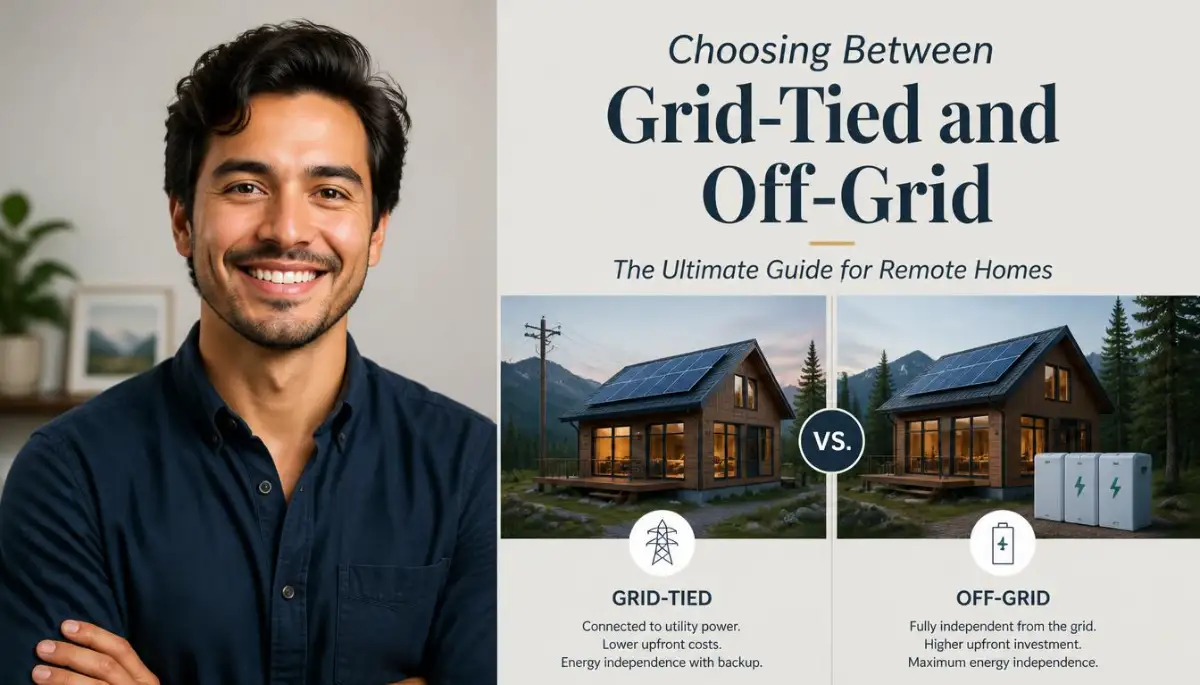
The Silent Nightmare of Remote Living: My Cold Night in the Woods
Picture this: It is 2 AM, the temperature is dropping below zero, and suddenly, every light in your cabin goes pitch black. I sat there in the freezing cold because I thought I knew how solar power worked—but I was wrong. Most people dream of moving away from the city, but they forget that "freedom" means you are now the CEO of your own power company. If you don't pick the right system, your dream home will feel like a very expensive camping trip. Let me show you what I learned the hard way so you don't have to sit in the dark.
That stressful night taught me a lesson I will never forget. I had installed a solar setup without truly understanding how off-grid systems work under heavy pressure. It was a scary, eye-opening experience that changed how I view home energy forever.
Living far away from the city sounds like a peaceful dream. However, keeping the lights on in a remote house can quickly turn into a stressful challenge if you choose the wrong power setup. Many people build their dream homes in the woods, only to face constant power outages.
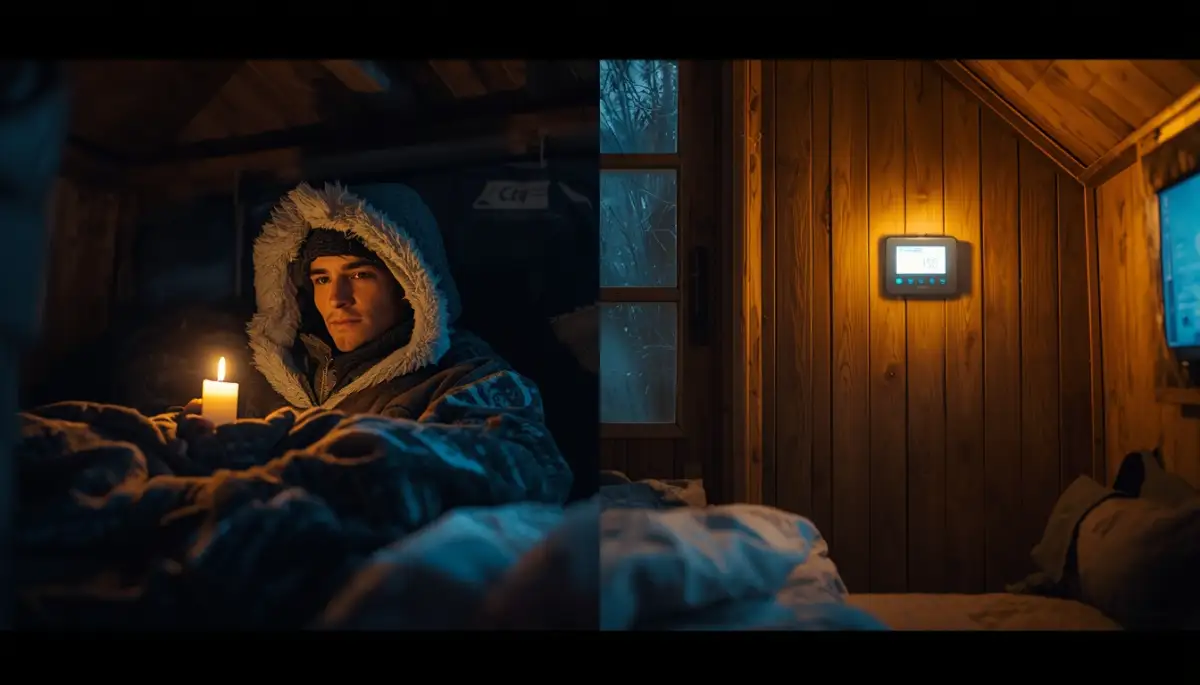
Many homeowners lose sleep over noisy backup generators running all night long. The high cost of fuel and sudden system failures can drain your bank account quickly. Making the wrong choice between keeping a grid connection and going completely independent is a costly mistake.
Thankfully, you do not have to go through the same struggles that I did. Understanding how these power setups behave in real life will save you time, money, and stress. Let us look at how you can make the smartest choice for your property.
Decoding the Power Options: Grid-Tied vs. Off-Grid Systems
Before You Flip the Switch: The 60-Second Summary
If you are in a rush, here is the "too long; didn't read" version of this guide:
- Grid-Tied is for Budgeting: If you have power lines nearby, stay connected. It's cheaper and easier.
- Off-Grid is for Freedom: Only go full off-grid if you are ready to be your own repairman.
- Batteries are the Heart: Don't go cheap here. Lithium is worth the extra money in the long run.
- The Sun Isn't Enough: You will need a backup generator for winter. No exceptions.
Understanding Grid-Tied Solar Frameworks
A grid-tied system keeps your remote home connected to the local utility grid lines. Your solar panels generate electricity during the day, and your home uses that power first. Any extra energy your panels produce goes back to the utility company.
When the sun goes down, your home automatically pulls power from the utility grid. This seamless transition means you never have to worry about running out of electricity. It is a highly reliable option for homes that still have access to nearby power lines.
Most grid-tied systems utilize a process called net metering to lower your bills. The utility company credits you for the excess energy you send to their lines. This setup keeps your initial installation costs low because you do not need to buy expensive battery banks.
The Reality of Going Completely Off-Grid
An off-grid system makes you a completely independent power producer with zero utility bills. Your solar panels charge a large battery bank that stores electricity for later use. This is often the only realistic choice for truly remote areas where utility lines do not exist.
During the day, your panels power your appliances and fill up your storage batteries. At night, your home runs entirely on the energy stored inside those batteries. It requires careful planning to ensure you have enough stored energy for cloudy days.
This independence comes with the responsibility of managing your own power station. You must monitor your consumption and maintain your equipment regularly to avoid blackouts. However, the feeling of complete self-sufficiency is incredibly rewarding for many homeowners.
Key Differences at a Glance
The "Hidden Costs" Nobody Tells You About
When I planned my budget, I only looked at panels and batteries. I was shocked by the extra stuff that added up. Here is a quick breakdown of what you actually pay for:
Evaluating Your True Energy Needs: The First Step
Calculating Your Daily Power Consumption
Before buying any equipment, you must know exactly how much electricity your home uses. Look at your past utility bills to find your daily kilowatt-hour usage. If you are building a new cabin, you will need to estimate your daily load manually.
Make a complete list of every appliance you plan to run in your remote home. Multiply the wattage of each appliance by the hours you expect to use it daily. This simple math will give you a clear picture of your actual daily energy target.
Check out this detailed video to see how to calculate solar panel needs for any remote cabin.
Factoring in Phantom Loads and Efficiency Losses
Many electronic devices consume small amounts of power even when they are turned off. These hidden energy drains are called phantom loads, and they can drain batteries quickly. You must factor these minor drains into your total calculations to prevent system overloads.
Solar systems also experience natural energy losses through heat and inverter conversions. A standard solar setup loses about fifteen to twenty percent of its theoretical efficiency. Always size your panels and battery bank slightly larger than your calculated needs to cover these losses.
Pro Tip: When I first set up my cabin, I bought cheap lead-acid batteries to save money. They degraded within eighteen months and left me stranded, forcing me to buy expensive replacements. Always invest in premium lithium batteries from day one for your peace of mind.
Analyzing Location Constraints and Climate Realities
Counting Your Average Peak Sun Hours
Your geographical location plays a massive role in how your solar system performs. Peak sun hours do not mean the hours of daylight, but the hours of intense, direct sunlight. Some northern regions receive very few peak sun hours during the winter months.
Managing Seasonal Weather Variations
Heavy snowfall and long periods of overcast weather can severely limit your solar production. Snow-covered panels cannot absorb sunlight, which means zero power generation until they are cleared. You must design your system to survive the worst weather weeks of the year.
For off-grid homes, this seasonal drop in sunlight makes a backup generator absolutely necessary. You cannot rely solely on solar panels when a storm blocks the sun for five consecutive days. Preparing for these seasonal shifts prevents freezing nights and ruined food.
The Financial Reality: Upfront Costs and Long-Term Value
Comparing Initial Setup Investments
Grid-tied solar systems are significantly cheaper to install than off-grid setups. Since you do not need batteries, you only pay for panels, an inverter, and basic mounting hardware. This lower entry cost makes grid-tied setups popular where power lines are nearby.
Off-grid setups require heavy investments in batteries, charge controllers, and backup generators. The battery bank alone can easily cost as much as the solar panels themselves. You must be prepared for this high upfront financial commitment to gain true independence.
Estimating Long-Term Maintenance and Replacement Costs
Grid-tied systems are almost maintenance-free because they have very few moving parts. You only need to keep the panels clean and replace the inverter after ten to fifteen years. Your utility company handles the rest of the grid infrastructure maintenance.
Off-grid owners must replace their storage batteries every ten to fifteen years, depending on the battery type. You also have to buy fuel for your generator and perform oil changes regularly. These recurring maintenance costs should always be included in your long-term household budget.
Myth vs. Reality: Clearing Up Solar Misconceptions
Myth: Solar Panels Work Normally During Power Outages
Many people believe that grid-tied solar panels will keep their lights on during a general blackout. This is completely false because standard grid-tied systems shut down automatically when the grid goes dark. This safety feature protects utility workers who are repairing the power lines.
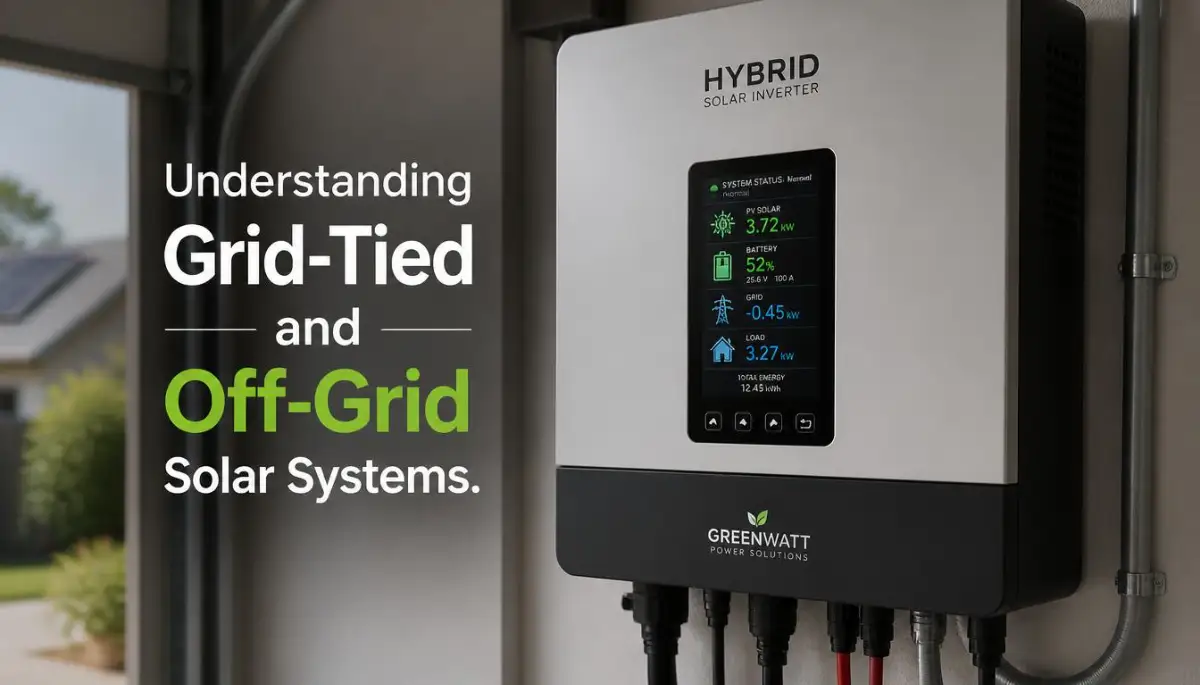
If you want power during a blackout, you need a hybrid system with a special battery backup. This setup isolates your home from the grid during a power failure, keeping your appliances running safely. Do not assume your standard grid-tied setup will protect you from local power outages.
Myth: Off-Grid Solar Means Never Having to Worry About Power
Some homeowners think going off-grid means they can use unlimited electricity without any consequences. In reality, off-grid living requires constant energy awareness and lifestyle adjustments. You cannot run multiple high-wattage appliances simultaneously on a cloudy day without draining your batteries.
You learn to run heavy appliances like washing machines only when the sun is shining directly on your panels. Off-grid living is not just a technology choice; it is a shift in how you relate to energy. Understanding this reality prevents frustration and ensures your system lasts for decades.
The "Cloudy Day" Logic: My Personal Rule
I used to think I could ignore the weather. Now, I live by a simple rule: If it’s gray outside, the dishwasher stays off. You learn to do your "heavy" chores—like laundry or vacuuming—only when the sun is hitting the panels. It sounds annoying, but it actually makes you feel more connected to the world around you. You start watching the sky, not just your phone.
How to Choose the Perfect Path for Your Remote Home
When to Choose a Grid-Tied Solar System
If your remote home is located within a few hundred feet of existing power lines, choose grid-tied. The cost of connecting to the grid is usually much lower than buying a massive battery bank. This option gives you the financial benefits of solar without the daily stress of power management.
It is also the best choice for people who do not want to perform regular system maintenance. You get to enjoy clean energy during the day and reliable grid power at night. It offers the perfect balance of green living and modern convenience.
When to Commit to a Full Off-Grid Setup
If the local utility company wants thousands of dollars to run power lines to your property, go off-grid. In many remote areas, building private power poles is far more expensive than buying a top-tier solar battery system. Off-grid solar is the ultimate solution for true wilderness cabins and remote homesteads.
It is also ideal for those who value complete self-sufficiency and want zero monthly utility bills. If you enjoy monitoring your own systems and do not mind occasional lifestyle adjustments, off-grid is incredibly rewarding. It grants you the freedom to live anywhere you choose without boundaries.
Mastering Your Remote Energy: Insider Secrets to Boost Solar Output
Installing solar panels is only the first step toward energy freedom. To get the absolute best performance, you need to understand how your system behaves during different seasons.
One great secret is to adjust your panel angles twice a year to match the sun's position. In summer, lay them flatter, but tilt them steeply in winter to catch the low-angle winter sun.
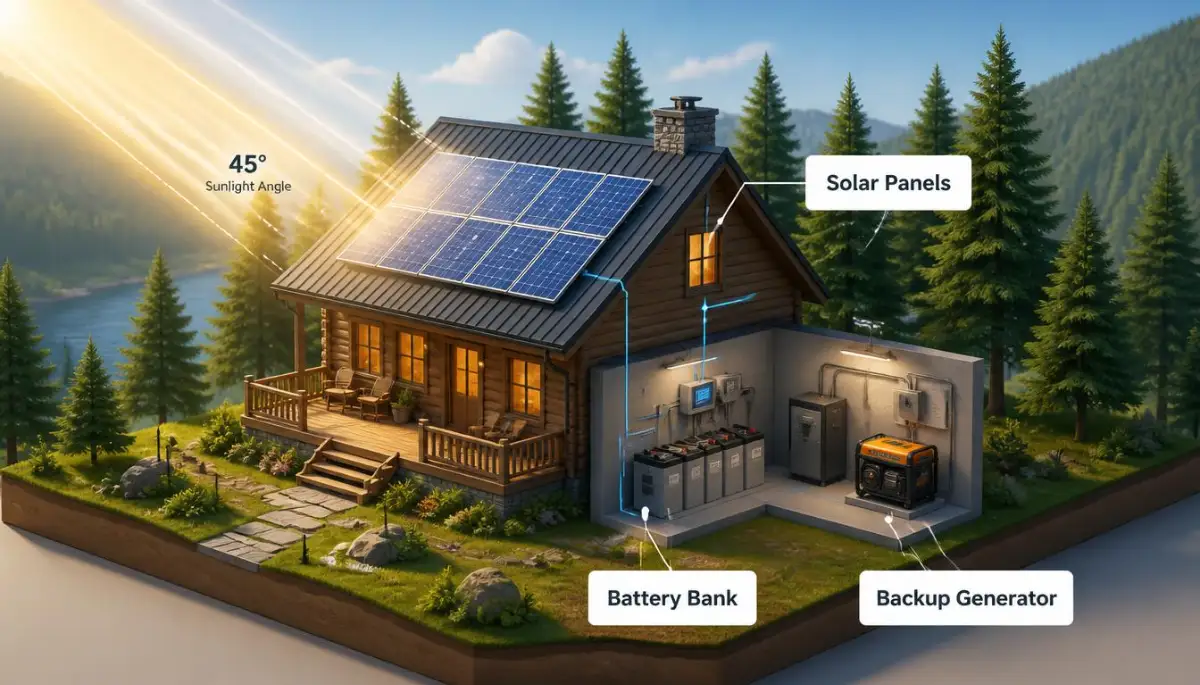
This simple physical adjustment can increase your total daily power harvest by up to fifteen percent. You can find precise local sun angles using tools provided by NASA Solar Radiation Data to optimize your setup.
If you are managing your system on a tight budget, every single watt counts. Balancing your solar investments is a financial skill that takes time to master. It is quite similar to learning smart budgeting methods for self-employed pros with unstable income since solar energy generation fluctuates naturally like freelance pay.
Let us look closely at battery health, which is the absolute heart of any off-grid property. For modern lithium batteries, try to keep their charge level between twenty and eighty percent instead of fully draining them.
Keeping batteries in this balanced sweet spot can double their total operational lifespan. Scientific tests by the National Renewable Energy Laboratory show that extreme heat or deep discharges speed up battery degradation.
You should also isolate your high-draw appliances and run them only when your panels are actively producing power. Turn on your water pump, washing machine, or workshop tools during midday sun hours.
This habit reduces the strain on your battery bank because power goes directly from the panels to the appliances. It prevents unnecessary wear and tear on your expensive storage equipment.
Another advanced step is to use smart automation tools to manage your daily power loads. Smart plugs can turn off your entertainment systems and phone chargers at night automatically.
This process eliminates constant vampire power draws that quietly drain your batteries while you sleep. To reduce your household energy footprint further, you can combine this with simple household swaps to shrink your plastic footprint easily for a highly efficient homestead.
Finally, keep your solar inverter in a cool, well-ventilated utility room. High temperatures make electronic inverters work much harder and lose overall system efficiency.
Installing a simple solar-powered fan in the inverter room keeps the air moving and prevents overheating. This minor upgrade protects your delicate electrical components and ensures a steady power flow.
Critical Solar Blunders: The Mistakes That Can Ruin Your System
Many eager homeowners jump into solar installation without doing proper research first. They buy cheap components from random online sellers, hoping to piece together a functional system.
This approach almost always leads to complete system failure and wasted money. Buying uncertified, low-quality gear can even create severe electrical fire hazards in your home.
This shortcut is a dangerous trap that mirrors the issues of using safe emergency cash why payday loans cost too much and what to do instead since both decisions end up costing triple in the long run.
Another common disaster is failing to size the system wiring correctly for the total current flow. Thin wires resist electricity, which heats up the cables and wastes massive amounts of harvested energy.
In worst-case scenarios, undersized wires can melt their plastic protective coating and spark a house fire. You must always refer to the National Electrical Code standards to select the correct wire gauges.
Many people also forget to plan for a reliable backup power generator. They assume their battery bank will handle five straight days of heavy winter clouds.
When the batteries go completely dead, they are left with no lights, no heat, and no running water. This situation is incredibly stressful and dangerous for families living in isolated mountain zones.
Installing an off-grid system without proper permits can also cause major legal headaches later on. If you do not follow local zoning laws, the county may fine you or declare your home uninhabitable.
Dealing with city fines and inspectors is incredibly draining for your mental health. It can feel as stressful as being served with a civil lawsuit here is your immediate action plan when you have no legal preparation.
Lastly, do not place your solar panels in spots that receive even partial shade during the afternoon. Even a tiny shadow from a single tree branch can shut down an entire string of solar panels.
Trim back overhanging branches regularly to ensure your panels get clean, direct exposure to the sky. Protecting your physical solar path is just as important as keeping your hardware clean.
Your Road to True Energy Independence: Taking Action
Choosing between keeping your grid connection and building a private power grid is a major life transition. Both paths offer incredible benefits if you plan your system with patience and correct information.
Grid-tied systems provide unmatched financial simplicity and steady reliability for properties with easy grid access. They are the perfect way to cut your utility costs without managing complex hardware.
On the other hand, off-grid systems offer the absolute freedom of complete self-reliance in the wild. They allow you to live on your own terms, away from city worries and rising power rates.
Before making your final purchase, map out your daily energy consumption and check your local winter sun hours. This initial effort will ensure your home stays bright and comfortable all year long.
If you are currently buying your first home or land to build on, matching your energy choices with your home loans is smart. You can study a first-time buyer guide understanding home equity and how to build it faster to learn how to finance your green energy dream.
Do not let the initial learning curve scare you away from solar power. Millions of homeowners have successfully transitioned to clean, reliable solar energy setups.
Take your time to research local installers, compare battery warranties, and start with a solid design. Your future self will thank you for the effort you invest today.
I want you to remember that the temporary struggles of setting up your system are completely worth the rewards. Every time I watch my solar batteries fill up under the morning sun, I feel a deep sense of accomplishment and peace.
My cold night in the dark mountain cabin was scary, but it pushed me to master my power systems. Now, my home is completely warm, bright, and self-sufficient. I hope my story inspires you to build your own safe haven and step into a self-reliant life today.
Real Answers to Your Pressing Solar Questions
What happens to off-grid solar systems when it rains for several days?
When heavy rain or thick clouds block the sun, off-grid solar panels produce very little electricity. Your home will run on the power stored inside your battery bank during these dark periods. If the bad weather lasts too long, your automated backup generator will start running to recharge the batteries safely.
Can I start with a grid-tied system and convert it to off-grid later?
Yes, you can transition your system by upgrading to a hybrid solar inverter. This special inverter allows you to connect battery storage while keeping your existing utility grid connection. Financing such upgrades can be managed carefully, much like how people plan a job change during mortgage how to keep your home loan approved to protect their long-term home investments.
How long do modern home solar batteries actually last before needing replacement?
Premium lithium iron phosphate batteries usually last between ten and fifteen years with daily use. Older lead-acid batteries have a much shorter lifespan of three to five years and require regular water top-offs. Always check the manufacturer's warranty terms to ensure your energy storage investment is protected.
Is it safe to install a complete home solar system by myself?
While mounting solar panels on a roof can be a DIY project, wiring the electrical panels is highly dangerous. Working with high-voltage electricity can cause severe electric shocks, system damage, or house fires if done incorrectly. It is always safest to hire a certified electrician to complete the final connections and safety inspections.
How do cold winter temperatures affect solar panel energy production?
Surprisingly, solar panels actually perform more efficiently in cold, crisp winter air than in extreme summer heat. However, the overall daily energy harvest is lower in winter simply because the days are much shorter. Keeping your panels free of snow is the key to maintaining a steady power supply during winter.
Disclaimer: This article is for informational and educational purposes only. Solar system design, high-voltage electrical wiring, and battery installations carry significant safety and financial risks. Always consult with a licensed professional electrician, local building inspectors, and certified solar engineers before purchasing or installing any energy equipment. The author and website assume no liability for actions taken based on this guide.